Artwork
Subrahmanya, with six heads, in his form as Shanmukha (Arumukha)
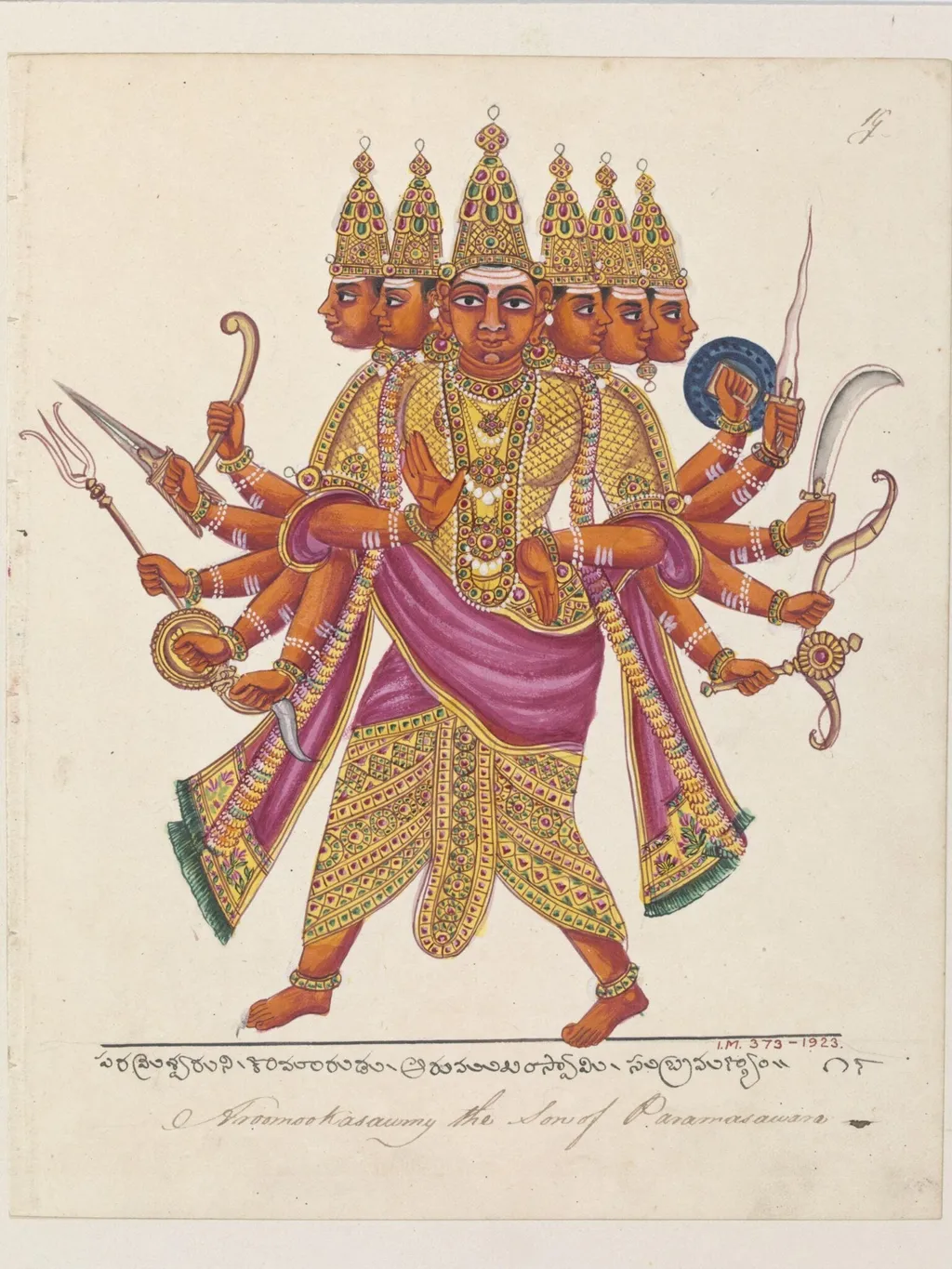
Subrahmanya, with six heads, in his form as Shanmukha (Arumukha) is a paint painting by the Romanticist artist Unknown. It dates from 1820 and is held in the collection of the Victoria and Albert Museum.
About this work
Overview
The figure stands centrally, rendered with vivid pigments and intricate detailing, against an unadorned background that emphasizes the complexity of his form.
This painting depicts Subrahmanya in his Shanmukha form, a six-headed manifestation associated with war and divine authority in Hindu tradition. The figure stands centrally, rendered with vivid pigments and intricate detailing, against an unadorned background that emphasizes the complexity of his form. The composition focuses entirely on the deity’s multifaceted presence, avoiding narrative context to heighten symbolic impact.
Subject & Meaning
Subrahmanya as Shanmukha represents the convergence of six aspects of divine power, each face embodying a distinct expression and perspective. The twelve arms, each holding a weapon, signify his readiness to protect cosmic order. The crowns and regalia affirm his royal divinity, while the symbolic hand gestures convey blessing and protection. This form is invoked in rituals seeking strength, clarity, and the triumph of dharma.
Technique & Style
The artist employs mineral-based pigments to achieve intense reds and yellows, layered with fine brushwork to render jewelry and fabric patterns. The flat, decorative background isolates the figure, a convention common in devotional painting traditions. Facial expressions are individually nuanced, suggesting careful observation and stylized realism. The emphasis on surface detail over spatial depth aligns with regional iconographic norms rather than Western perspective.
History & Provenance
The painting originates from a South Indian devotional context, likely produced in a temple-associated workshop during the 18th or early 19th century. Such images were used in ritual settings or as objects of personal veneration. Its preservation suggests it was maintained within a religious or aristocratic household, though its specific provenance remains undocumented beyond stylistic attribution to the Tamil or Keralan tradition.
Context
This work emerges from a tradition of Hindu devotional art that prioritizes symbolic representation over naturalism. Unlike Romanticism, which emphasized emotion and individual experience in nature, this painting adheres to established iconographic rules, channeling spiritual meaning through structured form. Its purpose was liturgical, not expressive, serving as a visual aid for meditation and worship rather than aesthetic contemplation.
Legacy
Paintings of Shanmukha continue to influence contemporary Hindu iconography, particularly in South India, where temple art preserves these forms with fidelity. While modern reproductions may simplify details, the original’s emphasis on multiplicity and divine authority remains a reference point for religious artists. Its endurance reflects the stability of theological imagery across centuries of cultural change.
Artist & collection

 Domestic Scene
 Giacomo and Cardinal Marco, investing Andrea, Abbot of San Zeno, with his Benefice
 The Nymph of Fontainebleau
 Portrait of a Woman
 Madonna and Child with Saints in the Enclosed Garden
 Venus and Minerva
 Family Group of Four on Sofa
 Wall painting from Room H of the Villa of P. Fannius Synistor at Boscoreale
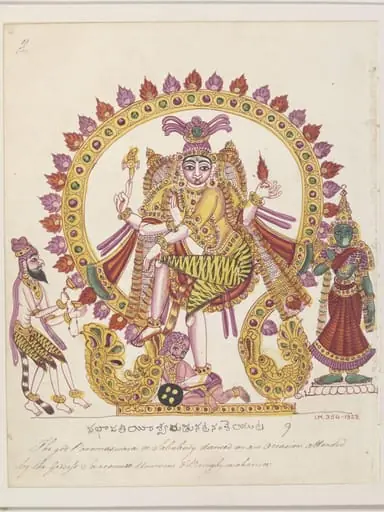 Nataraja (Shiva as lord of the dance)
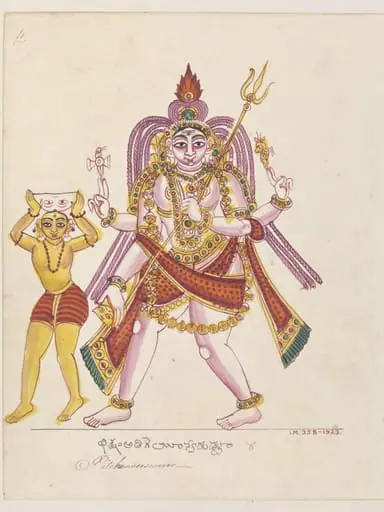 Shiva in his form as Bichandi or Bhikshatana
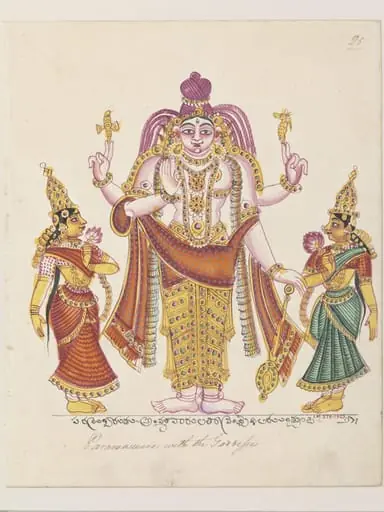 Harihara attended by Parvati and Lakshmi
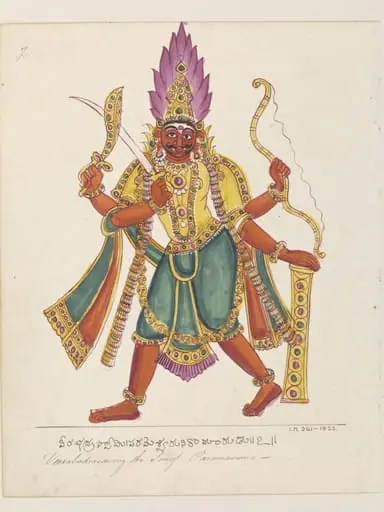 Virabhadra, the son of Shiva.
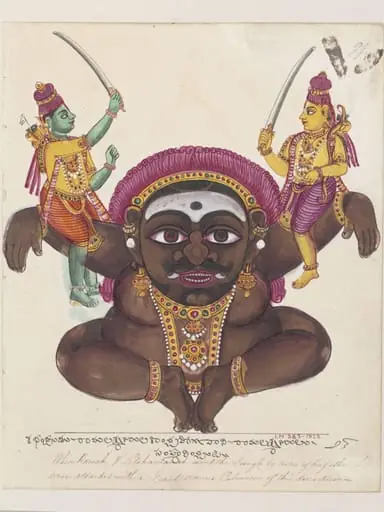 The rakshasa Kabandha supporting Rama and Lakshmana on his arms.
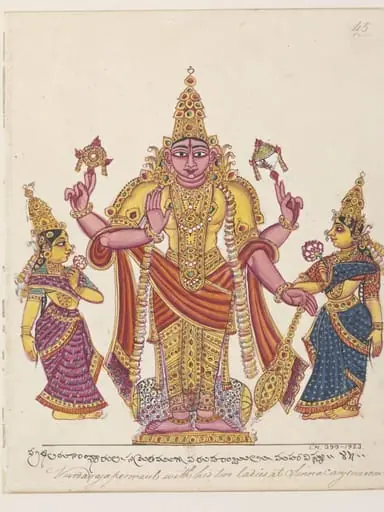 Vishnu as Varadarajaswami with his two 'shaktis', Shri Devi and Bhumi Devi.
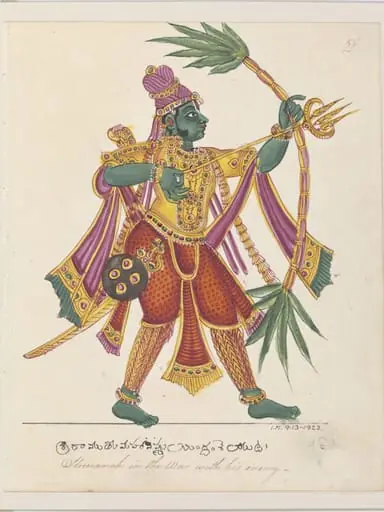 A green-skinned warrior