Artwork
Oală de formă bitronconică cu buza evazată și cu o toartă. Decorată cu ornamente în formă de semicercuri dispuse în jurul gâtului. Este smălțuită pe toată suprafața exterioară. Cromatică: fond: cărămiziu; motive: galben.
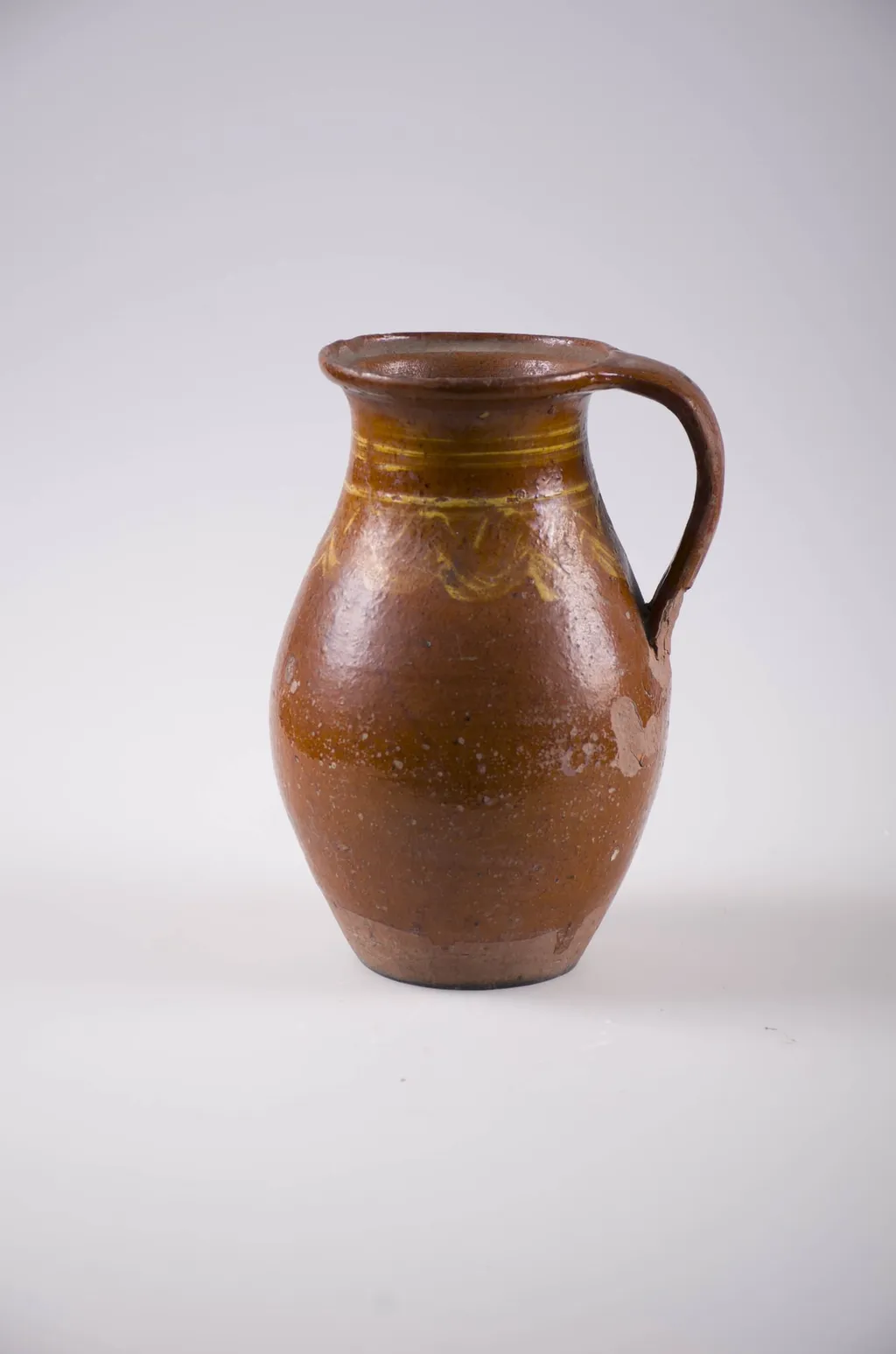
Oală de formă bitronconică cu buza evazată și cu o toartă. Decorată cu ornamente în formă de semicercuri dispuse în jurul gâtului. Este smălțuită pe toată suprafața exterioară. Cromatică: fond: cărămiziu; motive: galben. is a photography by Unknown. It dates from 1850 and is held in the collection of the ASTRA National Museum Complex. This ceramic vessel features a double-conical form with a flared rim and a single handle.
About this work
Overview
The glaze gives the object a uniform, slightly reflective finish, suggesting intentional surface treatment for both durability and aesthetic effect.
This ceramic vessel features a double-conical form with a flared rim and a single handle. Its entire exterior is coated in a smooth, glossy glaze, enhancing its tactile and visual presence. The surface exhibits a muted reddish-brown base tone, with decorative elements rendered in a pale yellow. The glaze gives the object a uniform, slightly reflective finish, suggesting intentional surface treatment for both durability and aesthetic effect.
Subject & Meaning
The decoration consists of repeated semicircular motifs arranged in bands around the neck. These patterns lack figural representation, indicating a preference for abstract, geometric ornamentation. Their placement near the vessel’s opening may imply symbolic association with containment, circulation, or ritual use, though no explicit narrative or religious meaning is discernible from the design alone.
Technique & Style
The vessel was formed from coarse clay and shaped by hand or on a slow wheel, evidenced by subtle irregularities in its form. The semicircular patterns were likely applied with a stamp or carved tool before glazing. The glaze, applied evenly across the surface, was fired to achieve a consistent sheen. The color contrast between the reddish body and yellow decoration reflects limited pigment availability and deliberate chromatic restraint.
History & Provenance
No documented excavation context or origin is provided. The form and decoration align with regional ceramic traditions from the late Neolithic to early Bronze Age in Southeastern Europe. Similar glazed vessels appear in archaeological reports from the Carpathian Basin and the Balkans, suggesting shared technological knowledge across dispersed communities during the 3rd to 2nd millennium BCE.
Context
This pitcher belongs to a broader category of utilitarian ceramics that transitioned from purely functional objects to items bearing decorative elements. Its glazing indicates access to kiln technology capable of reaching high temperatures. The presence of ornamentation on a storage or serving vessel suggests that aesthetic consideration was integrated into daily life, possibly reflecting social status or communal identity.
Legacy
The vessel exemplifies early experimentation with surface treatment in prehistoric pottery. Its semicircular motifs recur in later regional ceramics, indicating a persistent visual language. Though not part of a major artistic tradition, it contributes to understanding how early societies encoded meaning through form and decoration, laying groundwork for more complex ceramic systems in subsequent periods.
Artist & collection

 Domestic Scene
 Giacomo and Cardinal Marco, investing Andrea, Abbot of San Zeno, with his Benefice
 The Nymph of Fontainebleau
 Portrait of a Woman
 Madonna and Child with Saints in the Enclosed Garden
 Venus and Minerva
 Family Group of Four on Sofa
 Wall painting from Room H of the Villa of P. Fannius Synistor at Boscoreale
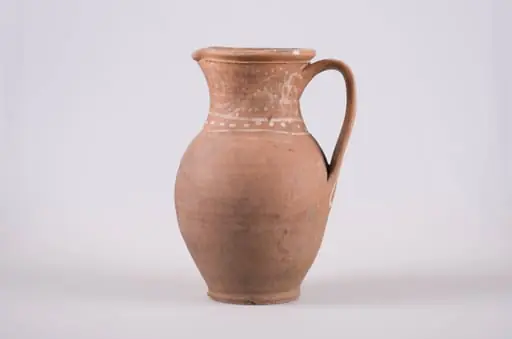 Recipient sferoidal cu gura largă și cioc. Prezintă toartă laterală. Decorul este floral și geometric pe toată suprafața gâtului format din linii, puncte, spirale. Decorat și pe toartă cu o linie de jur împrejur, iar pe buza vasului format din puncte. Cromatică: fond: cărămiziu; motive: alb.
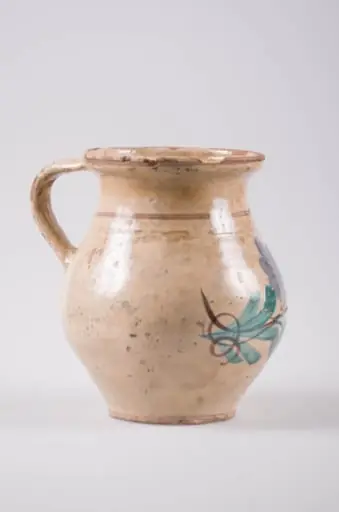 Oală de formă bitronconică de culoare bej. Decorul este reprezentat de motive florale: floarea este încadrată de linii albe realizate cu degetul; motive vegetale, motive geometrice: în partea superioară decorație circulară, linii. Prezintă toartă curbată. Smălțuită. Cromatică: fond: bej; motive: verde; albastru; maroniu.
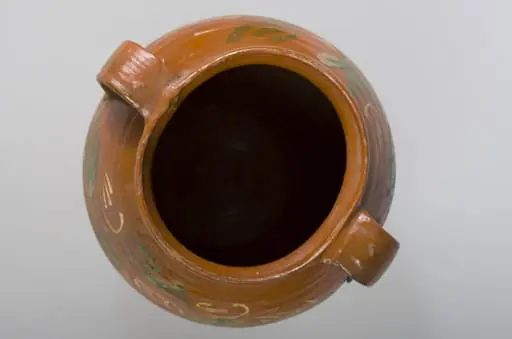 Vas de formă bitronconică, cu gât scurt cu buză rotunjită și evazată. Oala este smălțuită interior și pe 2/3 din exterior. Prezintă două toarte late ce unesc buza vasului de zona diametrului maxim. Decorații în registru floral-vegetal, dispuse concentric, în partea superioară a vasului, compuse din linii ondulate și palmate. Cromatică: fond: cărămiziu; motive: alb, verde.
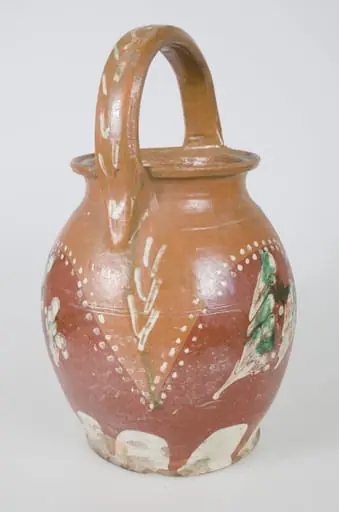 Vas smălțuit de formă ovoidală, bombat la mijloc, gât scurt cu buza dreaptă și evazată. Prevăzut cu o toartă semicirculară care pornește din buză, peste gură, și se prinde diametral opus (mănușar). Pe toartă este prezent motivul bradului realizat din linii albe unite în forma literei ”V”, înșiruite una după alta. Pe corpul vasului se găsesc trei registre circulare convexe, conturate cu câte două șiruri de puncte albe. În interiorul registrelor sunt decorații cu motive florale-vegetale stilizate. Între registre se găsesc câte trei decorații cu motivul bradului. La bază este conturat cu un șir de semicerucri pline. Cromatică: fond: cărămiziu; motive: brun; verde; alb.
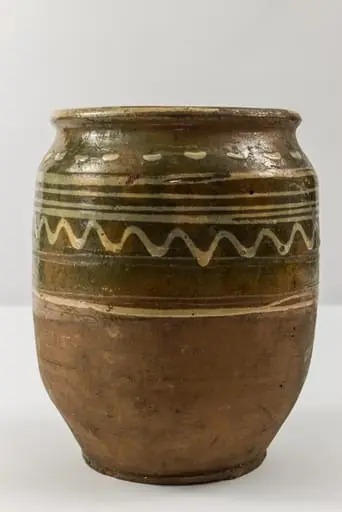 Piesă din lut modelat la roată, smălțuită în interior și parțial în exterior, de formă aproape cilindrică, cu pereții ușor îngustați spre bază, cu gură ușor răsfrântă. Decorul vasului este dispus pe suprafața exterioară, de la mijloc în sus, astfel: o dungă albă, un registru cu motivul valul, un grup de cinci cercuri concentrice, un registru cu motive liniare și punctiforme. Cromatică: maro, ocru, verde, alb.
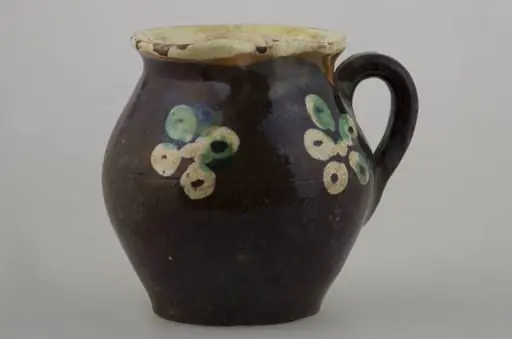 Vas de lut de mici dimensiuni de formă bitronconică și cu cioc de scurgere a apei la partea superioară cu gât scurt și buza evazată. Prevăzută cu o toartă care pornește de pe umărul vasului și se unește cu corpul sub diametrul maxim. Smălțuită în interior și exterior. În jumătatea superioară este decorată de o parte și de alta a torții cu motive florale: flori cu patru respectiv cinci petale. Toarta este decorată cu o linie albă. Cromatică: interior: alb; exterior: maro; motive: alb; verde.