Artwork
One of seventeen mica paintings depicting Hindu deities.
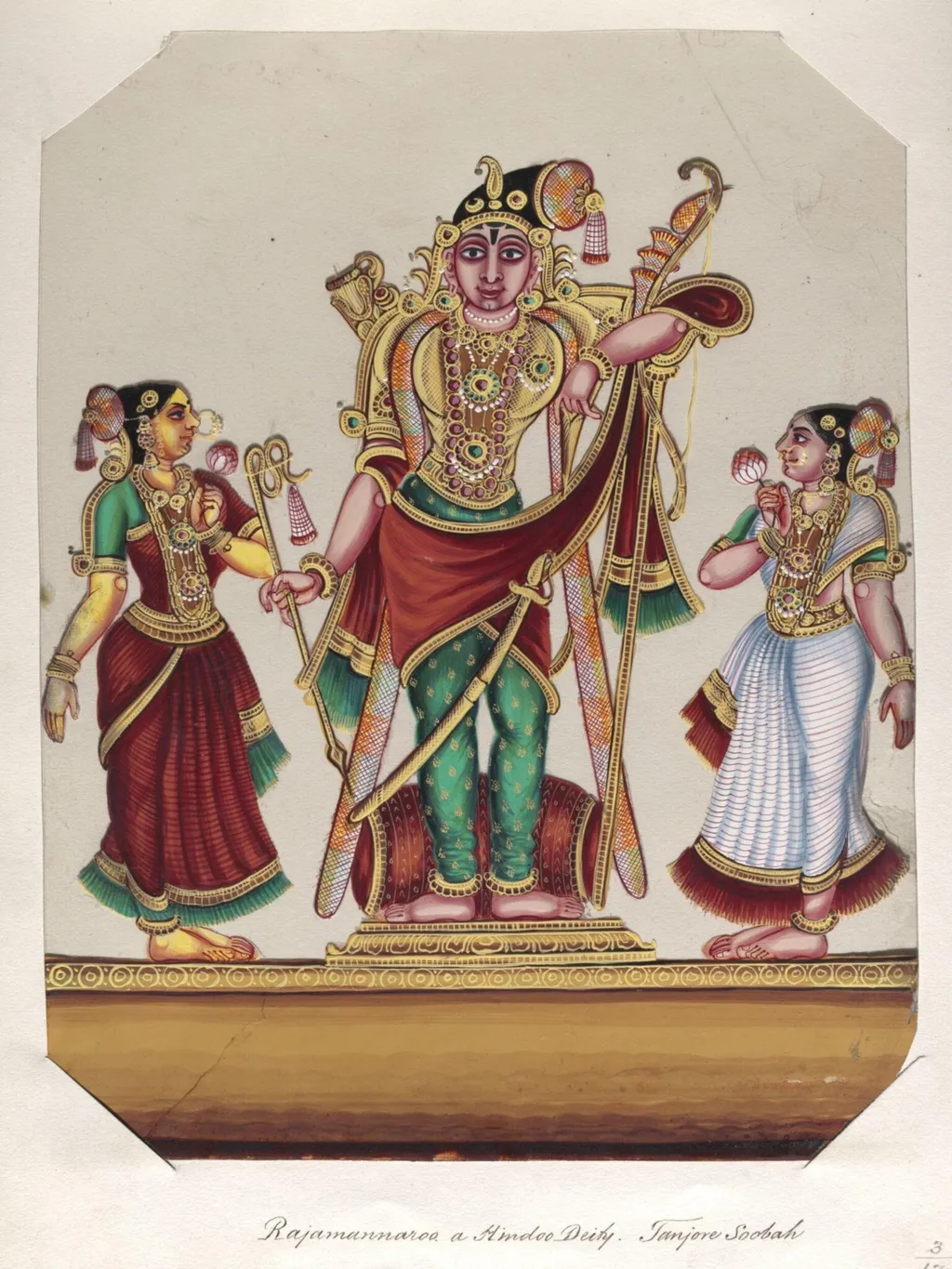
One of seventeen mica paintings depicting Hindu deities. is a paint painting by the Patna School of Painting artist Unknown. It dates from 1850 and is held in the collection of the Victoria and Albert Museum. This work is one of seventeen mica-based devotional paintings produced around 1850, likely in South India.
About this work
Overview
The medium—thin sheets of mica—allowed for delicate, translucent layers of pigment, enhancing the luminous quality of the figures.
This work is one of seventeen mica-based devotional paintings produced around 1850, likely in South India. Created by an unidentified artist, the series was intended for private worship or ritual use. The medium—thin sheets of mica—allowed for delicate, translucent layers of pigment, enhancing the luminous quality of the figures. Each painting in the set portrays a distinct deity, with this example centered on a prominent divine figure flanked by attendants.
Subject & Meaning
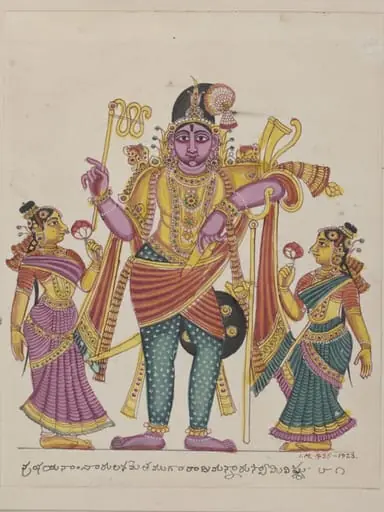
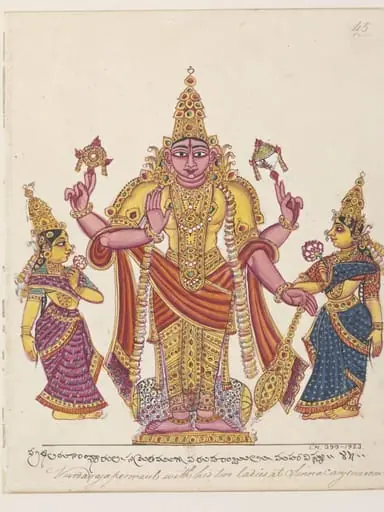
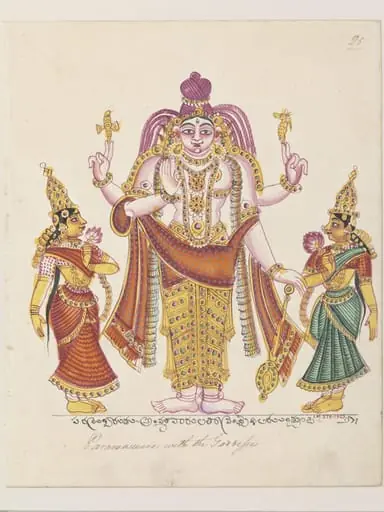
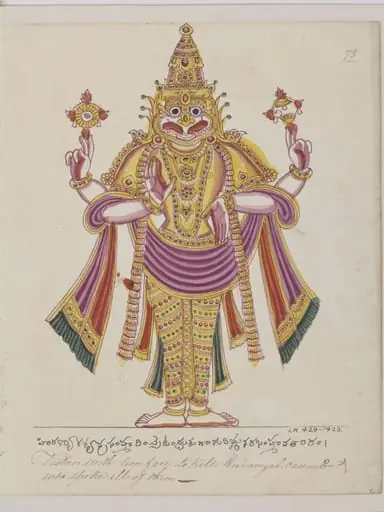
The central figure, identified as Venkatachellapathy, is depicted with regal attributes: a gold-and-jewel chest plate, vibrant green and red garments, a curved staff, and a ceremonial fan. These symbols denote divine authority and protective power. The two flanking figures, dressed in ornate robes, appear as attendants or lesser deities, their calm expressions and modest gestures reinforcing the central figure’s spiritual supremacy. The composition reflects a hierarchical cosmology, emphasizing reverence and order.
Technique & Style
The artist applied pigments to thin mica sheets, a technique that produced a shimmering, semi-translucent effect. Details were rendered with fine brushwork, particularly in the intricate gold patterning and jewelry. The figures are rendered in flat, frontal poses with minimal depth, focusing attention on symbolic elements rather than naturalism. The plain background eliminates distraction, heightening the ritual function of the image and aligning with devotional painting traditions of the region.
History & Provenance
The seventeen mica paintings were likely commissioned for a temple or wealthy household in the Tamil Nadu region during the mid-19th century. Their survival suggests they were carefully preserved, possibly within a devotional context. While the artist’s identity remains unknown, the consistent style and materials across the set indicate a workshop tradition. Their current whereabouts reflect colonial-era collection practices, though their original ritual use is better understood than their post-production journey.
Context
These paintings emerged during a period of cultural continuity under British colonial rule, when traditional religious art persisted despite shifting political landscapes. Mica paintings were part of a broader South Indian practice of creating portable devotional images, often used in home shrines or processions. The emphasis on symbolic dress and frontal composition aligns with centuries-old iconographic conventions, demonstrating resilience of local artistic forms amid external influences.
Legacy
The series remains a rare surviving example of 19th-century mica painting, offering insight into regional devotional aesthetics. While not widely known outside specialized circles, these works contribute to the understanding of how Hindu iconography was visually sustained in everyday religious life. Their preservation highlights the value placed on intimate, handcrafted sacred objects, contrasting with larger temple sculptures or murals typically studied in art history.
Artist & collection

 Domestic Scene
 Giacomo and Cardinal Marco, investing Andrea, Abbot of San Zeno, with his Benefice
 The Nymph of Fontainebleau
 Portrait of a Woman
 Madonna and Child with Saints in the Enclosed Garden
 Venus and Minerva
 Family Group of Four on Sofa
 Wall painting from Room H of the Villa of P. Fannius Synistor at Boscoreale