Artwork
One of sixteen paintings of South Indian temples.
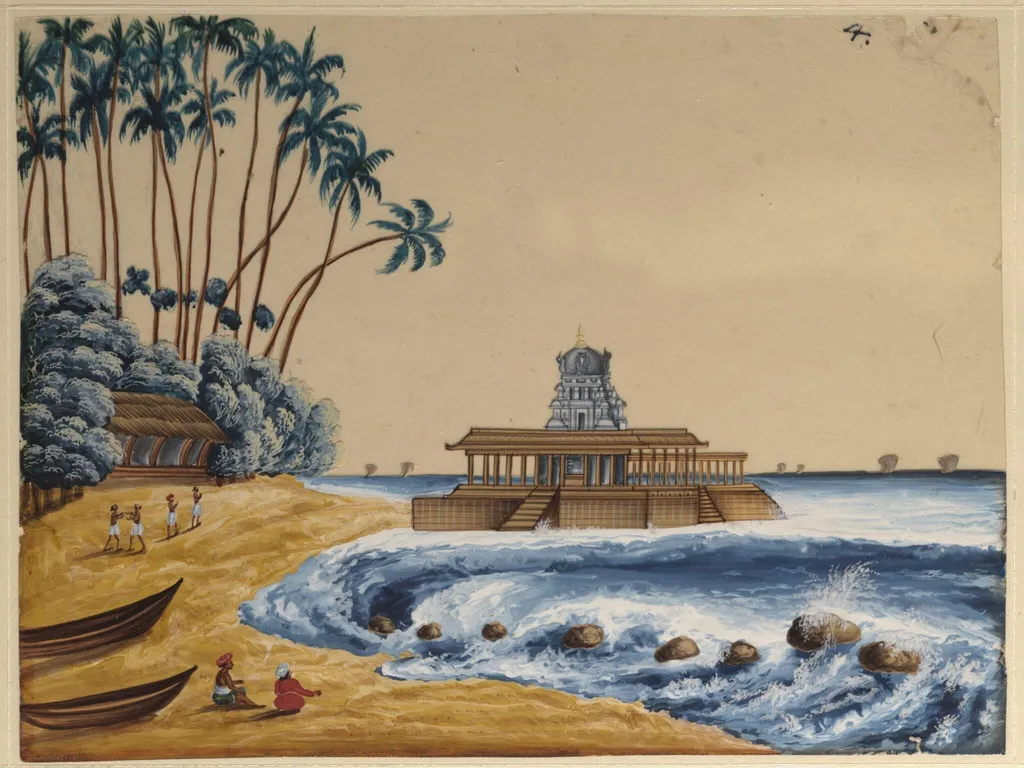
One of sixteen paintings of South Indian temples. is a paint painting by the Patna School of Painting artist Unknown. It dates from 1860 and is held in the collection of the Victoria and Albert Museum. This work is one of sixteen paintings produced in 1860 that document South Indian temple architecture.
About this work
Overview
The series as a whole serves as a visual record of sacred sites during a period of increasing colonial interest in Indian cultural heritage.
This work is one of sixteen paintings produced in 1860 that document South Indian temple architecture. Each piece in the series captures a distinct religious structure, emphasizing their physical presence within the landscape. The Rameshwaram Temple is rendered with careful observation, reflecting a documentary intent rather than idealized representation. The series as a whole serves as a visual record of sacred sites during a period of increasing colonial interest in Indian cultural heritage.
Subject & Meaning
The painting centers on the Rameshwaram Temple, a significant pilgrimage site dedicated to Shiva, situated near the coast. The composition positions the temple as both spiritual focal point and architectural anchor amid natural elements. Figures in the foreground engage in daily routines, suggesting the temple’s role in community life. The inclusion of a boat and water implies the temple’s relationship with the sea, reinforcing its mythological and geographic significance in Hindu tradition.
Technique & Style
The artist employs a precise, observational approach with muted yet harmonious tones to convey atmosphere. Layers of pigment build subtle depth, guiding the viewer’s gaze from the foreground activities toward the temple’s elevated structure. Details in foliage, architecture, and clothing are rendered with deliberation, indicating a methodical technique. The composition avoids dramatic contrast, favoring quiet balance and spatial clarity, characteristic of topographical illustration rather than romanticized landscape.
History & Provenance
Created in 1860, the series was likely commissioned or undertaken during British colonial administration in India, when systematic documentation of local monuments was common. These works may have been produced by Indian artists working under European patronage or influence, blending indigenous visual conventions with Western observational norms. The paintings were probably intended for archival or educational use, though their exact original ownership remains undocumented.
Context
In the mid-19th century, European and colonial institutions increasingly sought to catalog India’s architectural heritage. This series aligns with broader efforts to record religious sites, often for administrative or scholarly purposes. While Western art movements like Impressionism were emerging in Europe, this work reflects a different tradition—one rooted in ethnographic accuracy rather than aesthetic innovation. It stands as part of a non-Western response to colonial documentation practices.
Legacy
The series contributes to the historical record of South Indian temple architecture at a time of transition. Though not widely exhibited in major art institutions, these works remain valuable for scholars studying colonial-era visual culture and regional religious geography. Their quiet precision offers insight into how sacred spaces were perceived and recorded by artists navigating cross-cultural expectations, preserving details that might otherwise have been lost to time.
Artist & collection

 Domestic Scene
 Giacomo and Cardinal Marco, investing Andrea, Abbot of San Zeno, with his Benefice
 The Nymph of Fontainebleau
 Portrait of a Woman
 Madonna and Child with Saints in the Enclosed Garden
 Venus and Minerva
 Family Group of Four on Sofa
 Wall painting from Room H of the Villa of P. Fannius Synistor at Boscoreale
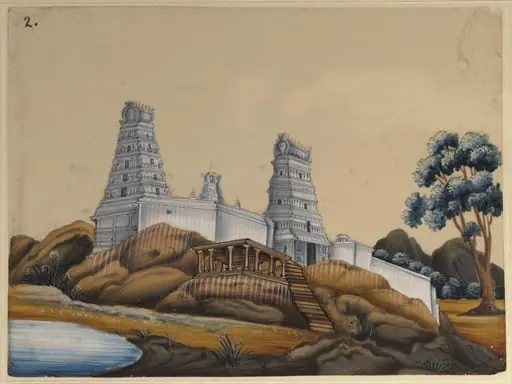 One of sixteen paintings of unidentified South Indian temples.
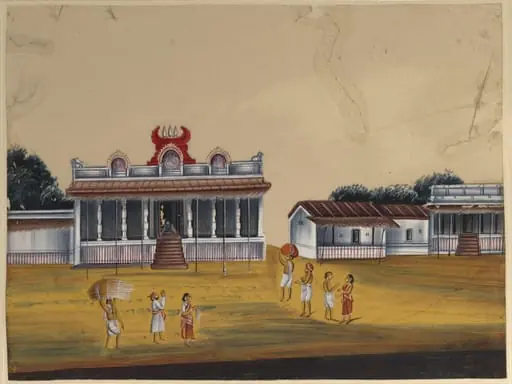 One of eight paintings of unidentified Hindu temples in South India
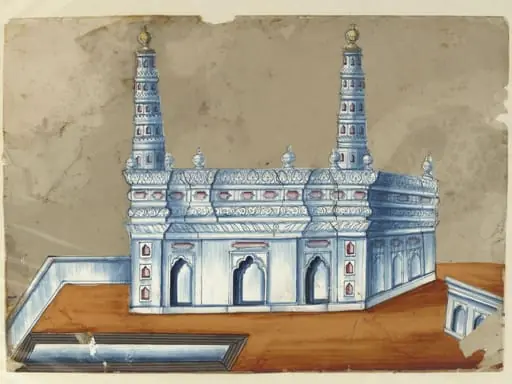 One of seven paintings of unidentified Muslim buildings in South India.
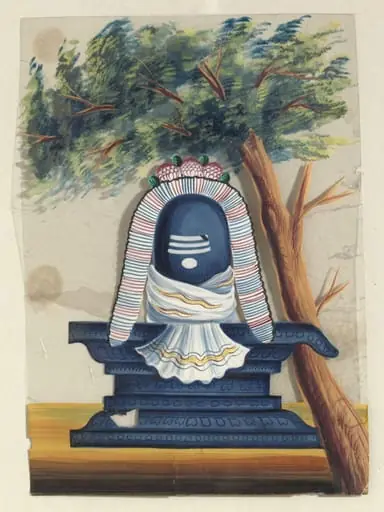 One of three paintings of Hindu deities.
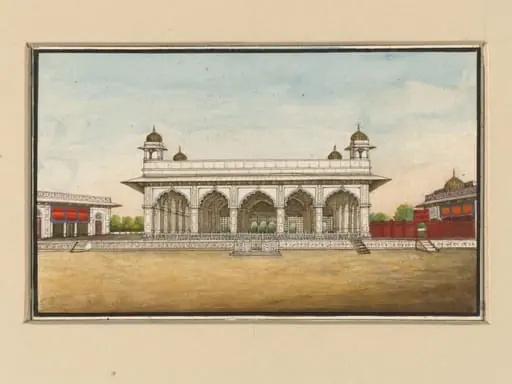 One of four drawings of Mughal architecture.
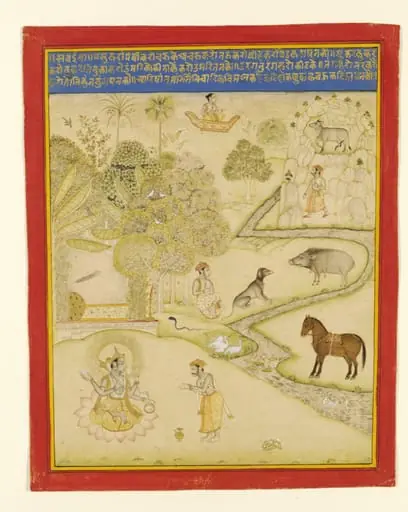 Maharana Amar Singh of Mewar