Artwork
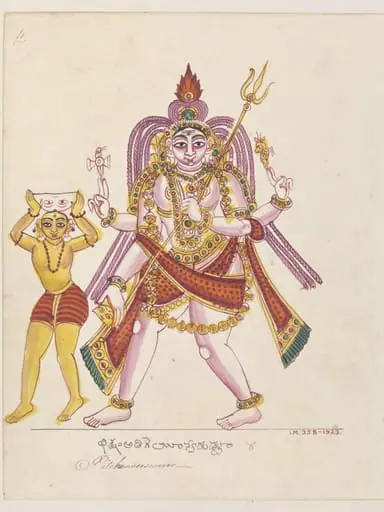
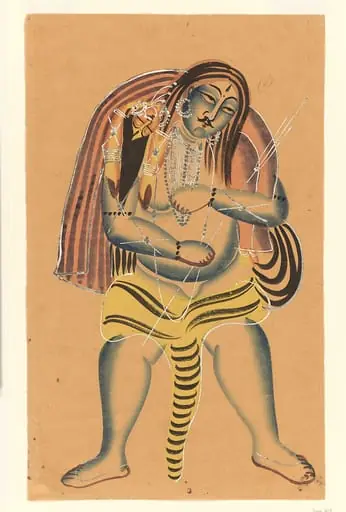
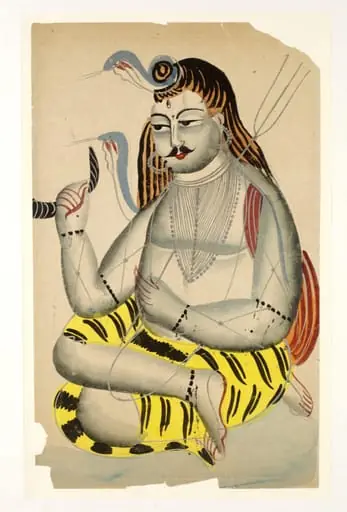
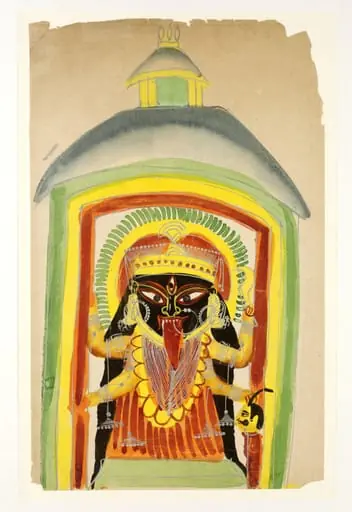
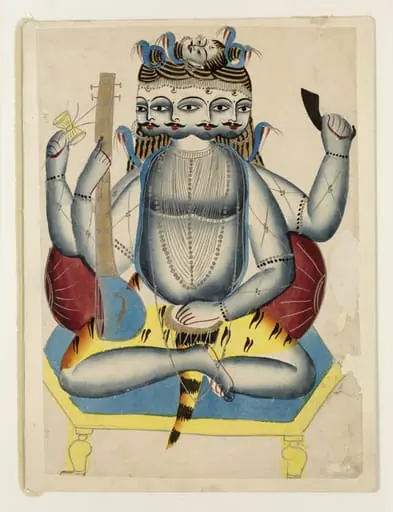
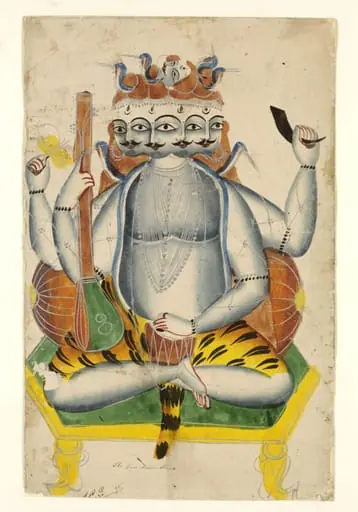
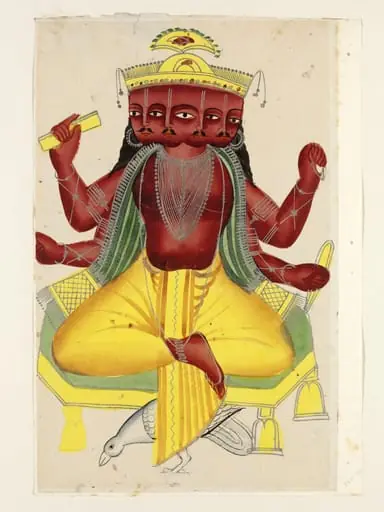
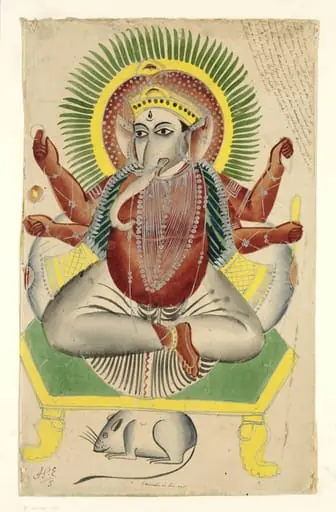
One of three paintings of Hindu deities.
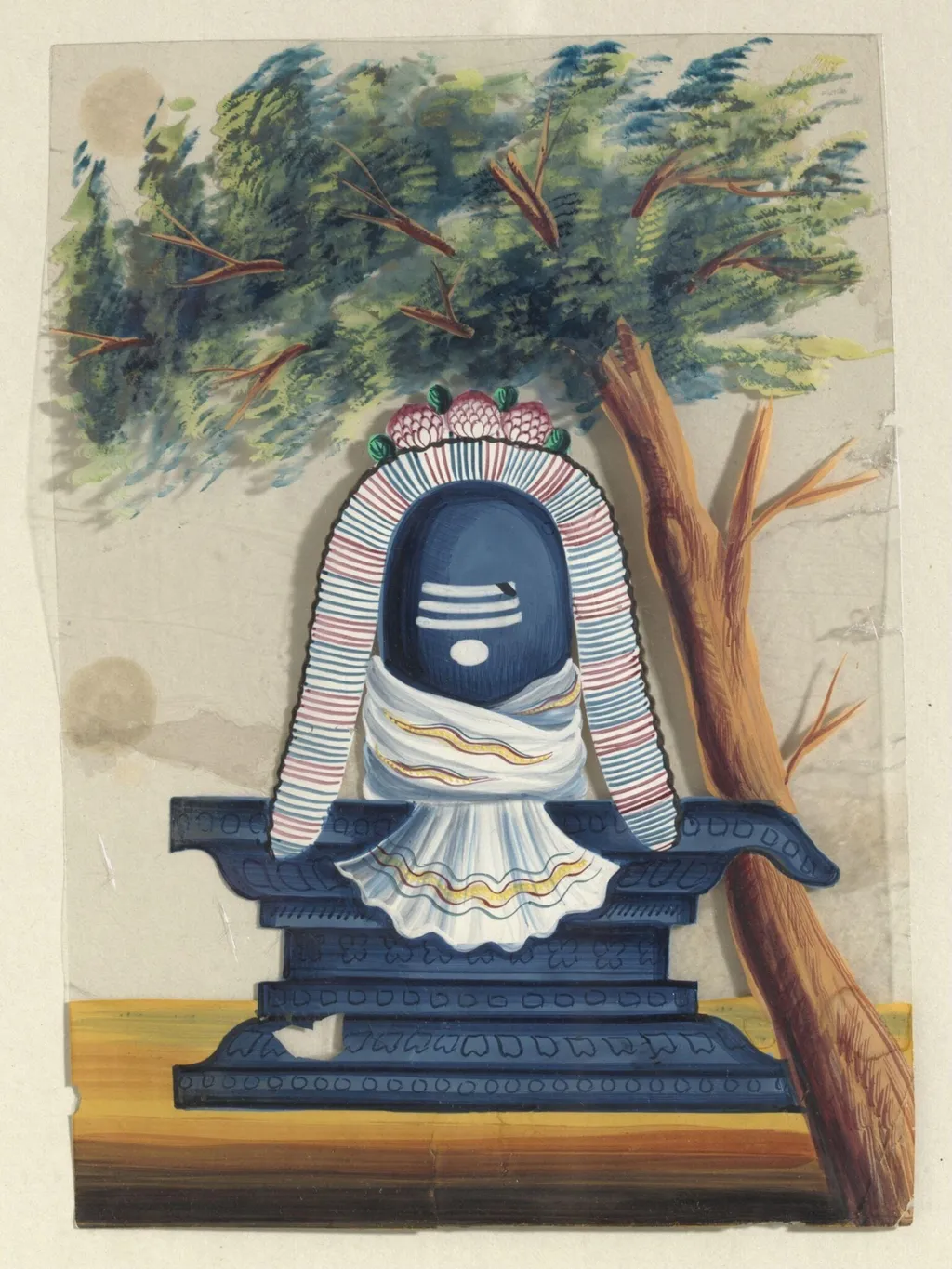
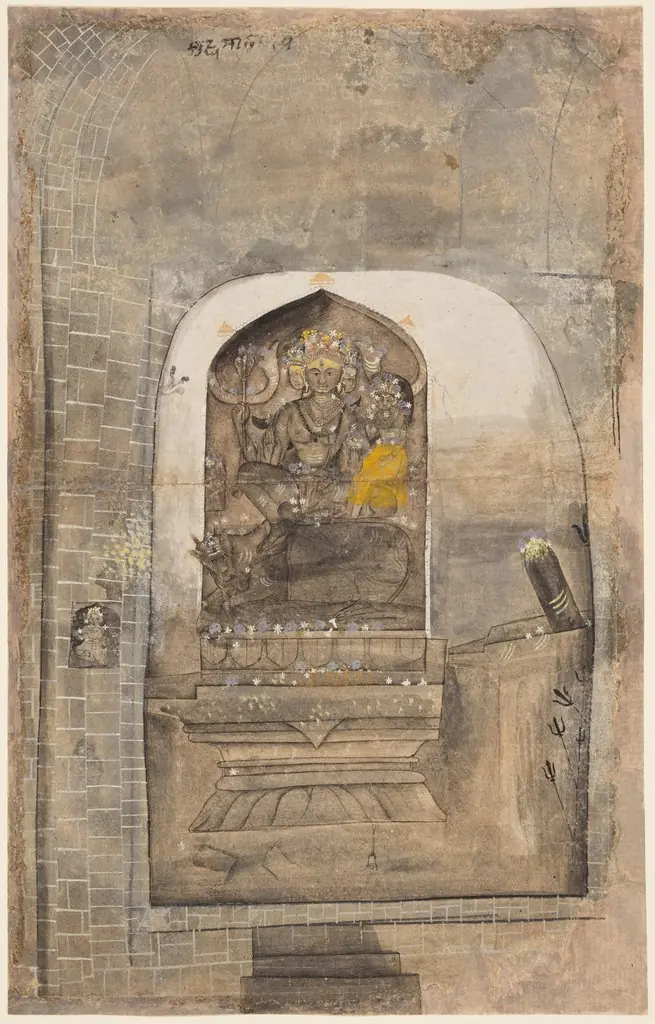
One of three paintings of Hindu deities. is a paint painting by the Patna School of Painting artist Unknown. It dates from 1850 and is held in the collection of the Victoria and Albert Museum. The work is a painted representation of a Hindu religious symbol, the Shiva lingam, rendered on a flat surface.
About this work
Overview
The lingam rests on a similarly colored pedestal, while the surrounding scene includes a leafy tree and a muted floor of yellow and brown tones.
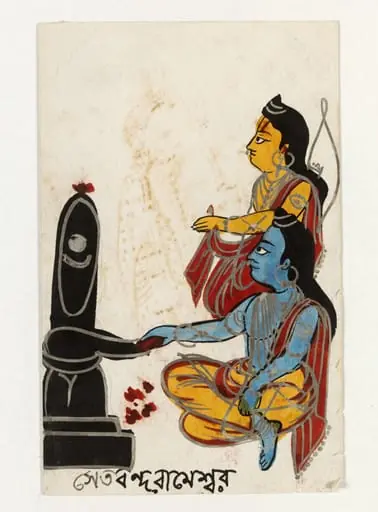
The work is a painted representation of a Hindu religious symbol, the Shiva lingam, rendered on a flat surface. The central motif is a dark‑blue oval form marked by three horizontal white bands and a central white spot, draped in a white cloth patterned with yellow and blue stripes. The lingam rests on a similarly colored pedestal, while the surrounding scene includes a leafy tree and a muted floor of yellow and brown tones.
Subject & Meaning
The lingam functions as an abstracted emblem of the deity Shiva, embodying concepts of creation, destruction, and regeneration within Hindu theology. The three white bands may allude to the triadic aspects of existence—creation, preservation, dissolution—while the central dot suggests the focal point of divine consciousness. The surrounding natural elements reinforce the connection between the divine and the earthly realm, inviting contemplation.
Technique & Style
Executed in a realistic manner, the painting emphasizes precise rendering of texture and surface. The artist employs a restrained palette dominated by muted blues, greens, and earthy browns, allowing subtle tonal variations to convey volume. Delicate brushwork defines the cloth’s striped pattern and the foliage’s leaves, while the smooth finish of the lingam contrasts with the rougher tree bark, enhancing the work’s contemplative atmosphere.
History & Provenance
Identified as one of a trio of similar paintings, the piece likely originated within a tradition of devotional art intended for private worship or temple display. Its exact date and creator remain undocumented, but the stylistic consistency with the other two works suggests a common workshop or patronage context, possibly linked to regional artistic production in northern India during the late 19th to early 20th century.
Artist & collection

 Domestic Scene
 Giacomo and Cardinal Marco, investing Andrea, Abbot of San Zeno, with his Benefice
 The Nymph of Fontainebleau
 Portrait of a Woman
 Madonna and Child with Saints in the Enclosed Garden
 Venus and Minerva
 Family Group of Four on Sofa
 Wall painting from Room H of the Villa of P. Fannius Synistor at Boscoreale