Artwork
One of Thirty-two paintings depicting festivals, ceremonies and occupations.
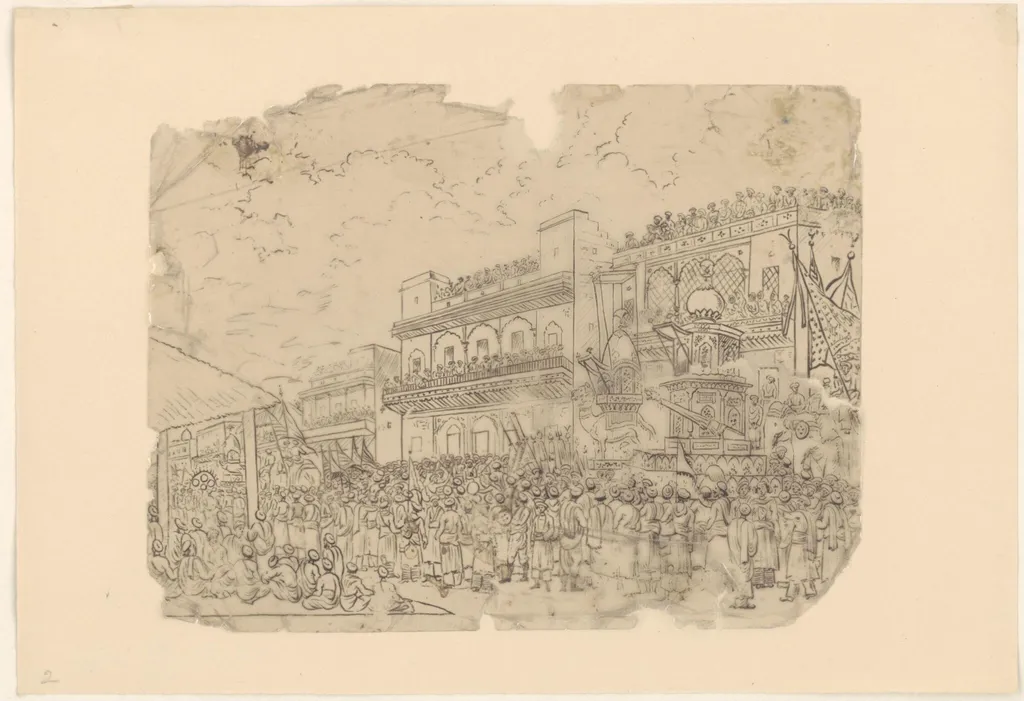
One of Thirty-two paintings depicting festivals, ceremonies and occupations. is a gouache painting by the Patna School of Painting artist Unknown. It dates from 1800 and is held in the collection of the Victoria and Albert Museum. The work is a gouache painting executed on a dark mica sheet, forming part of a series of thirty‑two similar panels.
About this work
Overview
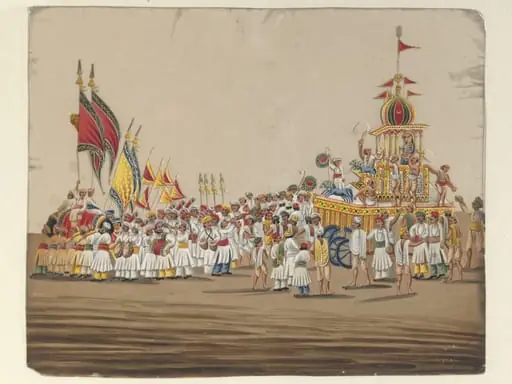
The work is a gouache painting executed on a dark mica sheet, forming part of a series of thirty‑two similar panels. It captures a bustling urban scene where spectators line balconies and rooftops, observing a procession associated with the Islamic month of Muharram.
Subject & Meaning
The depicted parade features elephants and camels bearing small shrine‑like structures known as ta’ziyas, which are traditionally used in Muharram commemorations. The composition emphasizes communal participation, illustrating how public ritual engages both street‑level onlookers and those observing from elevated positions.
Technique & Style
Applied with thin, layered washes of gouache, the artist exploits the glossy, opaque qualities of the medium to achieve bold, flat areas of colour against the dark mica background. The layering creates subtle tonal variations while maintaining a clear, graphic outline of figures and architecture.
History & Provenance
Created as one of a set of thirty‑two mica panels, the painting likely originated in a workshop that produced series illustrating various festivals, ceremonies and occupations. The series was intended for decorative or instructional purposes, though specific patronage details remain undocumented.
Context
Muharrah processions, especially those involving ta’ziyas, have long been a visual staple in South Asian Islamic culture, symbolising mourning and remembrance. The inclusion of elephants and camels reflects the ceremonial grandeur often associated with public religious observances in the region.
Legacy
The series offers valuable insight into historical visual representations of communal rituals, serving as a reference for scholars studying the interplay of art, religion, and urban life in the period when such mica‑based works were produced.
Artist & collection

 Domestic Scene
 Giacomo and Cardinal Marco, investing Andrea, Abbot of San Zeno, with his Benefice
 The Nymph of Fontainebleau
 Portrait of a Woman
 Madonna and Child with Saints in the Enclosed Garden
 Venus and Minerva
 Family Group of Four on Sofa
 Wall painting from Room H of the Villa of P. Fannius Synistor at Boscoreale
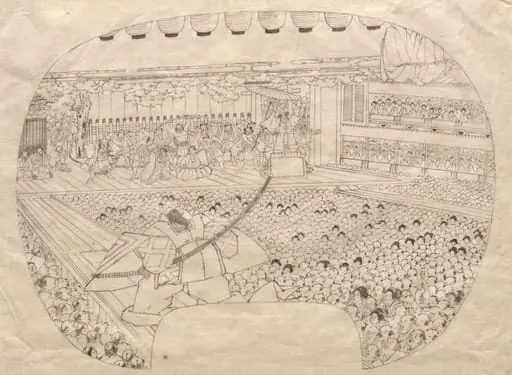 Design for Fan-shaped Print of Kabuki Theater
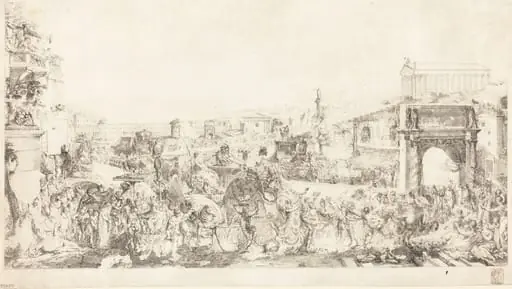 Triomphe de Pompee dans Rome
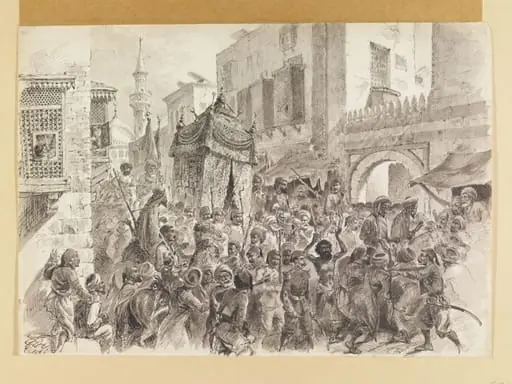 Return of the Mahmal from Mecca
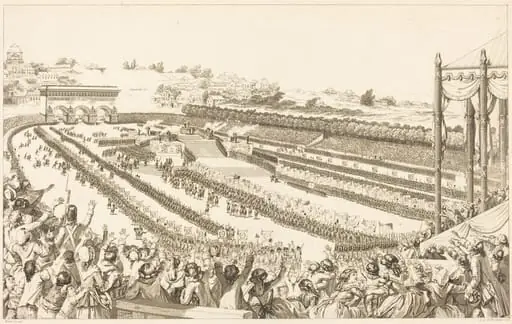 Fédération Générale de Français, au Champ de Mars, le 14 Juillet 1790
 Gateway out of main Street leading up to grand Temple
 Outside the walls of Sétif, Algeria
 Untitled
 A Procession of the Madonna di San Luca
 Oberbaum-Brucke, Berlin
 The Court of the Lions, Alhambra
 Part of the old fort: the mosque in the chowk and gate of the Great Katra, Dhaka (Dacca)
 One of two drawings depicting procession scenes in Patna.