Artwork
Guafu
Guafu is a photography by the Romanticist artist Unknown. It dates from 1801. This photographic portrait, dated 1801, is among the earliest surviving images produced using photographic processes.
About this work
The photo feels old and fragile, like a glass plate might shatter if you touch it.
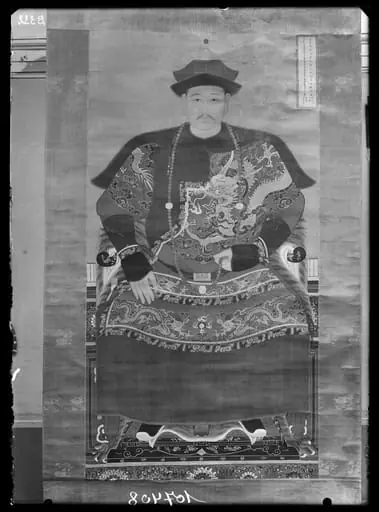
This photo shows a man in a dark suit with a white shirt and dark bow tie. His face is sharp and clear against the soft blur of the background. He looks right at the camera with a calm stare.
No one knows who took this picture. It was made in 1801, long before most people had cameras. The photo feels old and fragile, like a glass plate might shatter if you touch it.
It lives at the Museum of Ethnography.
Overview
This photographic portrait, dated 1801, is among the earliest surviving images produced using photographic processes. Though the maker remains unidentified, the image captures a man in formal attire with striking clarity against a softly blurred background. It is held in the collection of the Museum of Ethnography, where its fragile condition suggests the use of early glass plate technology.
Subject & Meaning
The subject is a man dressed in a dark suit, white shirt, and dark bow tie, his gaze direct and composed. His formal attire implies social standing, yet no identity or context has been documented. The stillness of his expression and the precision of his features suggest an intention to convey dignity, possibly for personal or familial preservation in an era when portraiture was rare and costly.
Technique & Style
The image exhibits the high contrast and fine detail characteristic of early photographic methods, likely a daguerreotype or similar process. The sharp focus on the subject contrasts with the blurred background, demonstrating an early understanding of depth and composition. The fragile, glass-based support indicates the technical limitations and delicate nature of photographic materials at the time.
History & Provenance
Created in 1801, the image predates the widespread availability of photographic equipment. Its survival is exceptional, given the perishable nature of early photographic media. It entered the collection of the Museum of Ethnography without documented provenance, and its origin, including the photographer and sitter, remains unknown.
Context
In 1801, photography had not yet been formally invented; this image may represent an experimental or pre-daguerreotype attempt. Portraits were typically painted, making this photograph an unusual artifact. Its existence suggests that individuals or artisans were exploring light-sensitive materials before the medium became standardized in the 1830s.
Legacy
As one of the earliest known photographic portraits, this image serves as a rare witness to the dawn of visual documentation. It underscores the slow, uncertain emergence of photography as a practice, bridging the gap between painted portraiture and the later photographic revolution. Its preservation highlights the value placed on early visual records, even when their origins are lost.
Artist & collection
Artist