Artwork
Guafu: Laozi and two Taoist deities
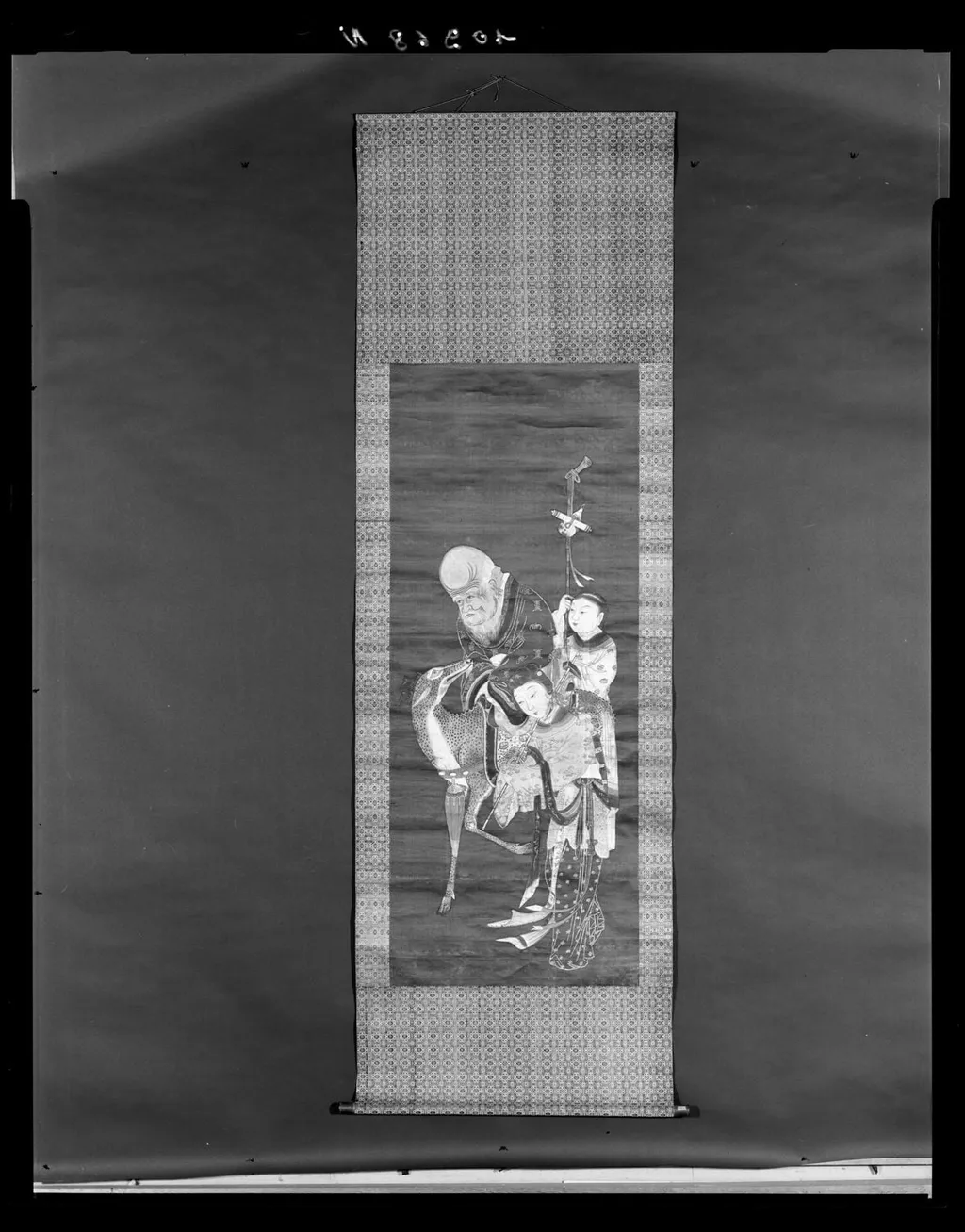
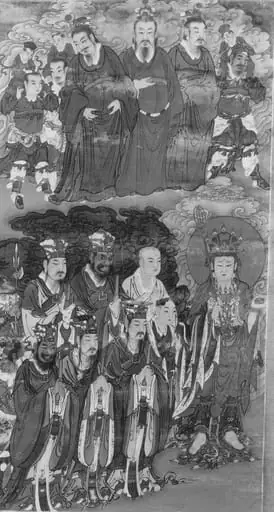
Guafu: Laozi and two Taoist deities is a photography by Unknown. The image depicts three figures seated together outdoors, captured in a composed, quiet arrangement.
About this work
Overview
The setting is simple, with natural light evenly illuminating their faces, reinforcing a sense of stillness and contemplation.
The image depicts three figures seated together outdoors, captured in a composed, quiet arrangement. All wear traditional robes, with subtle distinctions in color and detail suggesting differing roles. The setting is simple, with natural light evenly illuminating their faces, reinforcing a sense of stillness and contemplation. Though photographed, the scene mimics a painted composition, possibly intended as a study of Taoist iconography.
Subject & Meaning
The central figure, dressed plainly, is likely Laozi, the foundational sage of Taoism. Flanking him are two attendants or deities, their brighter robes and fans indicating ceremonial roles. The gesture of pointing forward may symbolize the direction of the Tao or the transmission of wisdom. The scene reflects a moment of quiet instruction, emphasizing harmony, humility, and the passive authority associated with Taoist thought.
Technique & Style
The photograph employs even lighting and a static composition to evoke the stillness of classical Chinese painting. The figures are arranged in a triangular formation, a common visual device in traditional depictions of sages. The use of costume and gesture, rather than elaborate background, directs focus to the interaction between the figures. The image’s staging suggests it was created for scholarly or ritual documentation rather than spontaneous capture.
History & Provenance
Held in the collection of the Royal Museum of Mariemont in Morlanwelz-Mariemont, the image is part of a broader ethnographic archive documenting religious and philosophical traditions in East Asia. It likely dates from the late 19th or early 20th century, a period when Western institutions systematically collected visual materials on non-Western cultures. Its origin as a photograph, rather than a painting, reflects evolving methods of cultural preservation.
Context
During the late Qing dynasty and early Republican era, Taoist imagery was frequently recorded by travelers and scholars seeking to document spiritual practices. This image aligns with similar ethnographic studies produced by institutions like the Museum of Ethnography, which aimed to preserve visual records of religious figures before modernization altered traditional customs. The photograph serves as a material witness to the persistence of Taoist symbolism in daily ritual life.
Legacy
As a photographic record of Taoist iconography, the image contributes to the scholarly understanding of how religious figures were visually represented beyond painted scrolls and temple murals. It reflects the transition from artistic tradition to documentary practice in the study of Eastern spirituality. Its preservation in a European museum underscores the global circulation of cultural imagery during the colonial era.
Artist & collection
Artist