Artwork
Fighting and gender scenes
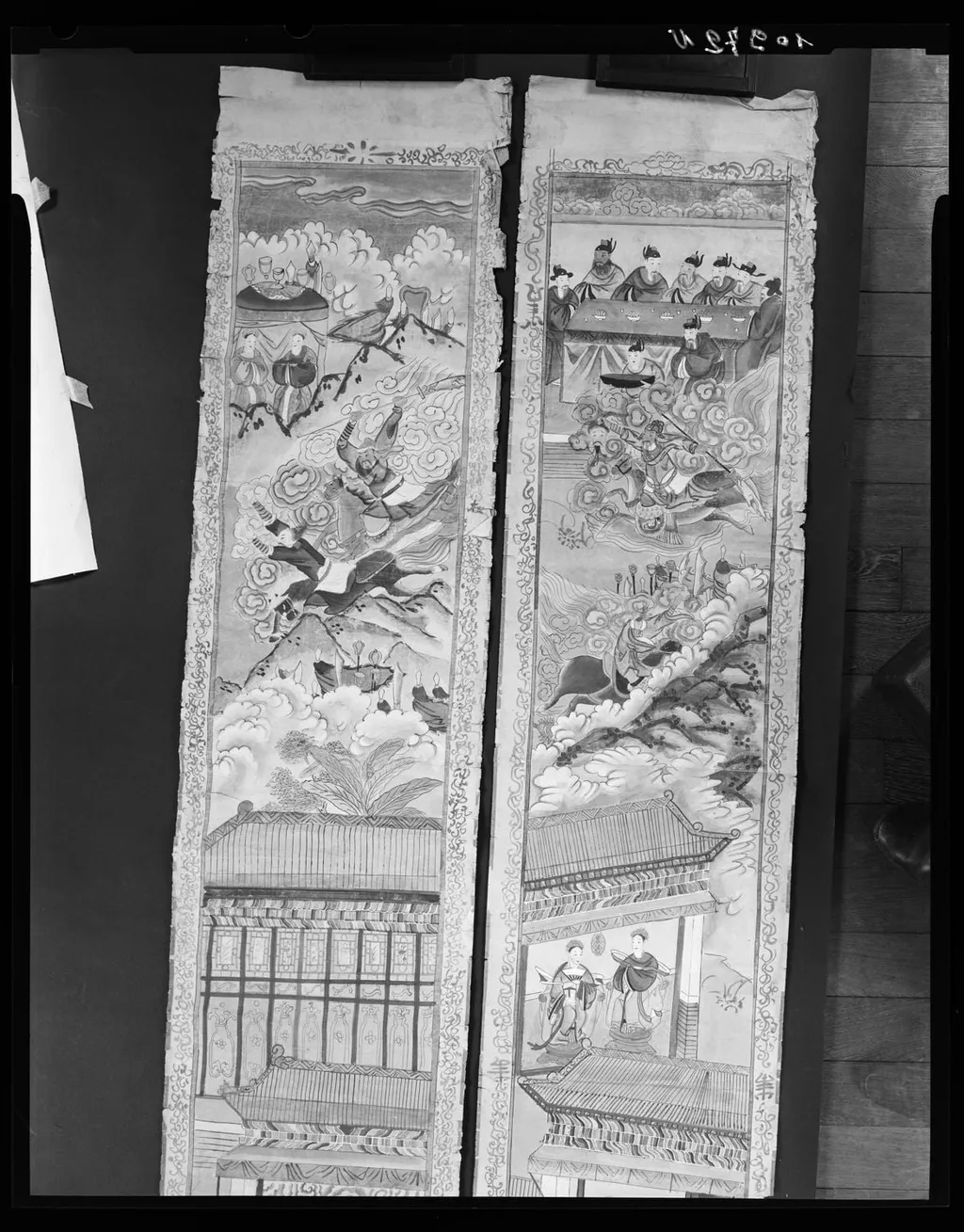
Fighting and gender scenes is a photography by the Romanticist artist Unknown. It dates from 1801.
About this work
That’s early for photos—most history books start photography in the 1830s.
This photo shows two men wrestling in a cluttered room. Their clothes are rumpled, boots kicked aside. A chair lies tipped over near a small table.
It was taken in 1801. That’s early for photos—most history books start photography in the 1830s. The blur around the men’s arms suggests the camera needed a long exposure. Someone kept it in a Belgian museum collection for over 200 years.
If you like gritty early photos, check out the Museum of Ethnography.
Overview
This image, dated 1801, is among the earliest known photographic attempts, predating the widely recognized advent of photography in the 1830s. Captured in a modest interior, it depicts two men engaged in physical struggle amid scattered furniture. The long exposure time is evident in the motion blur of their limbs, revealing the technical limitations of early light-sensitive processes. The photograph has remained in the collection of the Royal Museum of Mariemont for more than two centuries.
Subject & Meaning
The scene portrays an informal, possibly spontaneous bout of wrestling between two men, their clothing disheveled and footwear discarded. The setting suggests a private or domestic space rather than a formal arena. The lack of theatricality implies a candid moment, perhaps documenting physical contest as part of everyday life. No clear narrative or symbolic intent is apparent beyond the raw physicality of the interaction.
Technique & Style
The image was produced using an early photographic process requiring extended exposure, likely with a camera obscura and light-sensitive materials. The blurred motion of the wrestlers’ arms and the soft focus of surrounding objects reflect the limitations of slow emulsions. Composition is unstructured, with no attempt to frame or idealize the subjects. The result is a raw, unpolished record of light and movement, characteristic of experimental early photography.
History & Provenance
The photograph has been held in the Royal Museum of Mariemont’s collection since at least the early 19th century, preserved through multiple institutional transitions. Its survival is unusual, given the fragility of early photographic materials and the rarity of such images from this period. No record of the photographer or original owner has been established, but its continuous presence in a Belgian public collection underscores its historical value as a rare artifact.
Context
In 1801, photography as a defined technology did not yet exist; chemical image capture was still in experimental stages. Similar attempts were being made across Europe, often by amateur scientists or artists. This image aligns with broader efforts to fix images using silver salts or other light-sensitive compounds. Its existence challenges the conventional timeline of photographic history, suggesting more widespread, if undocumented, experimentation than previously acknowledged.
Legacy
As one of the earliest surviving photographic images, it contributes to the reevaluation of photography’s origins. It demonstrates that image-making with light-sensitive materials was being explored before Daguerre or Talbot’s formal announcements. The photograph’s endurance in a museum collection has allowed scholars to study early visual practices, offering insight into the material conditions and intentions behind pre-industrial photographic experiments.
Artist & collection
Artist