Artwork
Ratnasambhava, Akshobhya, Vairochana with attendants, Amitabha, and Amoghasiddhi, Top cover, from a Manuscript of the Perfection of Wisdom in Eight Thousand Lines (Ashtasahasrika Prajnaparamita-sutra)

Ratnasambhava, Akshobhya, Vairochana with attendants, Amitabha, and Amoghasiddhi, Top cover, from a Manuscript of the Perfection of Wisdom in Eight Thousand Lines (Ashtasahasrika Prajnaparamita-sutra) is an unspecified painting by Unknown. It dates from 14 and is held in the collection of the Cleveland Museum of Art. This painted cover once protected a manuscript of the Perfection of Wisdom in Eight Thousand Lines, a key Mahayana Buddhist text.
About this work
Overview
Created in the eastern Indian region, likely near the Vikramashila monastery, it served as a devotional object in a monastic setting.
This painted cover once protected a manuscript of the Perfection of Wisdom in Eight Thousand Lines, a key Mahayana Buddhist text. Created in the eastern Indian region, likely near the Vikramashila monastery, it served as a devotional object in a monastic setting. The surface is adorned with five central Buddhas and their attendants, arranged symmetrically around the binding holes, reflecting ritual use and sacred function.
Subject & Meaning
The five Buddhas represent the cosmic order in Esoteric Buddhist cosmology, each embodying a cardinal direction, a color, and a specific mudra symbolizing a spiritual quality. Vairochana, at the center, signifies universal wisdom; Akshobhya in the east embodies immovable resolve; Amitabha in the west represents boundless light; Ratnasambhava in the south radiates generosity; and Amoghasiddhi in the north signifies fearless action. Their attendants reinforce their roles as guides on the path to enlightenment.
Technique & Style
Executed in mineral pigments on paper, the painting features fine brushwork and precise outlines characteristic of late medieval Indian manuscript illumination. Figures are rendered with elongated proportions and serene expressions, set against flat, unmodeled backgrounds. Gold accents highlight halos and garments, while the attendants are depicted in smaller scale, emphasizing hierarchy and spiritual focus over naturalism.
History & Provenance
The cover belonged to a ritual manuscript used in monastic practice, likely at Vikramashila in Bihar, a major center of Buddhist learning between the 8th and 12th centuries. Residual ritual materials on its surface—such as ash, incense residue, or offerings—indicate it was handled during ceremonies. Its survival suggests it was preserved as a sacred relic even after the manuscript’s use declined.
Context
This artwork emerged during a period when Esoteric Buddhism flourished in eastern India and Nepal, blending tantric symbolism with scriptural study. Manuscripts like this were not merely texts but sacred objects, their covers functioning as visual mandalas to aid meditation. Similar iconography appears in contemporary Nepalese and Tibetan works, reflecting shared ritual traditions across the Himalayan region.
Legacy
Though the original manuscript may no longer survive, the cover remains a rare physical testament to the devotional practices of medieval Indian Buddhism. It informs modern understanding of how sacred texts were venerated, and its iconography influenced later Himalayan thangka traditions. Today, it stands as a key example of the integration of art, ritual, and doctrine in monastic life.
Artist & collection

 Domestic Scene
 Giacomo and Cardinal Marco, investing Andrea, Abbot of San Zeno, with his Benefice
 The Nymph of Fontainebleau
 Portrait of a Woman
 Madonna and Child with Saints in the Enclosed Garden
 Venus and Minerva
 Family Group of Four on Sofa
 Wall painting from Room H of the Villa of P. Fannius Synistor at Boscoreale
 Perfection of Wisdom in Eight Thousand Lines: Ashtasahasrika Prajnaparamita: Top Cover
 Preaching Amitabha with Avalokiteshvara and Manjushri, folio 186 (verso), from a Manuscript of the Perfection of Wisdom in Eight Thousand Lines (Ashtasahasrika Prajnaparamita-sutra)
 Perfection of Wisdom in Eight Thousand Lines: Ashtasahasrika Prajnaparamita: Back Cover
 Manuscript of the Perfection of Wisdom in Eight Thousand Lines (Ashtasahasrika Prajnaparamita-sutra)
 Prajnaparamita flanked by two female figures, folio 1 (verso), from a Manuscript of the Perfection of Wisdom in Eight Thousand Lines (Ashtasahasrika Prajnaparamita-sutra)
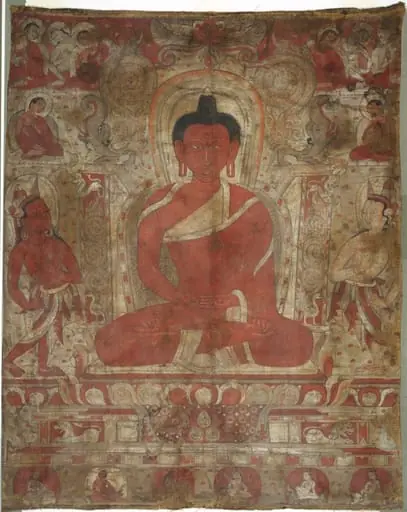 Seated Amitabha with Attendants
 Bodhisattva Manjushri with two forms of Avalokiteshvara, folio 348 (recto) from a Gandavyuha-sutra (Scripture of the Supreme Array)
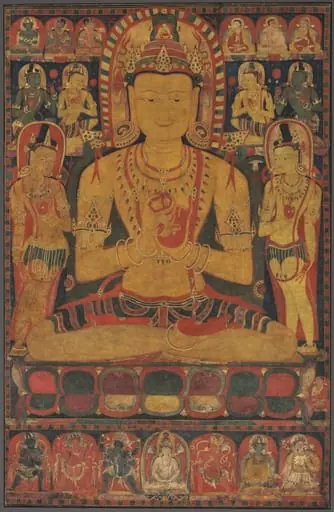 Tantric Buddha Vairochana as Vajrasattva
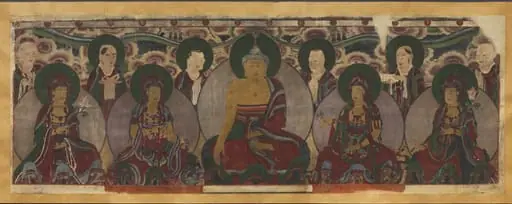 Assembly of Buddhist Deities
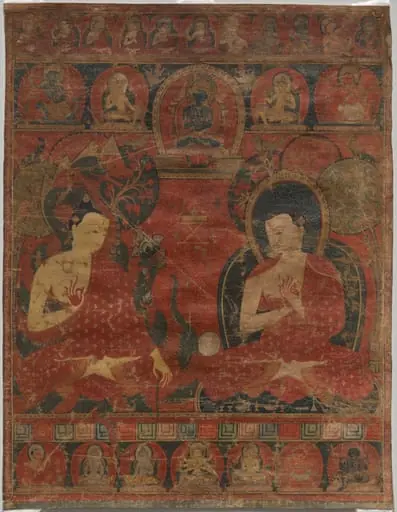 Nagarjuna (c. 150–250 CE) with a Buddhist Master