Artwork
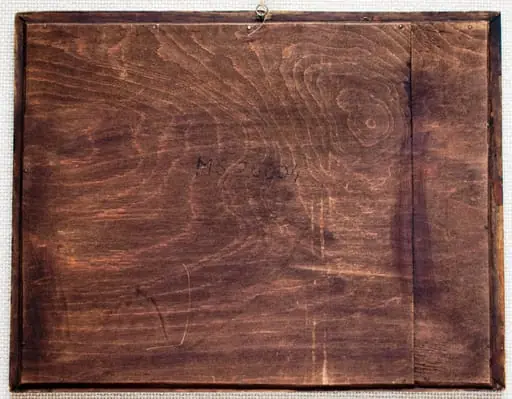
Pictură în oglindă, pe spatele unei bucăți de sticlă, ax vertical. Cuvioasa Paraschiva, redată în stilul specific Niculei:într-o mână o cruce împodobită cu raze și motive florale, în cealaltă o ramură verde. Chipul este trasat cu lejeritate, fața prelungă, expresivă. Pe cap poartă o tocă înaltă, stil occidental. Părul lung, ondulat , cade pe umeri. Veșminte în culori vii(galben, roșu, verde, alb).Câmp alb-gri, decorat cu același motiv floral care se repetă la cruce, o rozetă în culorile alb și verde. Icoana are caracteristicile specifice picturii niculene: stângăcia, simplitatea și primitivismul desenului; compoziția sumară, redusă la extrem, ornamentica de factură populară, intensitatea culorilor. Stratul pictural exfoliat. Rama profilată de culoare neagră, este completată cu un "dos" subțire.
Pictură în oglindă, pe spatele unei bucăți de sticlă, ax vertical. Cuvioasa Paraschiva, redată în stilul specific Niculei:într-o mână o cruce împodobită cu raze și motive florale, în cealaltă o ramură verde. Chipul este trasat cu lejeritate, fața prelungă, expresivă. Pe cap poartă o tocă înaltă, stil occidental. Părul lung, ondulat , cade pe umeri. Veșminte în culori vii(galben, roșu, verde, alb).Câmp alb-gri, decorat cu același motiv floral care se repetă la cruce, o rozetă în culorile alb și verde. Icoana are caracteristicile specifice picturii niculene: stângăcia, simplitatea și primitivismul desenului; compoziția sumară, redusă la extrem, ornamentica de factură populară, intensitatea culorilor. Stratul pictural exfoliat. Rama profilată de culoare neagră, este completată cu un "dos" subțire. is a drawing by Unknown. It dates from 1850 and is held in the collection of the "Dimitrie Gusti" National Village Museum. This devotional image is painted on the reverse side of a fragment of glass, oriented vertically.
About this work
Overview
It is framed in a narrow black profile with a thin backing, typical of portable religious icons from rural traditions.
This devotional image is painted on the reverse side of a fragment of glass, oriented vertically. The surface shows signs of exfoliation and cracking, indicating age and material fragility. It is framed in a narrow black profile with a thin backing, typical of portable religious icons from rural traditions. The composition is minimal, with no spatial depth, emphasizing the figure against a flat, pale background.
Subject & Meaning
The figure is Saint Paraschiva, depicted holding a cross adorned with floral and radiating motifs in one hand and a green branch in the other. These symbols suggest spiritual authority and renewal. Her serene, elongated face and gentle expression convey quiet sanctity. The combination of Christian iconography with natural elements reflects a syncretic devotional culture where faith intertwines with seasonal and earthly symbolism.
Technique & Style
Executed in the Niculite style, the painting exhibits deliberate simplicity and asymmetry. Lines are loosely drawn, forms are flattened, and proportions are intentionally unrefined. Colors—vivid yellow, red, green, and white—are applied boldly without shading or gradation. The floral ornamentation on the cross and background repeats in a rhythmic, folk-inspired pattern, reinforcing a handmade, non-academic aesthetic.
History & Provenance
The work originates from a regional tradition of glass icon painting in Moldavia or Wallachia, likely produced in the late 19th or early 20th century. Its fragmented state suggests it was once part of a household altar, possibly damaged during relocation or use. The thin black frame and glass support indicate it was designed for domestic veneration rather than institutional display.
Context
This icon reflects the persistence of vernacular religious art amid increasing Western influence. The Western-style tall hat worn by the saint signals cultural blending, while the primitive rendering and folk motifs preserve local artistic values. Such images were often made by itinerant painters or devout amateurs, serving as intimate objects of prayer in rural homes where formal church art was inaccessible.
Legacy
As a surviving example of Niculite iconography, it contributes to the understanding of how Orthodox devotion adapted in marginalized communities. Its preservation in ethnographic collections highlights its value as a cultural artifact rather than a refined artwork. The piece stands as evidence of a quiet, enduring tradition that prioritized spiritual presence over technical mastery.
Artist & collection
Museum
"Dimitrie Gusti" National Village Museum
Continue through works from the same source collection.
 Domestic Scene
 Giacomo and Cardinal Marco, investing Andrea, Abbot of San Zeno, with his Benefice
 The Nymph of Fontainebleau
 Portrait of a Woman
 Madonna and Child with Saints in the Enclosed Garden
 Venus and Minerva
 Family Group of Four on Sofa
 Wall painting from Room H of the Villa of P. Fannius Synistor at Boscoreale
 Icoana este pictată pe dosul unei bucăți de sticlă dreptunghiulară, în ax vertical; Sf. Dumitru, izvorâtorul de mir, care se prăznuiește pe 26 octombrie, este unul din sfinții reprezentați ca războinici, deși din viața lui nu se deduc fapte de arme. Semnificația este cea a războiului nevăzut cu patimile.În concepția populară Sf. Dimitrie este cel care dezleagă iarna, corespondentul Sf. Gheorghe care leagă iarna și dezleagă primăvara. Reprezentările lor sunt deasemenea asemănătoare, fie călare, Sf. Gheorghe pe cal alb și Sf. Dimitrie pe cal roșu. Aici Sf. Dimitrie 3/4, este redat ușor din semiprofil, în picioare, în mâna dreaptă cu o suliță iar în stânga avînd o cruce. Mantie roșie, lungă, cămașă verde închis, zale.Chipul este realizat în manieră naivă, expresiv.Părul lung, negru este revărsat pe umeri. Câmp bleu, cu un chenar din flori mari, roșii cu frunze în aceeași nuanță de verde pe care zugravul a mai utilizat-o. Inscripția este pe fond alb, într-un chenar dreptunghiular plasat în spatele aureolei. Pictura are caracteristicile specifice picturii niculene:stângăcia, simplitatea și primitivismul desenului; compoziția sumară, culorile intense. Rama- 4 șipci de brad profilate, culoarea lemnului natur.
 Sfântul Nicolae
 Sfântul Mare Ierarh Grigorie Cuvântătorul de Dumnezeu, sau Sfântul Grigorie Teologul sau de Nazianz. Este unul din cei Trei Sfinți Ierarhi, alături de Sfântul Vasile cel Mare și Sfântul Ioan Gură-de-Aur. Sfântul Grigorie are Sfânta Liturghie a Darurilor înainte Sfințite, care se săvârșește în timpul Postului Mare. Este îmbrăcat în veșminte liturgice arhierești, sacos roșu vermillon, epitrahil verde, nuanță de spanac-avocado, cu patru cruci. Poartă mithră și aureolă. Ține în mâna stângă Sfânta Evanghelie deschisă și binecuvintează cu mâna dreaptă. Fondul este albastru ceruleum cu stele albe. Icoana este de Țara Oltului. Cromatica este armonioasă: roșu vermillon, verde spanac-avocado, albastru ceruleum, nergu, alb. Inscripția din româno-chirilică se traduce Sf Grigorie.
 Icoana îl reprezintă pe Sfântul Arhanghel Gavriil, un voievod al puterilor cerești, al doilea în rangul arhanghelilor, după Sfântul Arhanghel Mihail, cunoscut ca mesager al veștilor frumoase. Misiunea Sfântului Gavriil este de a vesti mântuirea omenirii. Sfântul Gavriil este îmbrăcat în cămașă albă de înger cu verde, cu mantie roșie vermillon, cu interiorul căptușit cu verde de China. Cu chipul angelic și foarte tânăr, sfântul are mâinile în gestul de a arăta calea și dăruind crinul, simbolul BuneiVestiri, Maicii Domnului sau totodată, primind o crenguță înflorită din Rai, din mâna Maicii Domnului. Sfântul Gavriil este încadrat într-un medalion auriu, pe un fond gri, îmbogățit cu flori roșii - ruje înfrunzite. Este o tematică rară, pictată la Nicula, din Nordul Transilvaniei. Motivul zăluței albe este prezent în pictura icoanei, abia-întrezărit, în veșmântul sfântului.
 Sfinții Împărați Constantin și Elena, plasați sub brațele crucii pe care a fost răstignit Iisus. Crucea, cu brațele drepte, trilobate, în centrul compoziției, ușor asimetric. La întretăierea brațelor raze multicolore(orange, albastru și roșu, roșu și alb). Sfinții reprezentați cu veșminte împărătești, coroane înalte pe cap, mantii roșii și tunici bleumarin cu borduri aurite, bogat decorate. Ambii sunt tineri, cu părul lung, castaniu revărsat pe umeri. Aureolele și coroana Elenei aurite. Împărăteasa ține o ramură în mâna dreaptă, împăratul un sceptru. Deasupra crucii pe niște nori albi și înconjurați de raze, Dumnezeu Tatăl(bătrân, cu nimbul triunghiular)și Isus Hristos cu aură circulară, îneșmântați în roșu și albastru.Sunt flancați de câte un heruvim așezat pe norișori. Câmp albastru de Prusia, decorat cu steluțe albe și roșii, colțurile de sus ale icoanei acoperite de draperii roșii și cafenii. Sfinții plasați deasupra unor nori albi cu margini dantelate, gri. Fondul în 2/3 inferioară este de culoare vernil cu brâuri surmontate de forme ovoidale, pictate cu vernil roșu și bleumarin. Paleta cromatică este variată: roșu, galben, negru, alb, verde-oliv, bleu, albastru, cafeniu. Compoziția este echilibrată, dar încărcată. Desenul îngrijit, cu stângăcii. Rama este de lemn de brad, profilată la interior(culoare brun roșcat), la exterior decorată cu motiv de culoare mai închisă realizat cu pieptenele.
 Maica Domnului este înveșmântată în cămașă femeiască tradițională, presupusă iie cu câmpuri verticale alternativ pictate cu roșu vermillon și verde, cu danteluță aurie la baza gâtului, cu maforion roșu vermillon, poartă coroniță de împărăteasă și aureolă. Maica Domnului are gâtul neacoperit cu veșmânt și pe sub maramă se observă părul șaten castaniu. Este mai puțin frecventă această atitudine vestimentară a Maicii Domnului, asemănătoare femeilor din vremea aceea. Icoana este de la Poiana Sibiului, pictată în manieră specifică Mărginimii Sibiului. Pruncul Iisus Hristos este înveșmântat în roșu vermillon și verde și auriu la gulerașul cămășii populare, cu coroană și aureolă. Pruncul Iisus o ține pe Maica Domnului cu mânuța pe după gât, într-o tandrețe mângâietoare, lipindu-și capetele, unul de celălalt. Este a atitudine a Maicii Domnului Eleusa. Fondul icoanei este cerul de culoarea albastru ultramarin. Întreaga icoană este încadrată de un chenar decorativ geometrizant și floral compact, un ușor baroc, de culoare brun-roșcat-verde. Cromatică: roșu vermillon, albastru, verde de China, auriu, ocru-brun-bronziu, alb, negru, roșu stacojiu, brun-roșcat. Icoana este aparte și prin compoziție și prin veșminte. Chipurile au o delicatețe și o tandrețe emoționante. Inscripția din româno-chirilică se traduce MP Maica Domnului IC XC Iisus Hristos.
 Este o icoană de iconostas din Biserica din Cărpiniș, Roșia Montană, județul Alba. Maica Domnului este Eleusa - Înduioșătoare, tandră și iubitoare, ținând în brațe Pruncul Iisus Hristos care are în mâna stângă o carte închisă și un hrisov înfășurat și Binecuvântează cu mâna dreaptă, arătând înspre Maica Domnului, arâtâdu-ne-O. Maica Domnului arată calea cu mâna dreaptă, deci este Hodighitria și Eleusa, lipindu-și capul de capul Pruncului Mântuitor, aureolele întâlnindu-se tainic. Maica Domnului este înveșmântată în mantie cu maforion roșu vermillon-stacojiu cu drapaje acajou și interiorul căptușit cu ocru-bej și sacos crem-auriu. Pruncul Iisus Hristos este înveșmântat în crem-luminos; veșmânt bogat ornamentat cu elemente punctiflorale acajou și cute orange-portocalii. Fondul icoanei este orange-luminos, decorat cu câteva elemente astrale - steluțe albe. Icoana are un chenar decorativ lat brun-acajou. Inscripția din româno-chirilică se traduce MP IC XC Maica Domnului Iisus Hristos. Pomenește Doamne pe ctitorii Stan Bucur și Pamfil Bucur, mai la anu 1718, Cărpiniș, Ivan zugrav. Cromatica este armonioasă, senină, vie: roșu vermillon-stacojiu, orange luminos, brun, bej, bronziu, stacojiu, brun-acajou, alb, negru. Icoana este deosebită, fiind valoroasă atât prin desenul rafinat, cât și prin cromatica exemplară. Icoana este pictată de Popa Ivan Zugravul din Rășinari. Icoana este datată 1718, prima jumătate a secolului al XVIII-lea.
 Tema icoanei face parte din ciclul Patimilor Mântuitorului și înfățișează scena Răstignirii Domnului. Compoziția este extrem de simplă: Hristos răstignit în mijloc pe cruce, Maica Domnului în dreapta Lui, iar Sfântul Ioan Evanghelistul în stânga. Cromatica se compune din tonuri de roșu vermillon, verde, albastru, ocru galben, negru și gri. Rama icoanei e profilată, băițuită, și e formată din îmbinarea a patru baghete de lemn. Sticla este spartă în mai multe fragmente.
 Icoana îl reprezintă pe cuviosul Stelian în ipostaza consacrată: îmbrăcat în haine monahale, de factură athonită, ținînd în brațe, pe mâna dreaptă, un prunc înfășat în scutece, având aureolă(uneori pruncul apare cu însemnele lui Hrisos). Sfântul privește către prunc, mustățile și barba lungi, albe, chipul bine proporționat, ochii mari, expresivi, trăsăturile ușor vălurite, estompate.. Aureolele mari, după restaurare pictate cu galben, chenar roșu. Fond culoare verde crom, chenar îngust. Icoana a fost restaurată.
 Câmp central sub formă de cruce, împarte spațiul pictural în patru casete dreptunghiulare ce conțin următoarele scene: Stânga sus Maica Domnului cu Pruncul tipul Kazanskaia. Este reprezentată până la piept, nu se văd mâinile. Capul ușor înclinat spre Pruncul Iisus care binecuvintează. Maforion negru, bogat, cu bordură albă, fină. Dreapta sus - Sf. Nicolae în veșminte de arhiereu, cărunt, cu barba rotundă capul descoperit. Nu se văd mâinile.Desen schematic, redus la extrem în redarea corpului. Stânga jos - Sf. Gheorghe, oștean, călare pe un cal alb în poziție cambrată.Înfige, sulița în gura balaurului, redat aici ca un șarpe negru, subțire. În partea cealaltă un sfânt mucenic în veșminte lungi, dificil de identificat din cauza stratului de vernis îmbătrânit și a lacunelor din stratul pictural.Cromatica specifică pentru acest tip de icoane, tonuri de roșu, brun, galben, foița greu de deosebit din cauza verniului. Chenarul marginal specific icoanelor tip krasnushka.Inscripții caligrafice cu negru.
 Icoai"(a
 Pictură în olindă, supot de sticlă, ax orizontal. Câmpul icoanei împărțit în casete dreptunghiulare care redau: Bunavestire(Arhanghelul Gavriil care aduce vestea Fecioarei, deasupra Duhul Sfânt), Botezul Domnului(Sfântul Ioan Botezătorul botezându-l pe Iisus în prezența aceluiași arhanghel, sun revărsarea harului Duhului Sfânt), Nașterea lui Isus(doar Fecioara și dreptul Iosif, Pruncul în fundal) Intrarea în Ierusalim(Iisus pe asin întâmpinat de două personaje cu aureole-confuzie frecventă), Învierea(varianta apuseană simplificată, în care soldatul este așezat în pandant cu îngerul pentru echilibrul scenei) și Înălțarea(la care sunt prezenți doi apostoli cu aureole). Sus bandă orizontală cu decor floral, jos linii oblice. Modul de redare al scenelor este specific Niculei, desenul redus la extrem, număr limitat de personaje, paleta cromatică și modul de redare al personajelor(macrocefale, părul asemănător unei meșe) utilizarea culorii ocru galben în locul foiței aurii, specifice perioadei de declin a picturii pe sticlă. Câmpul pe care sunt proiectate scenele este bleu în casetele 1, 3, 5. brun deschis în celelalte, pământul realizat cu ocru. Decor floral, ruje dispuse în arcadă(4,5,6) liber în primele trei. Veșmintele predominant roșii, câteva accente de verde, drapajul - alb. Chenarul fiecărei casete decorat cu unda apei. Cromatica : alb, bleu, roșu, negru, verde. Rama profilată, decorată cu motiv vălurit.