Artwork
Piesă din faianță, cu aspect piriform, cu buza ușor evazată spre exterior, prevăzută cu toartă laterală semiovală. Decorul este reliefat și constă în motive florale (macul în diverse faze de dezvoltare: boboc, mac înflorit, capsule). Gâtul piesei este evidențiat printr-un brâu format din caneluri verticale. Cromatică: alb, bleu.
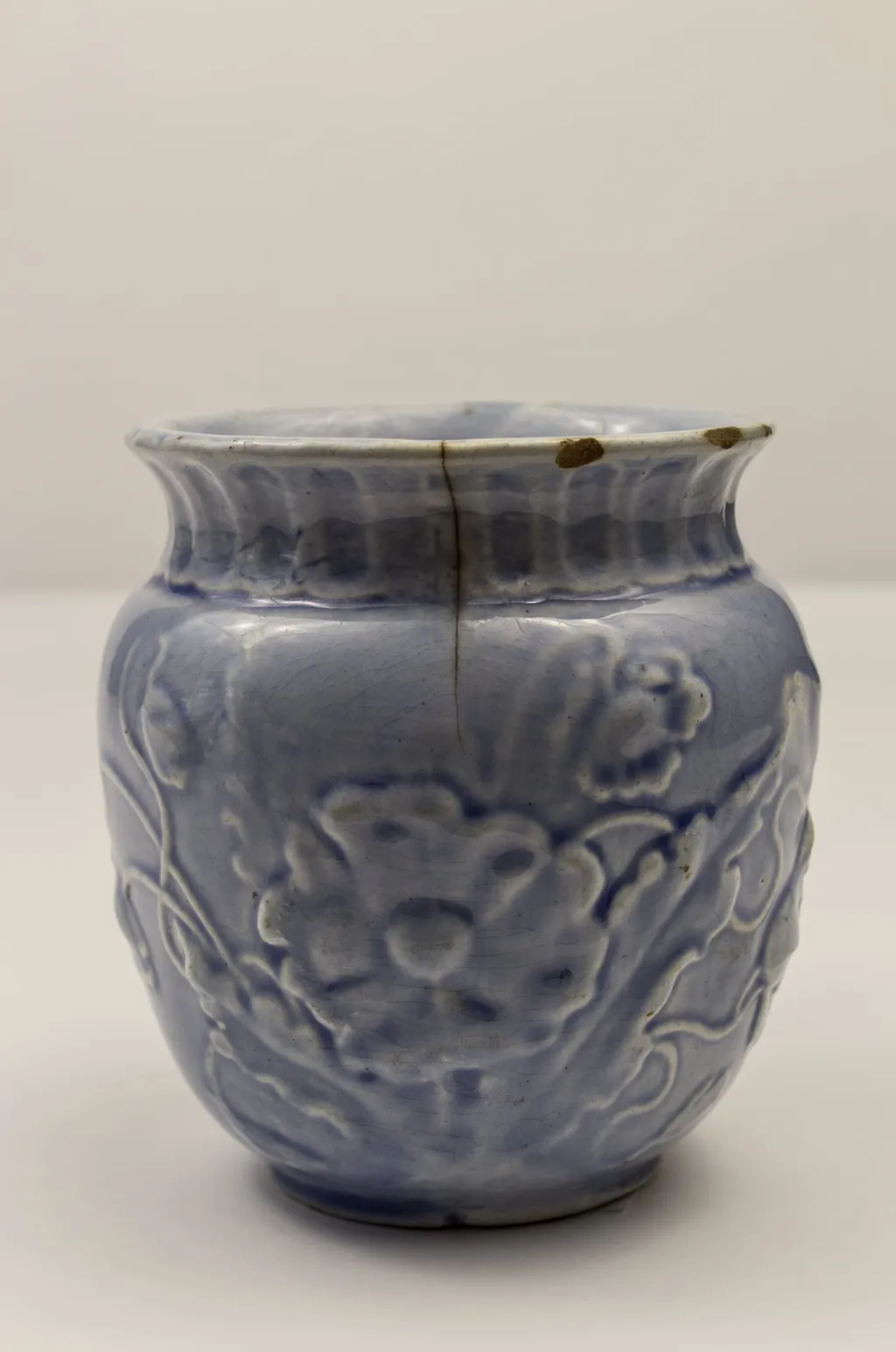
Piesă din faianță, cu aspect piriform, cu buza ușor evazată spre exterior, prevăzută cu toartă laterală semiovală. Decorul este reliefat și constă în motive florale (macul în diverse faze de dezvoltare: boboc, mac înflorit, capsule). Gâtul piesei este evidențiat printr-un brâu format din caneluri verticale. Cromatică: alb, bleu. is a print by Unknown. It dates from 1850 and is held in the collection of the Gavrila Simion Eco-Museum Research Institute Tulcea. This ceramic vessel features a pyriform body with a gently flared rim and a lateral handle of semi-oval shape.
About this work
Overview
Its surface is decorated in relief with stylized poppy flowers at various growth stages—buds, open blooms, and seed capsules.
This ceramic vessel features a pyriform body with a gently flared rim and a lateral handle of semi-oval shape. Its surface is decorated in relief with stylized poppy flowers at various growth stages—buds, open blooms, and seed capsules. The neck is accentuated by vertical grooves, and the color palette is limited to white glaze with cobalt-blue detailing, typical of a specific regional ceramic tradition.
Subject & Meaning
The decorative motif centers on the poppy, depicted across its life cycle: from unopened buds to fully bloomed flowers and mature capsules. This progression may reflect natural observation or symbolic associations with transience and renewal. The choice of a single plant type, rendered with botanical precision, suggests an emphasis on organic rhythm rather than ornamental excess.
Technique & Style
The decoration is executed in low relief, carved into the clay before glazing, then painted with cobalt oxide under a transparent white slip. The contrast between the pale ground and the deep blue motifs enhances the three-dimensionality of the floral forms. Vertical grooves along the neck serve both as a structural accent and a visual counterpoint to the organic curves of the body.
History & Provenance
This piece belongs to a group of ceramic objects produced in the 17th or 18th century in regions influenced by Ottoman and Central European ceramic traditions. Similar vessels have been found in domestic and ecclesiastical contexts, often used for storage or display. Wear along the rim indicates prolonged use, suggesting it was part of everyday material culture rather than ceremonial display.
Context
The blue-and-white aesthetic aligns with broader Eurasian ceramic trends, yet the specific floral repertoire and relief technique reflect localized craftsmanship. Comparable designs appear on tiles and utilitarian ware, indicating that this vase was part of a shared visual language in household objects. Its form and decoration bridge functional utility and decorative intention.
Legacy
This vessel exemplifies a regional ceramic idiom that persisted through centuries, adapting imported techniques to indigenous motifs. Its survival offers insight into the continuity of artisanal practices in rural or provincial workshops. Though not widely documented, such pieces contribute to understanding the diversity of ceramic production beyond major urban centers.
Artist & collection
Museum
Gavrila Simion Eco-Museum Research Institute Tulcea
Continue through works from the same source collection.
 Domestic Scene
 Giacomo and Cardinal Marco, investing Andrea, Abbot of San Zeno, with his Benefice
 The Nymph of Fontainebleau
 Portrait of a Woman
 Madonna and Child with Saints in the Enclosed Garden
 Venus and Minerva
 Family Group of Four on Sofa
 Wall painting from Room H of the Villa of P. Fannius Synistor at Boscoreale
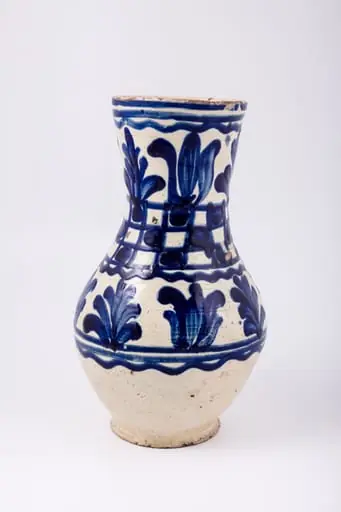 Cănceu piriform prevăzut cu o toartă, gât zvelt și ușor evazat, corpul pântecos, toarta de la gât la diametrul maxim al vasului. Decorul este împărțit în trei registre verticale încadrate în partea superioară și inferioară de linii subțiri și vălurite. Primul și al treilea registru sunt decorate cu motive florale și fitomorfe, câte o lalea înflorită intercalată de brăduți stilizați. Al doilea registru este decorat cu tabla de șah. Cromatica: alb și albastru cobalt.
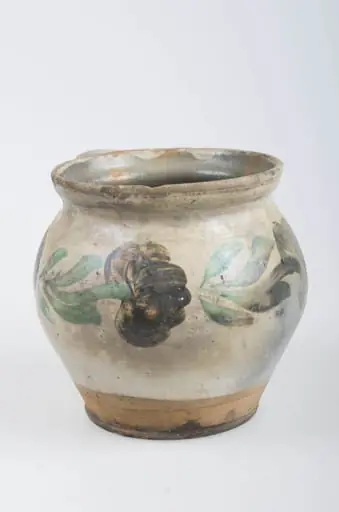 Vas bombat în partea mediană cu buza răsfrântă spre exterior. Toartă pe centrul vasului ce unește gura cu partea mediană. Pe toată suprafața vasului prezintă decorații realizate prin pictare, ilustrând flori albastre, în alternanță cu frunze verzi, împreună cu dungi dispuse orizontal. Cromatică: fond: alb; motive: verde, albastru, maro.
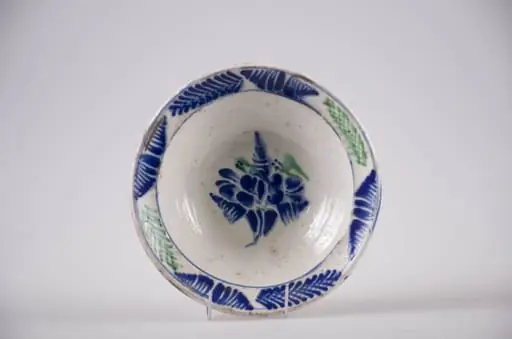 Blid de formă tronconică cu buza evazată, Smălțuit la interior. Decorul este format din ornamente florale dispuse pe motiv central: floare; motive marginale, fitomorfe: brăduț. Cromatică: verde și albastru pe fond alb.
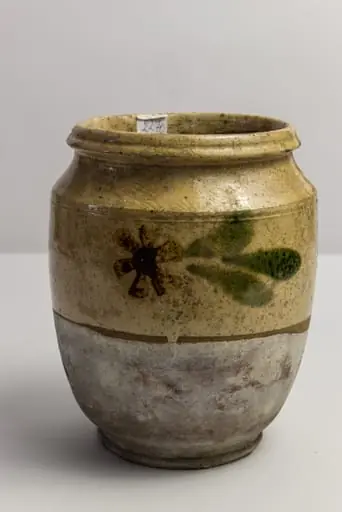 Piesă din lut modelat la roată, smălțuită parțial, de formă aproape cilindrică. Decorul vasului este dispus pe suprafața exterioară, fiind realizat prin pictare: motive florale (floare cu frunze), diametral opuse; brâu circular de culoare ocru. Cromatică: bej, maro, verde, ocru, negru.
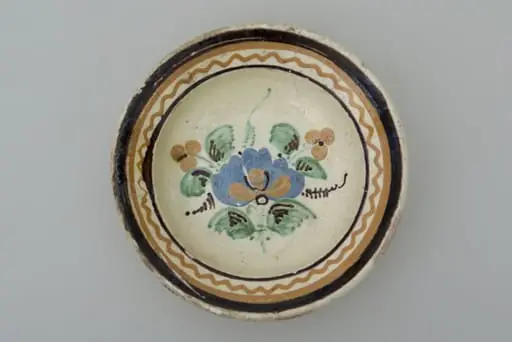 Blid de formă tronconică cu buza evazată. Smălțuit. Decorat cu motive florale: buchet, plasat pe fundul vasului și motive geoemtrice plasate pe gură: alternantă de cercuri și spirale ce se închid îm cerc. Cromatică: fond: alb; motive: maro; crem; verde; albastru.
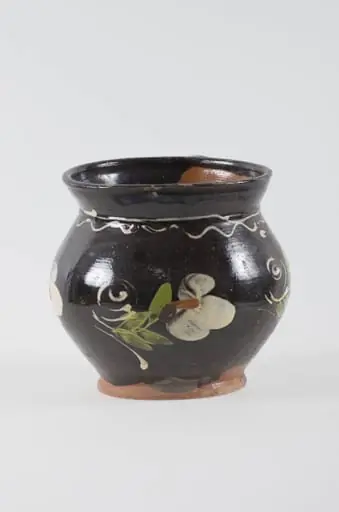 Vasul este de lut smălțuit și are formă bitronconică. Este prevăzut cu o toartă semicirculară și cu buza profilată înspre exterior. Decorat cu motive geometrice (linii drepte, curbe) și motive florale. Cromatică: fond: maro; motive: alb; verde; maro deschis.
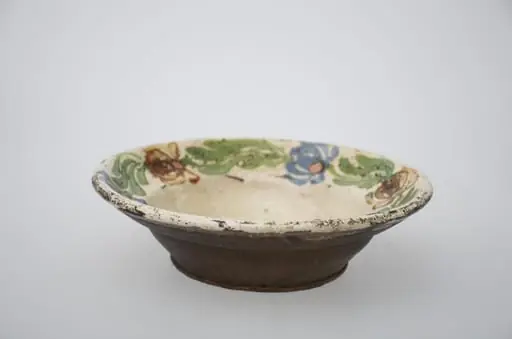 Farfurie de formă tronconică adâncă cu buza largă și decor pe fund, spre margini. Ornamentat cu motive florale. Cromatică: fond: alb; motive: maro; verde; albastru.
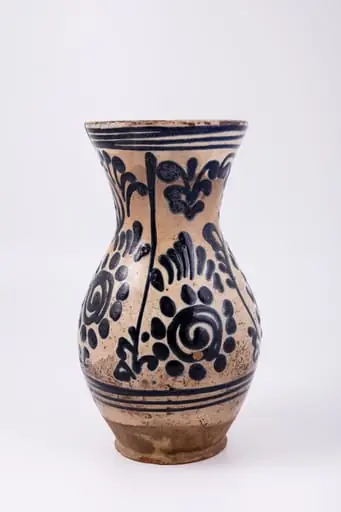 Cană cu corpul bombat, gât scurt, puternic evazat, toarta dispusă de la gât la diametrul maxim al vasului. Suprafața decorativă a vasului este încadrată între linii subțiri dispuse în partea superioară și inferioare. Decorul central reprezintă calea cu sori stilizată alcătuită din lujeri și floarea-soarelui. Cromatica: alb și albastru cobalt.
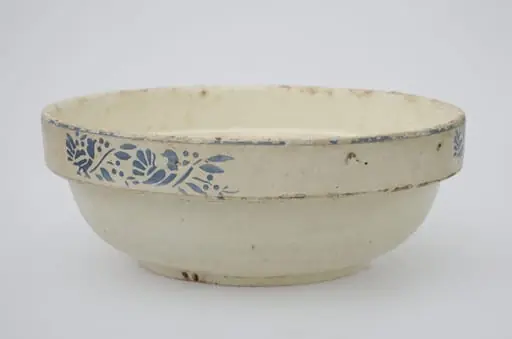 Strachină de lut de formă tronconică, cu buza ușor evazată, smălțuită în interior și la exterior. Decorată cu motive liniare, vegetale, florale și avimorfe (porumbel și porumbiță) motivele avimorfe se regăsesc pe exterior în trei registre, iar pe interior într-o casetă. Cromatică: fond: alb-bej: motive: albastru.