Artwork
Blid de formă tronconică cu buza evazată, Smălțuit la interior. Decorul este format din ornamente florale dispuse pe motiv central: floare; motive marginale, fitomorfe: brăduț. Cromatică: verde și albastru pe fond alb.
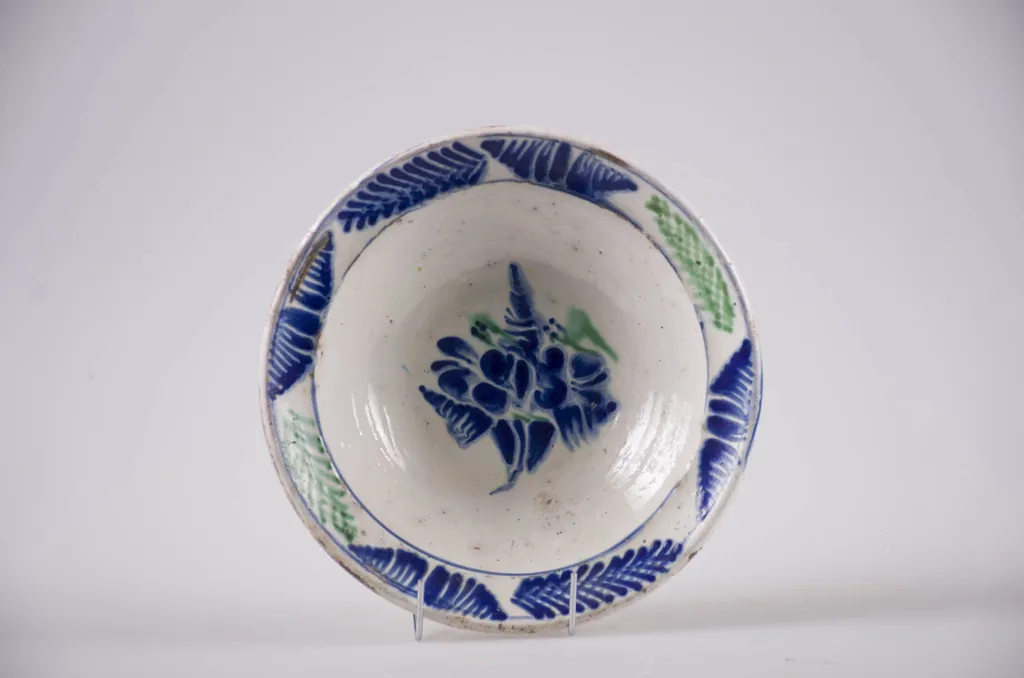
Blid de formă tronconică cu buza evazată, Smălțuit la interior. Decorul este format din ornamente florale dispuse pe motiv central: floare; motive marginale, fitomorfe: brăduț. Cromatică: verde și albastru pe fond alb. is a print by Unknown. It dates from 1850 and is held in the collection of the ASTRA National Museum Complex. This is a shallow ceramic bowl with a flared rim and a glazed interior.
About this work
Overview
The form is simple, emphasizing function alongside decorative intent, typical of utilitarian ceramics from a region with strong folk traditions in pottery.
This is a shallow ceramic bowl with a flared rim and a glazed interior. Its surface is primarily white, accented with hand-painted blue and green decorations. The glaze is uneven in places, suggesting manual application rather than industrial production. The form is simple, emphasizing function alongside decorative intent, typical of utilitarian ceramics from a region with strong folk traditions in pottery.
Subject & Meaning
The central motif is a single stylized flower with green stems and leaves, surrounded by marginal patterns of repeating leafy forms arranged in a wavelike rhythm. These fitomorphic designs suggest a connection to natural cycles and seasonal renewal. The flower, though simplified, may symbolize growth or domestic harmony, common themes in vernacular ceramic decoration where botanical elements convey continuity and life.
Technique & Style
The decoration was applied by hand using pigments on a white-glazed surface, with blue and green hues dominating. Brushwork is loose and irregular, indicating artisanal execution without the precision of mass-produced wares. The floral motif is schematic rather than naturalistic, and the marginal patterns follow a rhythmic, repetitive structure, reflecting a localized aesthetic tradition rooted in folk craftsmanship.
History & Provenance
The object likely originates from a rural ceramic workshop in Eastern Europe, where similar wares were produced from the 18th to early 20th centuries. Its form and decoration align with regional traditions in Romania or Moldova, where glazed earthenware was common in household use. No documented provenance exists, but comparable pieces are found in ethnographic collections from these areas.
Context
This bowl belongs to a broader category of domestic ceramics made for everyday use, often in peasant households. Its modest scale and decorative simplicity reflect a culture where utility and ornament coexisted without elaborate symbolism. Similar vessels were used for storing food or serving meals, with decoration serving both aesthetic and cultural identity purposes within local communities.
Legacy
Though not part of fine art traditions, such ceramics preserve the visual language of rural artisans whose work was rarely documented. Today, they are valued as material evidence of folk expression and regional identity. Museums and cultural institutions collect these objects to represent the continuity of handmade traditions in the face of industrialization.
Artist & collection

 Domestic Scene
 Giacomo and Cardinal Marco, investing Andrea, Abbot of San Zeno, with his Benefice
 The Nymph of Fontainebleau
 Portrait of a Woman
 Madonna and Child with Saints in the Enclosed Garden
 Venus and Minerva
 Family Group of Four on Sofa
 Wall painting from Room H of the Villa of P. Fannius Synistor at Boscoreale
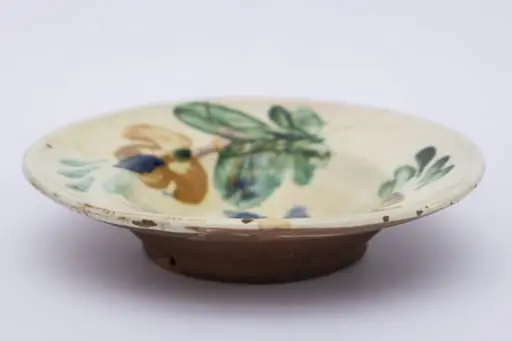 Farfurie de formă tronconică cu fundul adâncit și marginea evazată; smălțuită în interior. Ornament prin pictare ilustrând în plan central, pe fundul vasului, o floare albastră; pe margine chenar floral, reprezentat de două flori cărămizii cu frunze verzi. Pentru atârnare baza este perforată. Cromatică: fond: alb; motive: cărămiziu; verde; albastru; brun.
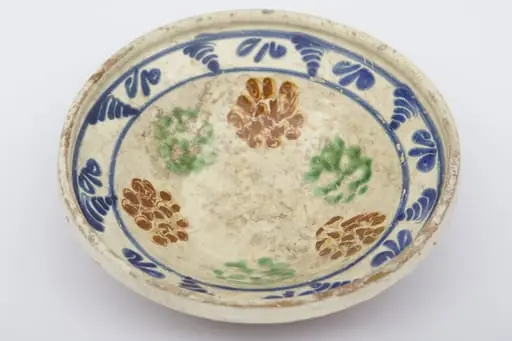 Vas ceramic de dimensiuni medii, smălțuit la interior, având formă tronconică. Blidul a fost decorat cu motive geometrizante și fitomorfe stilizate. Primul registru, dispus pe fundul piesei este format din șase flori verzi și maro, intercalate. Marginal, pe buza profilată a fost realizat cel de-al doilea registru, fiind trasate două linii circulare, care încadrează motive vegetale albastre, succesive. Blidul era folosit pentru servirea hranei. Prezintă uzură funcțională. Cromatică: fond: cărămiziu; crem; motive: albastru; maro; verde.
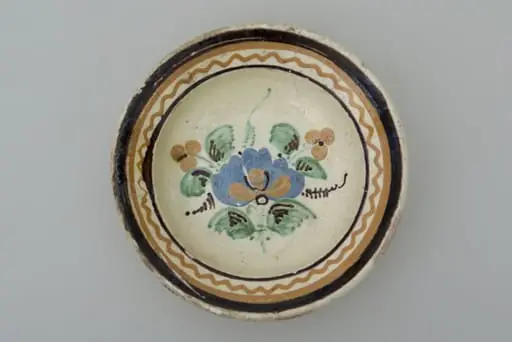 Blid de formă tronconică cu buza evazată. Smălțuit. Decorat cu motive florale: buchet, plasat pe fundul vasului și motive geoemtrice plasate pe gură: alternantă de cercuri și spirale ce se închid îm cerc. Cromatică: fond: alb; motive: maro; crem; verde; albastru.
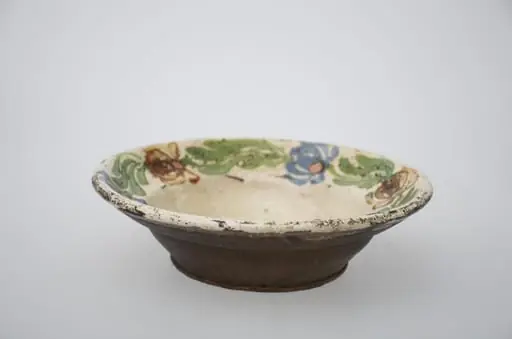 Farfurie de formă tronconică adâncă cu buza largă și decor pe fund, spre margini. Ornamentat cu motive florale. Cromatică: fond: alb; motive: maro; verde; albastru.
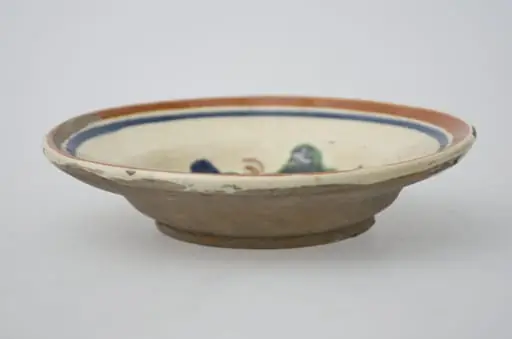 Farfurie tronconică, de dimensiuni mai mici cu pereții ușor curbați și marginea evazată. Prezintă un motiv central de tip floral; pe margine două cercuri colorate. Smălțuită numai în interior. Cromatică: fond: alb; motive; verde; albastru; brun; negru.
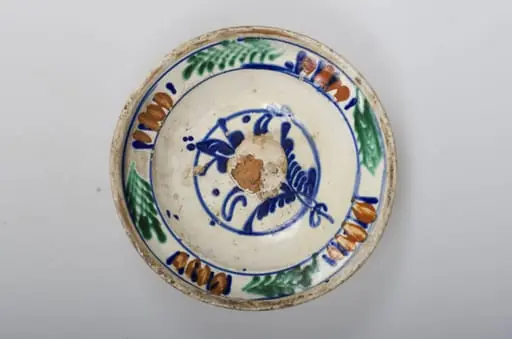 Vas de formă tronconică adâncit, smălțuit în interior cu buză profilată spre exterior. Este decorat în interior cu motive vegetale și florale (motivul brăduțului) dispuse într-un registru circular pictat pe în zona diametrului maxim al vasului. Cromatică: fond cărămiziu (exterior) cu scurgeri de smalț alb spre baza vasului; fond crem (interior); albastru; maro; verde; galben.
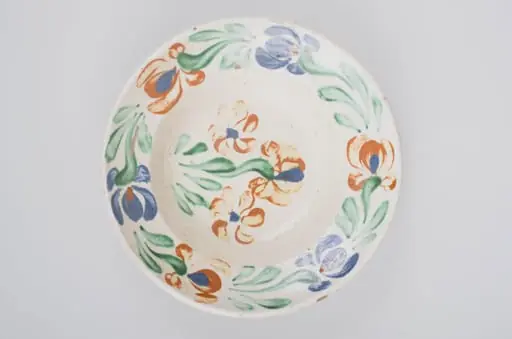 Farfurie cu fundul adâncit și buza evazată. Smălțuită numai în interior și scurgeri de smalț sub buză. Prezintă găuri pentru prinderea aței în vederea agățării. Decorată cu motive florale: central are trei flori iar pe margine un chenar floral. Cromatică: fond: alb; motive: maro; verde; albastru.
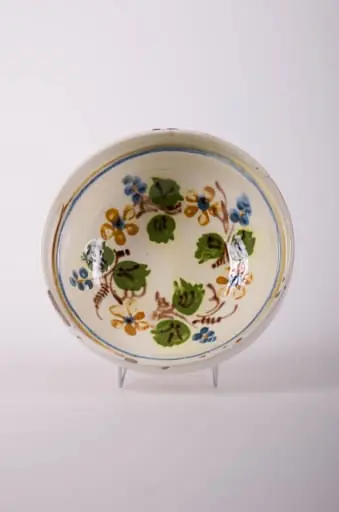 Farfurie de formă tronconică, adâncită, cu buza foarte înaltă; pe fund are găuri pentru agățare. Este smălțuit în interior și exterior (buza). Decorat cu motive geometrice: linie; motive fitomorfe; motive florale. Cromatică: fond: alb; motive: verde; maro; albastru.
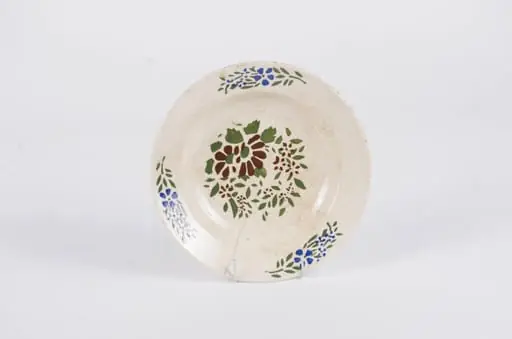 Farfuria este de formă tronconică, fiind smălțuită integral. Prezintă un decor floral-vegetal dispus pe fundul și pe buza vasului. Cromatică: fond alb; motive: verde; maro; albastru.
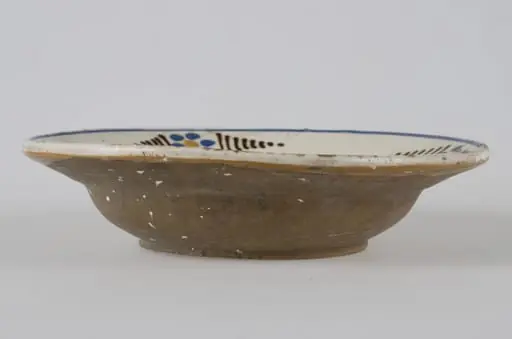 Vas adânc din lut, de formă tronconică, cu marginea evazată. Pe fundalul de culoare albă este decorat cu motive geometrice: linie circulară, linii curbe, puncte pe buza vasului; motive vegetale și florale, pe centrul vasului. Cromatică: fond: alb; motive: albastru; verde; maro; cărămiziu.
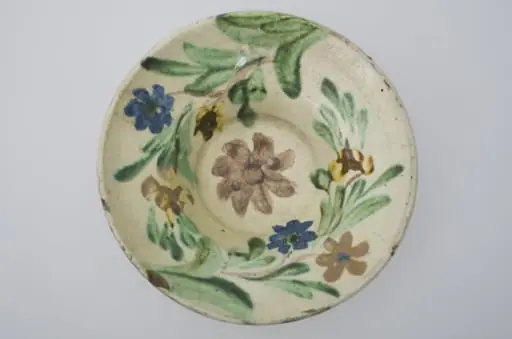 Farfurie cu marginea foarte lată și evazată, smălțuită în interior. Decor floral pe toată suprafața interioară. Cromatică: fond: alb; motive: brun; verde; galben; albastru.