Artwork
Portable Triptych Icon: The Resurrection and Anastasis
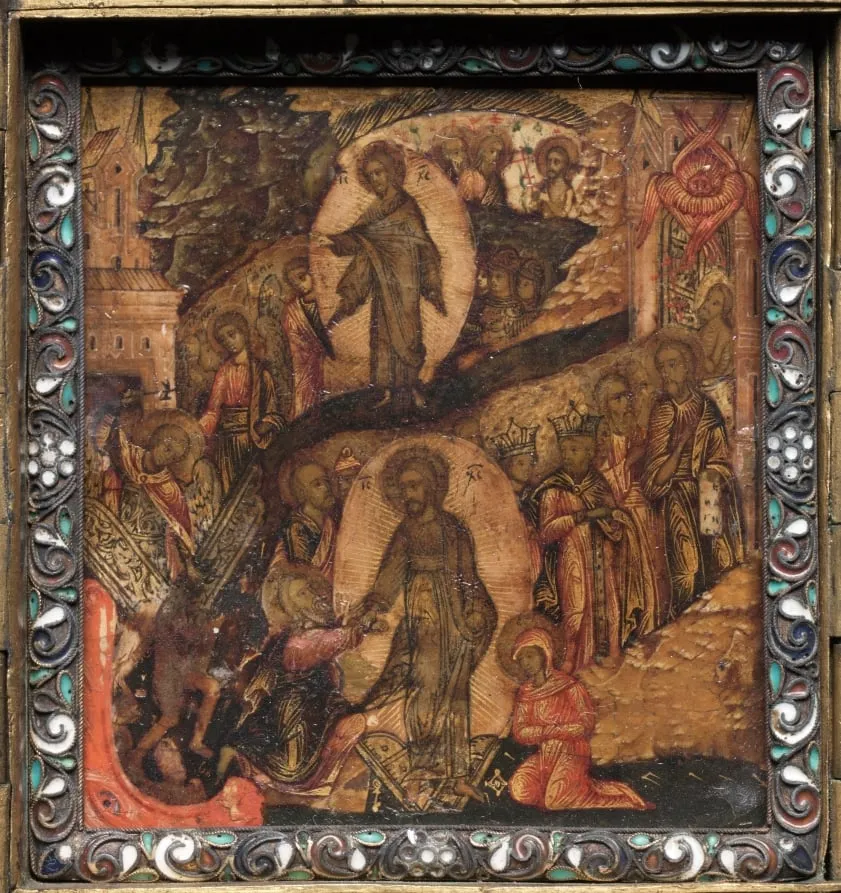
Portable Triptych Icon: The Resurrection and Anastasis is an unspecified painting by the Baroque artist Unknown. It dates from 1604 and is held in the collection of the Cleveland Museum of Art. This small wooden triptych, designed to be folded and carried, was created for personal devotional use in 17th-century Russia.
About this work
The middle scene shows *Anastasis*, a Byzantine way of painting the Resurrection where Christ breaks the gates of hell.
You see a small, foldable wooden panel with three painted scenes side by side. On the left, Jesus hangs on the cross. In the middle, he rises from a tomb while pulling Adam and Eve from their graves. On the right, people kneel before a holy image of Mary and baby Jesus.
This triptych was made for private prayer—easy to carry, easy to close. The middle scene shows *Anastasis*, a Byzantine way of painting the Resurrection where Christ breaks the gates of hell. These portable icons were common in 17th-century Russia, meant for personal devotion, not just churches.
To see more like this, look up 17th century.
Overview
This small wooden triptych, designed to be folded and carried, was created for personal devotional use in 17th-century Russia. Its compact form allowed private prayer away from church settings, reflecting a broader trend of lay piety. Each panel depicts a distinct sacred moment, arranged to guide contemplation from suffering to redemption and intercession.
Subject & Meaning
The left panel shows Christ on the cross, emphasizing sacrifice. The central scene presents Anastasis—the Resurrection as Christ shatters the gates of Hades, rescuing Adam and Eve to symbolize salvation’s universal reach. The right panel depicts veneration of the Vladimir Mother of God, a revered icon believed to hold protective power. Together, the panels trace a spiritual journey from death to divine mercy.
Technique & Style
Painted in tempera on wood, the icon follows Byzantine conventions with flattened space, symbolic color, and hieratic figures. The Anastasis scene employs traditional iconographic elements: Christ standing on broken gates, radiant halos, and stylized figures of the righteous. The composition is tightly organized, prioritizing spiritual clarity over naturalism, consistent with Orthodox devotional aesthetics.
History & Provenance
Commissioned by a private individual rather than a monastery, the triptych reflects the rise of domestic religious practice in early modern Russia. Its portability suggests ownership by a wealthy layperson or clergy member seeking daily spiritual focus. While its exact origin is unrecorded, similar icons survive in Russian collections, often linked to noble or merchant households of the period.
Context
In 17th-century Russia, portable icons became widespread as personal devotion expanded beyond monastic and liturgical settings. The Anastasis motif, inherited from Byzantium, remained central to Orthodox theology, while the Vladimir icon symbolized national spiritual identity. These objects bridged the sacred and the domestic, reinforcing faith in everyday life amid political and ecclesiastical change.
Legacy
This triptych exemplifies a devotional tradition that persisted in Russian households long after the decline of large-scale icon production. Its format influenced later private altarpieces and reinforced the role of the icon as both spiritual tool and heirloom. Surviving examples like this one help trace the evolution of lay piety in Orthodox Christian communities.
Artist & collection

 Domestic Scene
 Giacomo and Cardinal Marco, investing Andrea, Abbot of San Zeno, with his Benefice
 The Nymph of Fontainebleau
 Portrait of a Woman
 Madonna and Child with Saints in the Enclosed Garden
 Venus and Minerva
 Family Group of Four on Sofa
 Wall painting from Room H of the Villa of P. Fannius Synistor at Boscoreale
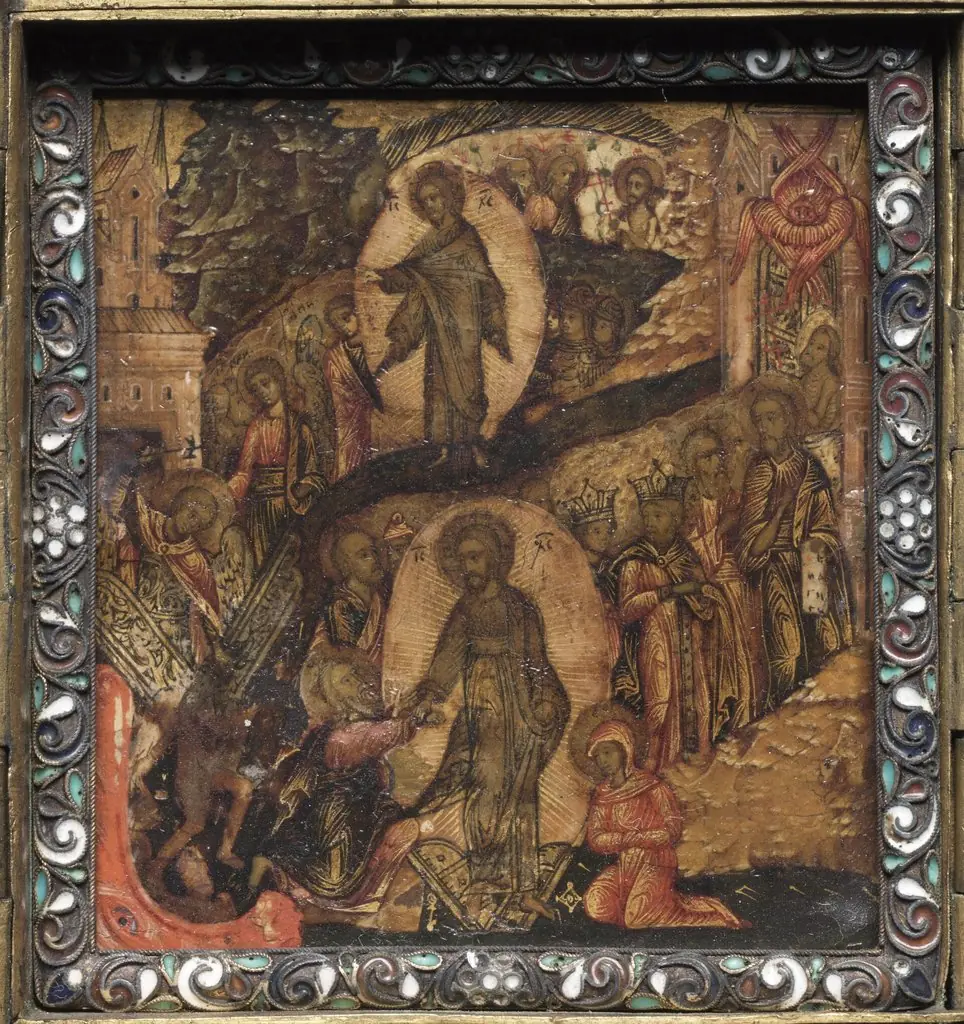 Portable Triptych Icon: The Resurrection and Anastasis
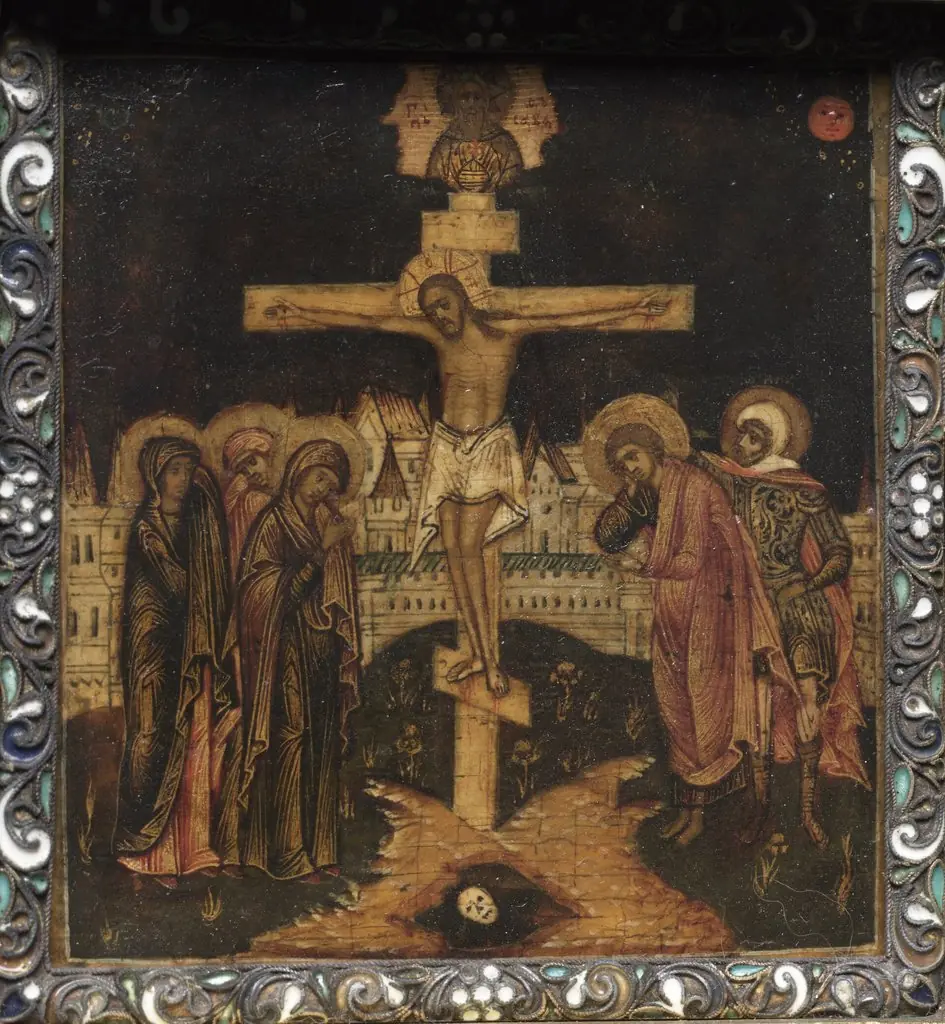 Portable Triptych Icon: The Crucifixion
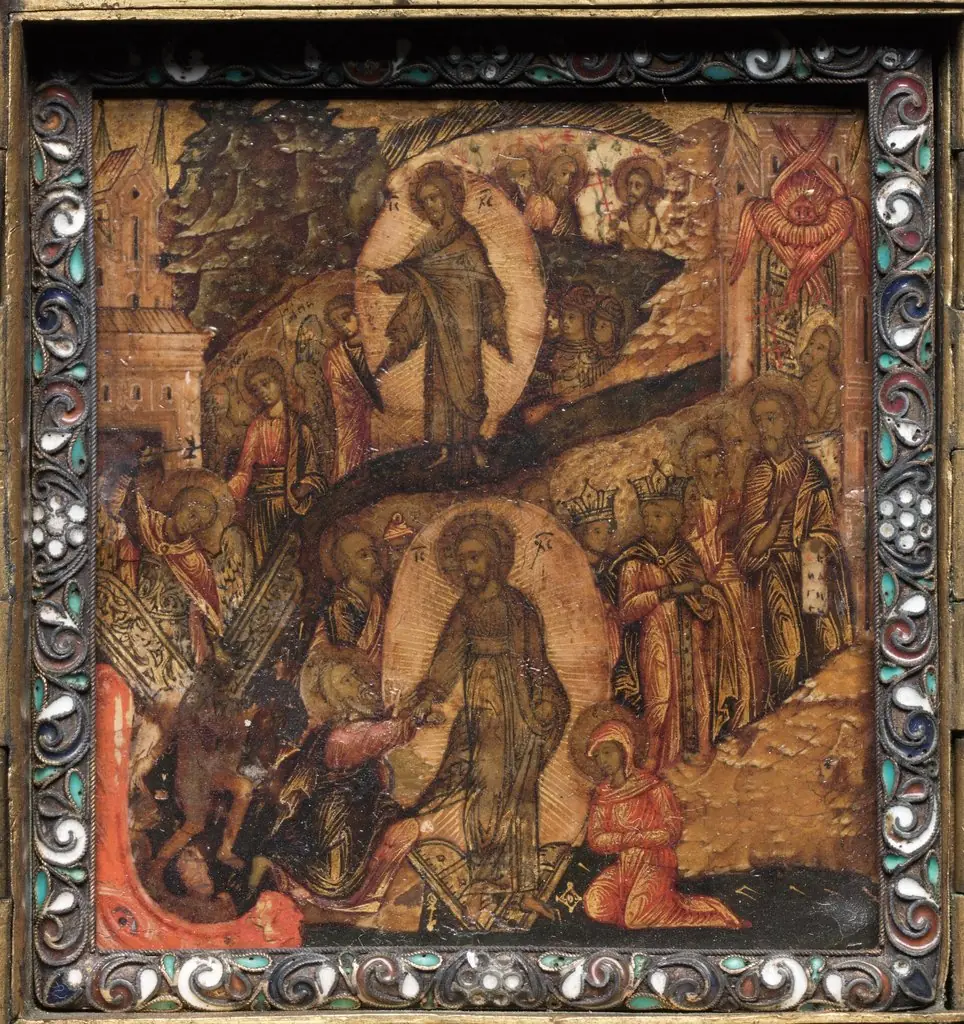 Portable Triptych Icon
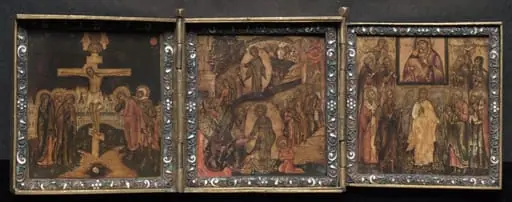 Portable Triptych Icon
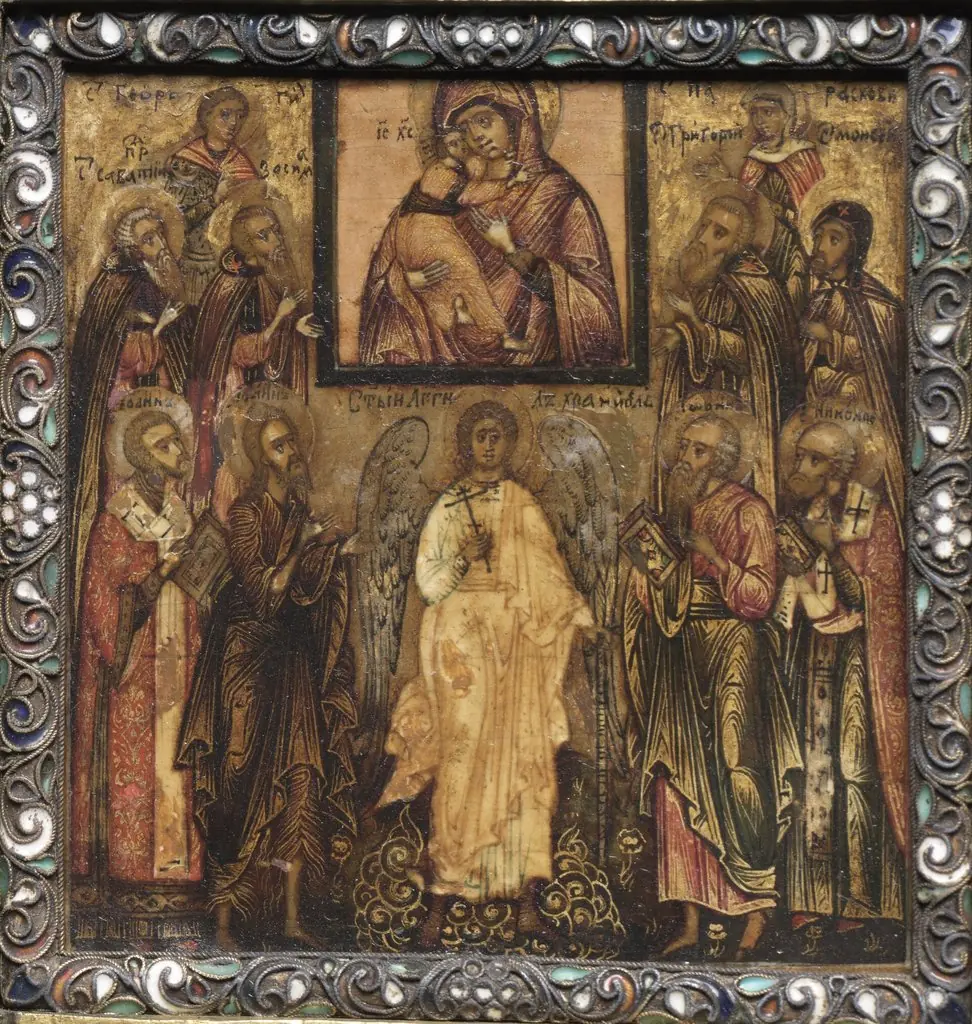 Portable Triptych Icon: Adoration of the Miracle-Working Icon of the Vladimir Mother of God
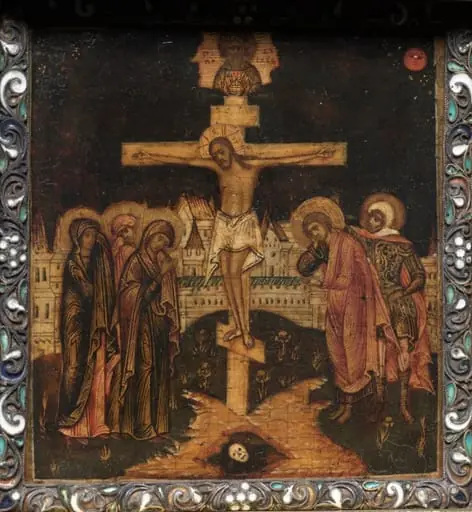 Portable Triptych Icon: The Crucifixion
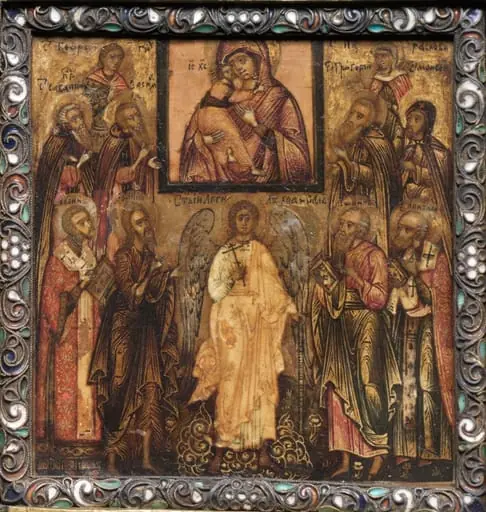 Portable Triptych Icon: Adoration of the Miracle-Working Icon of the Vladimir Mother of God
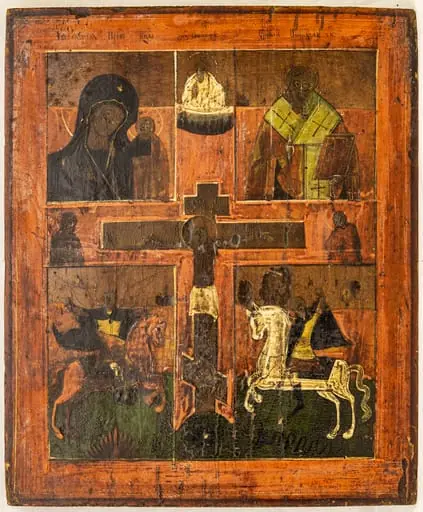 Icoană în patru registre, în centru Iisus Crucificat
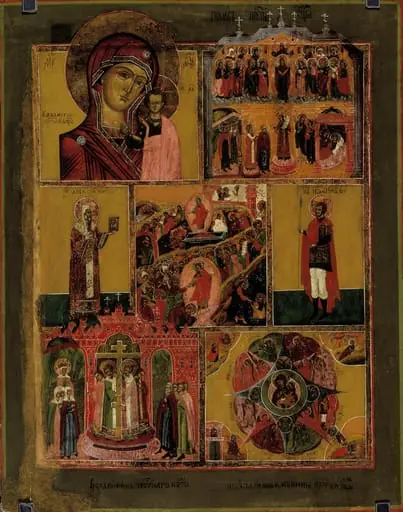 Pääsiäinen ja kirkkovuoden juhlia, venäläinen ikoni