Artwork
Portable Triptych Icon: The Crucifixion
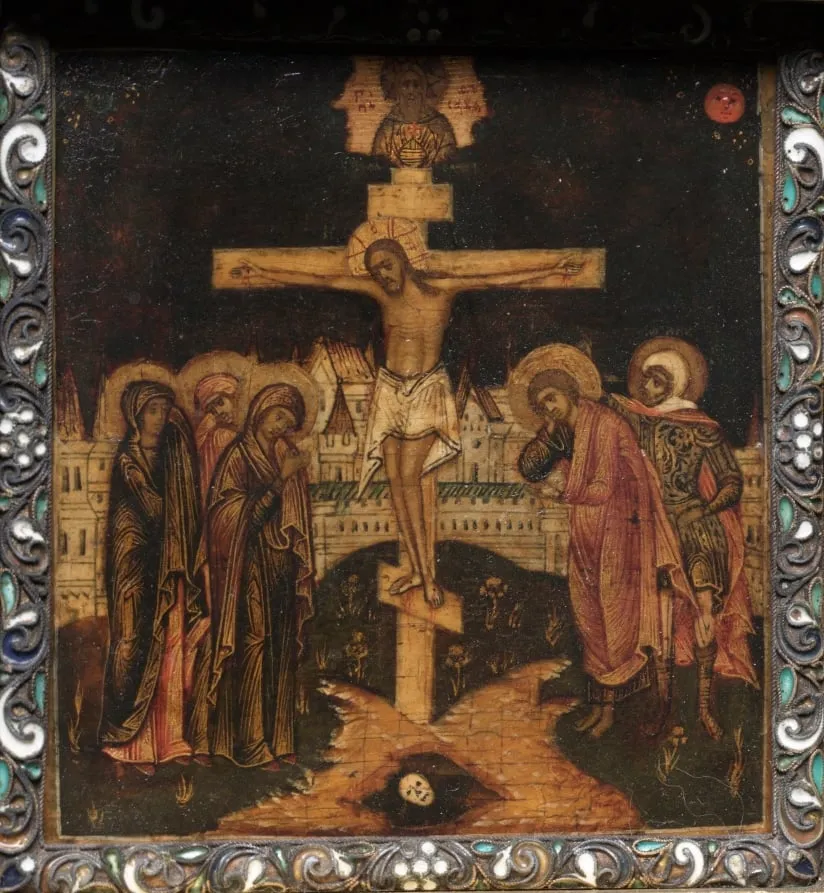
Portable Triptych Icon: The Crucifixion is an unspecified painting by the Baroque artist Unknown. It dates from 1604 and is held in the collection of the Cleveland Museum of Art. The object is a small, three‑panel wooden triptych designed for personal devotion.
About this work
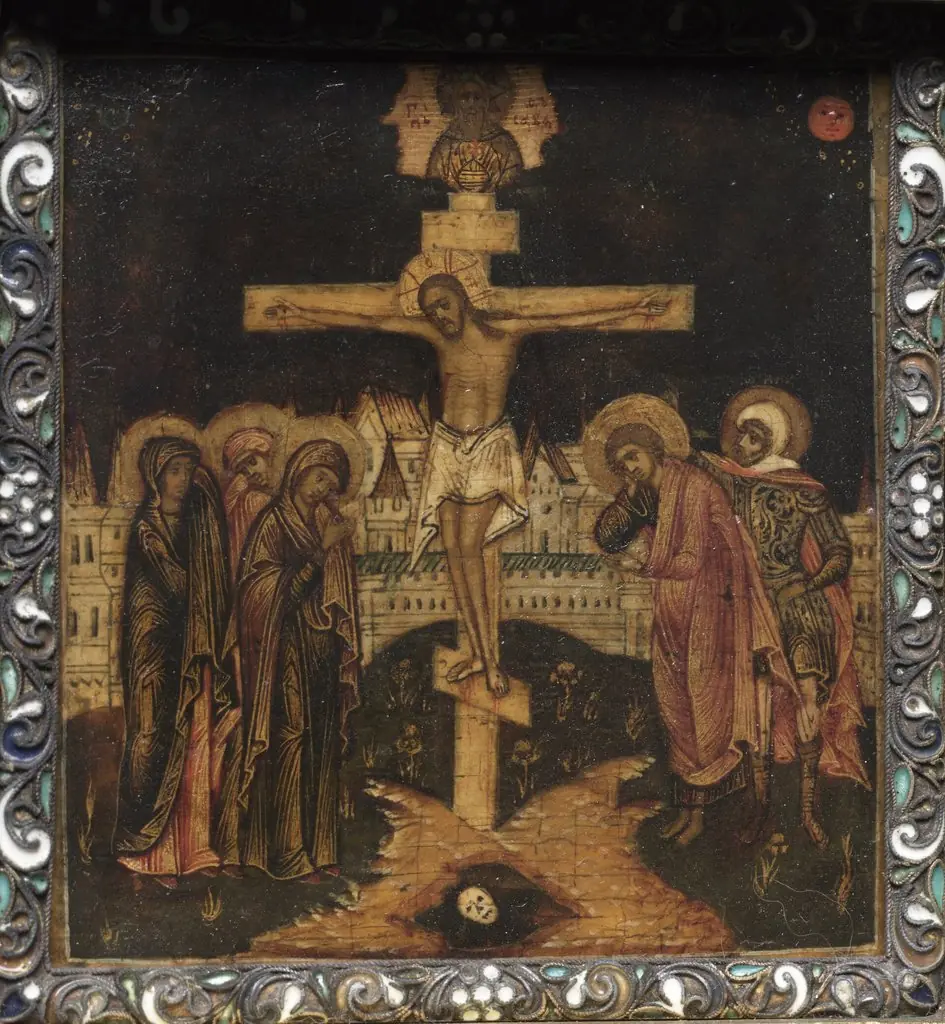
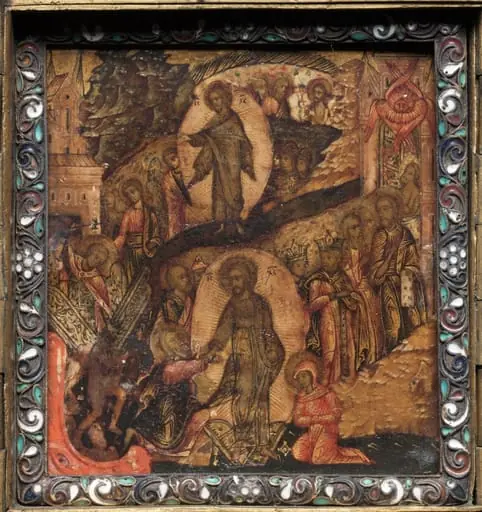
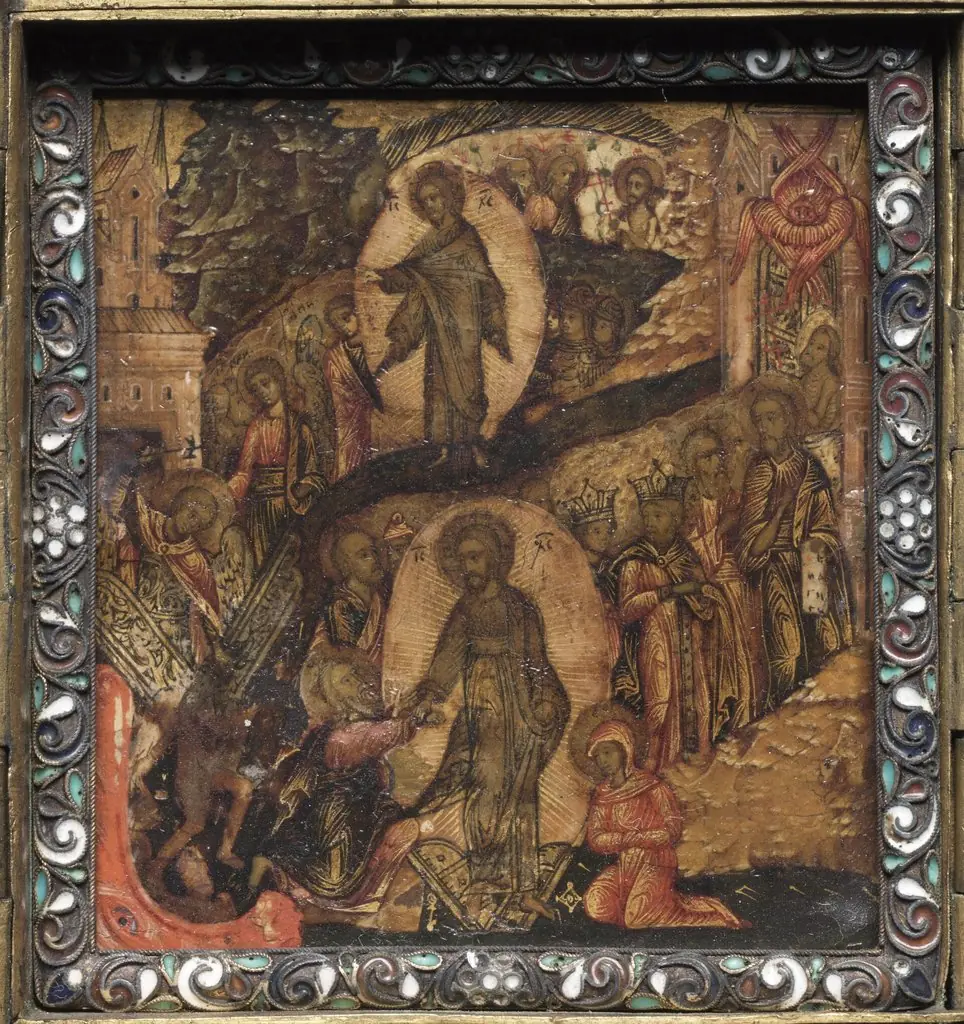
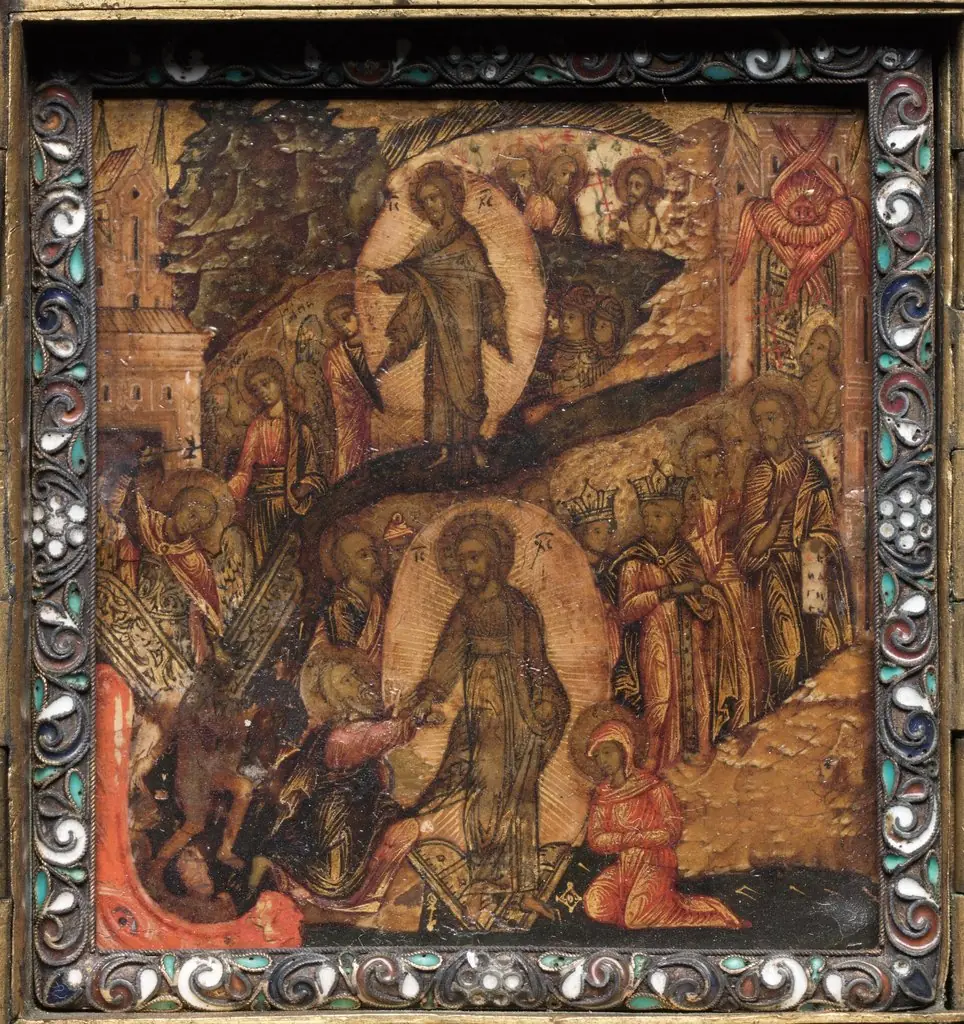
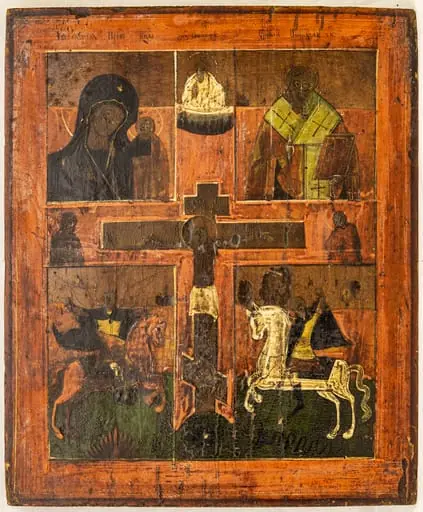
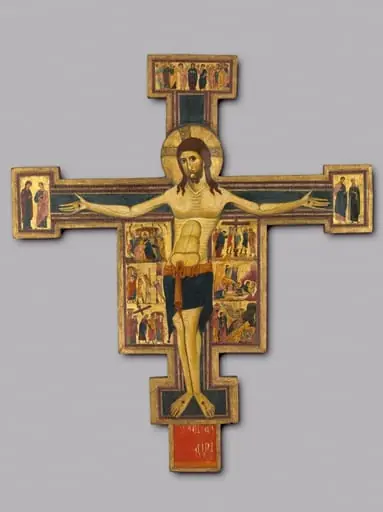
You see three small wooden panels hinged together: a crucifixion, a resurrection, and a crowd praying to an old image of Mary.
You see three small wooden panels hinged together: a crucifixion, a resurrection, and a crowd praying to an old image of Mary.
This little folding icon was made for someone to carry and pray with. It could be closed like a book when not in use. The scenes are packed with tiny gold halos and bright colors—no shadows, just flat, glowing figures.
Look up more works from the subject: byzantium. russia, moscow?, byzantine period, 17th century.
Overview
The object is a small, three‑panel wooden triptych designed for personal devotion. Its hinged panels could be folded shut, allowing the owner to transport and store it like a book. The central image depicts the Resurrection, flanked by a left panel showing the Crucifixion and a right panel illustrating worshippers before an older icon of the Virgin.
Subject & Meaning
The three scenes present a narrative of Christ’s passion and triumph, moving from his death on the cross to his victorious rise from the tomb, and concluding with veneration of a revered Marian image. This progression underscores themes of sacrifice, redemption, and the intercessory role of the Mother of God within Orthodox spirituality.
Technique & Style
Rendered in bright, flat colors with abundant gold leaf halos, the figures lack modelling shadows, creating a luminous, iconic surface typical of Russian ecclesiastical painting. The composition relies on clear outlines and stylized forms, emphasizing spiritual presence over naturalistic representation.
History & Provenance
Such portable icons were common in later Russian religious practice, often commissioned by lay patrons for private prayer. While the exact patron is unknown, the work likely dates to the 17th century, reflecting the continuation of Byzantine artistic conventions in Muscovite contexts.
Context
The triptych belongs to a tradition that merged Byzantine iconography with Russian devotional needs, producing compact, movable objects for the faithful. Its inclusion of a “miracle‑working” Vladimir Mother of God icon connects it to a broader cult of Marian images revered throughout Russian Orthodoxy.
Artist & collection

 Domestic Scene
 Giacomo and Cardinal Marco, investing Andrea, Abbot of San Zeno, with his Benefice
 The Nymph of Fontainebleau
 Portrait of a Woman
 Madonna and Child with Saints in the Enclosed Garden
 Venus and Minerva
 Family Group of Four on Sofa
 Wall painting from Room H of the Villa of P. Fannius Synistor at Boscoreale