Artwork
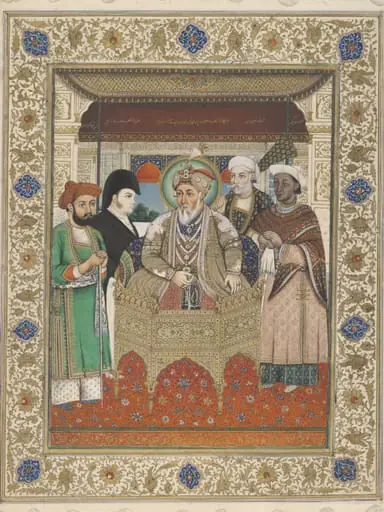
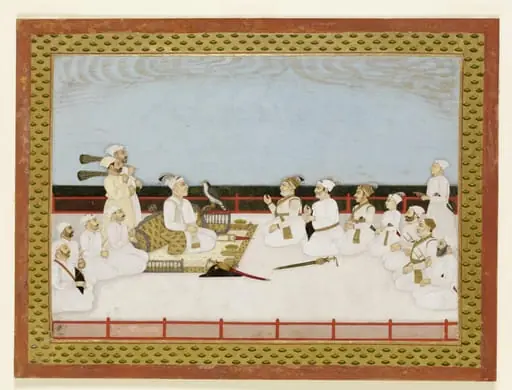
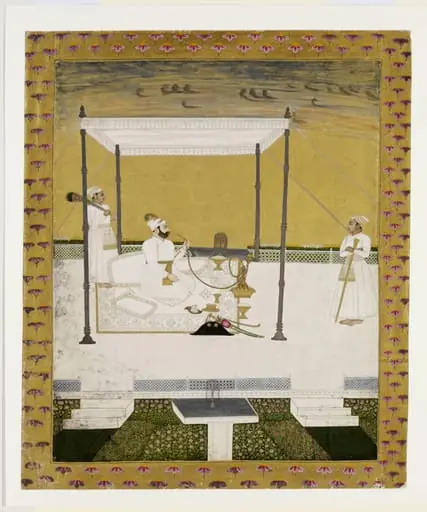
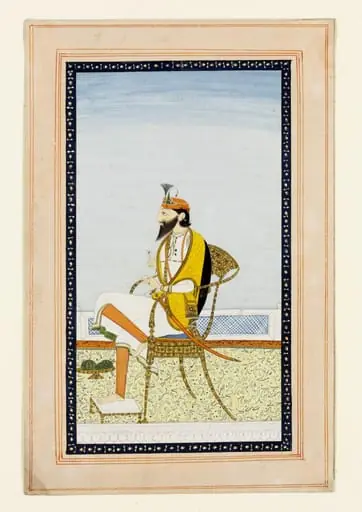
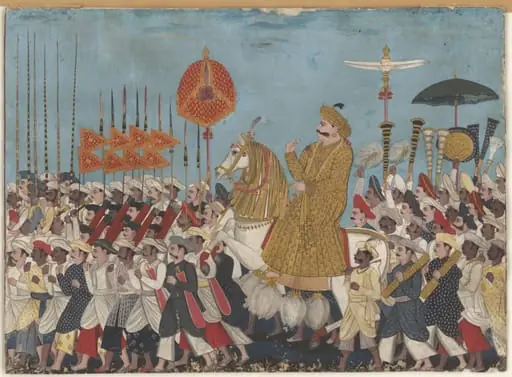
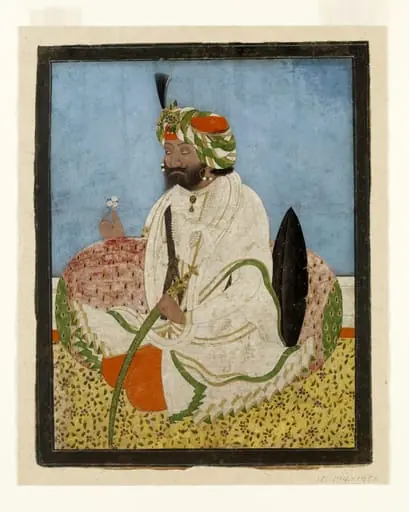
Portrait of Maharaja Ali Jah Daulat Rao Sindhia of Gwalior
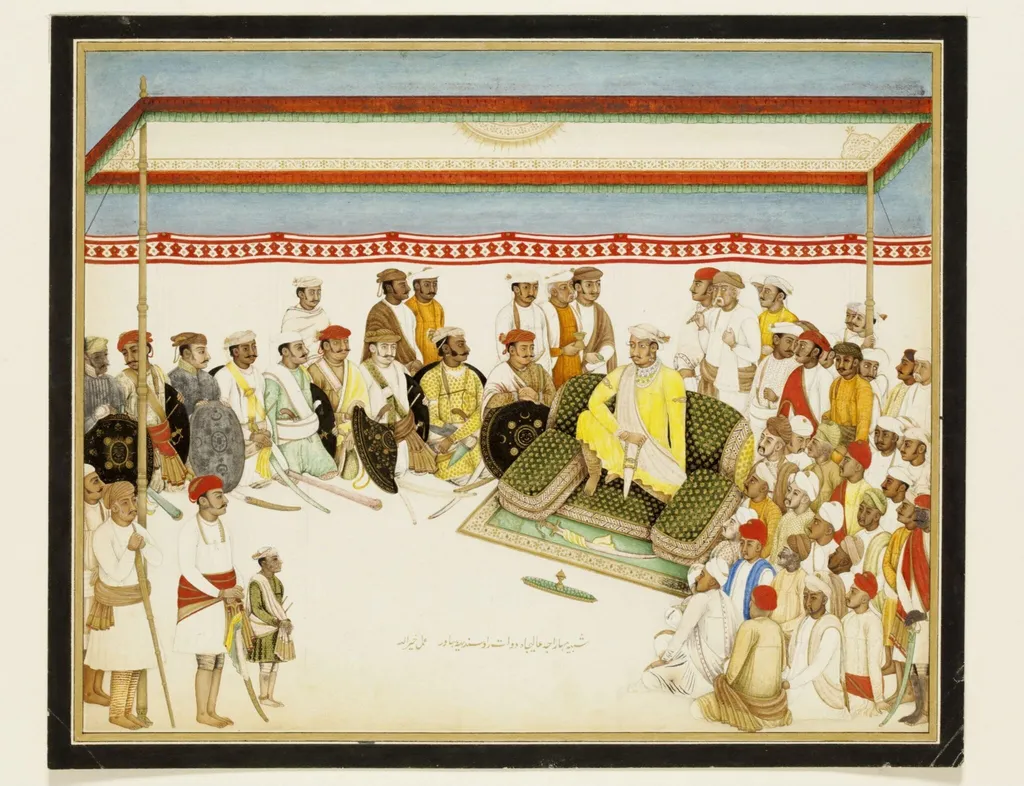
Portrait of Maharaja Ali Jah Daulat Rao Sindhia of Gwalior is a paint painting by the Patna School of Painting artist Unknown. It dates from 1825 and is held in the collection of the Victoria and Albert Museum.
About this work
Overview
The work is a portrait of Maharaja Ali Jah Daulat Rao Sindhia of Gwalior, painted circa 1825 by the Delhi artist Khairullah. Executed in the Company style, the canvas presents the ruler seated on plush cushions beneath a canopy, flanked by attendants who attend to his presence.
Subject & Meaning
Ali Jah Daulat Rao Sindhia (1781–1827) was a Maratha chief who inherited the Gwalior throne in 1794 as the great‑nephew and adopted son of Madhoji Sindhia. His reign, marked by participation in the Second Maratha War and defeat at Assaye in 1803, lasted thirty‑three years before he was succeeded by Jhanko Rao Sindhia.
Technique & Style
The portrait exemplifies the Company painting genre, where Indian artists incorporated European conventions such as linear perspective and chiaroscuro while retaining native decorative detail. Khairullah rendered the Maharaja’s elaborate costume and the surrounding textiles with fine brushwork, creating a subtle play of light and shadow that gives the scene depth.
History & Provenance
Commissioned for a European audience—likely a British East India Company official—the painting reflects the demand for visual records of Indian elites among colonial residents. Such works were often produced in workshops that could supply multiple copies for sale in Indian bazaars as well as for private patrons.
Context
During the early nineteenth century, the British presence in India fostered a market for portraits that combined local iconography with Western artistic standards. The portrait of Sindhia thus serves both as a documentation of a regional ruler’s status and as an artifact of cultural exchange between Indian painters and their colonial patrons.
Artist & collection

 Domestic Scene
 Giacomo and Cardinal Marco, investing Andrea, Abbot of San Zeno, with his Benefice
 The Nymph of Fontainebleau
 Portrait of a Woman
 Madonna and Child with Saints in the Enclosed Garden
 Venus and Minerva
 Family Group of Four on Sofa
 Wall painting from Room H of the Villa of P. Fannius Synistor at Boscoreale