Artwork
Prăznicar cu Sărbătorile Triodului
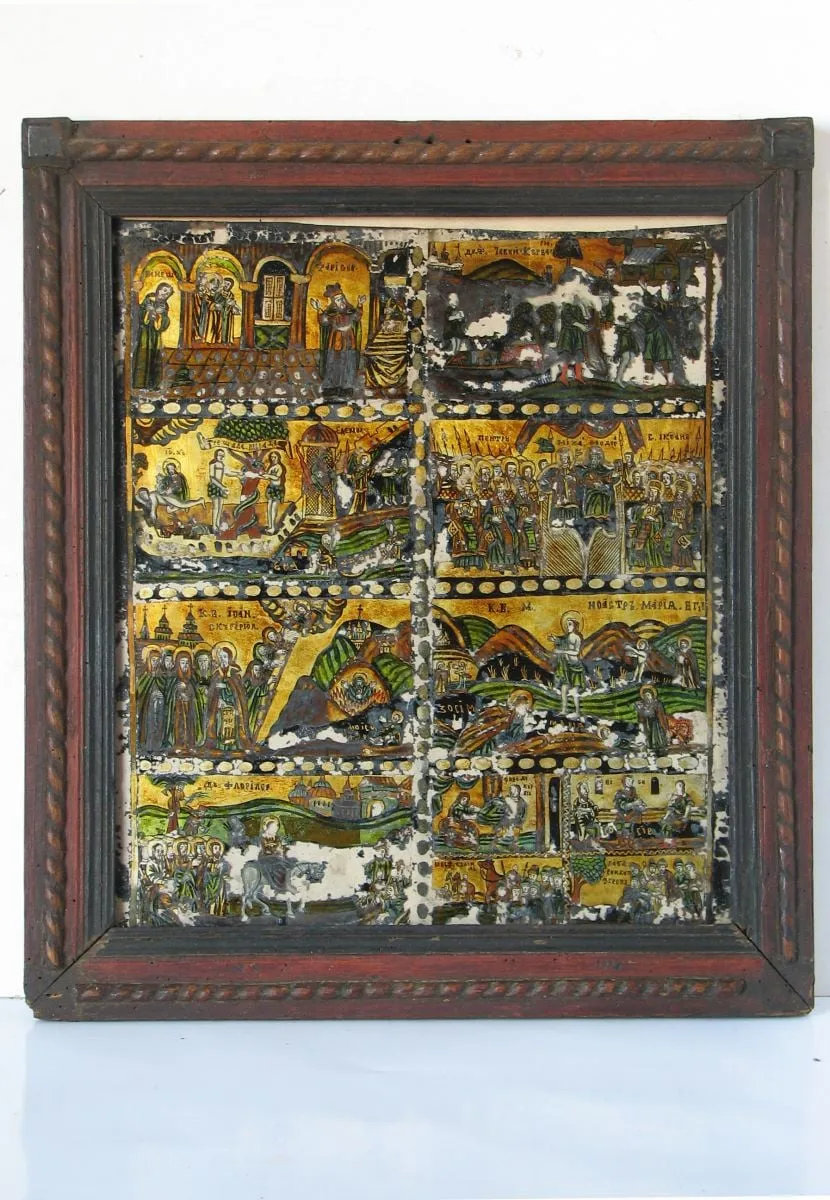
Prăznicar cu Sărbătorile Triodului is a drawing by Unknown. It dates from 1850 and is held in the collection of the ASTRA National Museum Complex. This wooden panel presents a dense, narrative composition divided into six horizontal bands.
About this work
Overview
The work is hand-drawn, with meticulous yet irregular linework, suggesting a devotional or instructional purpose rather than purely decorative intent.
This wooden panel presents a dense, narrative composition divided into six horizontal bands. Each band contains multiple small scenes rendered in bright, now-faded pigments—greens, reds, and yellows—against a gold-leaf background that has dulled with time. Figures in traditional robes move through doorways, fields, and boats, all defined by thick black outlines. The work is hand-drawn, with meticulous yet irregular linework, suggesting a devotional or instructional purpose rather than purely decorative intent.
Subject & Meaning
The panel illustrates episodes tied to the Triodion, a liturgical book used in Eastern Christian traditions during the pre-Lenten season. Scenes depict communal gatherings, religious rituals, and symbolic animals, each framed as a moment from the church calendar. Inscriptions in an archaic script likely label events or saints’ names, guiding viewers through a cycle of spiritual preparation. The crowded composition reflects a desire to compress sacred time into a single, contemplative surface.
Technique & Style
The artist employed tempera or similar pigments on wood, applying colors with careful but uneven brushwork. Bold black outlines separate each scene, creating a stained-glass-like clarity. Gold leaf, once luminous, has worn thin in places, revealing the wood beneath. The lack of perspective and the stacking of vignettes suggest a folk or regional style, prioritizing narrative clarity over spatial realism. Fine details in clothing and architecture imply skilled craftsmanship, though the lines lack uniformity.
History & Provenance
The panel likely originated in a Romanian or Moldavian ecclesiastical setting during the 17th or early 18th century, a period when such devotional panels were common in monasteries and parish churches. Its survival suggests it was preserved in a relatively stable environment, though exposure to light and humidity caused pigment fading. No documented ownership history is known, but its form aligns with portable liturgical objects used in processions or private devotion.
Context
This work belongs to a tradition of Eastern Orthodox iconographic panels that visualized liturgical texts for congregations with limited literacy. Similar panels, often called 'Triodion panels,' were used to teach seasonal observances through imagery. The dense, compartmentalized style echoes manuscript illuminations and wall frescoes from the Balkans, where religious storytelling prioritized comprehensiveness over aesthetic refinement. Its format reflects a culture where faith was experienced through repeated, visual cycles.
Legacy
Though not widely known outside regional collections, the panel exemplifies a vernacular approach to sacred art that persisted in rural Eastern Europe long after Renaissance naturalism took hold elsewhere. Its preservation offers insight into how liturgical traditions were maintained through visual means. Modern scholars value it not for technical polish but for its unmediated record of local piety and the material culture of Orthodox communities in the early modern period.
Artist & collection

 Domestic Scene
 Giacomo and Cardinal Marco, investing Andrea, Abbot of San Zeno, with his Benefice
 The Nymph of Fontainebleau
 Portrait of a Woman
 Madonna and Child with Saints in the Enclosed Garden
 Venus and Minerva
 Family Group of Four on Sofa
 Wall painting from Room H of the Villa of P. Fannius Synistor at Boscoreale
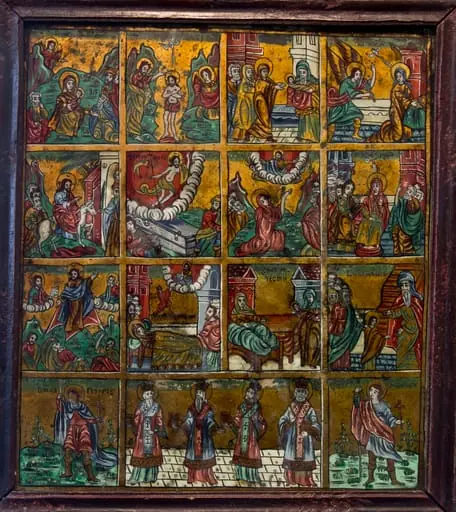 Prăznicar – Scene din viața lui Iisus
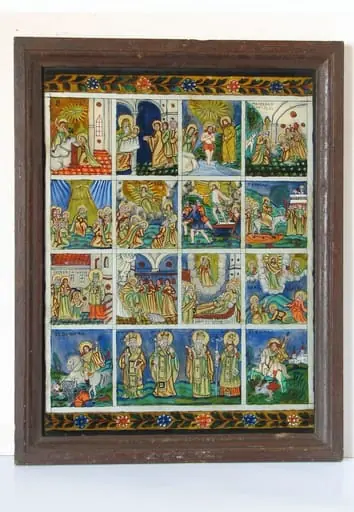 Prăznicar cu scene din viața Mântuitorului Iisus Hristos și alți Sfinți
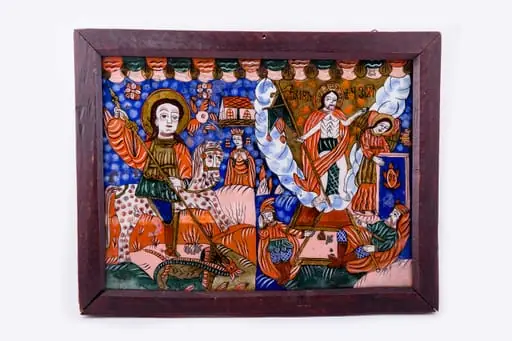 Sfânmati
 Sfân
Sfân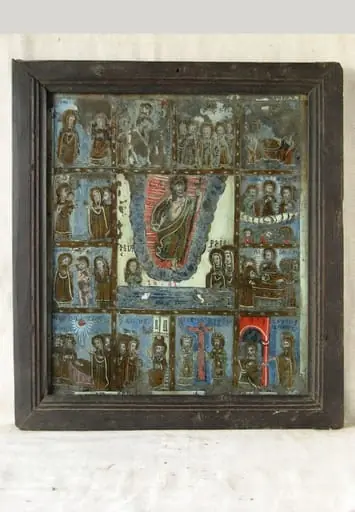 Prăznicar cu Învierea Mântuitorului Iisus Hristos
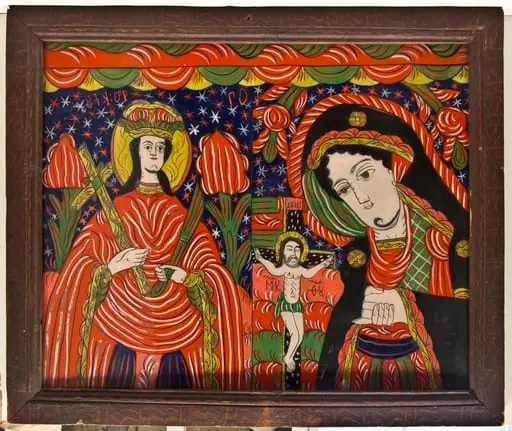 Sf. Parascheva și Maica Domnului îndurerată
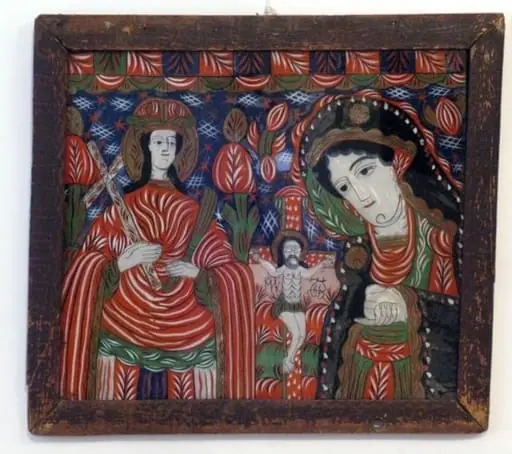 Sfânta Cuvioasă Paraschiva; Maica Domnului îndurerată
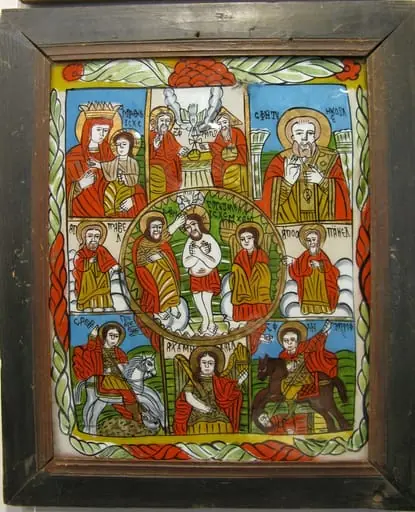 Prăznicar – Botezul lui IS HS
 Icoaării