Artwork
Prince Salim
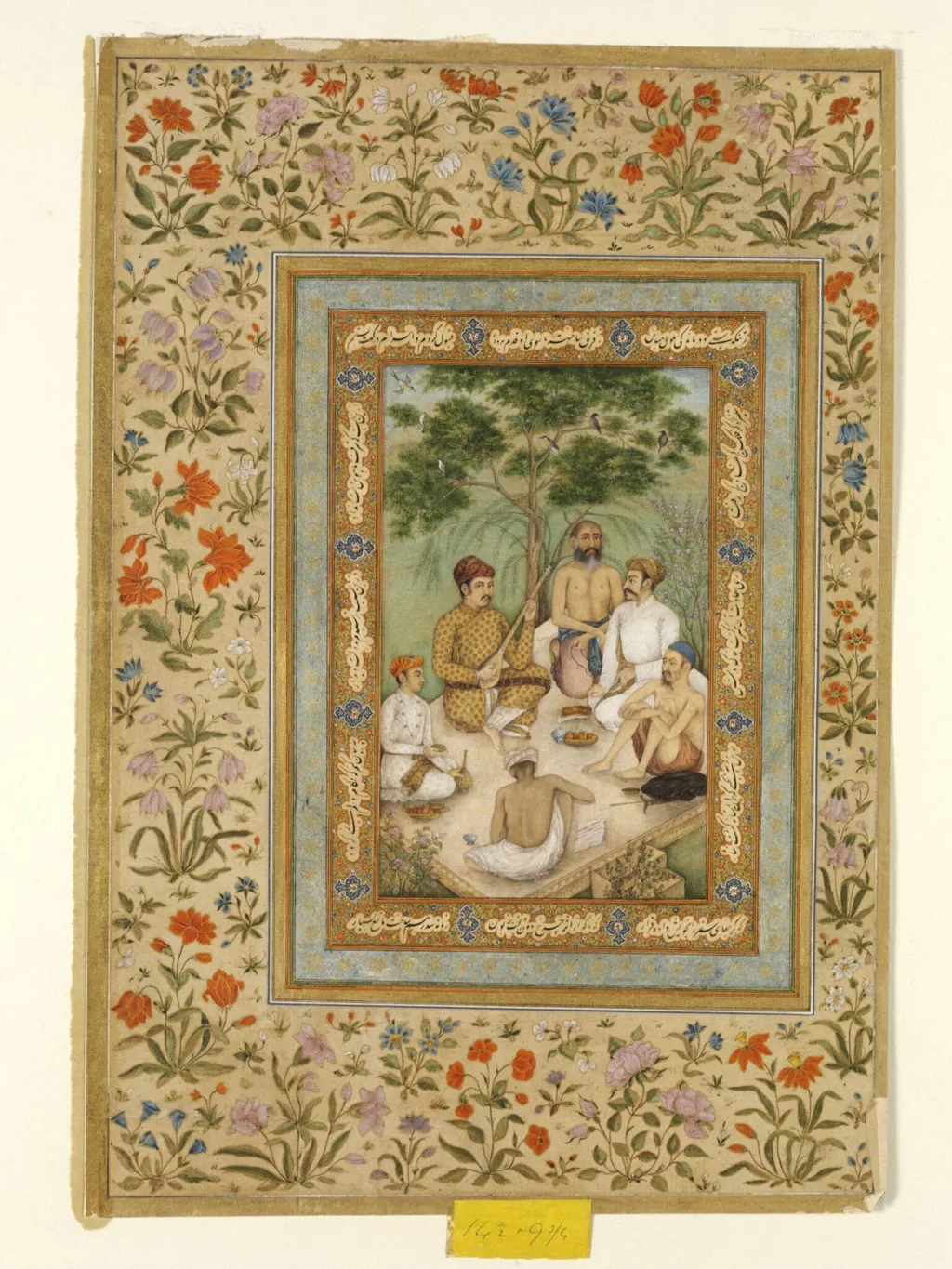
Prince Salim is a paint painting by the Mughal Painting artist Unknown. It dates from 1800 and is held in the collection of the Victoria and Albert Museum.
About this work
Overview
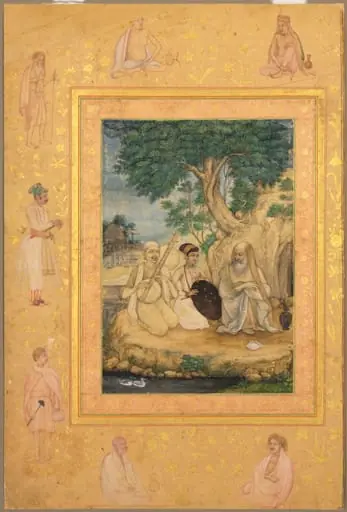
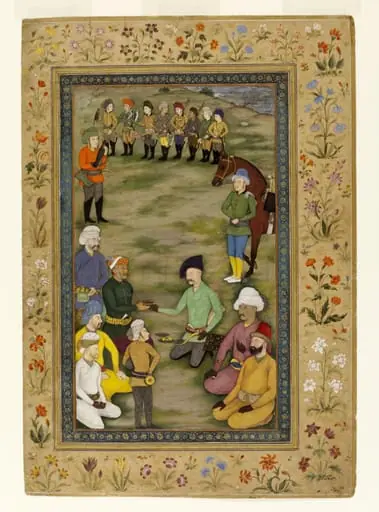
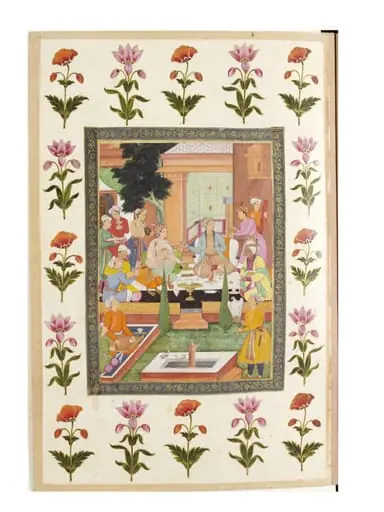
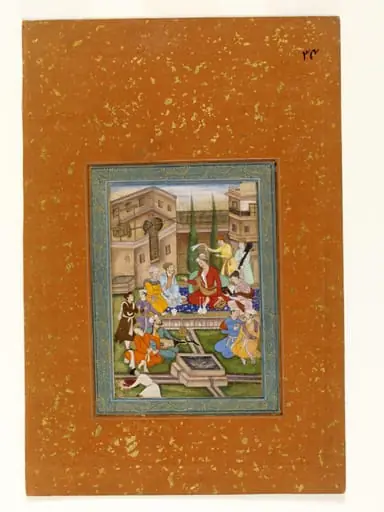
This opaque watercolour and gold painting on paper, dated circa 1800, depicts Prince Salim—later Emperor Jahangir—engaged in a tranquil outdoor moment.
This opaque watercolour and gold painting on paper, dated circa 1800, depicts Prince Salim—later Emperor Jahangir—engaged in a tranquil outdoor moment. It is a later reproduction of an earlier 17th-century Mughal composition, reflecting continued interest in imperial imagery. The work entered the collection through the 1920 bequest of Harriet Sarah, Baroness Wantage, and is catalogued under multiple accession records within the institution.
Subject & Meaning
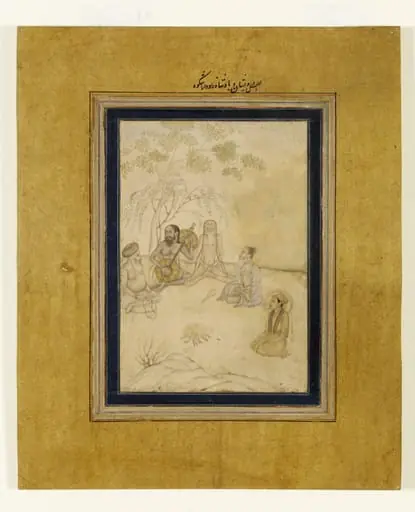
Prince Salim is shown seated among musicians and attendants beneath a tree by a riverbank, suggesting a pause during travel or a private leisure moment. The presence of a servant offering food, a resting dog, and relaxed figures conveys intimacy rather than ceremony. The scene emphasizes imperial accessibility and cultivated refinement, aligning with Mughal ideals of rulership that blended power with personal grace.
Technique & Style
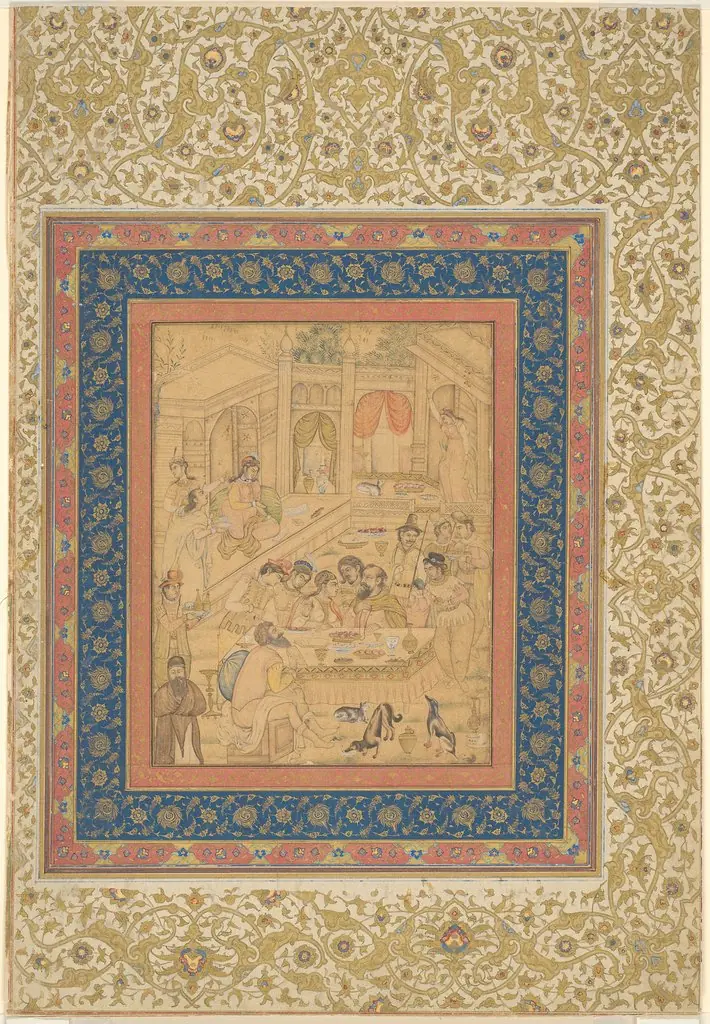
Executed in opaque watercolour with gold detailing, the painting exhibits fine brushwork and layered pigments typical of Mughal manuscript illustration. The border is densely adorned with stylized floral motifs in vivid reds, blues, and golds, framing the central scene. Naturalistic elements like the river and foliage contrast with the ornamental border, creating a balance between realism and decorative tradition.
History & Provenance
The painting is a 19th-century reinterpretation of a 17th-century prototype, likely produced in a royal atelier to satisfy ongoing demand for imperial portraiture. It passed into British hands through the collection of Harriet Sarah, Baroness Wantage, who bequeathed it upon her death in 1920. Its multiple accession numbers reflect its complex documentation history within the institution’s holdings.
Context
During the late Mughal period, reproductions of earlier imperial images remained popular, serving both as historical records and symbols of continuity. This work reflects the enduring appeal of Jahangir’s reign, even decades after his death. Similar compositions appear in albums compiled for elite patrons, where personal and political identity were intertwined through visual culture.
Legacy
The painting contributes to the broader understanding of how Mughal imagery was preserved and reimagined in the 19th century. Its survival in a Western collection underscores the cross-cultural circulation of South Asian art during the colonial era. Comparable works can be found in institutions such as the Victoria and Albert Museum, where similar album paintings are studied for their aesthetic and historical value.
Artist & collection

 Domestic Scene
 Giacomo and Cardinal Marco, investing Andrea, Abbot of San Zeno, with his Benefice
 The Nymph of Fontainebleau
 Portrait of a Woman
 Madonna and Child with Saints in the Enclosed Garden
 Venus and Minerva
 Family Group of Four on Sofa
 Wall painting from Room H of the Villa of P. Fannius Synistor at Boscoreale