Artwork
The gathering of dervishes with Prince Dara Shikuh
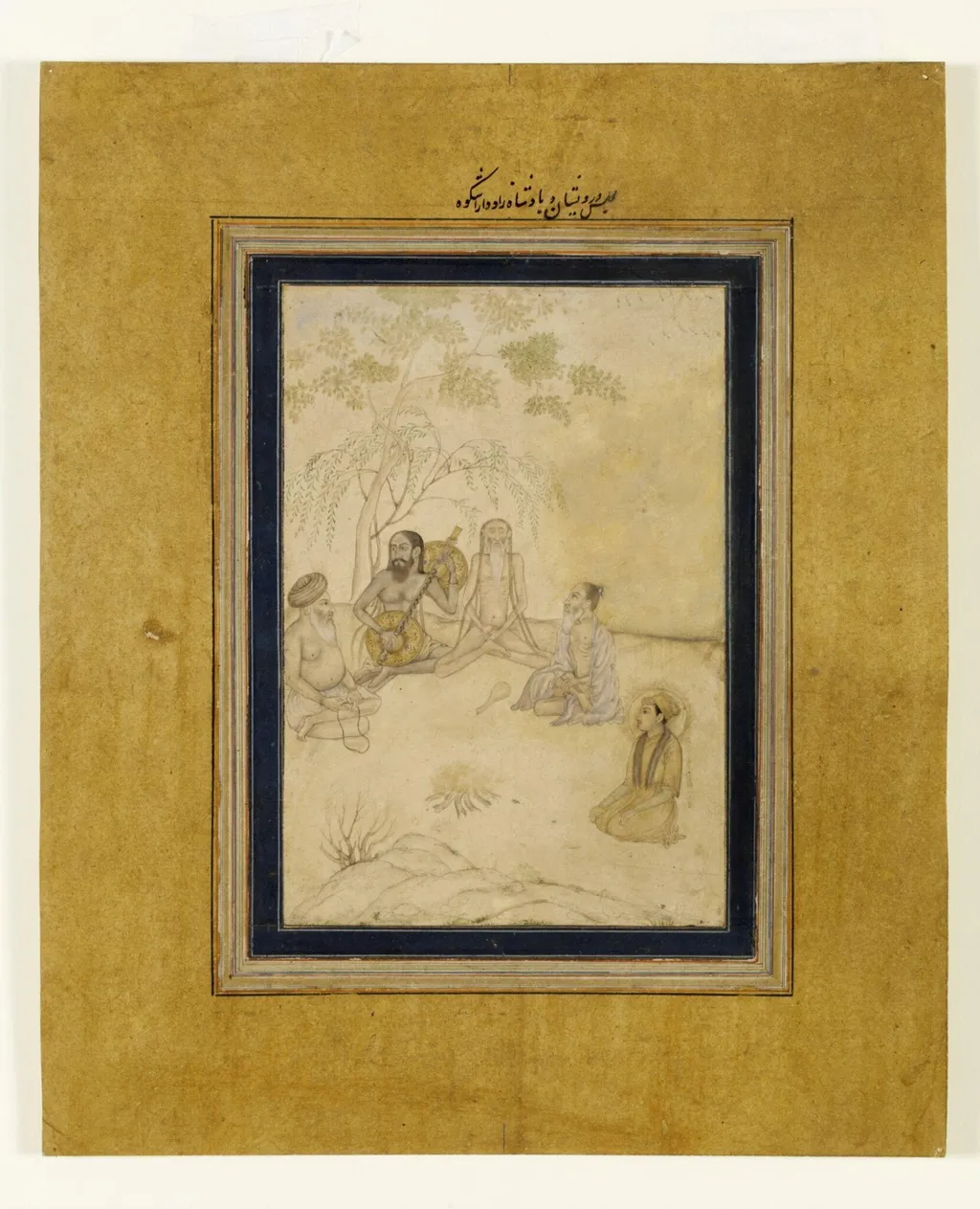
The gathering of dervishes with Prince Dara Shikuh is a paint painting by the Baroque artist Unknown. It dates from 1685 and is held in the collection of the Victoria and Albert Museum. This opaque watercolour on paper depicts a quiet outdoor gathering of five figures beneath a tree.
About this work
Overview
The scene is framed by a simple landscape of rocky hills and sparse vegetation, with a gold-speckled yellow mount surrounding the image.
This opaque watercolour on paper depicts a quiet outdoor gathering of five figures beneath a tree. The scene is framed by a simple landscape of rocky hills and sparse vegetation, with a gold-speckled yellow mount surrounding the image. Executed in subdued tones, the composition conveys stillness rather than spectacle, emphasizing contemplation over action. The work is catalogued as RP 1913-1239M in museum records, acquired in 1913 from Messrs Luzac & Co.
Subject & Meaning
The figures include ascetic dervishes, one holding a drum, and two individuals in robes, one crouching in introspection. The seated figure beneath the tree is likely a nobleman, possibly Prince Dara Shikuh, known for his interest in Sufi mysticism, or Prince Akbar, son of Aurangzeb. The gathering suggests a moment of spiritual exchange, where religious devotion and royal patronage intersect, reflecting the syncretic culture of Mughal elite circles.
Technique & Style
The painting employs fine brushwork in muted, earthy pigments, avoiding dramatic contrasts to sustain a tranquil mood. Figures are rendered with soft outlines and minimal detail, their forms blending gently into the background. Gold leaf accents on the mount add subtle luminosity without intruding on the scene’s quietude. The style reflects the refined aesthetic of late Mughal court painting, prioritizing atmosphere over narrative intensity.
History & Provenance
The painting entered institutional collection in 1913 through acquisition from Messrs Luzac & Co., a London dealer specializing in Asian art. Its earlier provenance remains undocumented, though its style and subject align with mid-17th century Mughal workshops. The inscription at the top, though partially obscured, hints at royal association, supporting its attribution to a courtly context rather than a folk tradition.
Context
During the reigns of Shah Jahan and Aurangzeb, Mughal courts fostered diverse spiritual practices, with some princes actively engaging Sufi orders. Paintings like this captured intimate moments of religious interaction, distinct from grand ceremonial scenes. Such works reflect a broader cultural current where Islamic mysticism coexisted with imperial authority, offering visual testimony to intellectual and spiritual pluralism.
Legacy
This painting contributes to the understanding of Mughal visual culture beyond imperial portraiture, illustrating the quiet presence of Sufi traditions within elite circles. Though not widely exhibited, it remains a key example of how court artists rendered spiritual intimacy through restraint. Its preservation allows ongoing study of cross-cultural religious expression in early modern South Asia.
Artist & collection

 Domestic Scene
 Giacomo and Cardinal Marco, investing Andrea, Abbot of San Zeno, with his Benefice
 The Nymph of Fontainebleau
 Portrait of a Woman
 Madonna and Child with Saints in the Enclosed Garden
 Venus and Minerva
 Family Group of Four on Sofa
 Wall painting from Room H of the Villa of P. Fannius Synistor at Boscoreale
 Prince Visiting an Ascetic during a Hunt
 A prince visiting a holy man in a rocky landscape
 A Prince Visiting a Holy Man in a Rocky Landscape (recto)
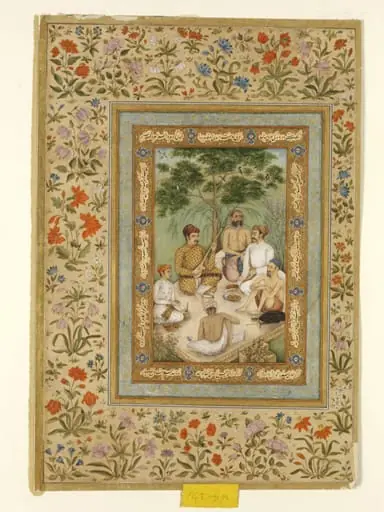 Prince Salim
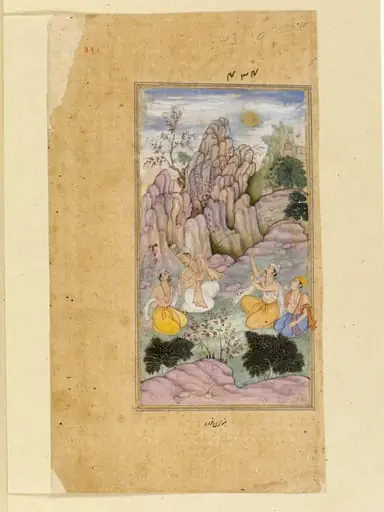 Untitled
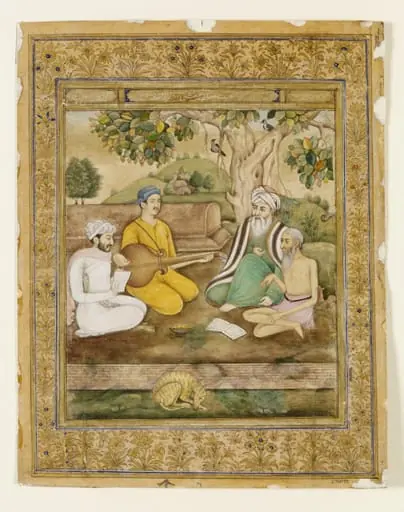 Shaikh Salim Chishti
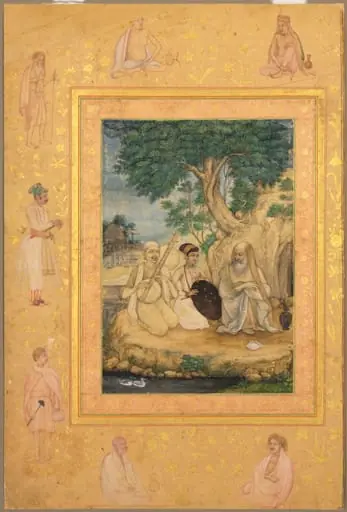 Prince and ascetics, from the Late Shah Jahan Album
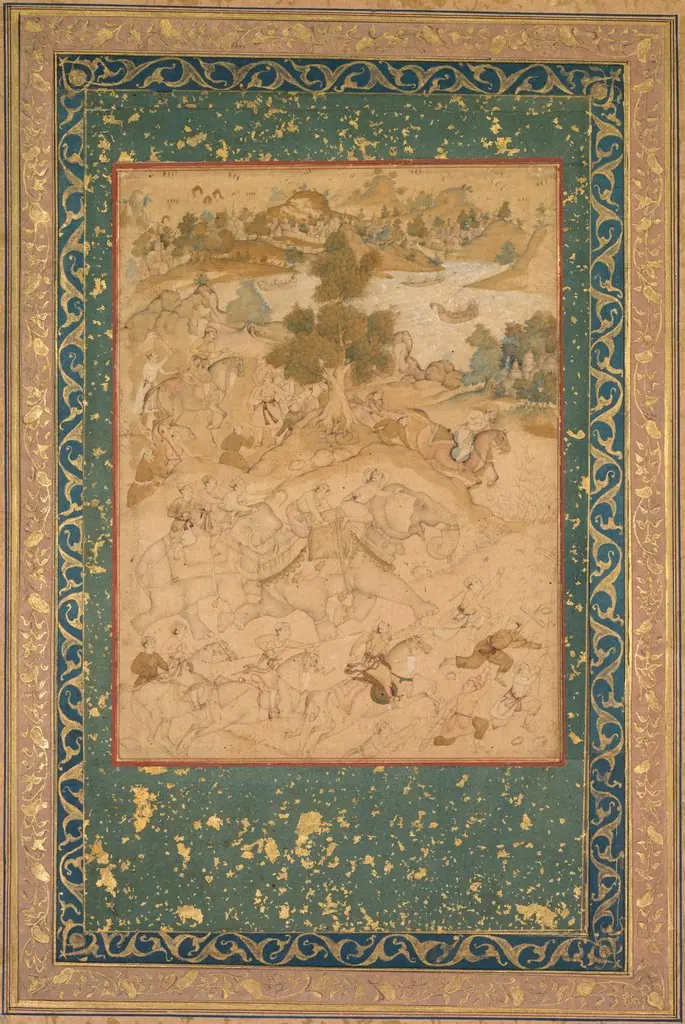 Akbar supervising the capture of wild elephants at Malwa in 1564, painting 90 from an Akbar-nama (Book of Akbar) of Abu’l Fazl (Indian 1551–1602)