Artwork
European Banquet Scene
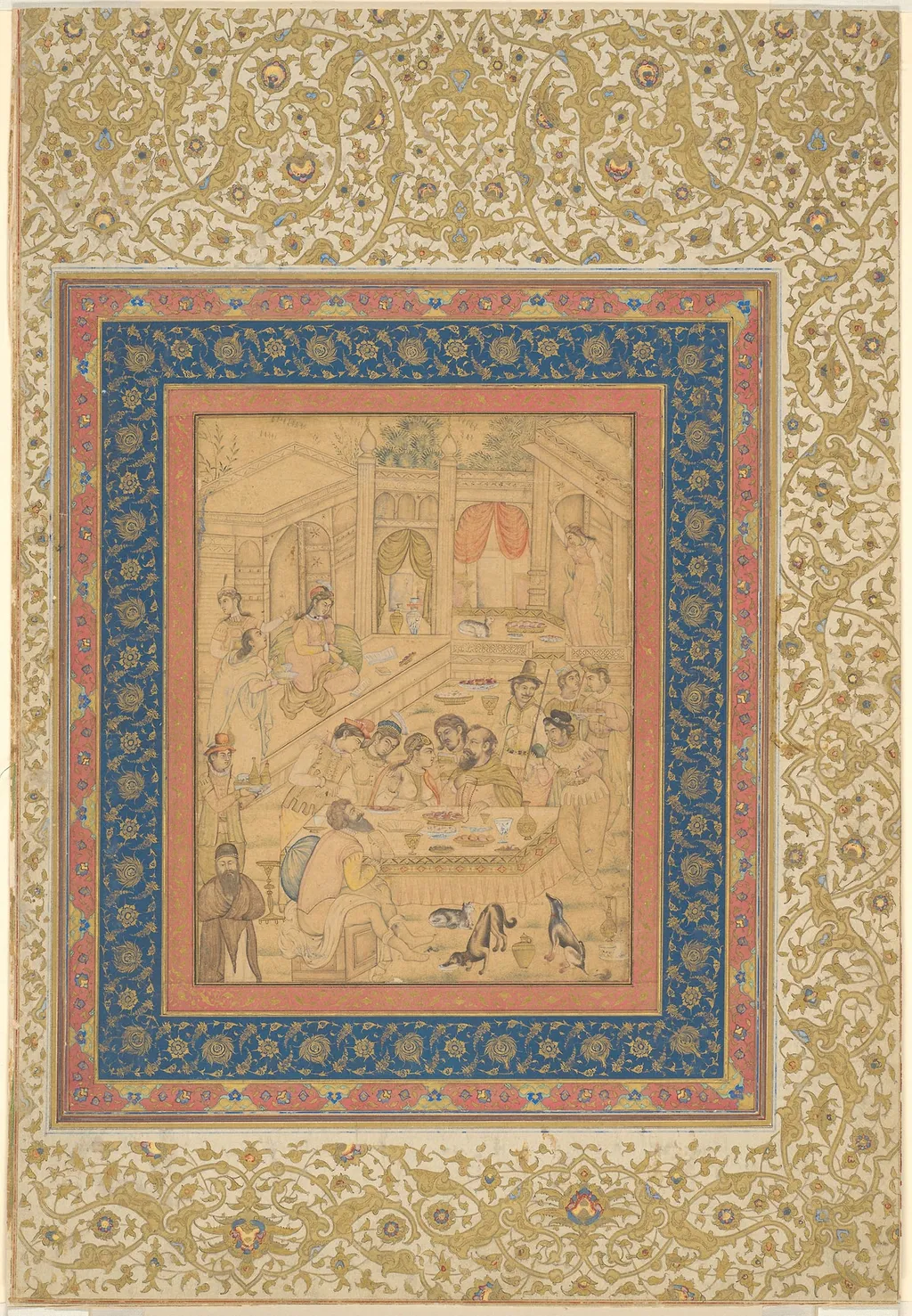
European Banquet Scene is an unspecified painting by the Early Baroque Italian artist Unknown. It dates from 1600 and is held in the collection of the Art Institute of Chicago. This painting depicts an indoor banquet in a European domestic or aristocratic setting.
About this work
Overview
Animals—dogs and cats—move freely among the guests, suggesting a relaxed, lived-in atmosphere rather than formal ceremony.
This painting depicts an indoor banquet in a European domestic or aristocratic setting. A long table is filled with seated figures engaged in eating, conversation, and quiet observation. The space is expansive, with high ceilings and draped windows allowing soft light to enter. Animals—dogs and cats—move freely among the guests, suggesting a relaxed, lived-in atmosphere rather than formal ceremony.
Subject & Meaning
The scene captures a moment of social ritual, emphasizing communal dining as an expression of status and domestic harmony. The presence of pets implies intimacy and familiarity, contrasting with the rigid formality often associated with elite gatherings. The composition invites viewers to observe not just the meal, but the subtle dynamics between individuals, hinting at social hierarchies and unspoken interactions.
Technique & Style
The artist employs fine detail to render textures of fabric, ceramics, and architectural elements. Muted tones of gold, blue, and earthy hues dominate, creating a restrained elegance. Light filters through tall windows, casting soft shadows that enhance the depth of the room. The careful patterning of floor tiles and wall decorations reflects a commitment to realism and atmospheric cohesion.
History & Provenance
The work originates from the late 16th or early 17th century, likely from the Low Countries or Northern Europe, where genre scenes of domestic life gained popularity. Its survival suggests it was owned by a wealthy household or collector. No definitive record of its early ownership exists, but its style aligns with contemporaneous works by artists documenting everyday aristocratic life.
Context
During this period, paintings of banquets served as both celebration and documentation of social order. Unlike religious or mythological scenes, these works focused on the visible world—food, furnishings, and human behavior. The inclusion of animals was not merely decorative; it signaled domestic tranquility and the blending of human and animal life within elite homes.
Legacy
This painting contributes to a broader tradition of Northern European genre painting that valued observation over idealization. Its quiet realism influenced later artists interested in capturing the nuances of daily life. Though not widely exhibited today, it remains a valuable record of how wealth, leisure, and social interaction were visually encoded in early modern Europe.
Artist & collection

 Domestic Scene
 Giacomo and Cardinal Marco, investing Andrea, Abbot of San Zeno, with his Benefice
 The Nymph of Fontainebleau
 Portrait of a Woman
 Madonna and Child with Saints in the Enclosed Garden
 Venus and Minerva
 Family Group of Four on Sofa
 Wall painting from Room H of the Villa of P. Fannius Synistor at Boscoreale
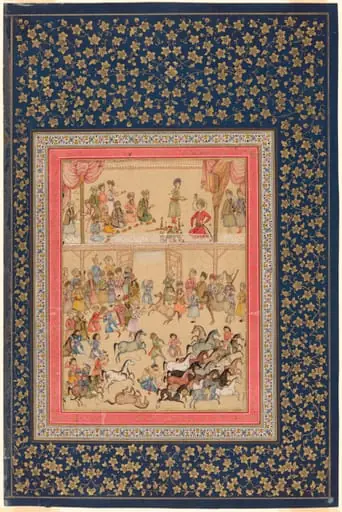 Royal Horse Inspection
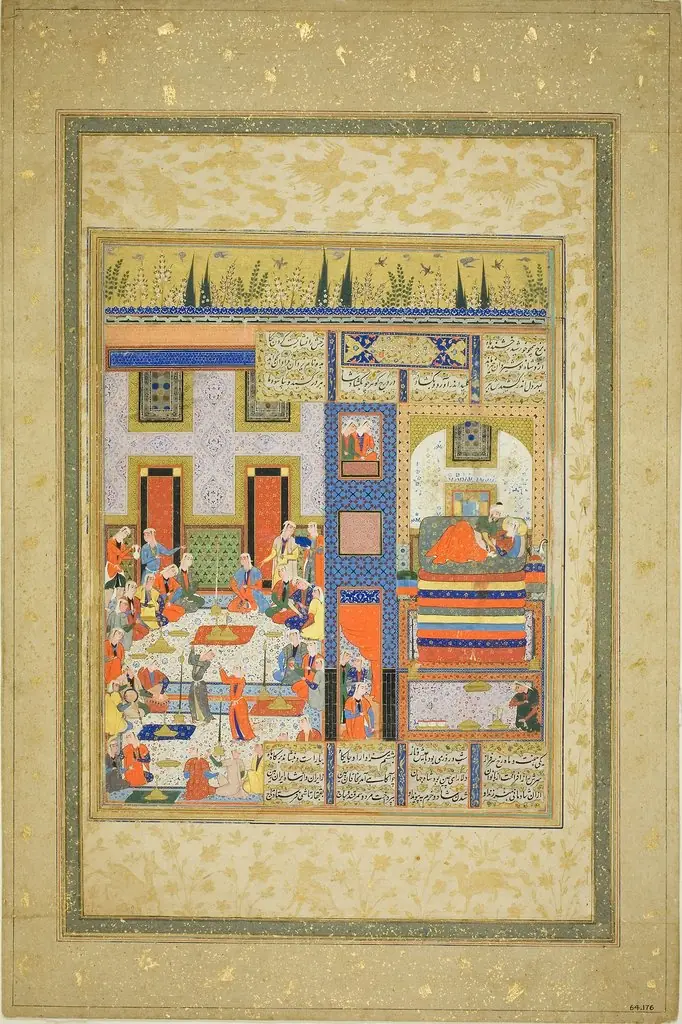 The Wedding Night of Anushirvan and the Khaqan's Daughter (from a copy of Firdausi's Shahnama)
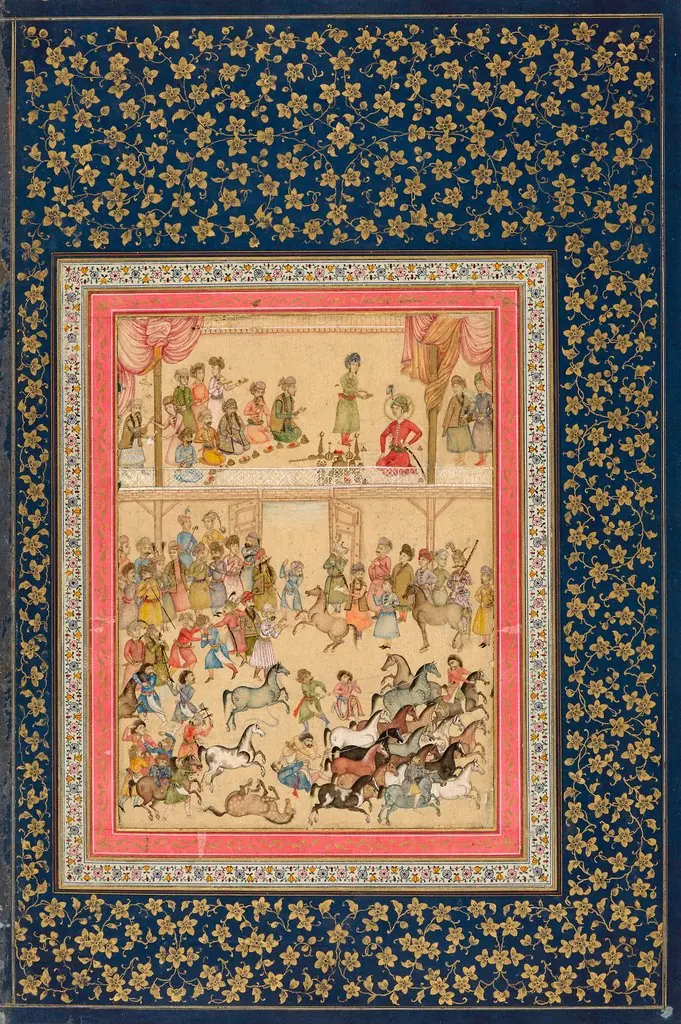 Royal Horse Inspection
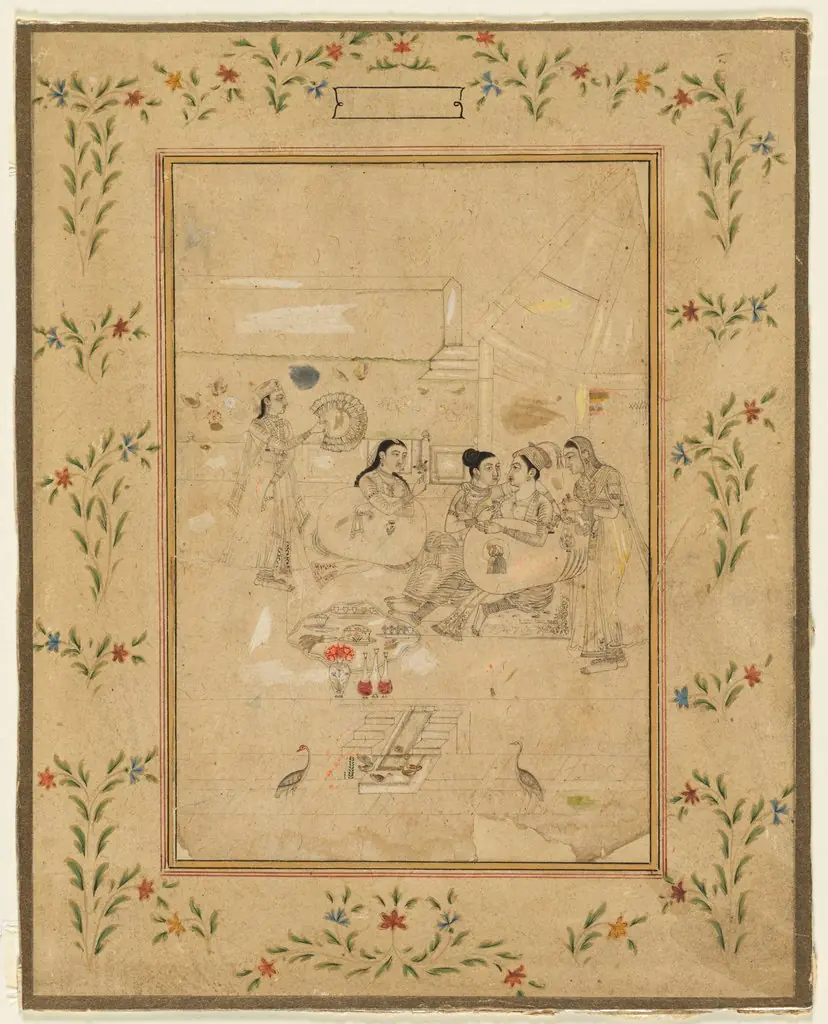 Women playing at cross-dressing
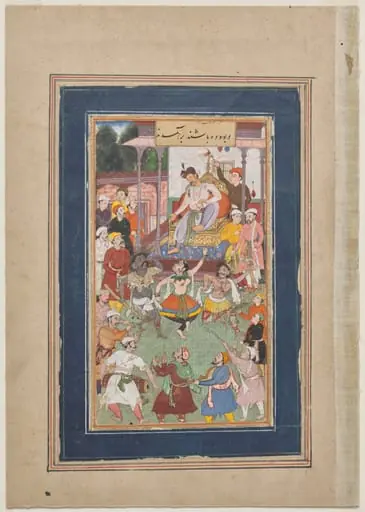 Grotesque Dancers Performing
 Women playing at cross-dressing
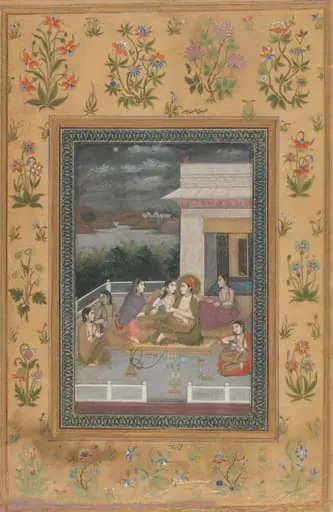 A Couple on a Terrace Surrounded by Attendants and Musicians
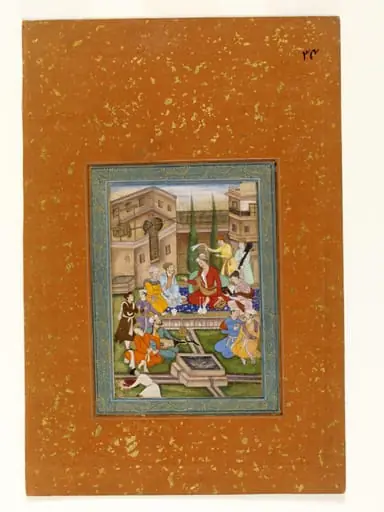 Akbar
Akbar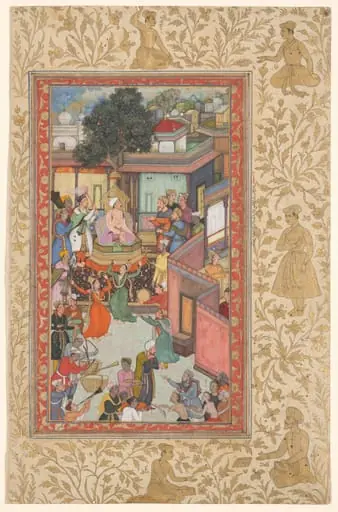 Circumcision ceremony for Akbar’s sons, painting 126 from an Akbar-nama (Book of Akbar) of Abu’l Fazl (Indian, 1551–1602)
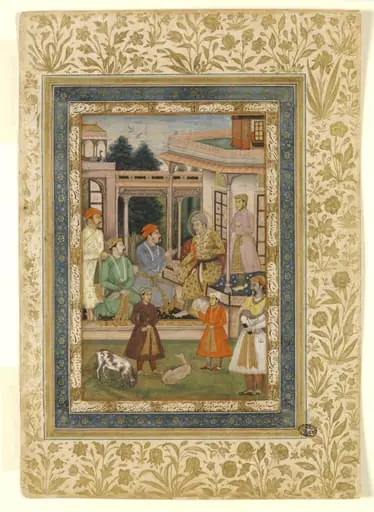 Akbar
Akbar