Artwork
Broadside: An Invitation to an Arms Competition
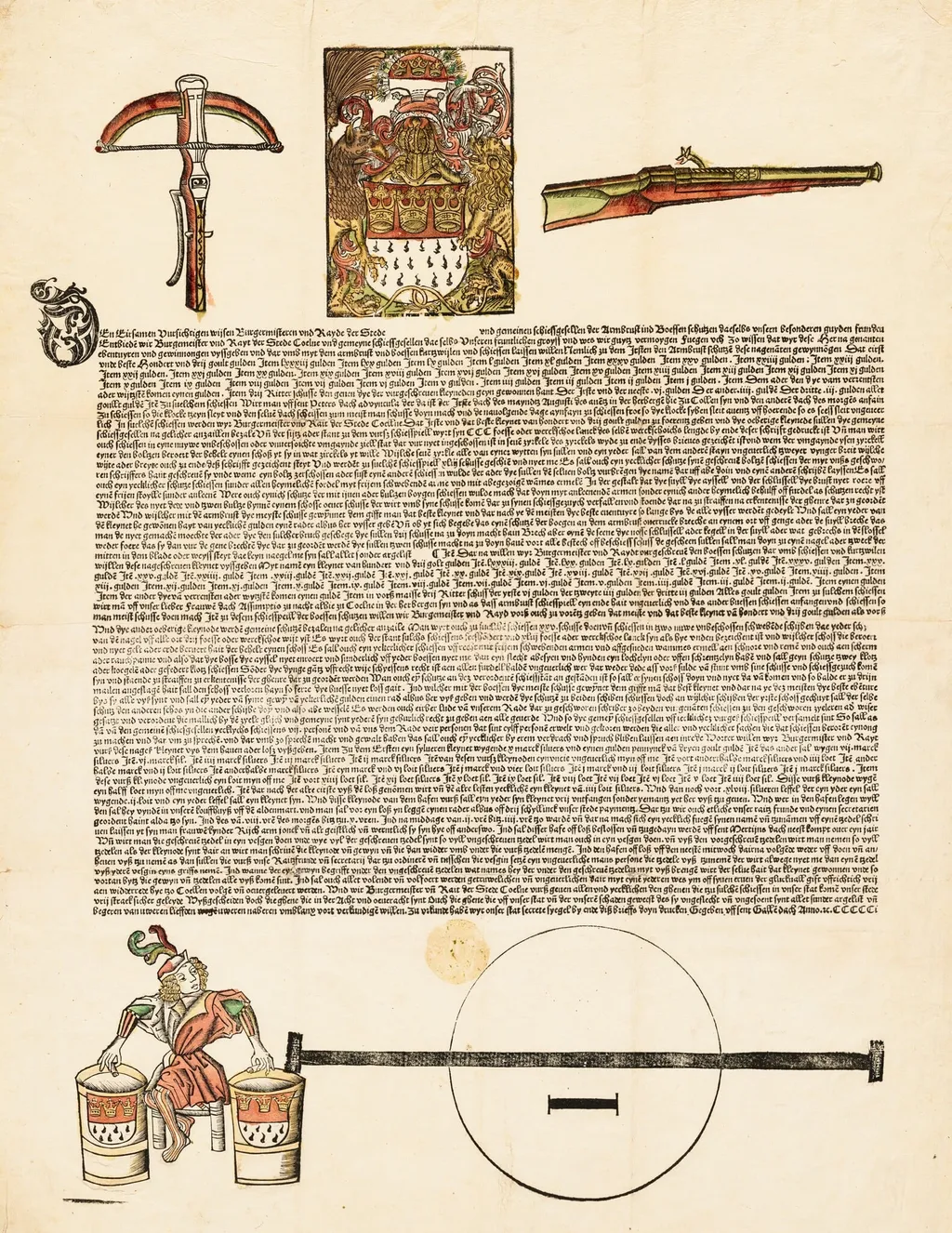
Broadside: An Invitation to an Arms Competition is an ink print by the Renaissance artist German 16th Century. It dates from 1501 and is held in the collection of the National Gallery of Art.
About this work
Overview
Broadside: An Invitation to an Arms Competition is a hand‑colored woodcut printed on two joined sheets of paper. The image combines a dense, multi‑panel composition with movable type, creating a printed announcement that merges visual spectacle with textual invitation.
Subject & Meaning
The central scene depicts a chaotic melee: armored figures engage with swords and shields while a fire‑breathing dragon looms overhead. Flanking elements—a massive black pickaxe with a red‑wrapped handle on the left and a striped spear propped against a wall on the right—frame the combat, suggesting a tournament of martial skill and fantastical challenge.
Technique & Style
Executed as a woodcut, the design relies on carved relief blocks, allowing bold lines and stark contrasts. Hand‑coloring adds vivid hues to the otherwise monochrome print, while the inclusion of movable type integrates printed text in German that invites viewers to participate in the competition.
History & Provenance
The work originates from a period when broadsides served as public notices, combining visual propaganda with printed announcements. Its production on joined sheets reflects a practical approach to larger formats, and the use of movable type indicates a connection to early modern printing practices.
Context
Set within a tradition of martial broadsides, the image functions both as advertisement and spectacle, appealing to a populace familiar with tournaments, chivalric contests, and the symbolic power of weaponry. The dragon motif adds a fantastical element common in early modern visual culture.
Legacy
As an example of hybrid printmaking—melding woodcut illustration with typographic text—the broadside illustrates the transitional nature of early modern communication, where visual and textual media converged to convey public events and communal challenges.
Artist & collection

Artist
A German artist from the late 1500s drew lively scenes of knights clashing in parades and mock battles.

![Abraham Entertaining the Angels [verso], by German 16th Century](https://artifactworldgallery.com/img/german-16th-century--abraham-entertaining-the-angels-verso--69d1b25f4eba0a53-w320.webp)
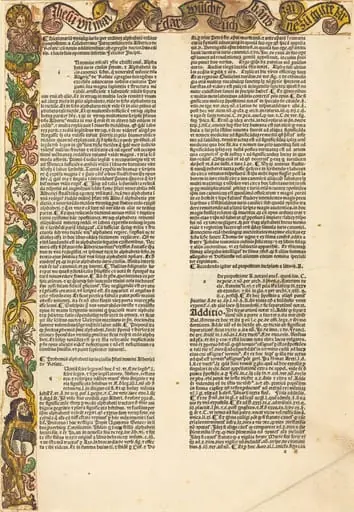 Border from an Almanac
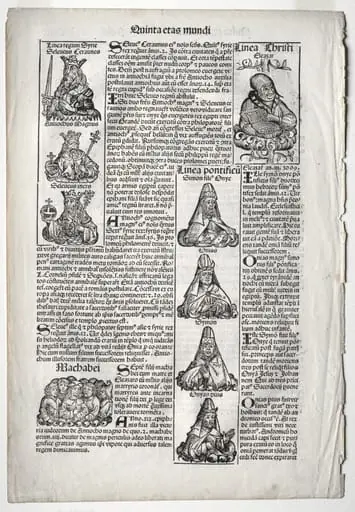 Genealogical Page; published in the Nuremberg Chronicle by Hartmann Schedel
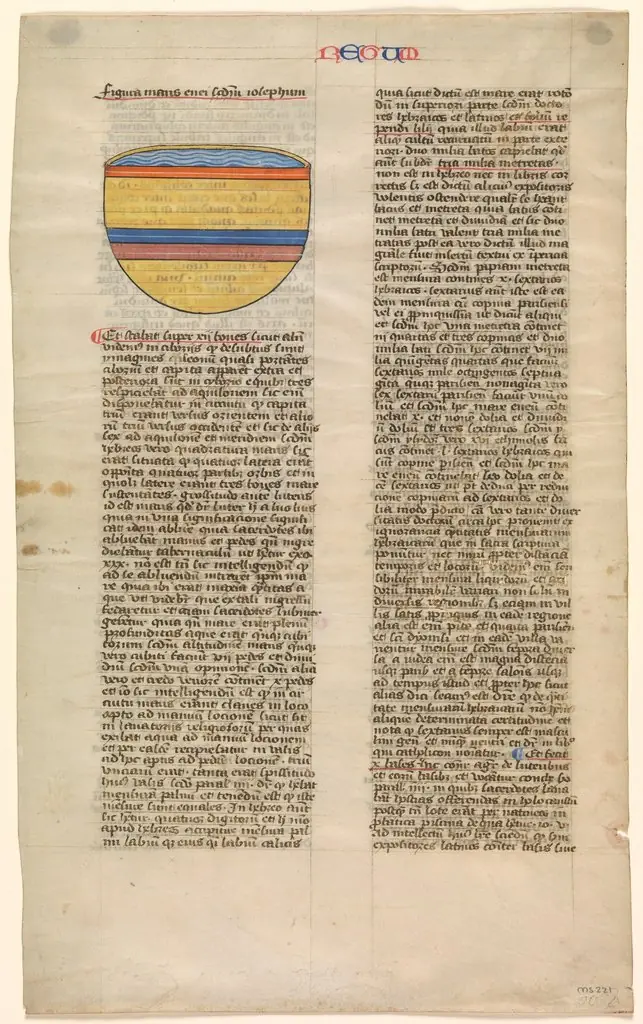 Brazen Sea, one of six illustrated leaves from the Postilla Litteralis (Literal Commentary) of Nicholas of Lyra
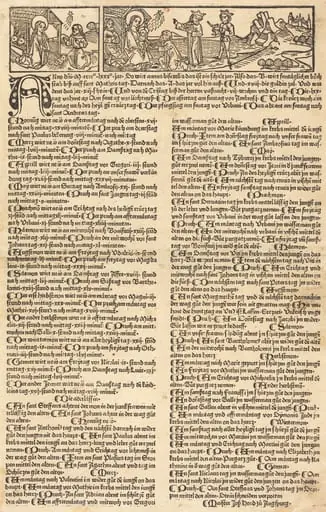 Calendar with the Nativity and Adoration
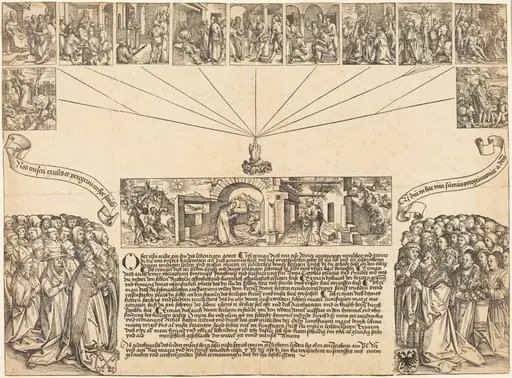 The Nativity and Passion of Christ
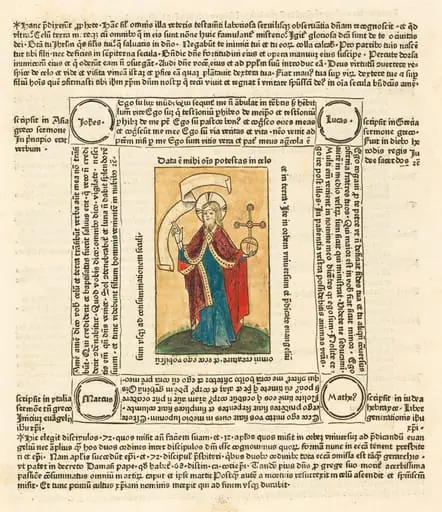 Christ as Salvator Mundi
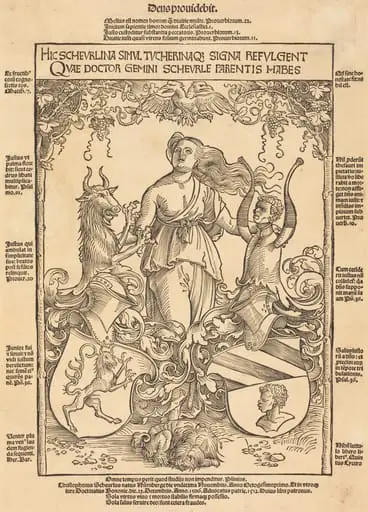 Coat of Arms of Scheurl and Tucher Families
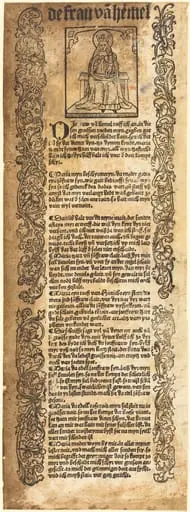 Song to the Madonna
 Nuremberg Chronicle
 Maximilian Makes Peace with Henry VII
 Saint Luke
 Madonna with the Rosary