Artwork
明代帝后半身像册(二)-孝洁肃皇后
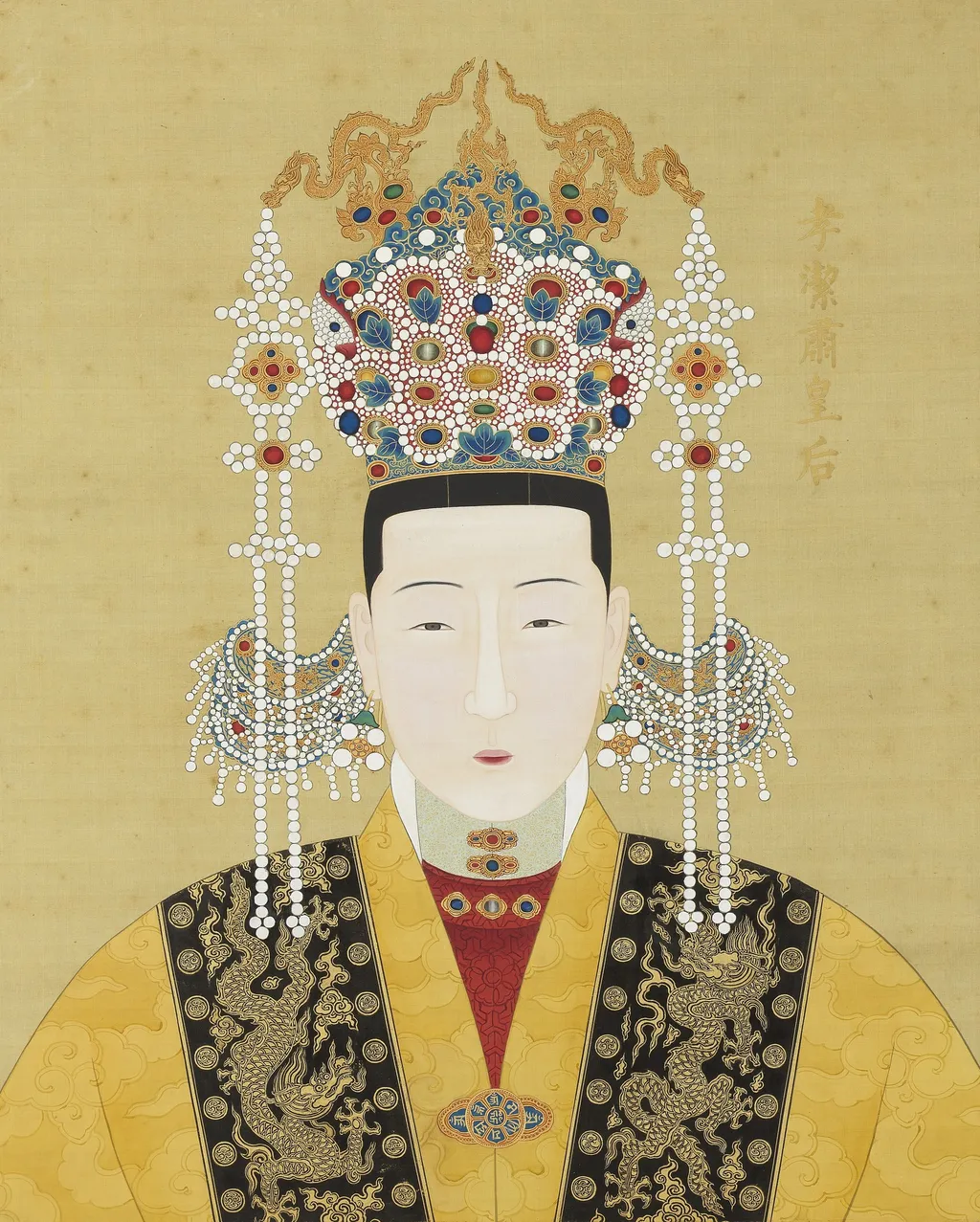
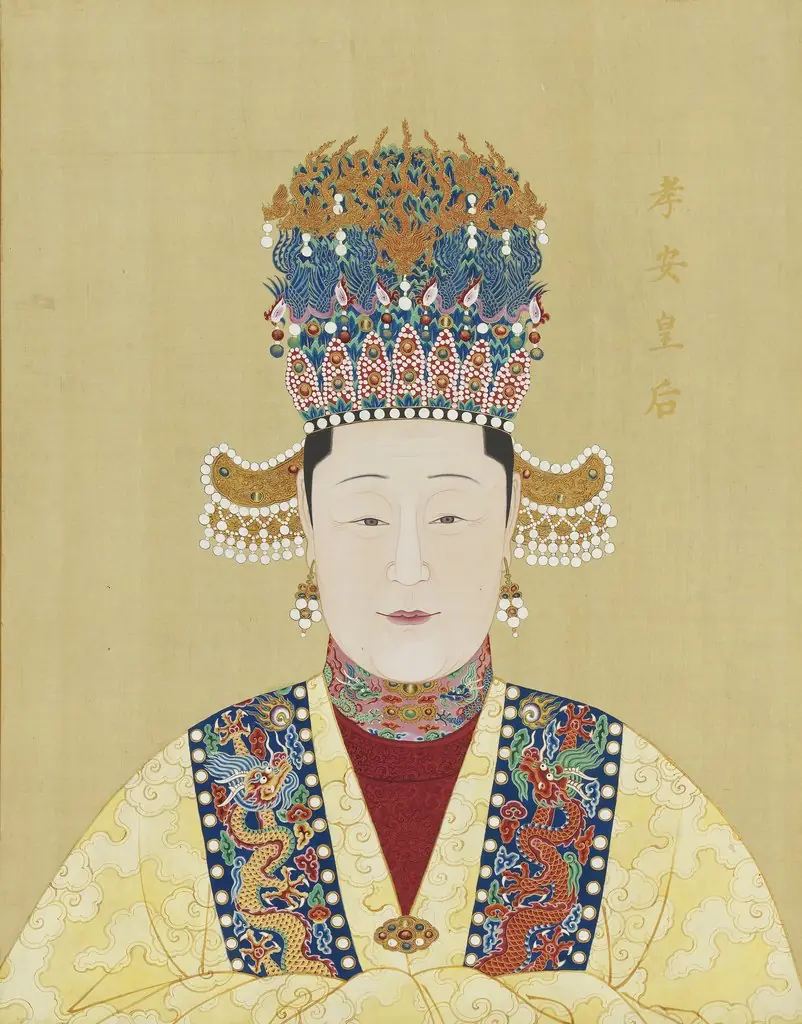
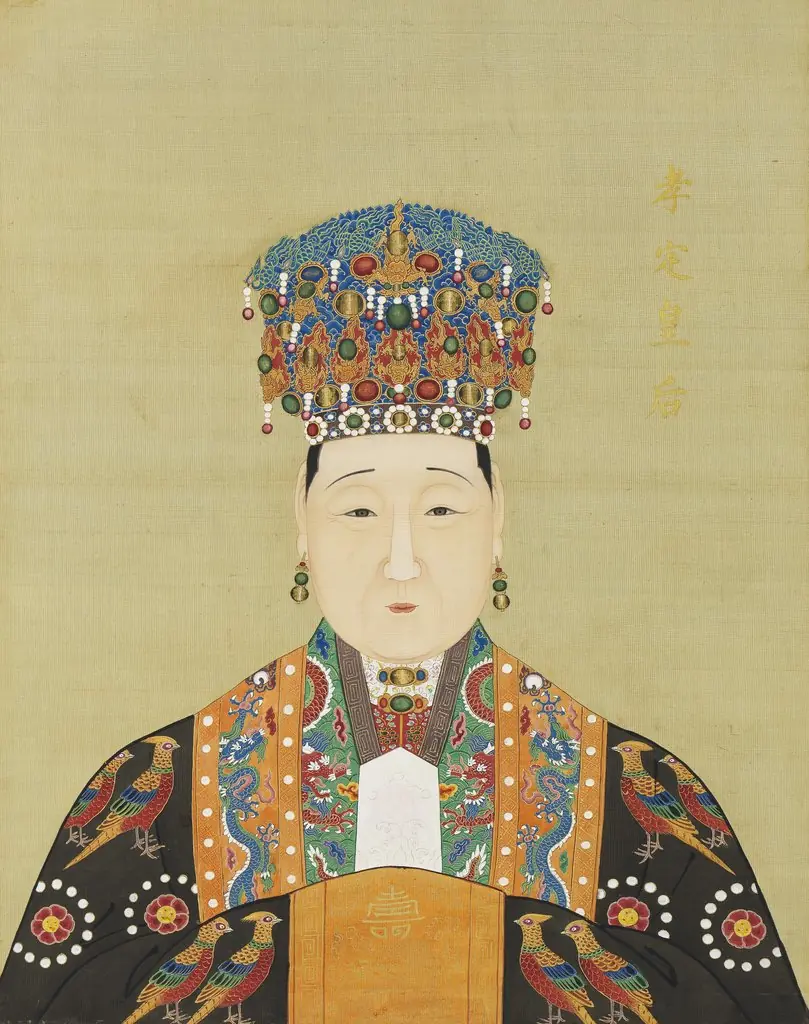
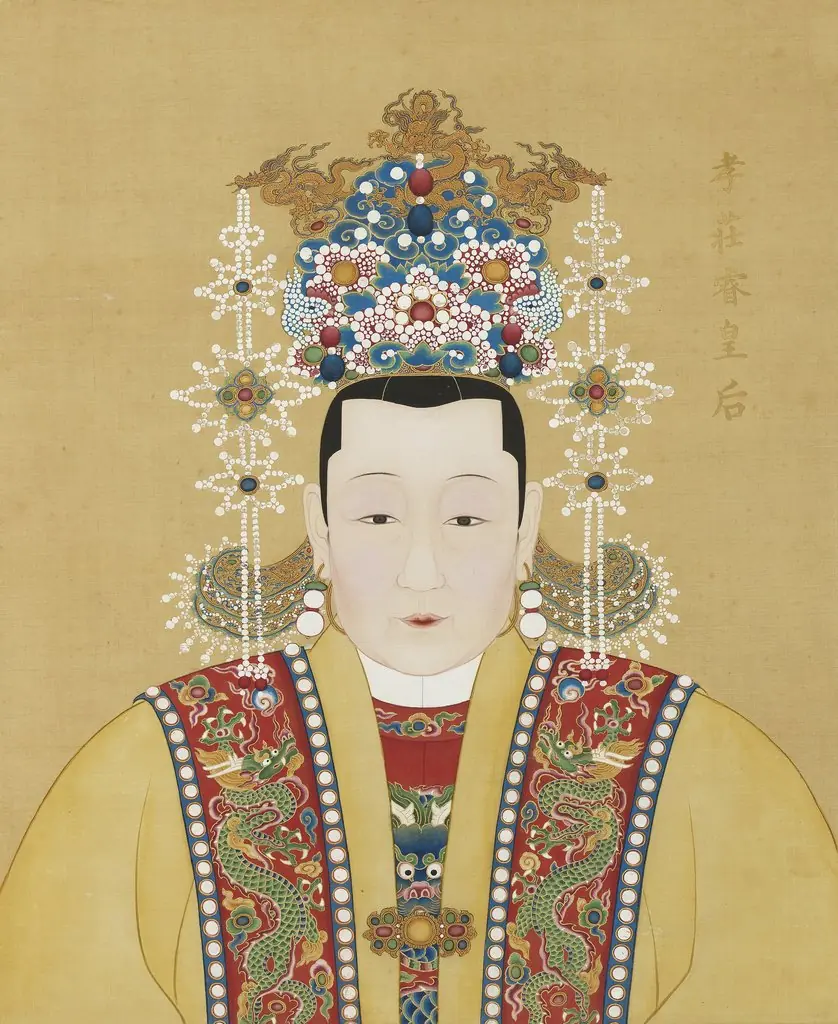
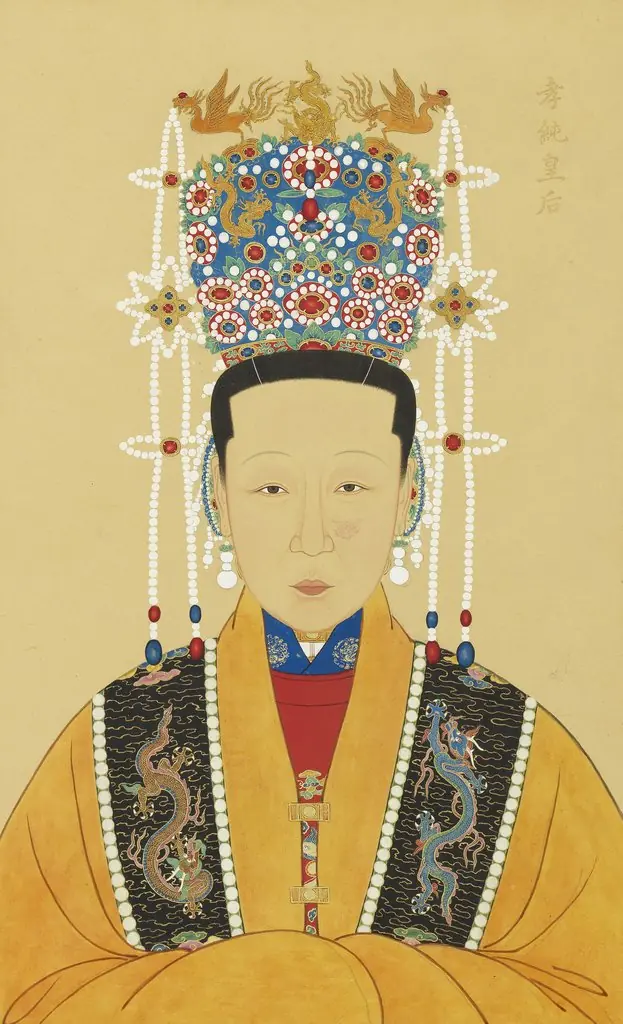
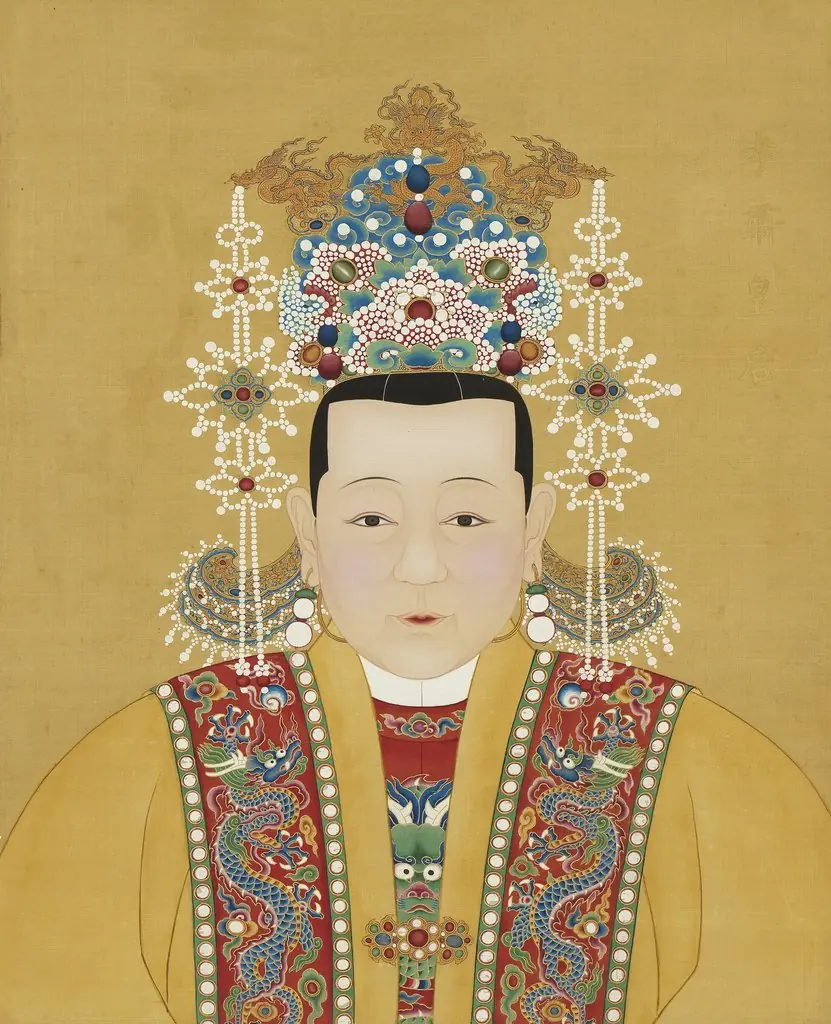
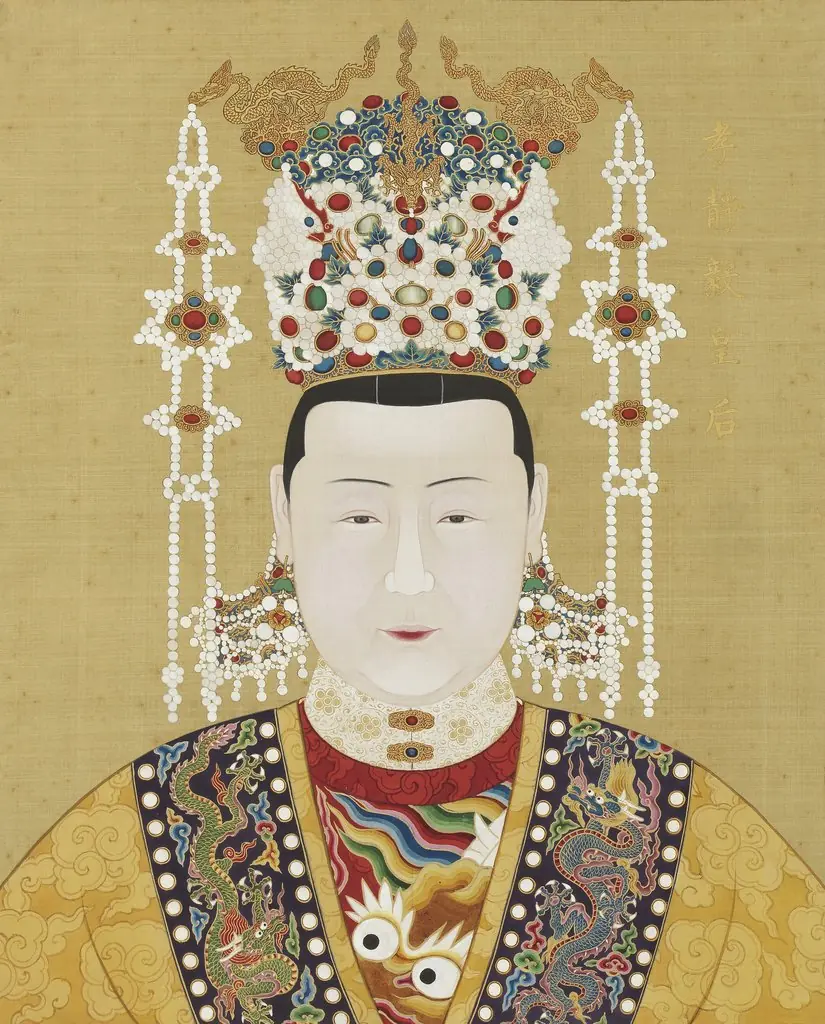
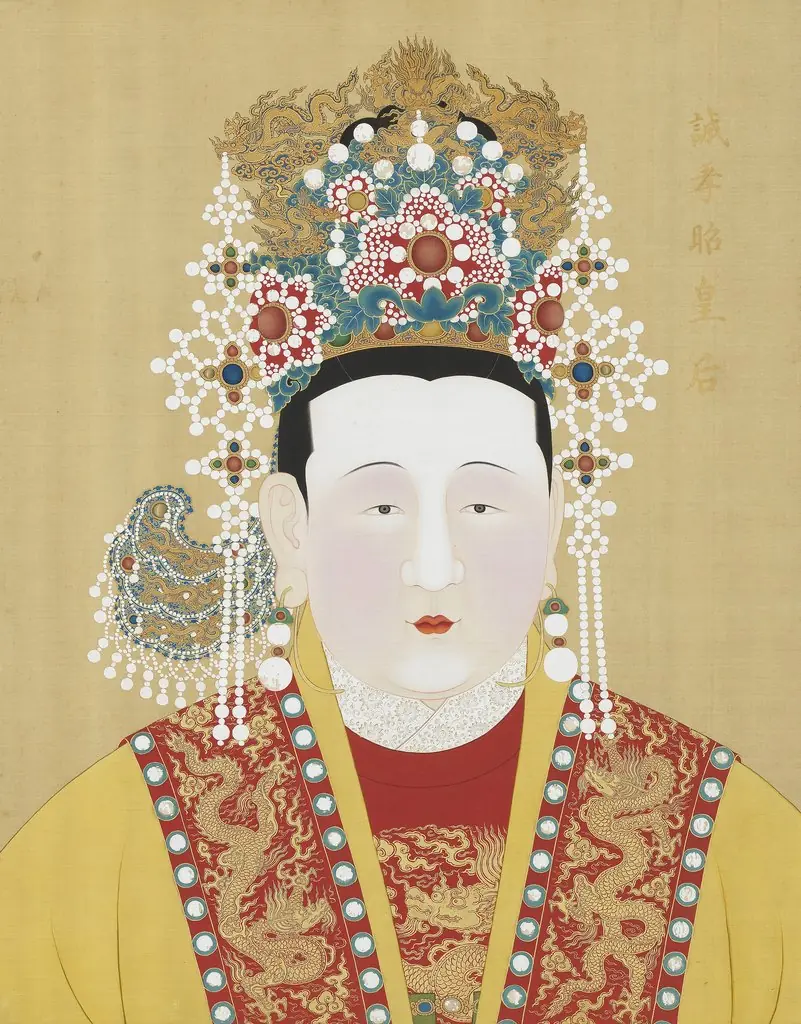
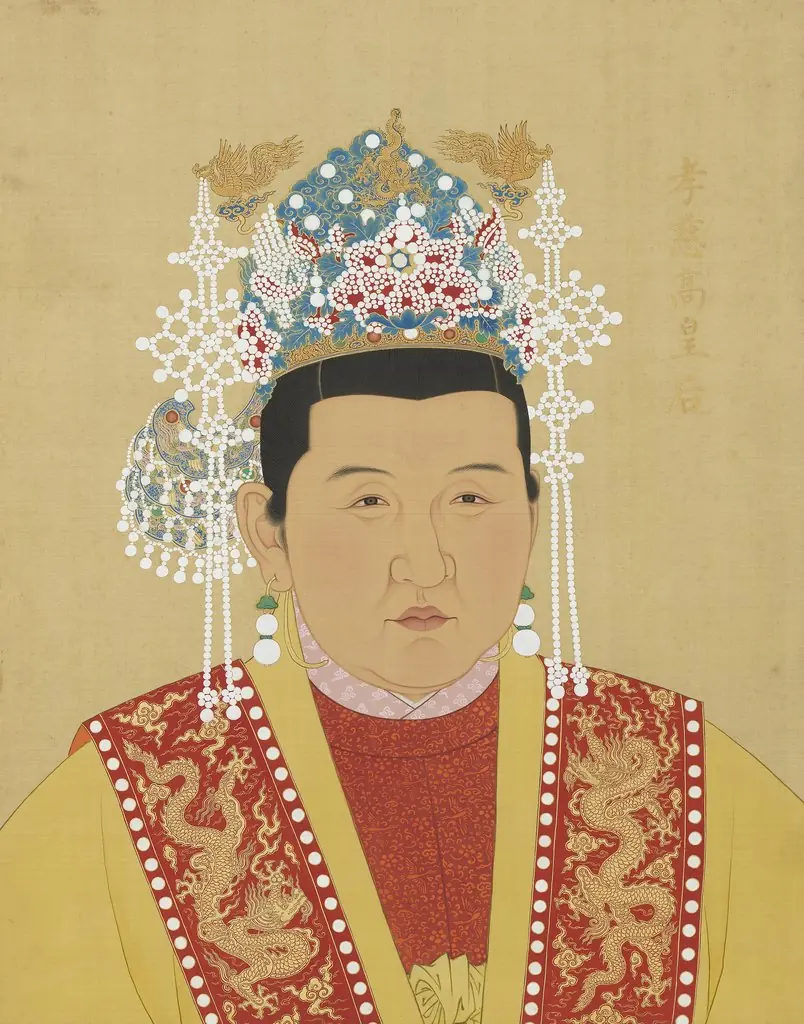
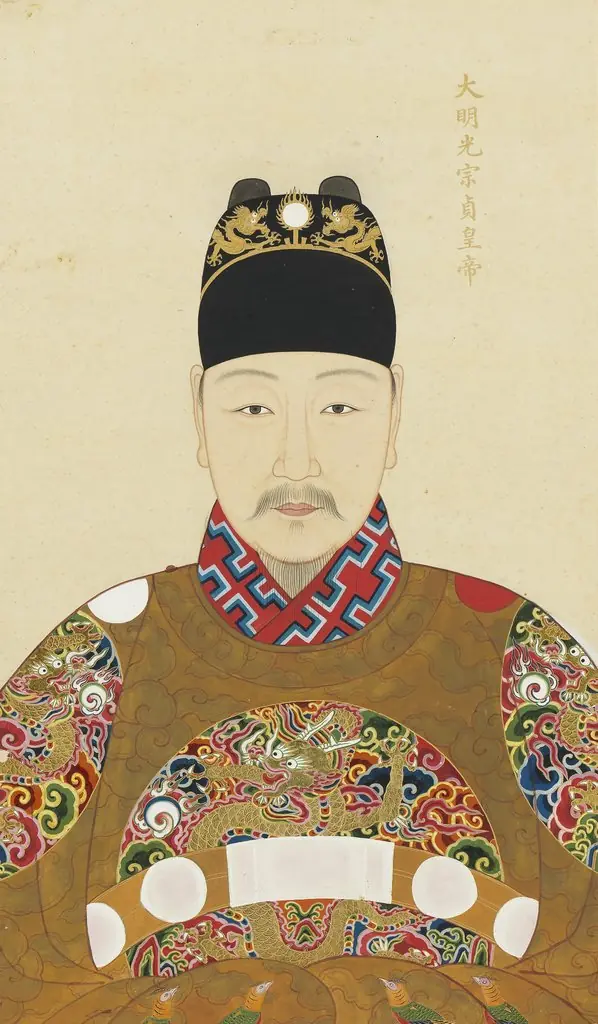
明代帝后半身像册(二)-孝洁肃皇后 is an unspecified painting by Unknown. It dates from 1850 and is held in the collection of the National Palace Museum. This portrait is one of a pair from a Ming dynasty album depicting imperial consorts and emperors in formal half-length poses.
About this work
Overview
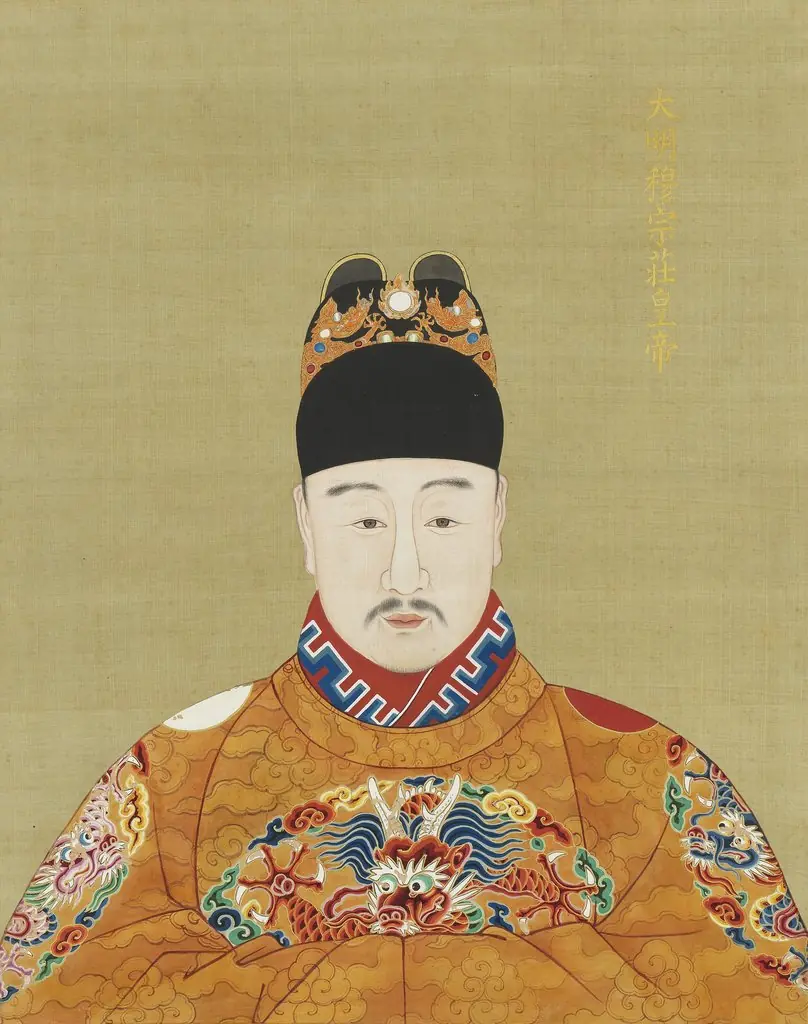
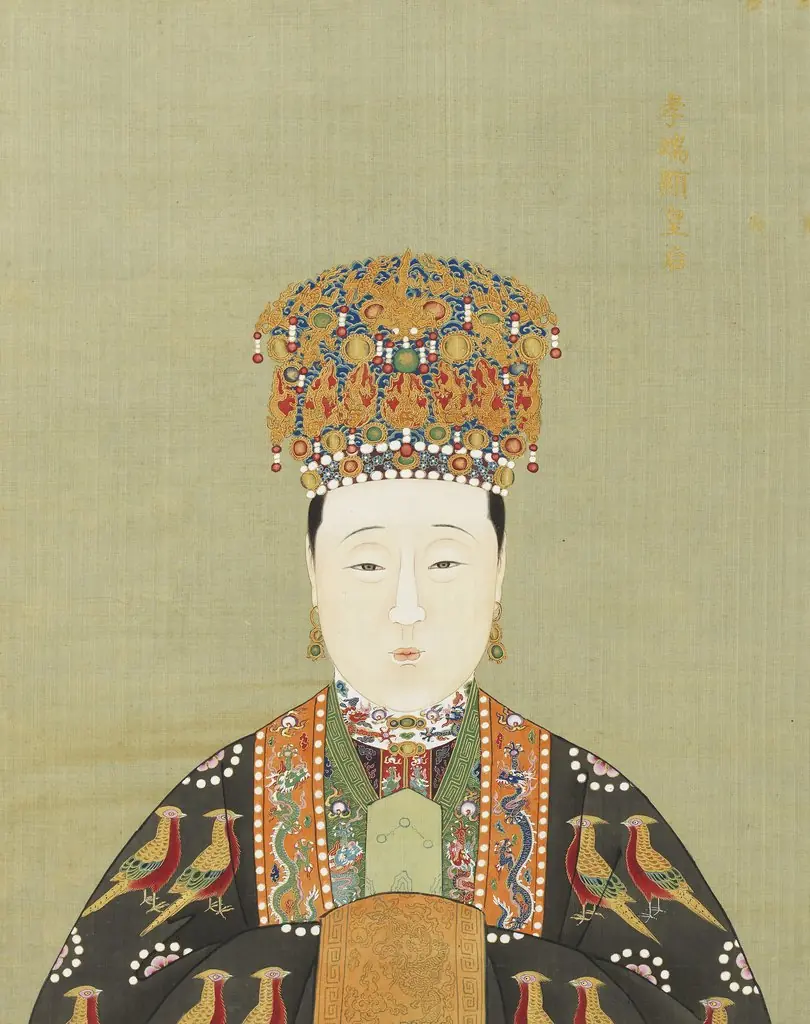
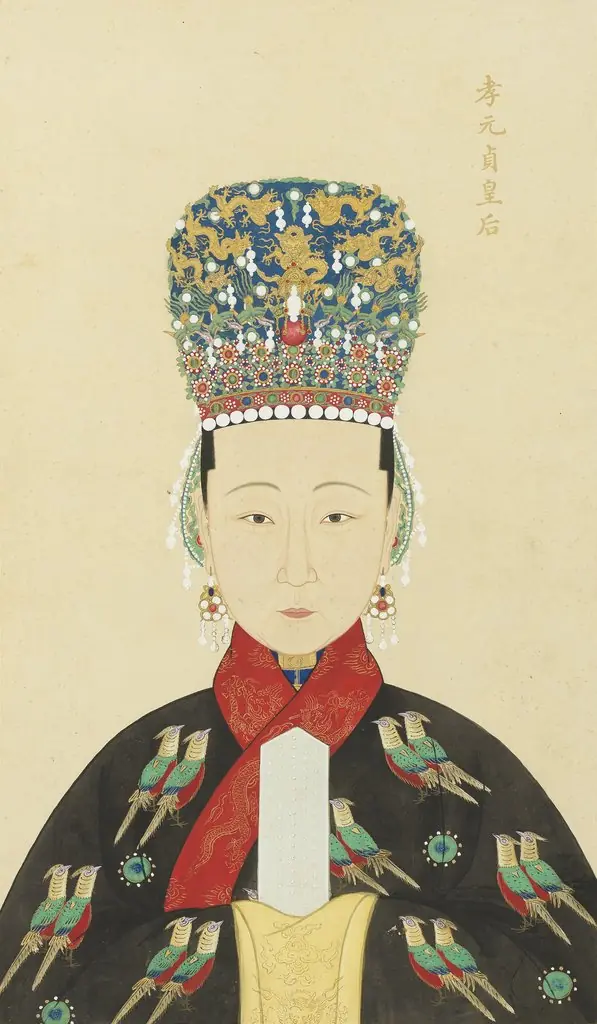
This portrait is one of a pair from a Ming dynasty album depicting imperial consorts and emperors in formal half-length poses.
This portrait is one of a pair from a Ming dynasty album depicting imperial consorts and emperors in formal half-length poses. Executed in ink and color on silk, it presents a dignified, frontal view of an imperial woman, likely Empress Xiaojie, surrounded by symbols of courtly authority. The composition follows strict imperial portraiture conventions, emphasizing ceremonial attire over individual expression.
Subject & Meaning
The figure is identified as Empress Xiaojie Su, consort of the Jiajing Emperor. Her elaborate headdress, adorned with pearls and gemstones, and the yellow robe embroidered with dragon and cloud motifs signify her rank as empress. The restrained facial expression and direct gaze reflect Confucian ideals of composure and moral authority, reinforcing her role as a symbol of imperial virtue rather than personal identity.
Technique & Style
The painting employs fine brushwork and layered mineral pigments to render textures of silk, metal, and gemstones with precision. Facial features are rendered with subtle gradations, avoiding dramatic shading. The background is left plain, focusing attention on the figure’s regalia. Unlike Western sfumato, Chinese court portraiture prioritized clarity of insignia and symbolic detail over atmospheric depth.
History & Provenance
The portrait belongs to a set commissioned by the Ming court for ancestral veneration, likely created in the mid-16th century. It remained in the imperial collection until the early 20th century, when it was moved to Taiwan with other artifacts from the Beijing Palace Museum. Its preservation reflects the Ming dynasty’s institutional commitment to documenting imperial lineage through visual records.
Context
Imperial portrait albums like this were produced under strict guidelines, serving both ritual and political functions. They were displayed in ancestral temples during ceremonies and reinforced the legitimacy of the ruling house. Similar portraits of emperors and empresses were standardized in pose, color, and ornamentation, ensuring visual continuity across generations of rulers.
Legacy
These portraits remain key sources for understanding Ming court dress, symbolism, and gendered representations of power. While not intended as individualized likenesses, they offer precise documentation of textile patterns, headdress construction, and ceremonial protocol. Today, they are studied for their historical accuracy and role in sustaining imperial ideology through visual tradition.
Artist & collection

 Domestic Scene
 Giacomo and Cardinal Marco, investing Andrea, Abbot of San Zeno, with his Benefice
 The Nymph of Fontainebleau
 Portrait of a Woman
 Madonna and Child with Saints in the Enclosed Garden
 Venus and Minerva
 Family Group of Four on Sofa
 Wall painting from Room H of the Villa of P. Fannius Synistor at Boscoreale