Artwork
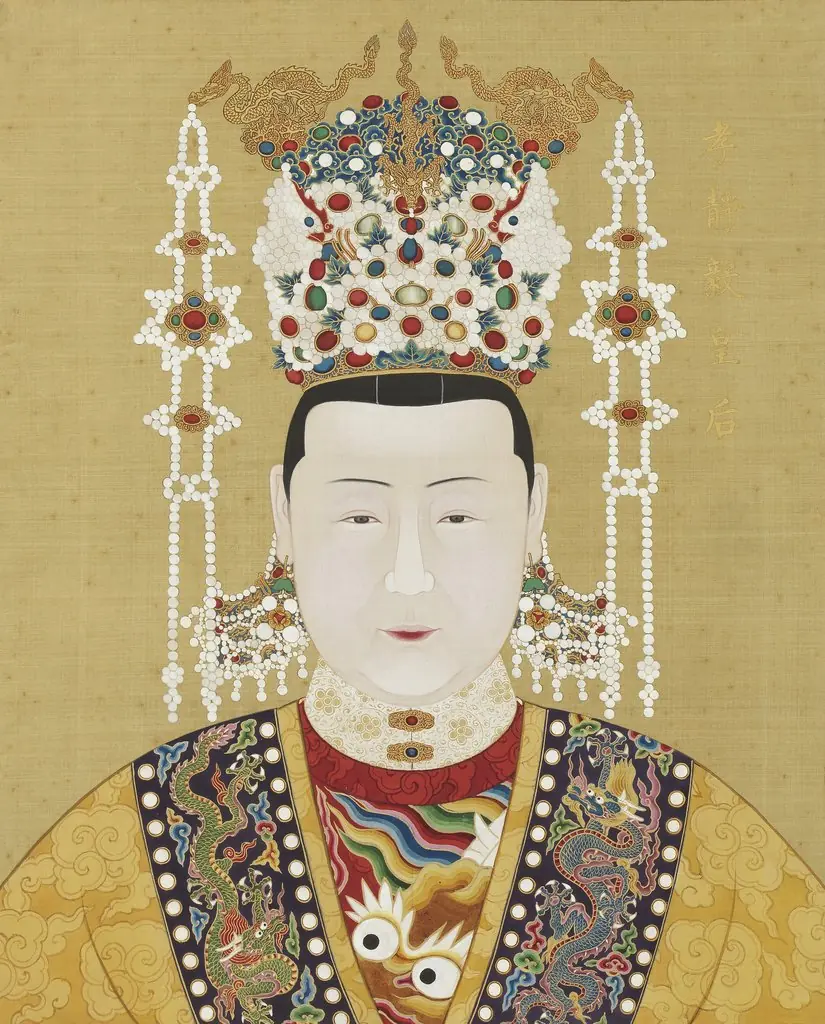
明代帝后半身像册(二)-孝靖皇后
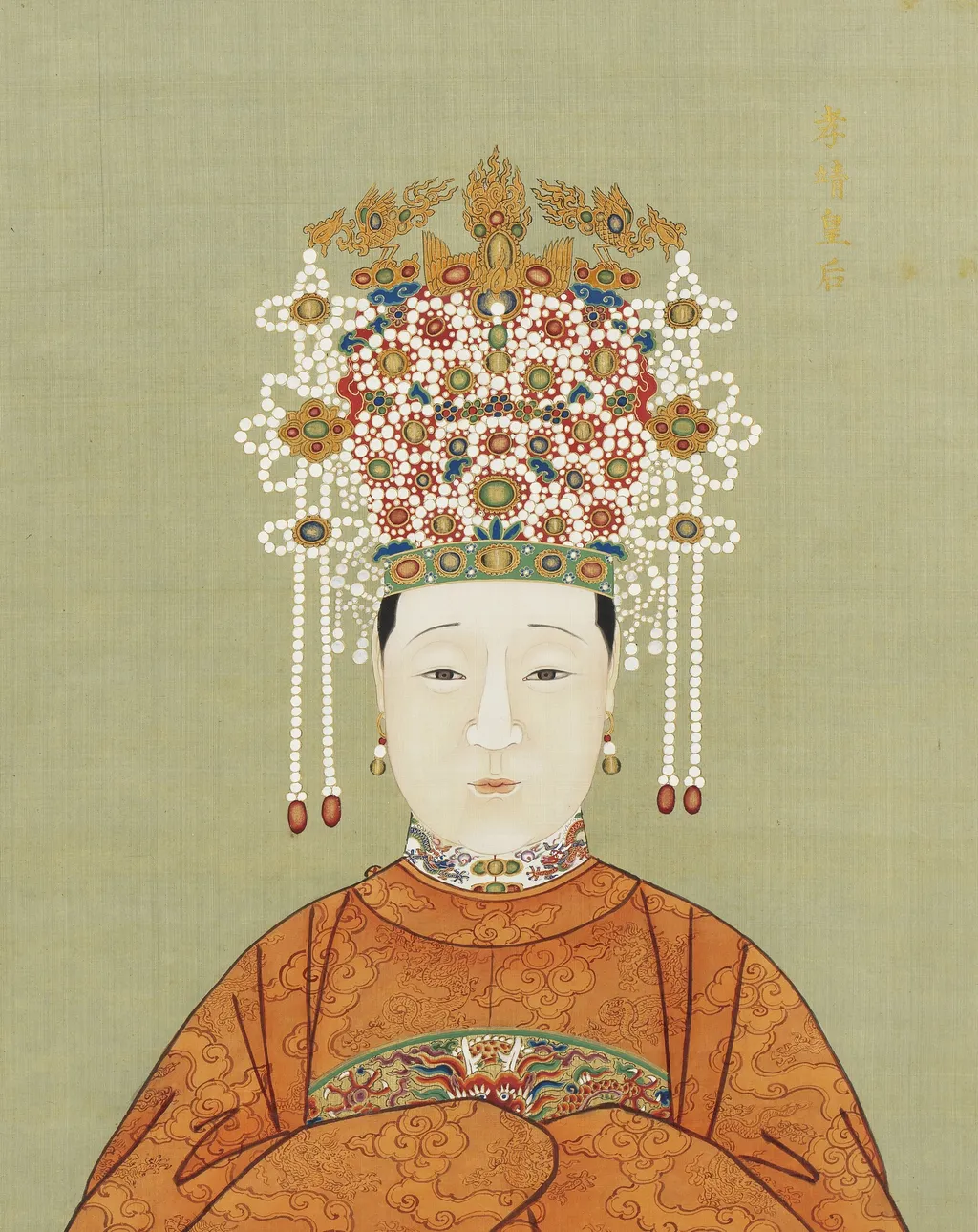
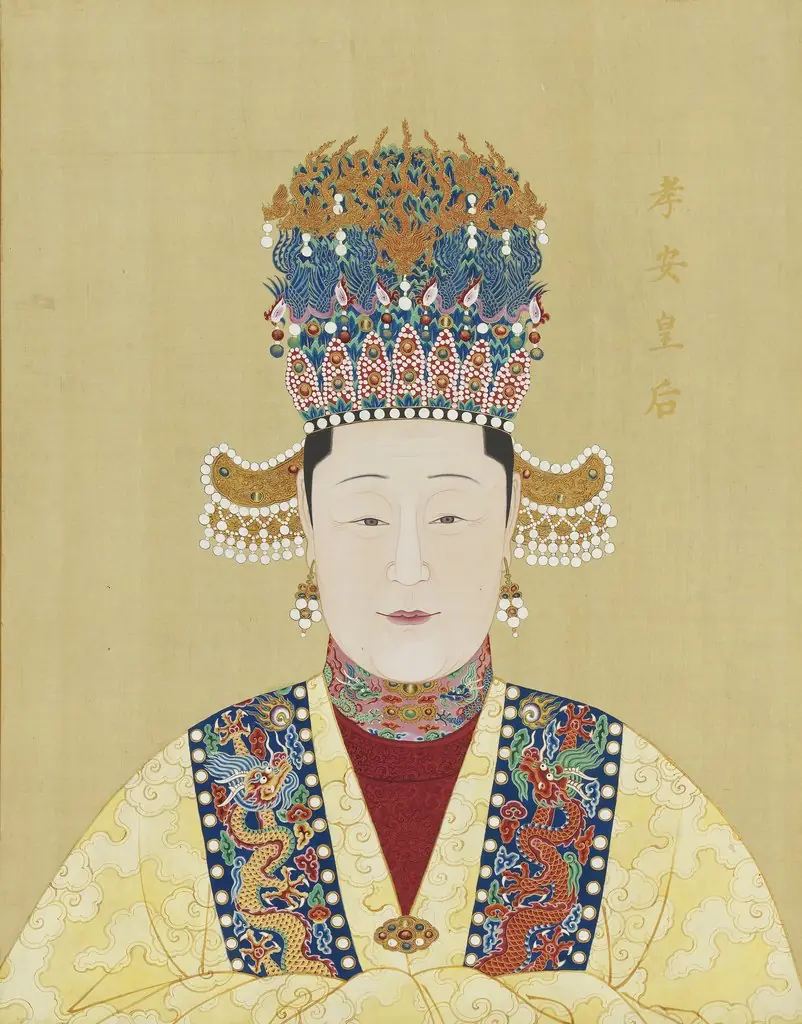
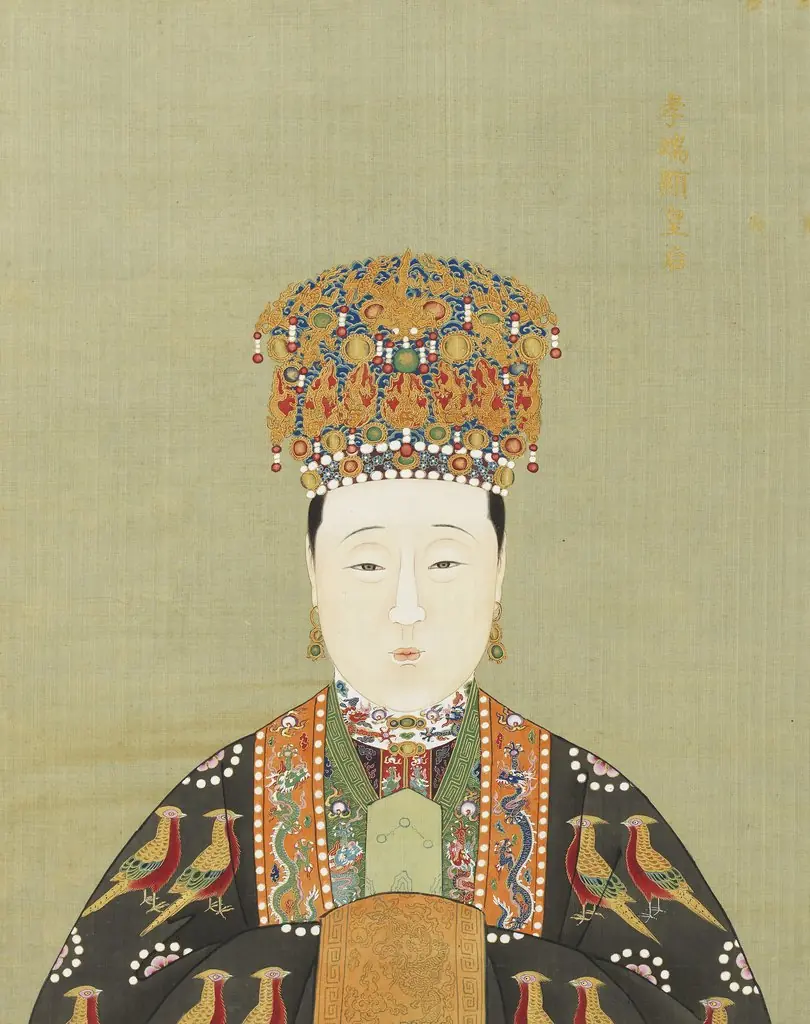
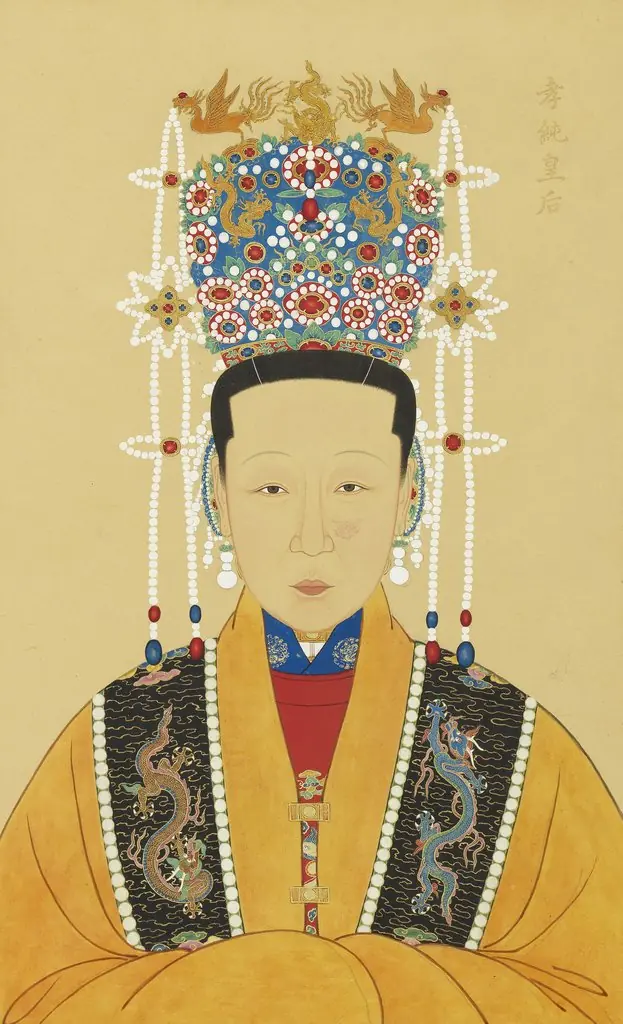
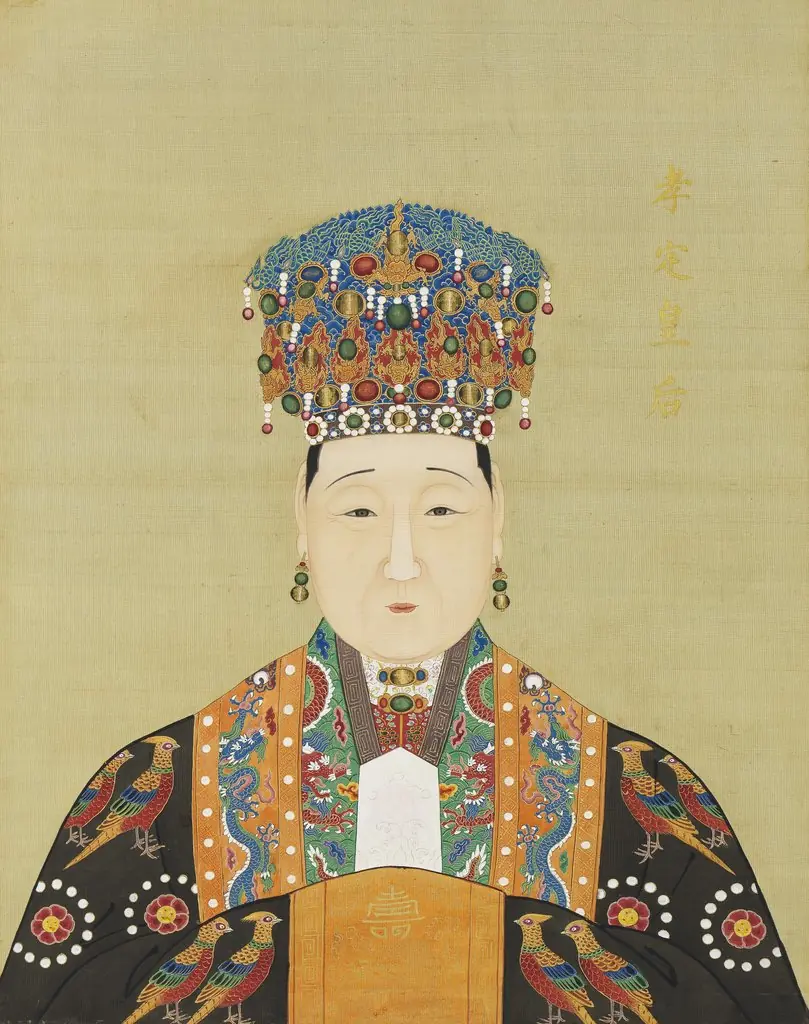
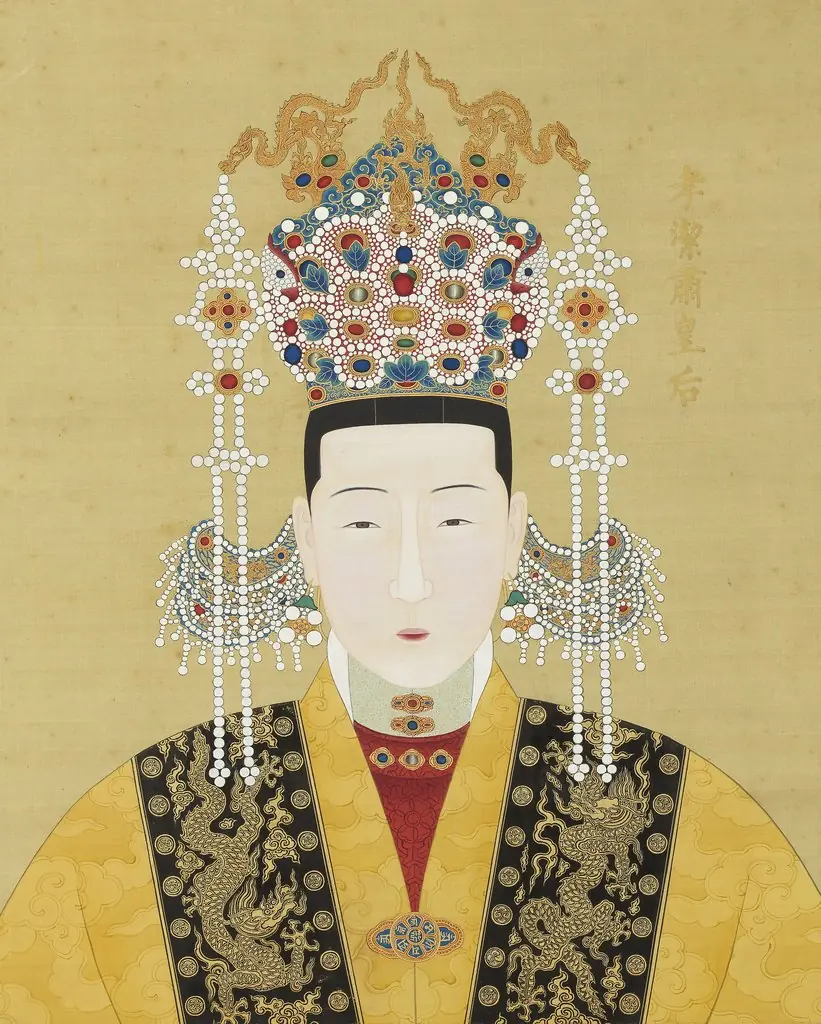
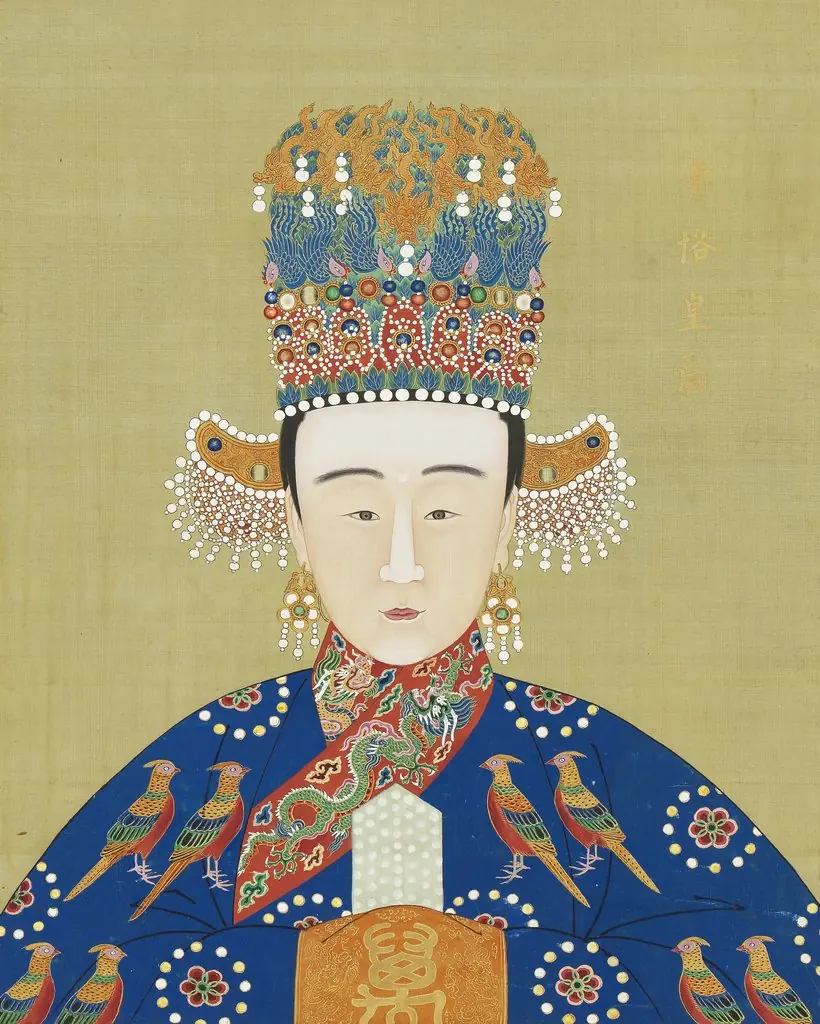
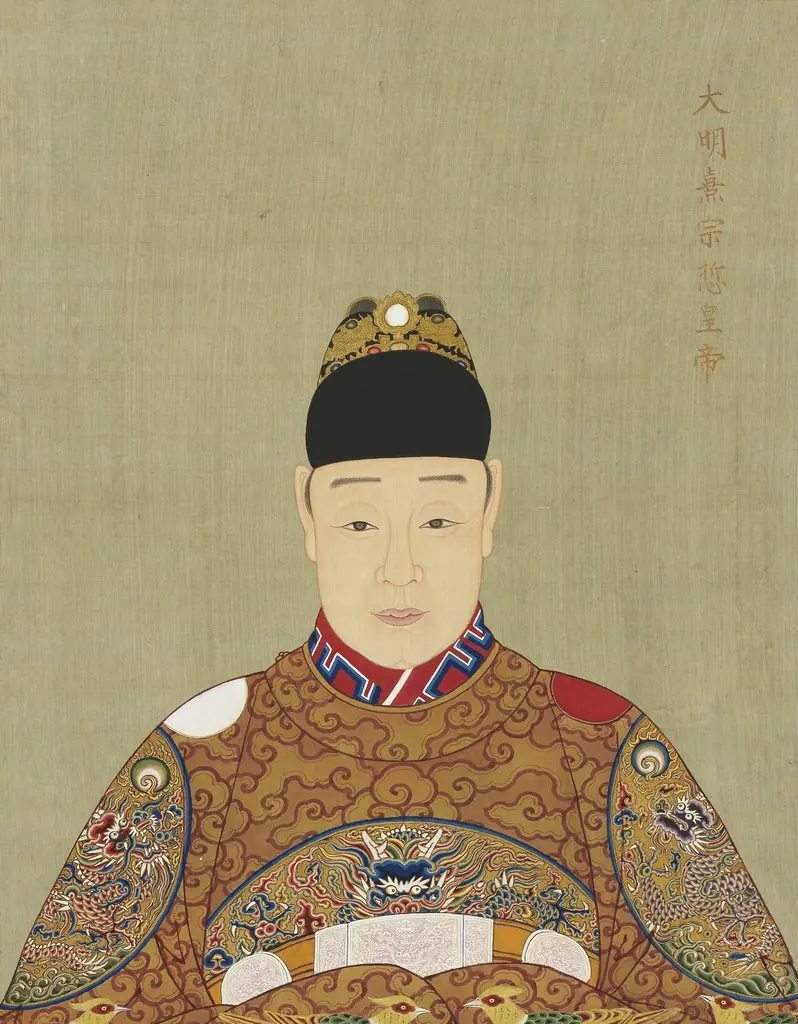
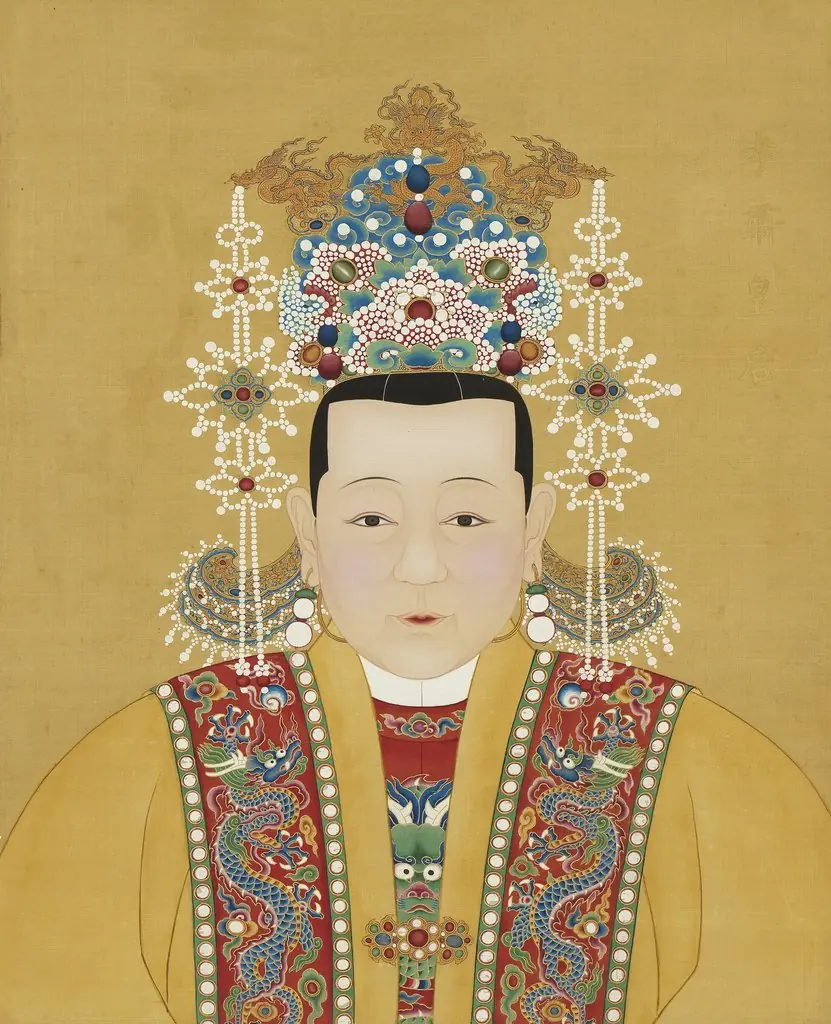
明代帝后半身像册(二)-孝靖皇后 is an unspecified painting by Unknown. It dates from 1850 and is held in the collection of the National Palace Museum. The work is a portrait of an imperial consort from the Ming dynasty, rendered as a half-length figure.
About this work
Overview
The work is a portrait of an imperial consort from the Ming dynasty, rendered as a half-length figure. The subject faces the viewer, clothed in a vivid orange robe with a high collar and a decorative chest panel, and set against a muted green background. The portrait is part of the National Palace Museum’s collection.
Subject & Meaning
The figure represents Empress Xiaojing, a consort of the Ming court, identified by the elaborate headdress and courtly attire that signal her high rank. The pale complexion, pulled‑back hair, and the thin white stripe on the nose are conventional markers of aristocratic femininity in Ming portraiture.
Technique & Style
Executed in traditional Chinese painting techniques, the portrait combines fine brushwork for facial features with bold, flat washes for the orange robe. The headdress is rendered with meticulous detail, showing white beads, red and blue accents, and gold motifs, including two dragons at its apex, reflecting the luxurious court aesthetic.
History & Provenance
The painting originates from the Ming period (1368–1644) and has been preserved within the imperial collection before entering the National Palace Museum. Its survival offers a rare visual record of court dress and ceremonial regalia of the era.
Context
During the Ming dynasty, portraiture of imperial women served both documentary and ritual functions, affirming lineage and status. The use of vibrant orange and gold, along with dragon motifs, aligns with contemporary conventions that linked the wearer to imperial authority and celestial symbolism.
Artist & collection

 Domestic Scene
 Giacomo and Cardinal Marco, investing Andrea, Abbot of San Zeno, with his Benefice
 The Nymph of Fontainebleau
 Portrait of a Woman
 Madonna and Child with Saints in the Enclosed Garden
 Venus and Minerva
 Family Group of Four on Sofa
 Wall painting from Room H of the Villa of P. Fannius Synistor at Boscoreale