Artwork
明代帝后半身像册(一)-明太祖高皇帝
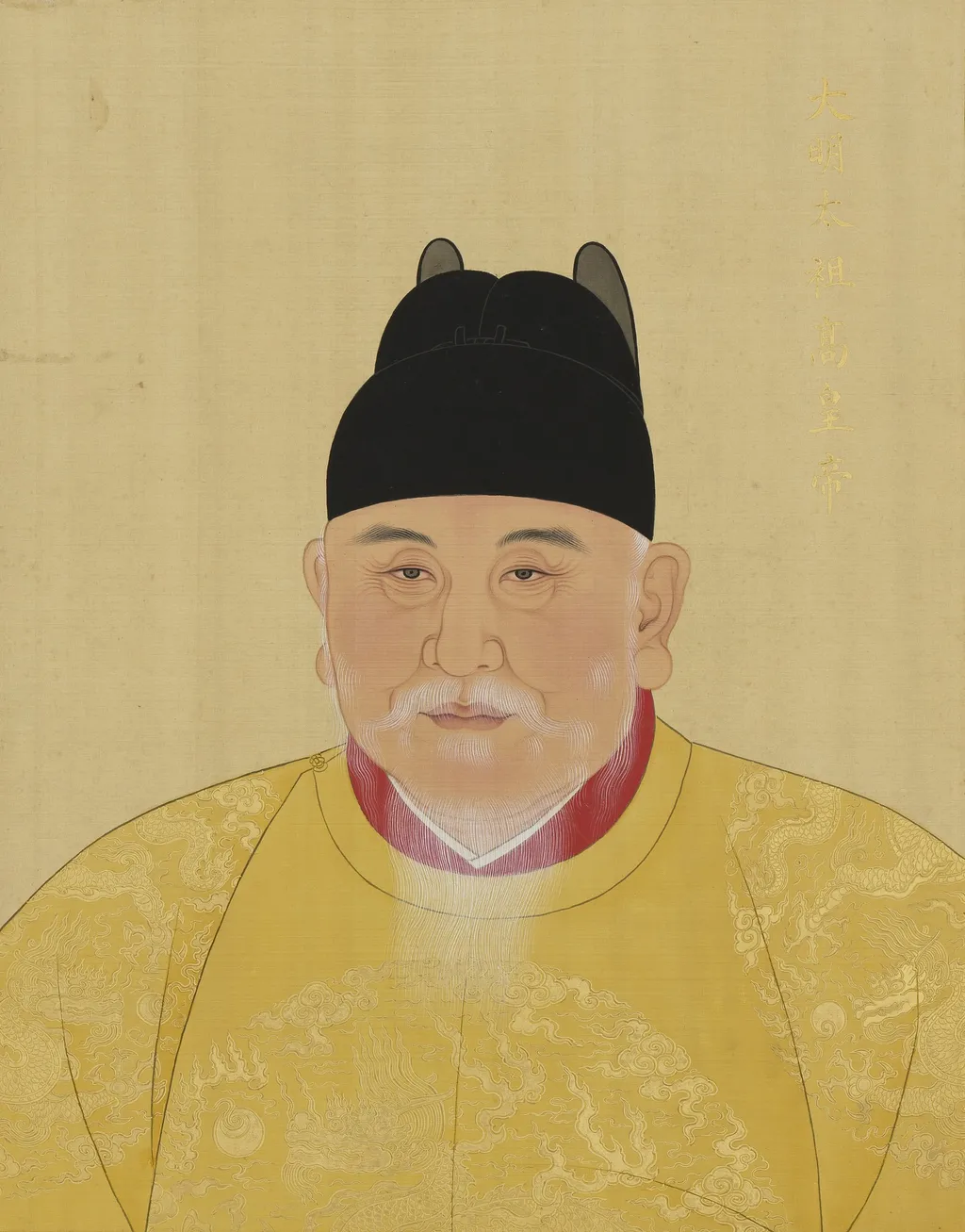
明代帝后半身像册(一)-明太祖高皇帝 is an unspecified painting by Unknown. It dates from 1850 and is held in the collection of the National Palace Museum.
About this work
Overview
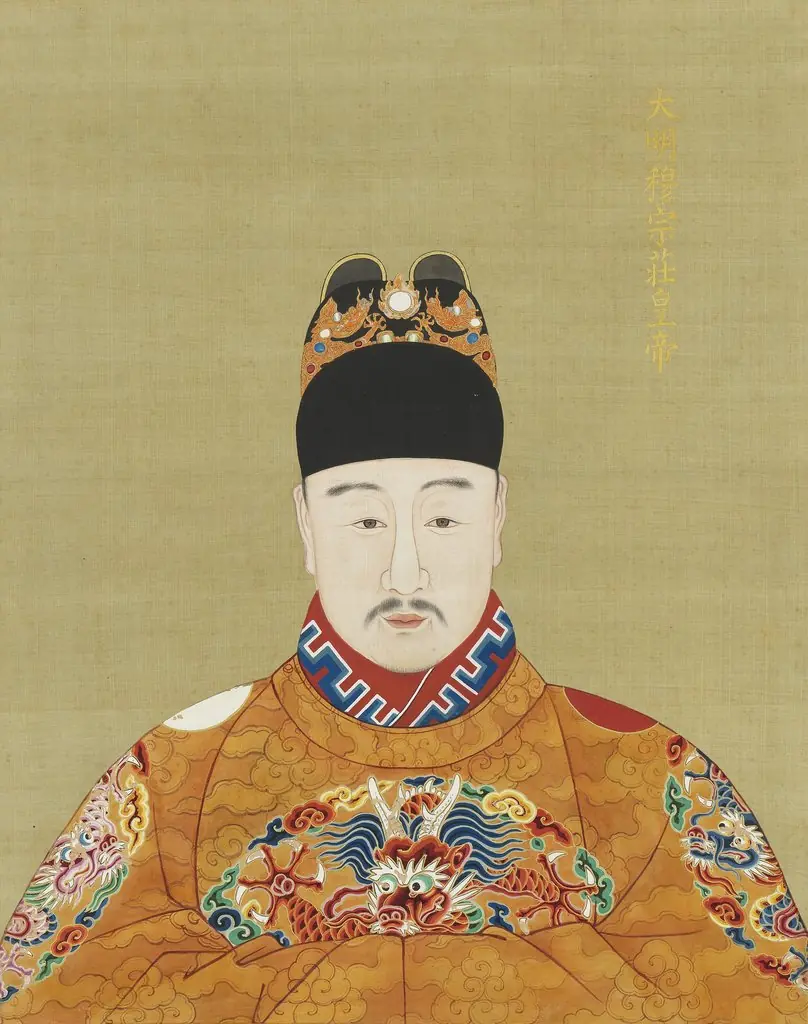
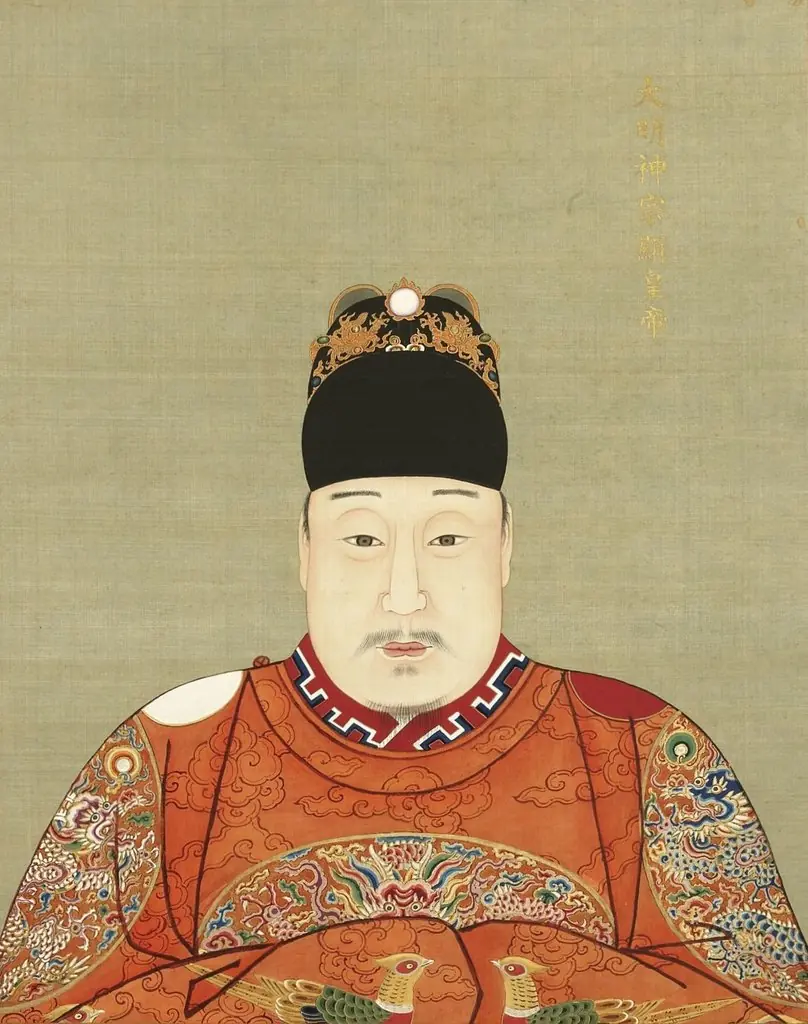
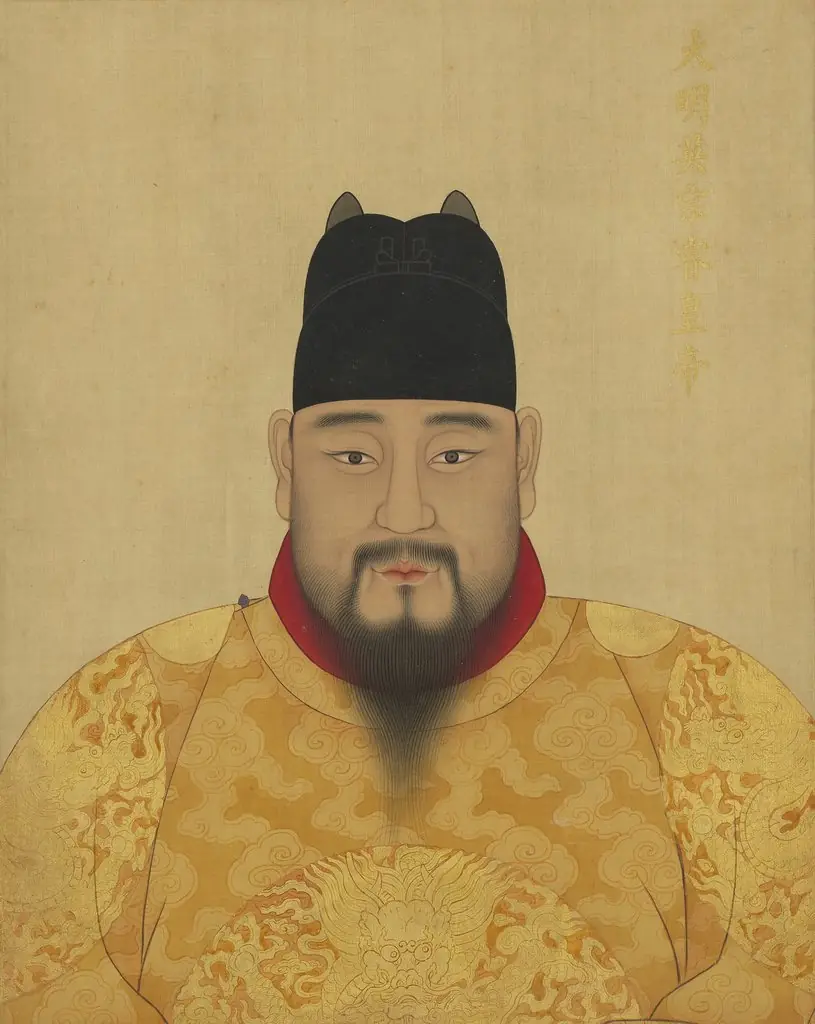
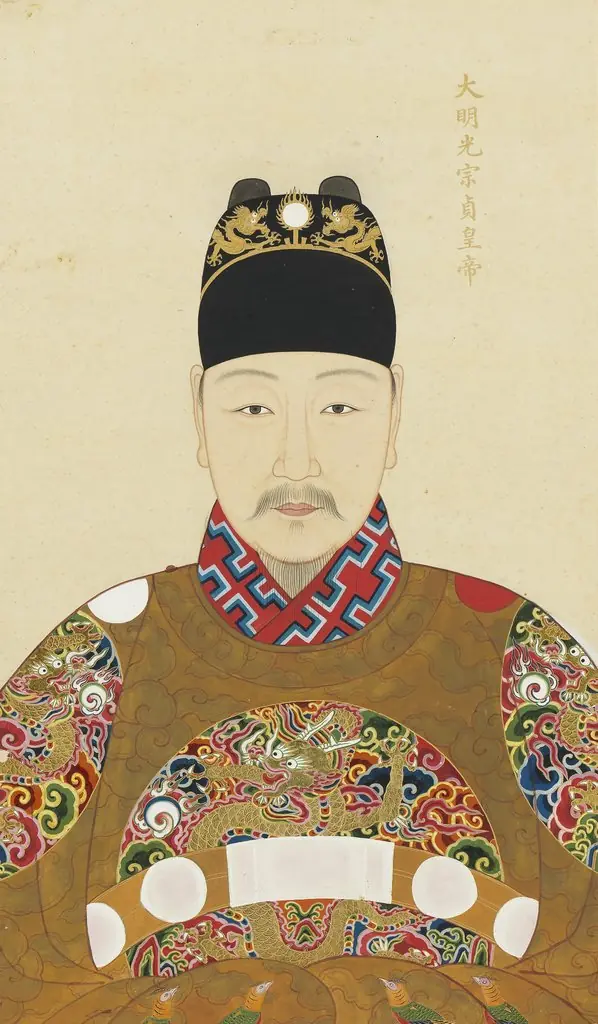
This portrait is one of a series of half-length imperial images produced during the Ming dynasty, specifically depicting Hongwu Emperor, the dynasty’s founder.
This portrait is one of a series of half-length imperial images produced during the Ming dynasty, specifically depicting Hongwu Emperor, the dynasty’s founder. Rendered in traditional Chinese court painting style, it emphasizes regal presence through formal composition, rich color, and precise detail. The subject is shown in full ceremonial attire against a plain beige ground, focusing attention entirely on his bearing and attire.
Subject & Meaning
The figure is Hongwu Emperor, Zhu Yuanzhang, who established the Ming dynasty in 1368. His depiction adheres to imperial iconography: the yellow robe signifies sovereignty, the black hat denotes official rank, and the red collar reflects ceremonial protocol. The white eyebrows and mustache convey age and wisdom, reinforcing his role as a stern but legitimate ruler. The portrait serves as a visual assertion of dynastic authority and ancestral legitimacy.
Technique & Style
Executed with fine brushwork and opaque pigments, the painting employs bold outlines and saturated hues to define form and texture. The fabric of the robe is rendered with meticulous attention to pattern and fold, while facial features are modeled with subtle gradations. The background remains unadorned, a deliberate choice to isolate the figure and amplify the symbolic weight of his attire and expression.
History & Provenance
Created in the early Ming court, likely during or shortly after Hongwu’s reign, this portrait was part of an official series commissioned to honor imperial ancestors. Such images were displayed in ancestral halls and used in ritual contexts. The series was preserved within the imperial collection and later transferred to the Palace Museum in Beijing, where it remains today as part of the court’s visual archive.
Context
Ming court portraiture followed strict conventions rooted in Confucian ideals of order and hierarchy. Unlike earlier dynastic portraits, Ming imperial images emphasized realism in facial features while maintaining symbolic rigidity in costume and posture. This style reflected the dynasty’s emphasis on restoring Han Chinese traditions after Mongol rule, reinforcing cultural continuity through visual authority.
Legacy
The portrait series set a precedent for subsequent Ming and Qing imperial imagery, establishing a visual language of rulership that endured for centuries. These works were not merely likenesses but instruments of political memory, reinforcing lineage and legitimacy. Their preservation and study continue to inform understanding of Ming court culture and the role of art in state ideology.
Artist & collection

 Domestic Scene
 Giacomo and Cardinal Marco, investing Andrea, Abbot of San Zeno, with his Benefice
 The Nymph of Fontainebleau
 Portrait of a Woman
 Madonna and Child with Saints in the Enclosed Garden
 Venus and Minerva
 Family Group of Four on Sofa
 Wall painting from Room H of the Villa of P. Fannius Synistor at Boscoreale