Artwork
明代帝后半身像册(二)-神宗显皇帝
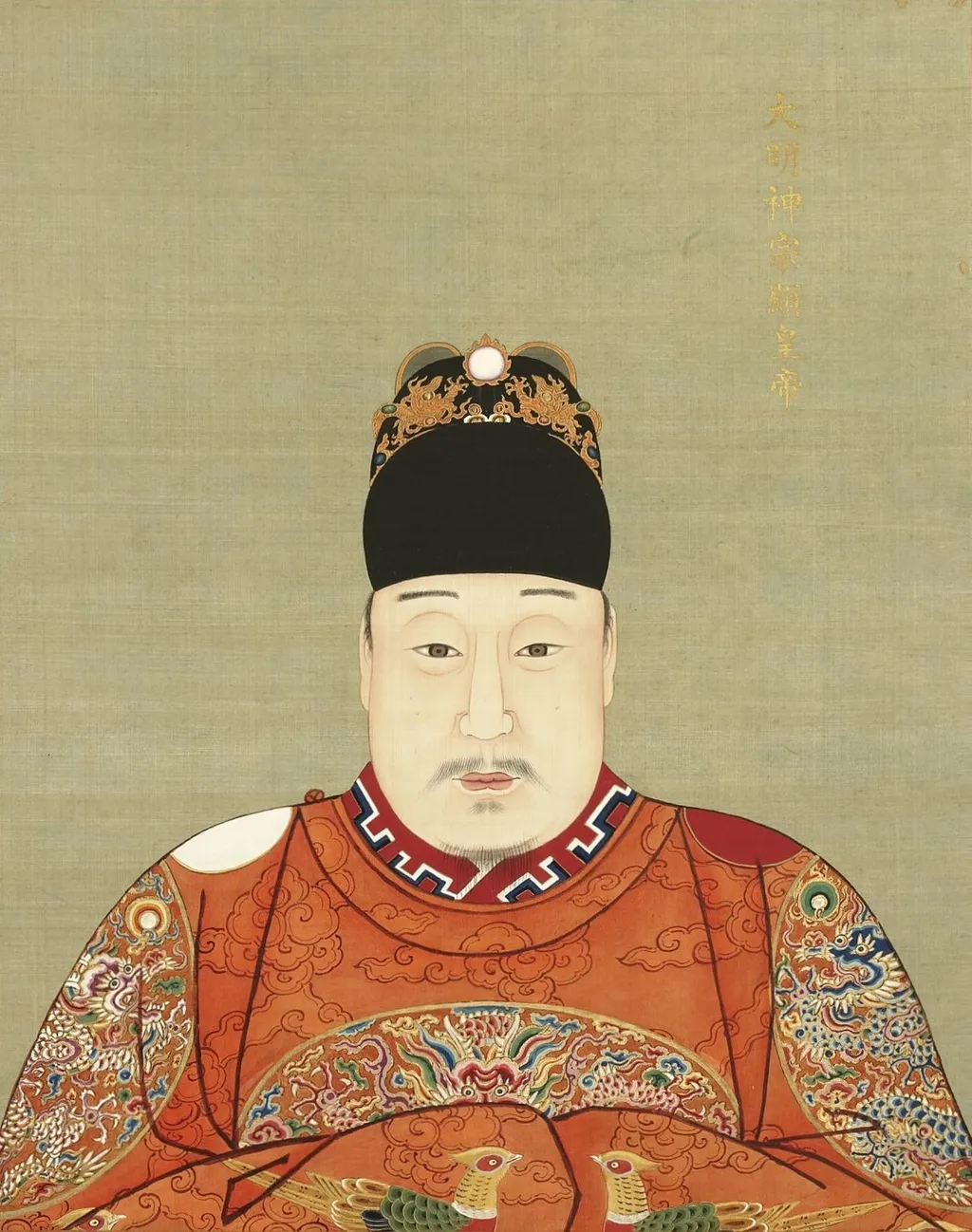
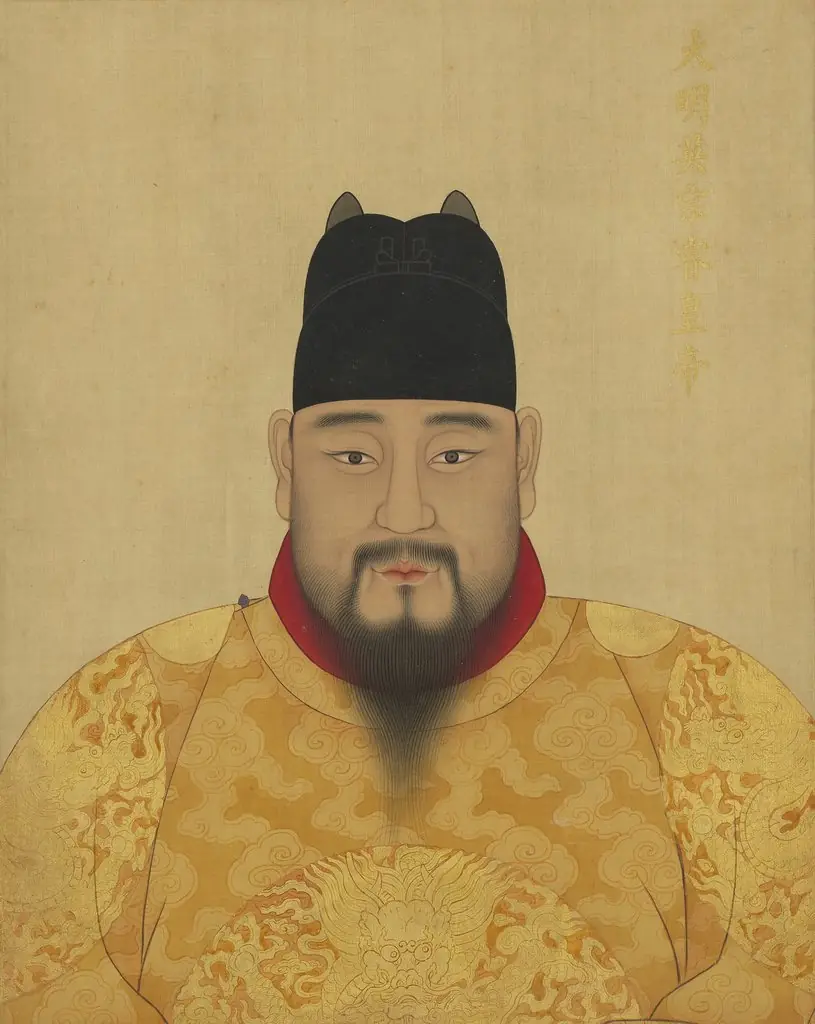
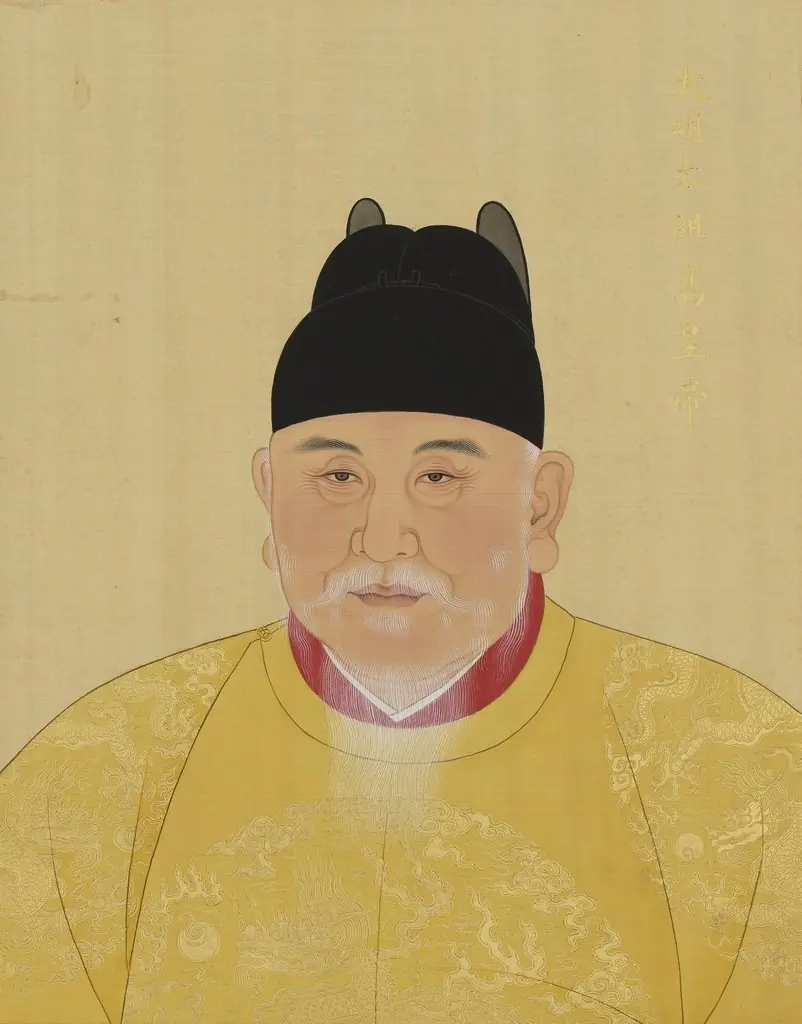
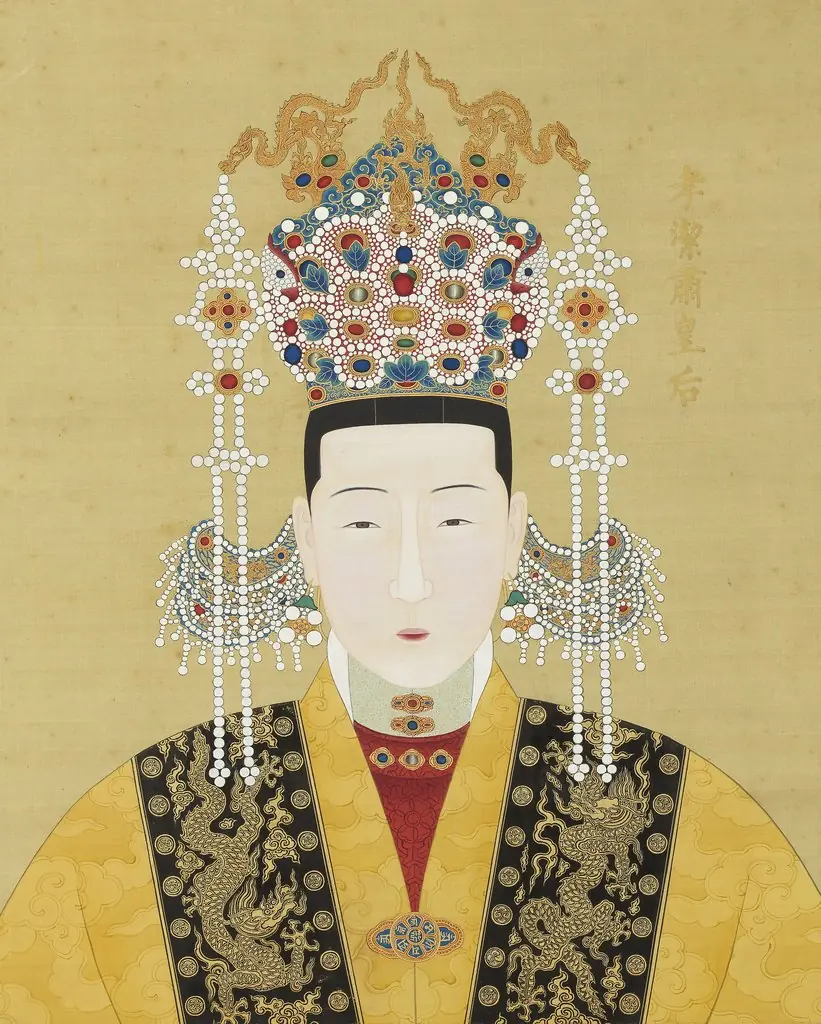
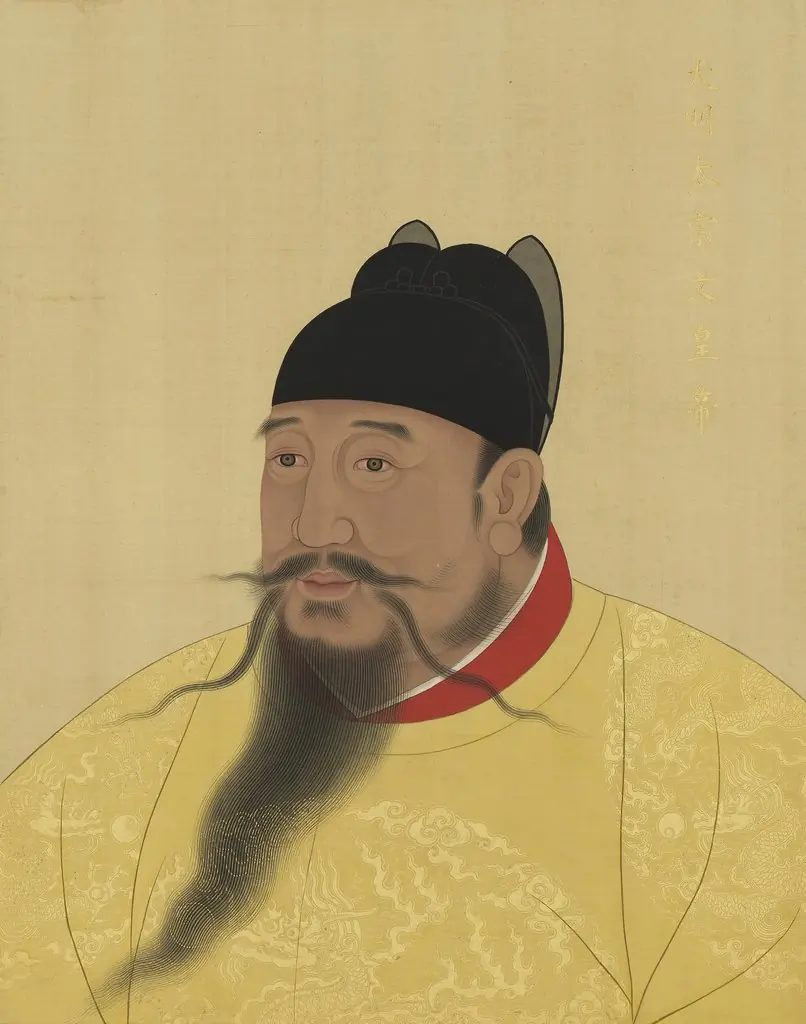
明代帝后半身像册(二)-神宗显皇帝 is an unspecified painting by Unknown. It dates from 1850 and is held in the collection of the National Palace Museum. The work is a half-length portrait from the Ming dynasty, depicting the emperor identified as Shenzong.
About this work
Overview
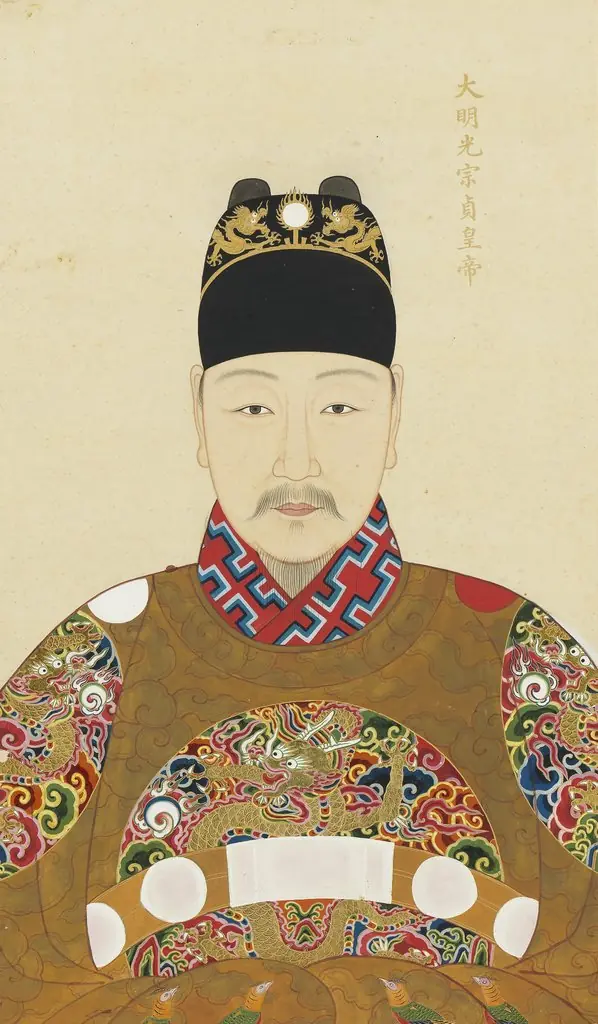
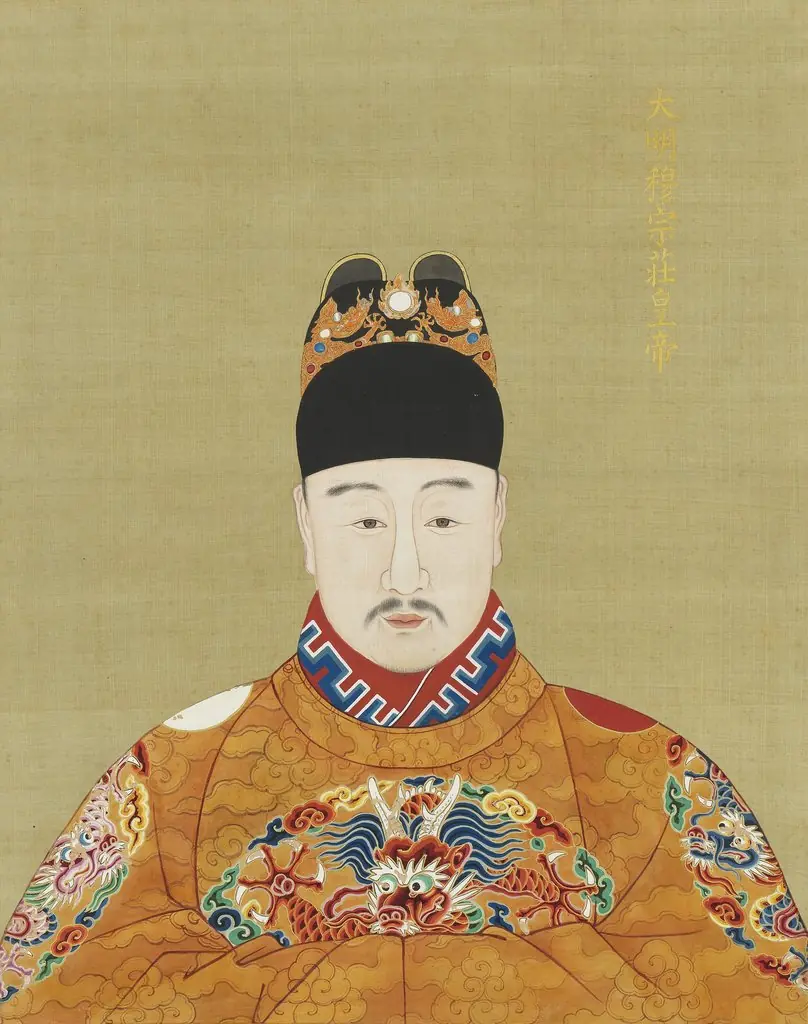
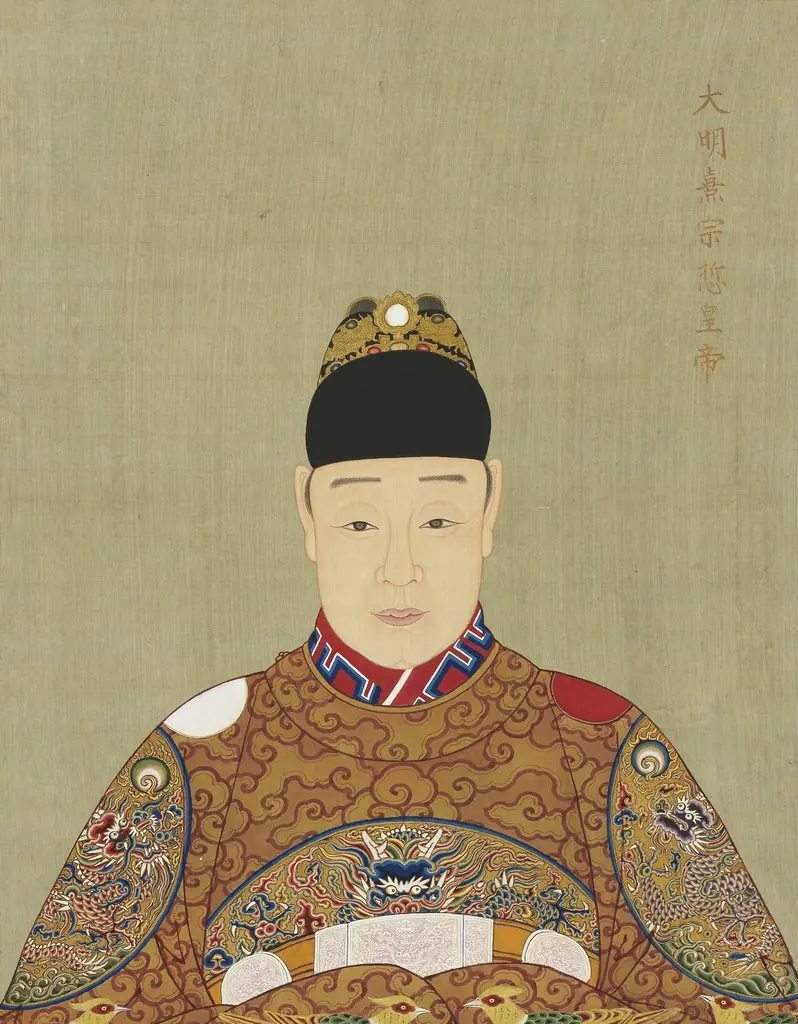
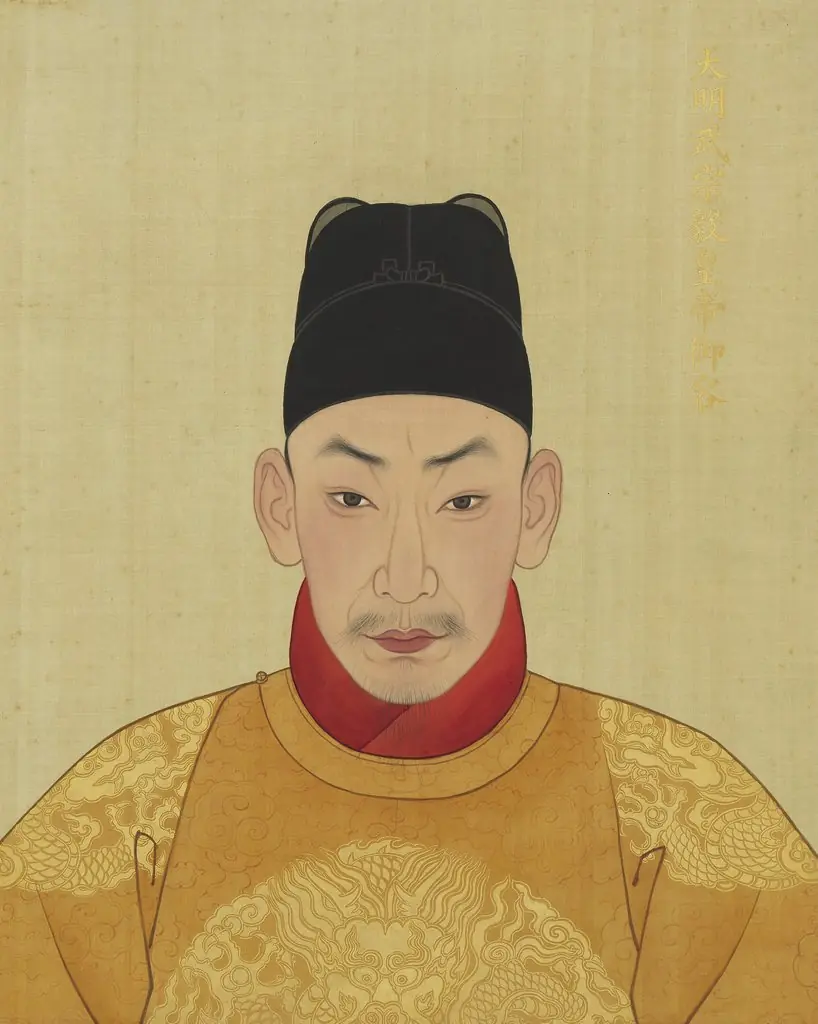
The work is a half-length portrait from the Ming dynasty, depicting the emperor identified as Shenzong. Rendered on silk, the figure is shown in formal court attire against a muted, light‑brown backdrop, creating a restrained yet authoritative presence.
Subject & Meaning
The sitter is presented in the ceremonial garb of a reigning monarch: a black hat adorned with gold motifs, a red robe richly patterned with stylised birds, and a solemn facial expression. The direct gaze engages the viewer, underscoring imperial dignity and the Confucian ideal of the ruler as a moral exemplar.
Technique & Style
Executed with fine brushwork typical of court painters, the portrait combines precise line for the intricate hat and robe details with subtle washes that model the flesh tones. The use of a limited palette—predominantly reds, blacks, and gold—enhances the hierarchical symbolism of the clothing.
History & Provenance
The painting forms part of a series of imperial half‑body portraits compiled during the reign of the Yongle Emperor, later catalogued as the "Ming Dynasty Imperial Portrait Album (II)." It entered the collection of the National Palace Museum in Taipei following the relocation of Chinese imperial artworks after 1949.
Context
Portraits of this type served both as records of succession and as visual affirmations of the emperor’s legitimacy. Produced in the 11th year of Shenzong’s reign, the image reflects the period’s emphasis on centralized authority and the elaborate court rituals that defined Ming political culture.
Artist & collection

 Domestic Scene
 Giacomo and Cardinal Marco, investing Andrea, Abbot of San Zeno, with his Benefice
 The Nymph of Fontainebleau
 Portrait of a Woman
 Madonna and Child with Saints in the Enclosed Garden
 Venus and Minerva
 Family Group of Four on Sofa
 Wall painting from Room H of the Villa of P. Fannius Synistor at Boscoreale