Artwork
明代帝后半身像册(一)-孝庄睿皇后
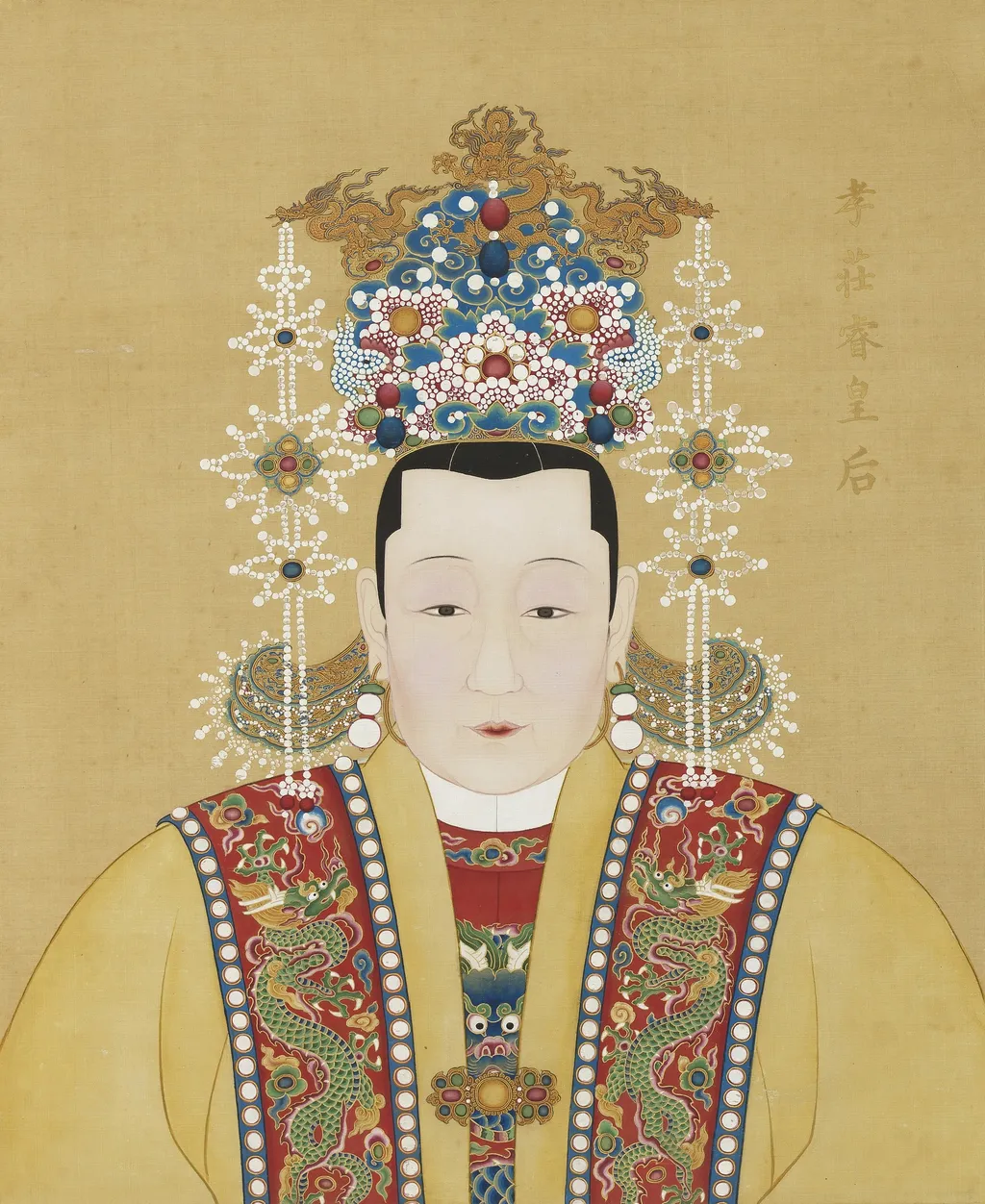
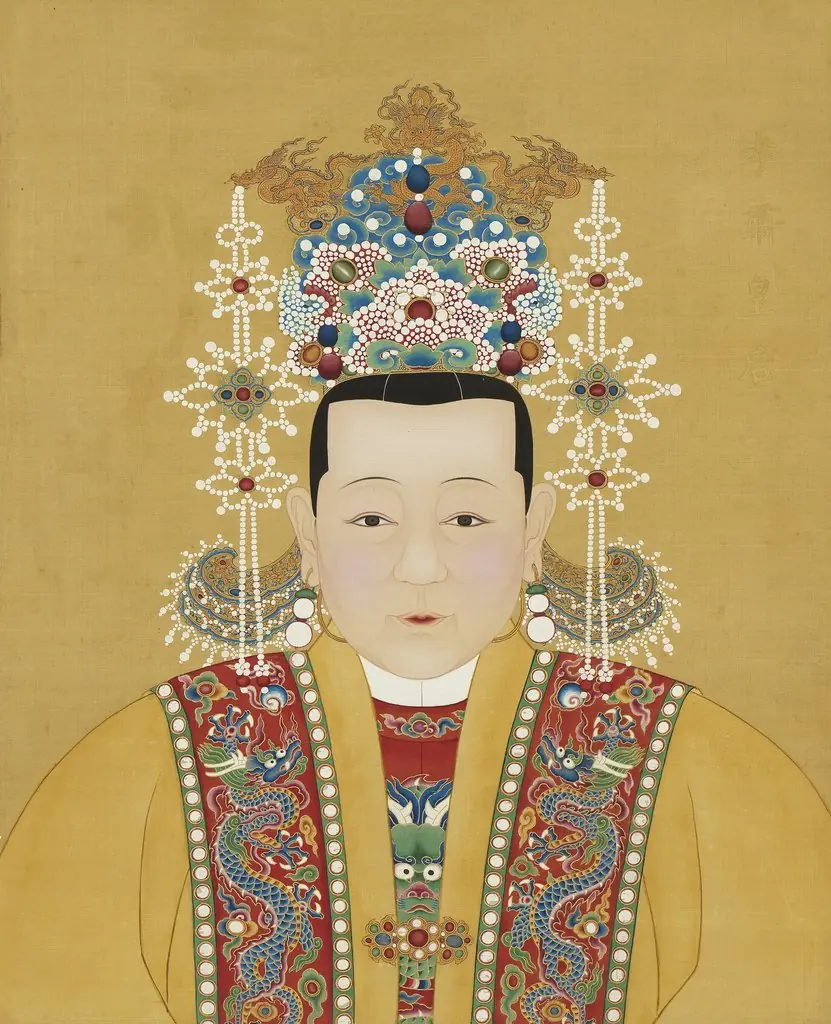
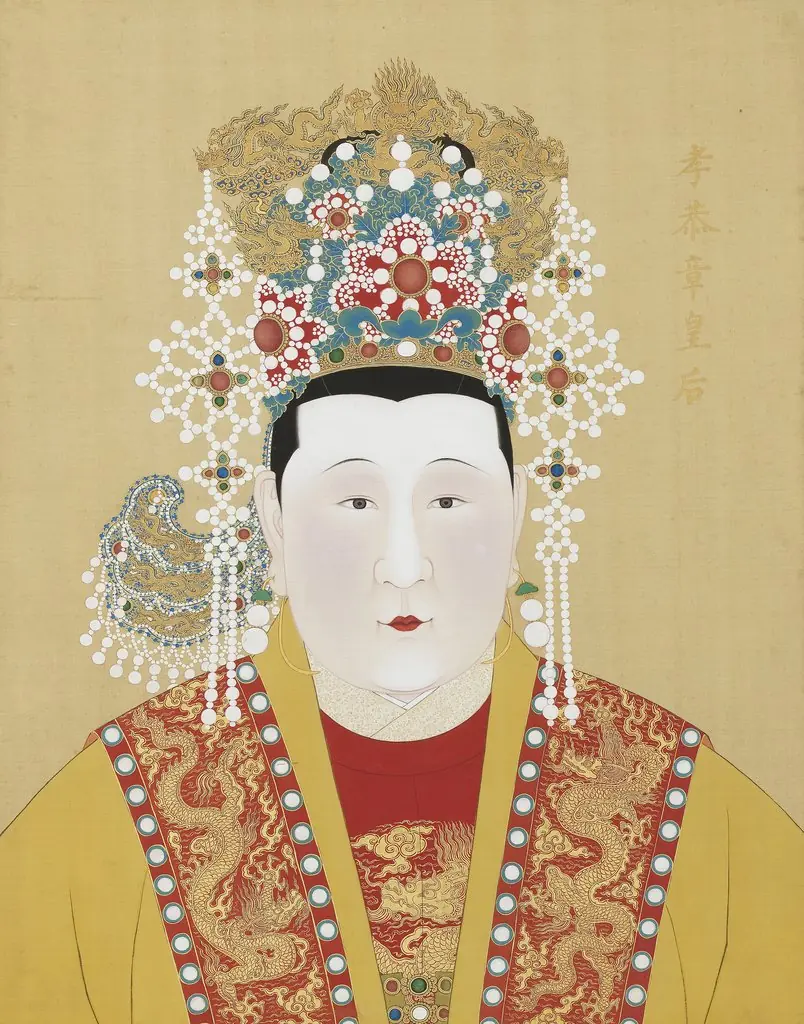
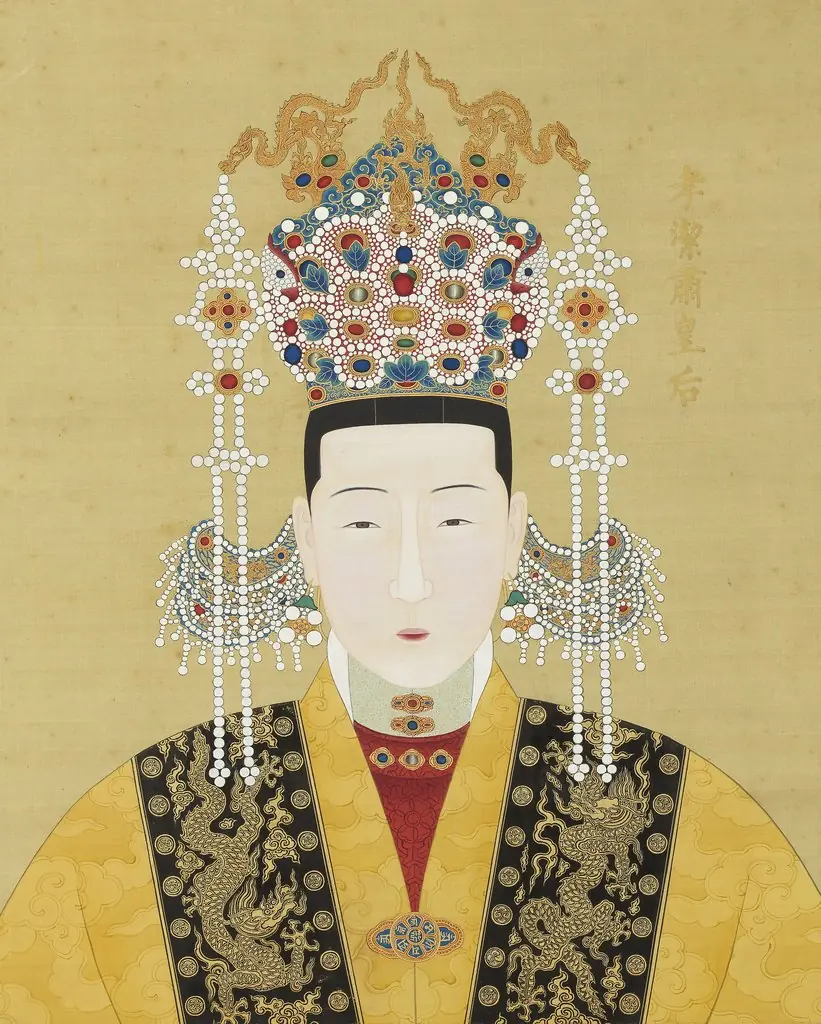
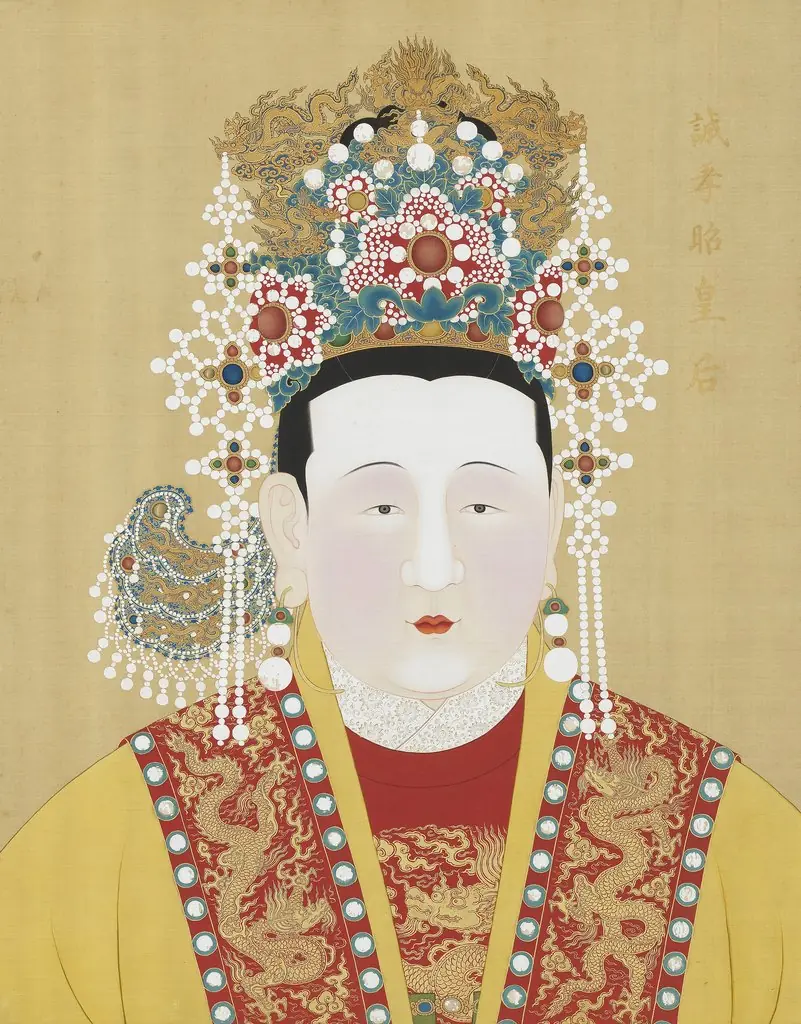
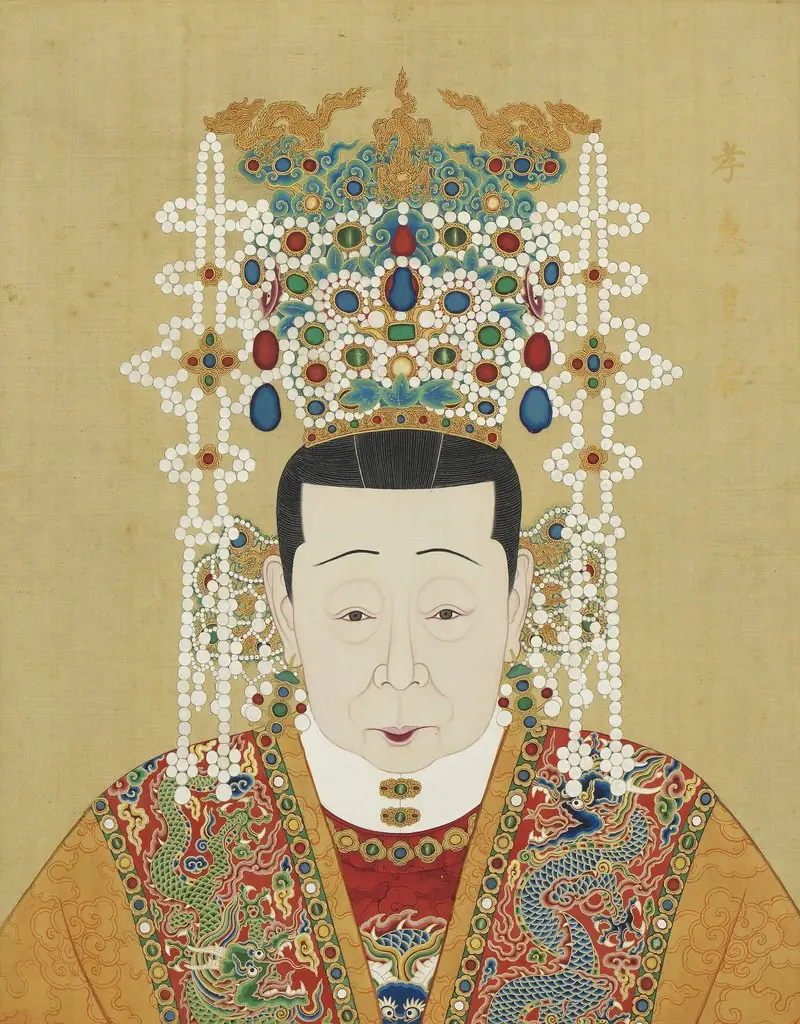
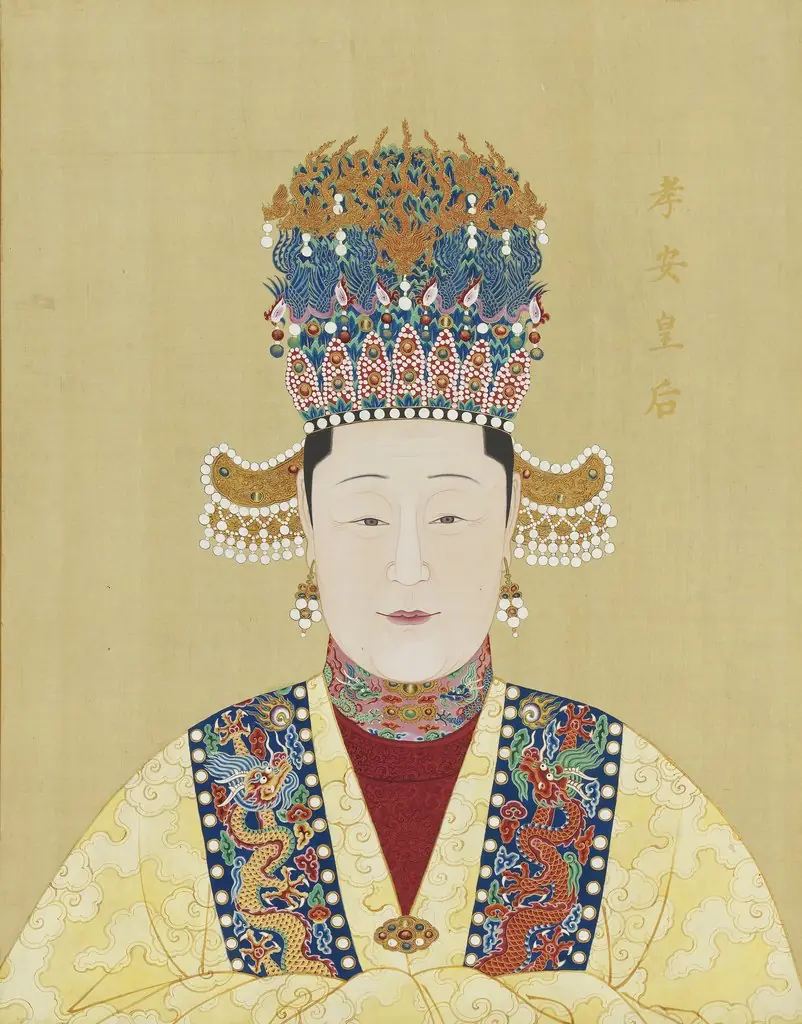
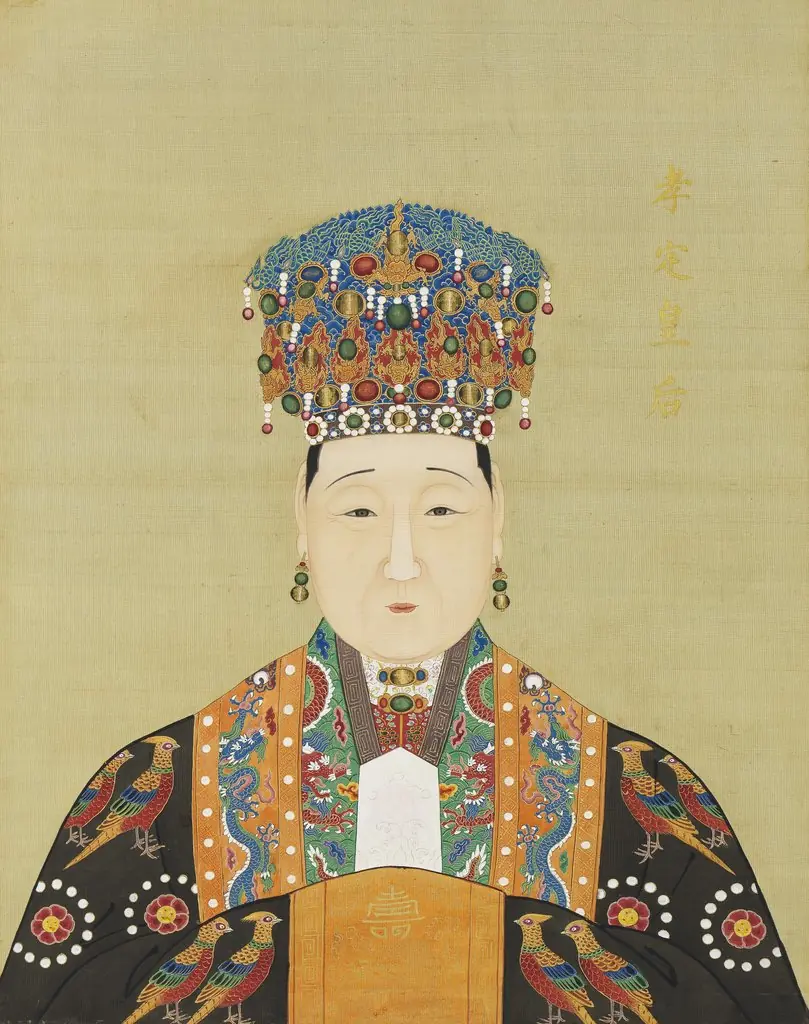
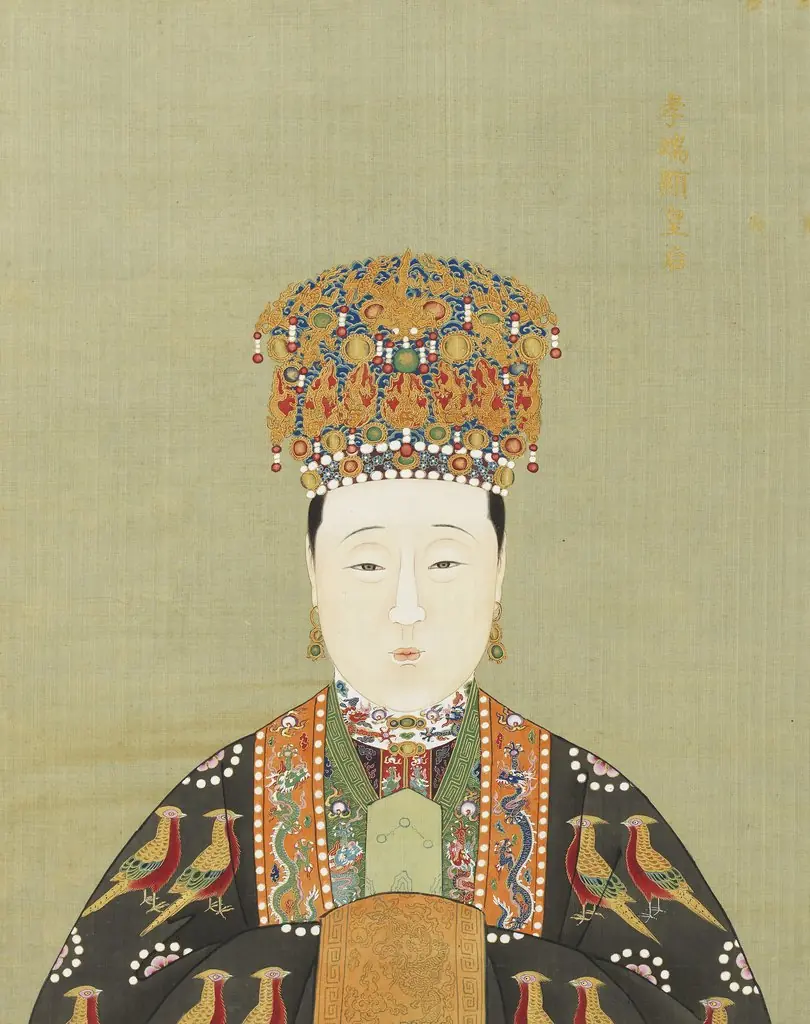
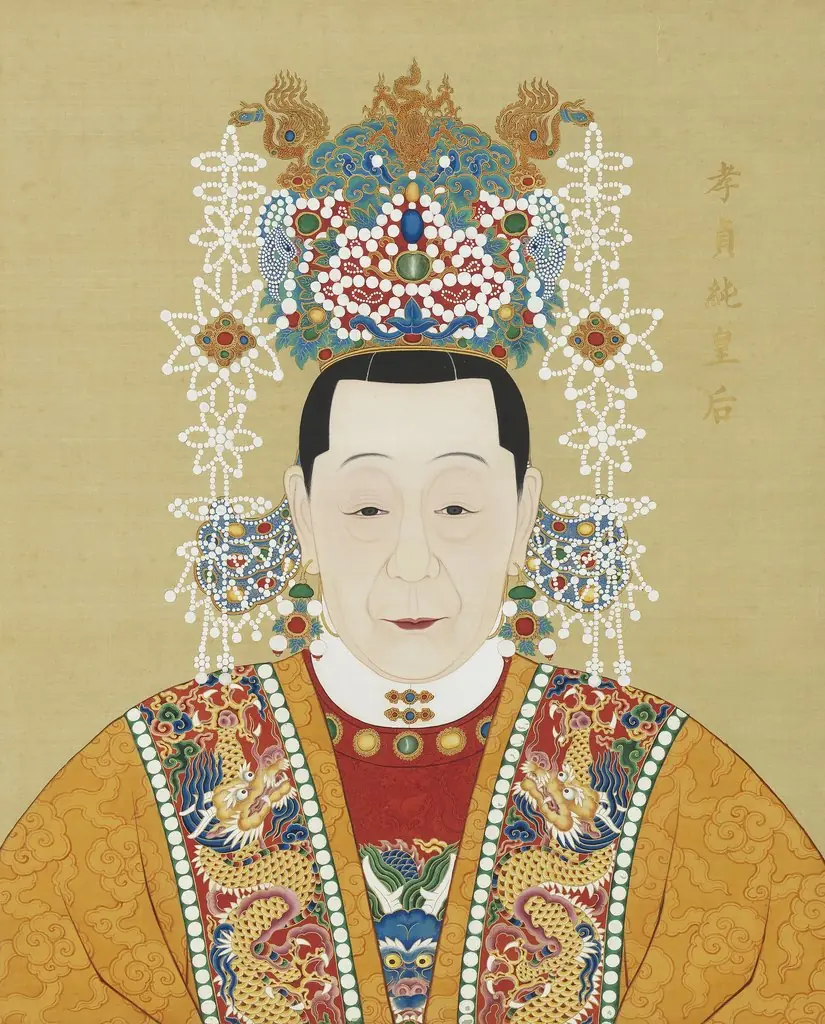
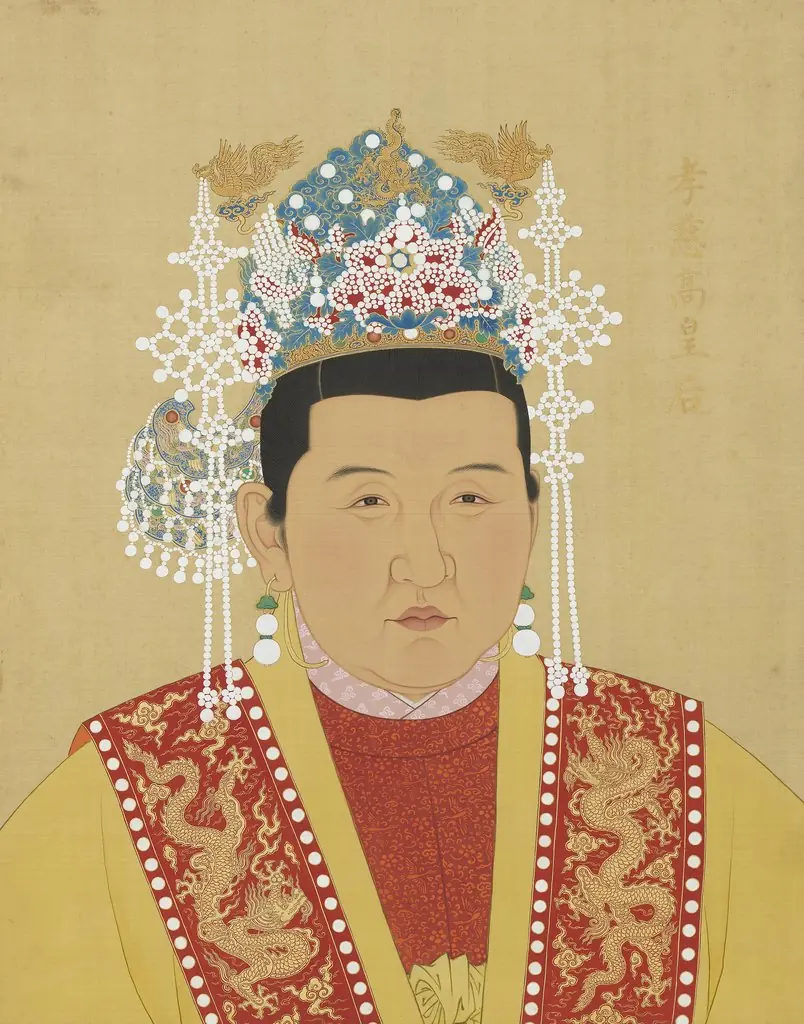
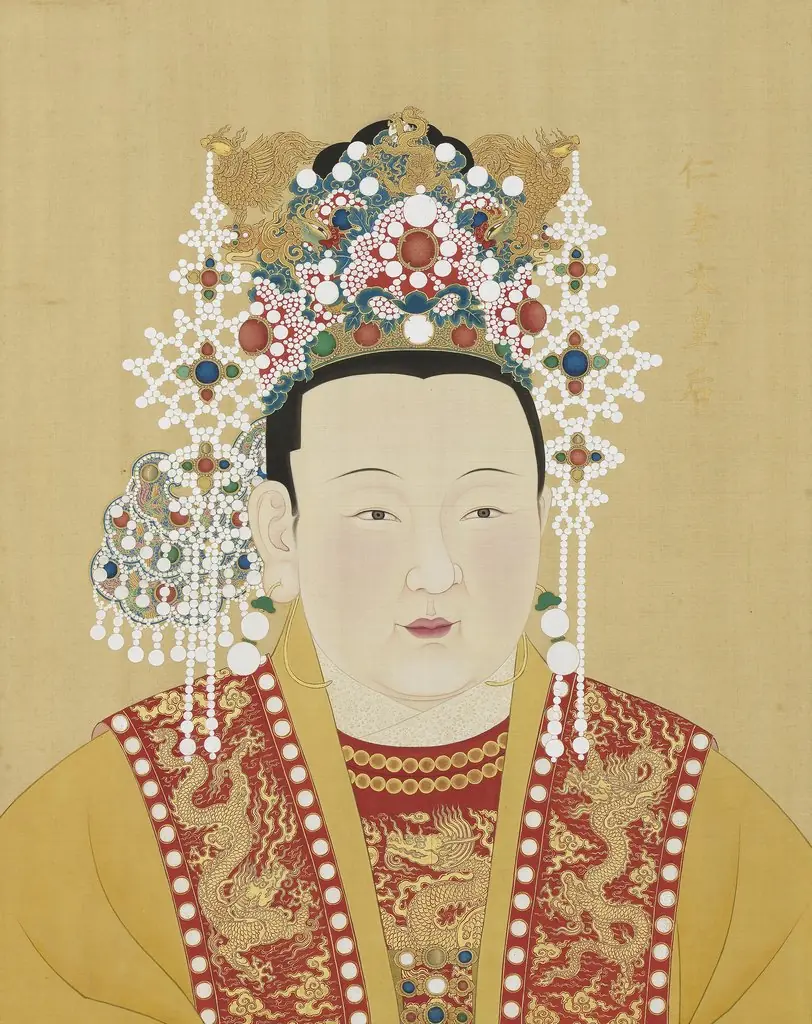
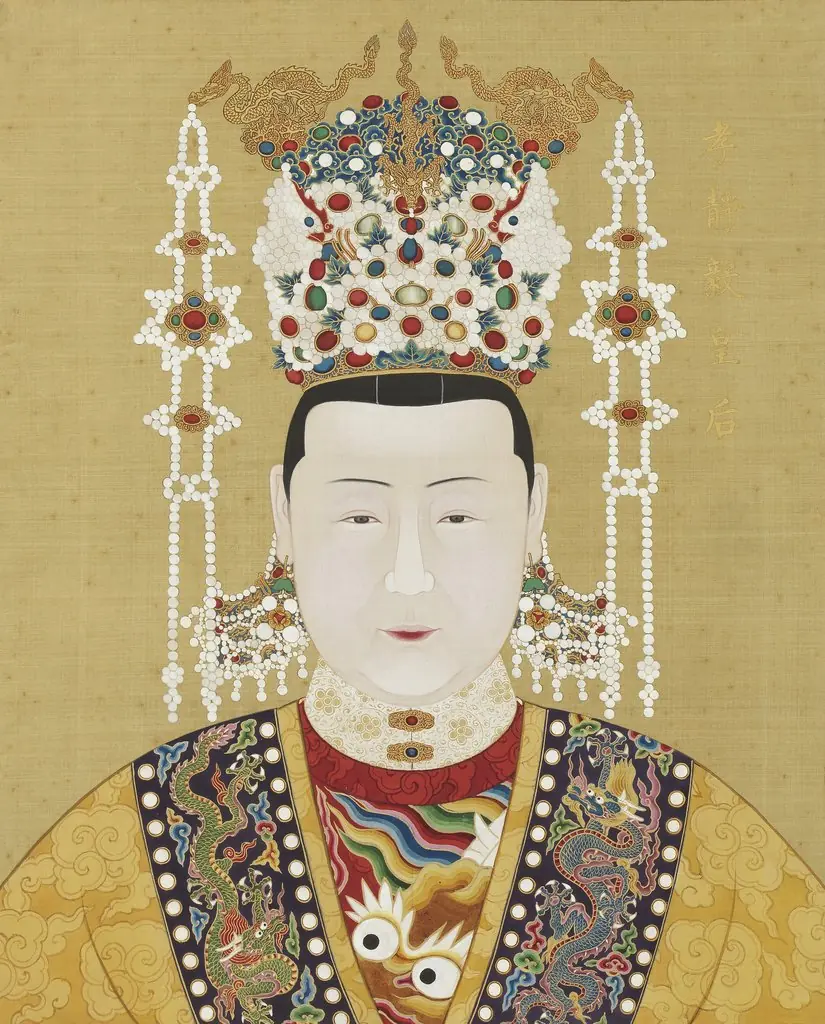
明代帝后半身像册(一)-孝庄睿皇后 is an unspecified painting by Unknown. It dates from 1850 and is held in the collection of the National Palace Museum. This portrait is one of a series depicting Ming dynasty imperial consorts, executed in the traditional court painting style.
About this work
Overview
This portrait is one of a series depicting Ming dynasty imperial consorts, executed in the traditional court painting style.
This portrait is one of a series depicting Ming dynasty imperial consorts, executed in the traditional court painting style. It portrays Empress Xiaozhuangrui, wife of the Wanli Emperor, in formal ceremonial attire. The work belongs to a state-commissioned collection intended for ancestral veneration and dynastic record-keeping, produced under strict iconographic guidelines at the imperial painting academy.
Subject & Meaning
The subject is Empress Xiaozhuangrui, depicted in full regalia to signify her status as empress consort. The yellow robe and red vest with dragon motifs denote imperial authority, while the elaborate headdress reflects ceremonial protocol. The serene, idealized facial rendering conveys dignity and moral virtue, aligning with Confucian ideals of female nobility and dynastic continuity.
Technique & Style
The painting employs fine brushwork and layered mineral pigments to achieve smooth, luminous skin tones and precise textile detail. Dragon embroidery is rendered with meticulous line work, and the crown’s ornaments are rendered in gold and colored inks. The composition is frontal and symmetrical, minimizing individual expression to emphasize ritual role over personal identity.
History & Provenance
Created during the late 16th century, the portrait was likely housed in the imperial ancestral temple or palace archives. It entered the collection of the National Palace Museum in Taipei following the relocation of imperial artifacts in the 20th century. The series remains part of China’s official imperial visual archive, preserved for historical and cultural study.
Context
Portraits of empresses like this were produced as part of a broader imperial project to visually codify lineage and legitimacy. Similar works adorned temple halls during ancestral rites, reinforcing the emperor’s divine mandate through the ceremonial presence of his consort. These images were not private likenesses but public symbols of dynastic order.
Legacy
The portrait stands as a representative example of Ming court portraiture, illustrating the fusion of Confucian ideology and artistic convention. It continues to inform scholarly understanding of gender, power, and visual culture in late imperial China. Its preservation ensures ongoing access to the material language of imperial authority.
Artist & collection

 Domestic Scene
 Giacomo and Cardinal Marco, investing Andrea, Abbot of San Zeno, with his Benefice
 The Nymph of Fontainebleau
 Portrait of a Woman
 Madonna and Child with Saints in the Enclosed Garden
 Venus and Minerva
 Family Group of Four on Sofa
 Wall painting from Room H of the Villa of P. Fannius Synistor at Boscoreale