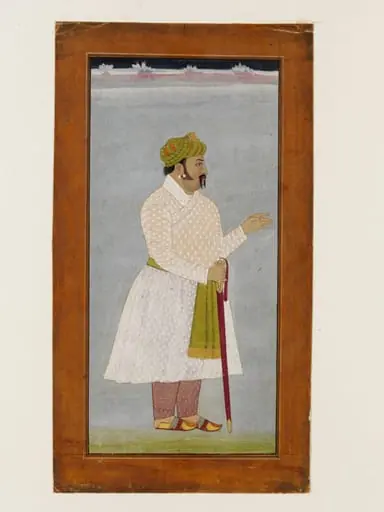
Artwork
Raja Kailashpat Dev
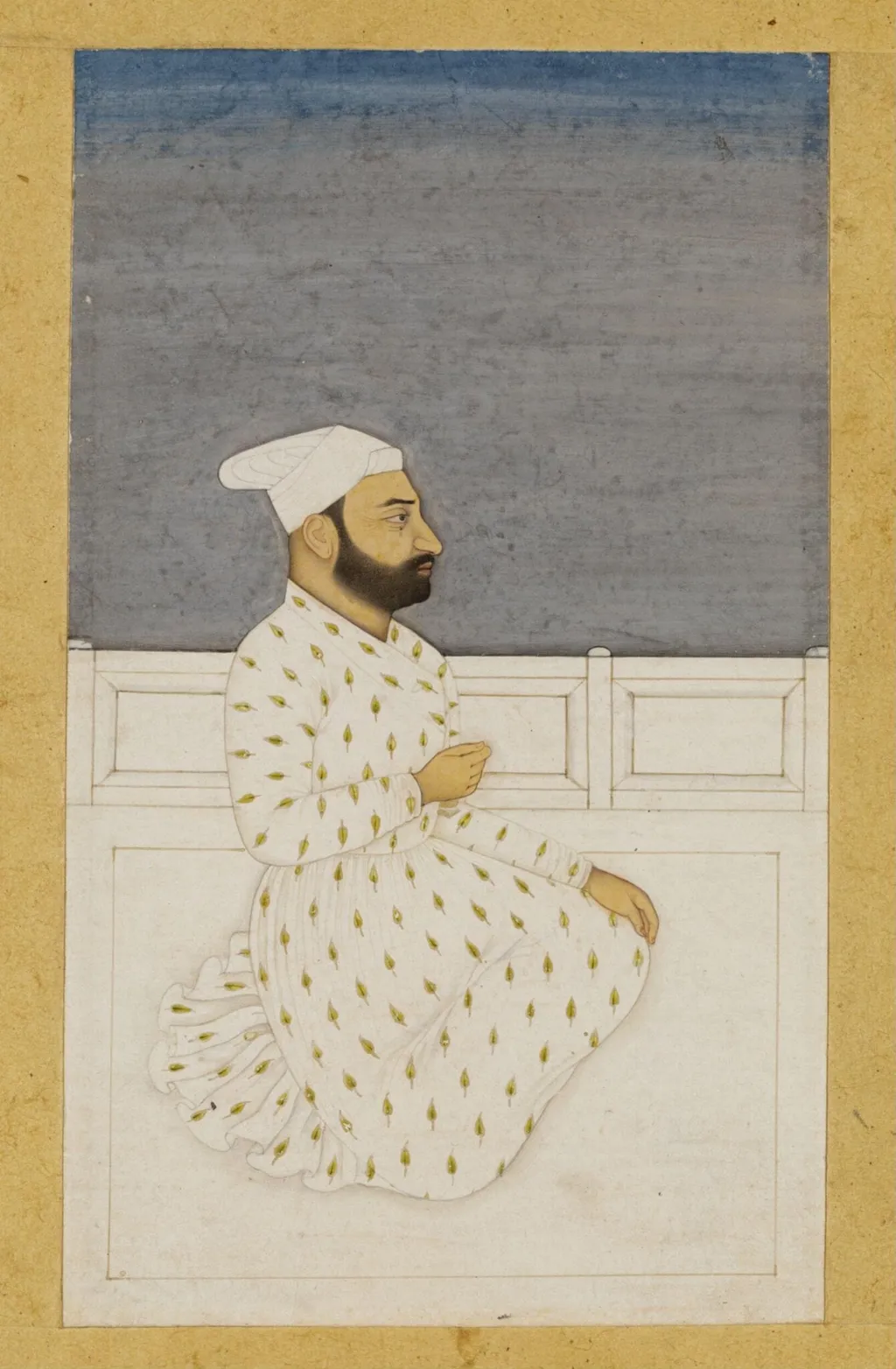
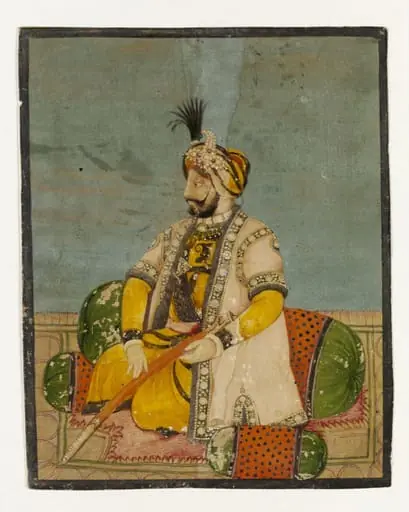
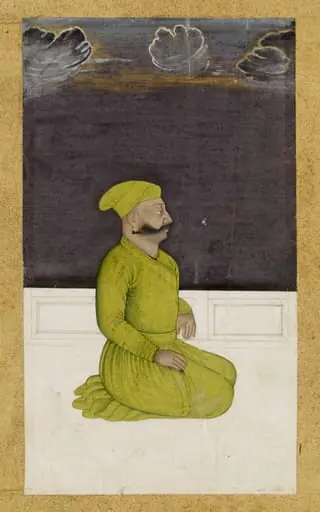
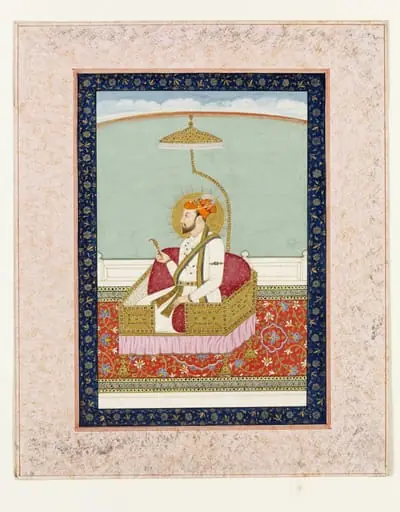
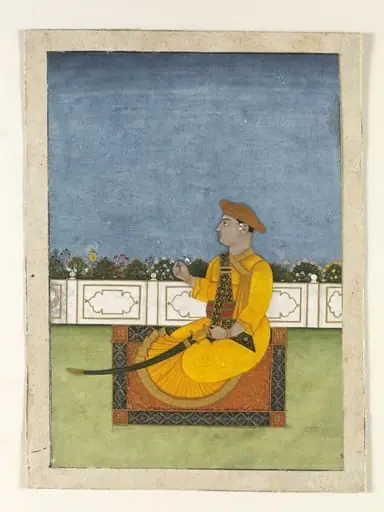
Raja Kailashpat Dev is a paint painting by the Baroque artist Unknown. It dates from 1745 and is held in the collection of the Victoria and Albert Museum.
About this work
Overview
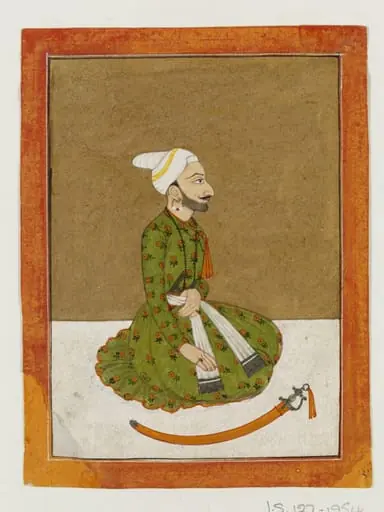
Created in 1745, this opaque watercolour on paper depicts Raja Kailashpat Dev, ruler of Bandralta from around 1715 to 1730.
Created in 1745, this opaque watercolour on paper depicts Raja Kailashpat Dev, ruler of Bandralta from around 1715 to 1730. The portrait captures him in a composed, seated posture, rendered with delicate precision. The work belongs to the Pahari school of painting, known for its intimate scale and refined detail. Despite its modest dimensions, the composition conveys quiet authority through stillness and careful observation.
Subject & Meaning
Raja Kailashpat Dev is portrayed not in action but in repose, suggesting contemplation and inner authority rather than martial power. His calm demeanor and modest attire reflect ideals of rulership rooted in dignity and restraint. The absence of grand symbols or courtly entourage shifts focus to the individual, emphasizing personal presence over political spectacle, a common trait in later Pahari portraiture.
Technique & Style
The artist employed fine brushwork and layered opaque watercolour to model form with subtle gradations of light and shadow. The robe’s intricate green leaf motifs are rendered with meticulous precision, contrasting with the plain white fabric. Soft transitions across the face and folds of clothing create a sense of volume, while the flat blue background and white railing isolate the figure, enhancing the portrait’s introspective tone.
History & Provenance
The painting was likely commissioned shortly after the raja’s death, possibly as a devotional or ancestral tribute. It remained within the Bandralta royal lineage before entering private or institutional collections in the 20th century. Its survival is notable, as many such works from smaller hill states were lost or dispersed during political upheavals in the 19th century.
Context
Produced in the mid-18th century, this portrait reflects the evolving aesthetic of Pahari courts, where Mughal influences merged with local sensibilities. While larger courts favored elaborate narratives, smaller principalities like Bandralta favored intimate, psychologically nuanced depictions. The use of chiaroscuro, though restrained, shows awareness of broader artistic currents beyond the hills.
Legacy
This painting exemplifies how regional artists adapted formal conventions to express individual identity with quiet subtlety. Its emphasis on inner presence over external grandeur influenced later portraiture in the Himalayan foothills. Though not widely known outside specialist circles, it remains a key reference for understanding the diversity of Indian miniature painting beyond imperial centers.
Artist & collection

 Domestic Scene
 Giacomo and Cardinal Marco, investing Andrea, Abbot of San Zeno, with his Benefice
 The Nymph of Fontainebleau
 Portrait of a Woman
 Madonna and Child with Saints in the Enclosed Garden
 Venus and Minerva
 Family Group of Four on Sofa
 Wall painting from Room H of the Villa of P. Fannius Synistor at Boscoreale