Artwork
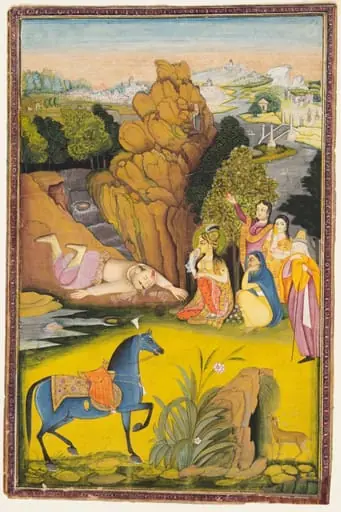
Rama and Lakshmana slay the demon giant Viradha, from Chapters 2 through 4 of the Aranya Kanda (Book of the Forest) of a Ramayana (Rama’s Journey)
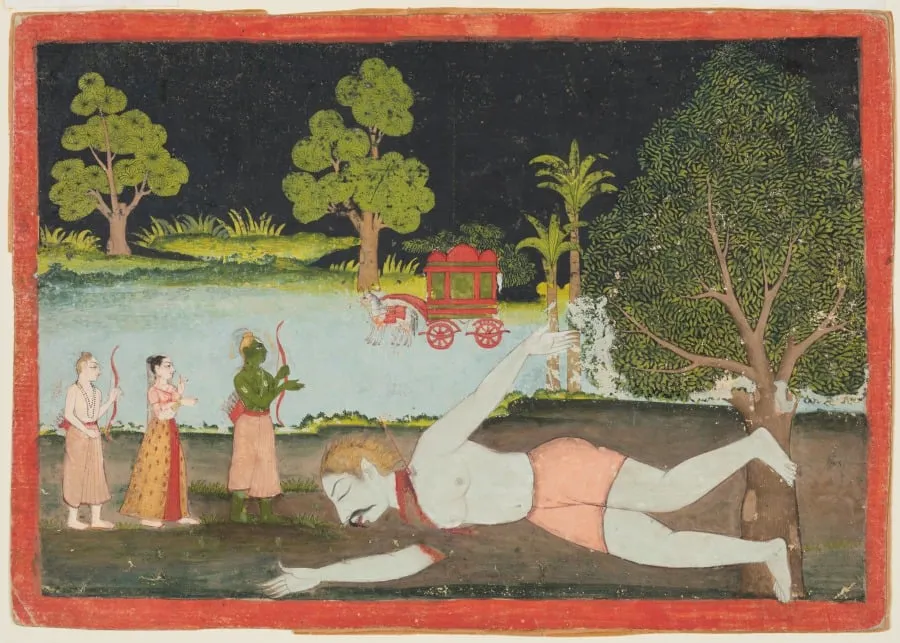
Rama and Lakshmana slay the demon giant Viradha, from Chapters 2 through 4 of the Aranya Kanda (Book of the Forest) of a Ramayana (Rama’s Journey) is an unspecified painting by the Mughal Painting artist Unknown. It dates from 1770 and is held in the collection of the Cleveland Museum of Art.
About this work
Overview
The painting depicts a dramatic episode from the Indian epic Ramayana, illustrating the moment when Rama and his brother Lakshmana confront the demon Viradha in the Dandaka forest. The scene captures the tension of the rescue, with the two heroes engaged in combat against a towering blue-skinned monster while Sita watches from behind a tree.
Subject & Meaning
Viradha, originally the celestial musician Tumburu, had been transformed into a demon by the god Kubera as punishment. In the narrative, his encounter with Rama and Lakshmana ends with his death, which simultaneously releases him from the curse and restores his former divine nature. The painting thus visualizes the triumph of dharma over a cursed adversary and the rescue of the heroine.
Technique & Style
Rendered in vivid, flat colors and simplified forms, the composition resembles a traditional storybook illustration rather than a realistic battle scene. The use of bold outlines and stylized figures emphasizes narrative clarity, while the dark forest background provides a contrasting setting for the luminous characters.
History & Provenance
The work originates from the Rajput court of Datia, a princely state known for its patronage of narrative painting in the 18th–19th centuries. It forms part of a series that visualized episodes from the Aranya Kanda, the Forest Book of the Ramayana, intended for devotional and instructional purposes within the royal household.
Context
During the period of exile described in the Ramayana, Rama, Lakshmana, and Sita travel through the Dandaka forest, a setting that serves as a testing ground for the heroes' virtues. The encounter with Viradha reflects the broader theme of confronting and overcoming supernatural obstacles on the path toward righteousness.
Artist & collection

 Domestic Scene
 Giacomo and Cardinal Marco, investing Andrea, Abbot of San Zeno, with his Benefice
 The Nymph of Fontainebleau
 Portrait of a Woman
 Madonna and Child with Saints in the Enclosed Garden
 Venus and Minerva
 Family Group of Four on Sofa
 Wall painting from Room H of the Villa of P. Fannius Synistor at Boscoreale
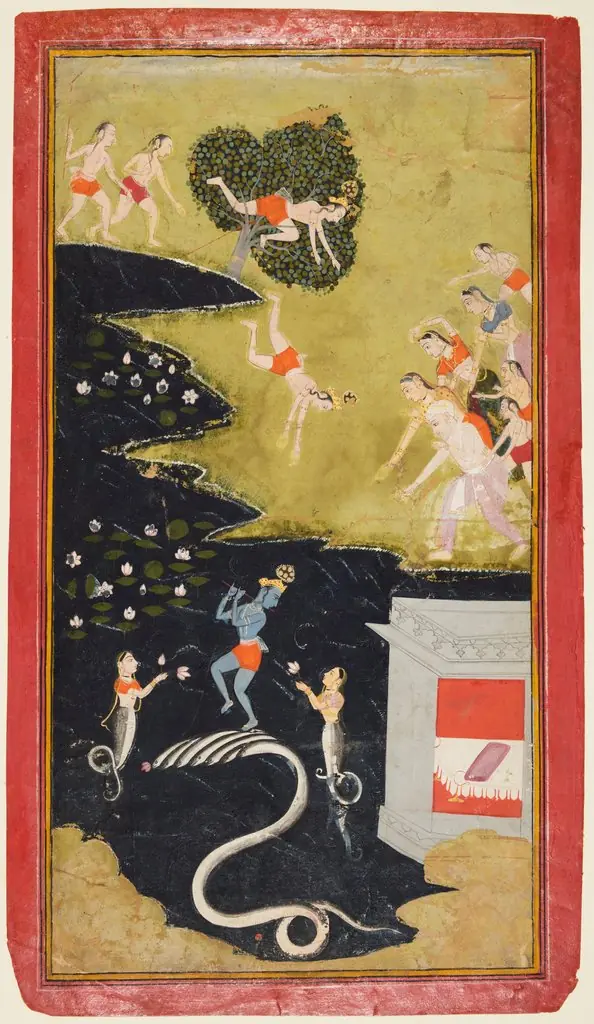 Krishna Quells the Serpent Kaliya, from a Bhagavata Purana
 Untitled
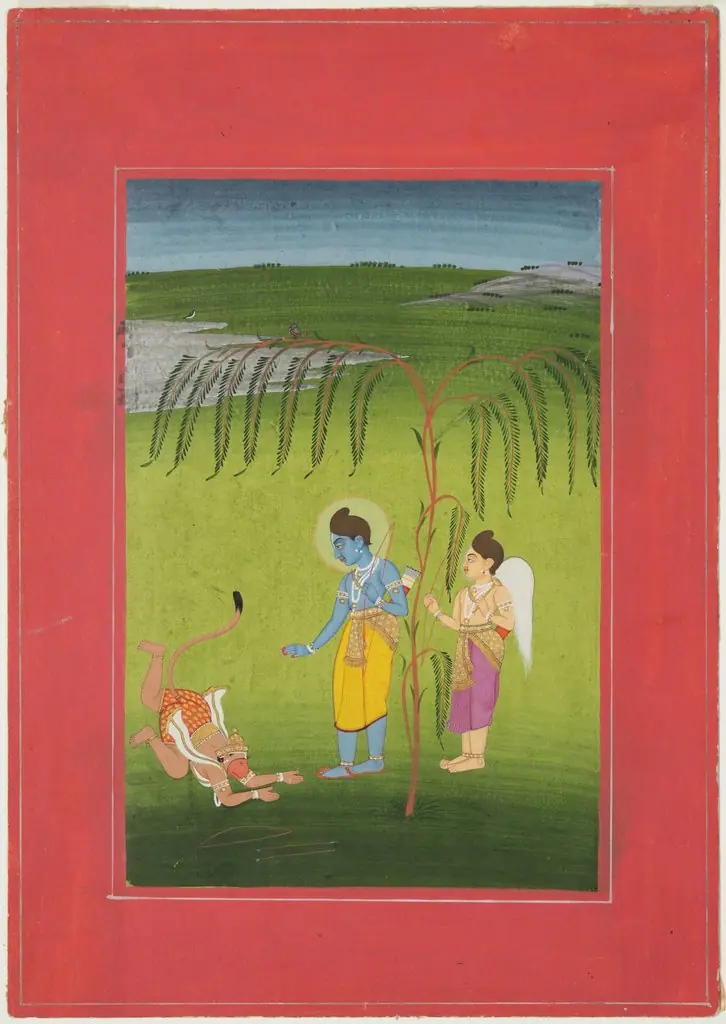 Rama Receiving Obeisance from Hanuman
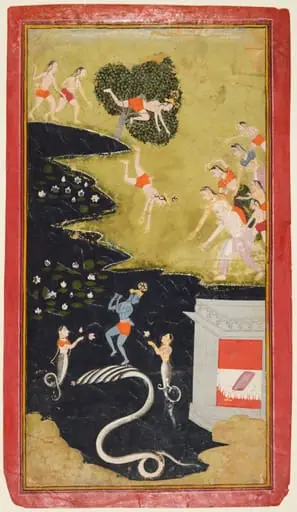 Krishna Quells the Serpent Kaliya, from a Bhagavata Purana
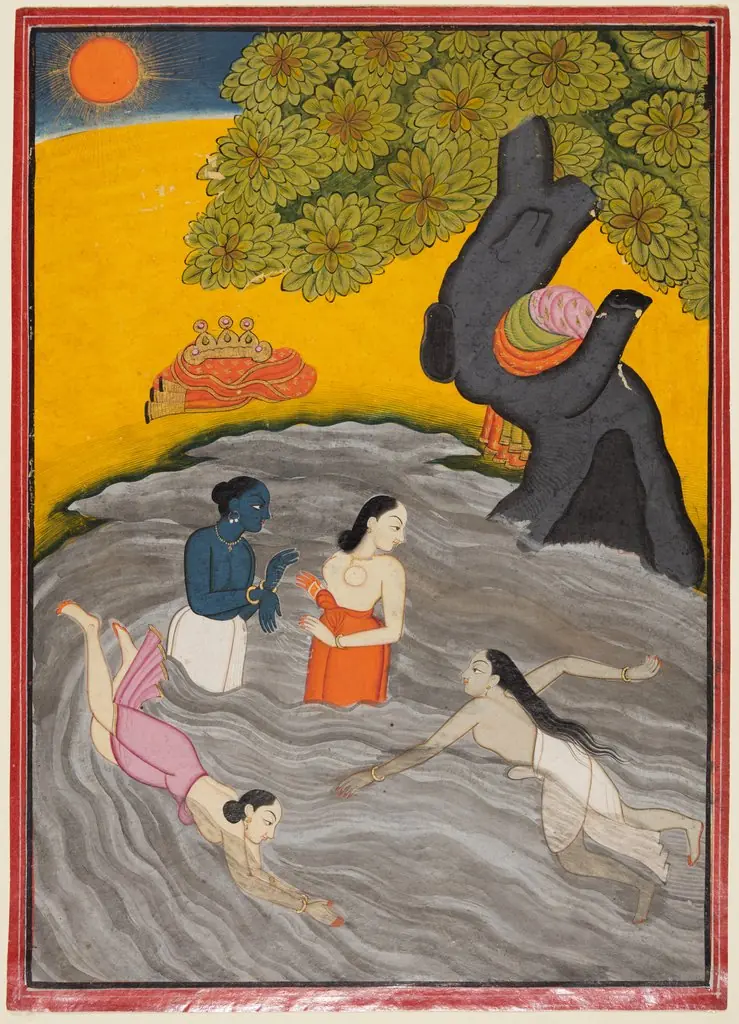 Krishna Playing with the Gopis in the Yamuna
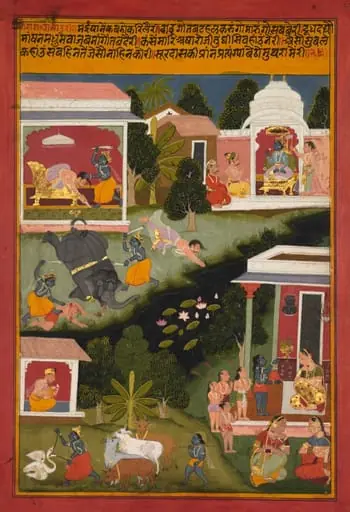 Krishna asks for sweets, from a Sursagar of Surdas (Indian, c. 1480–1580)
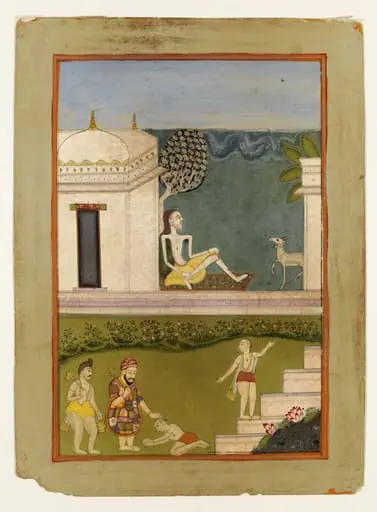 Bhairava Raga
 Farhad Kills Himself After Hearing the False News of Shirin’s Death
 Untitled