Artwork
Farhad Kills Himself After Hearing the False News of Shirin’s Death
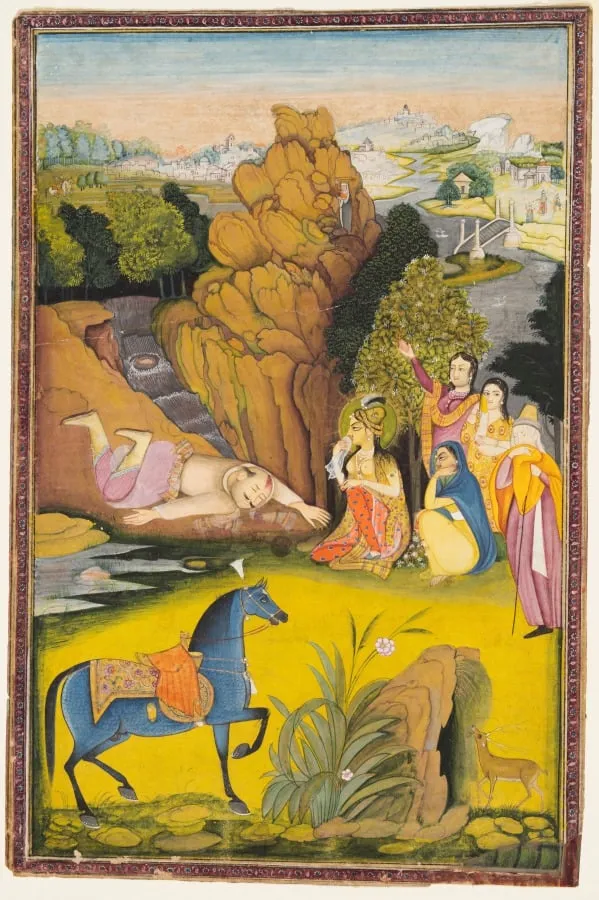
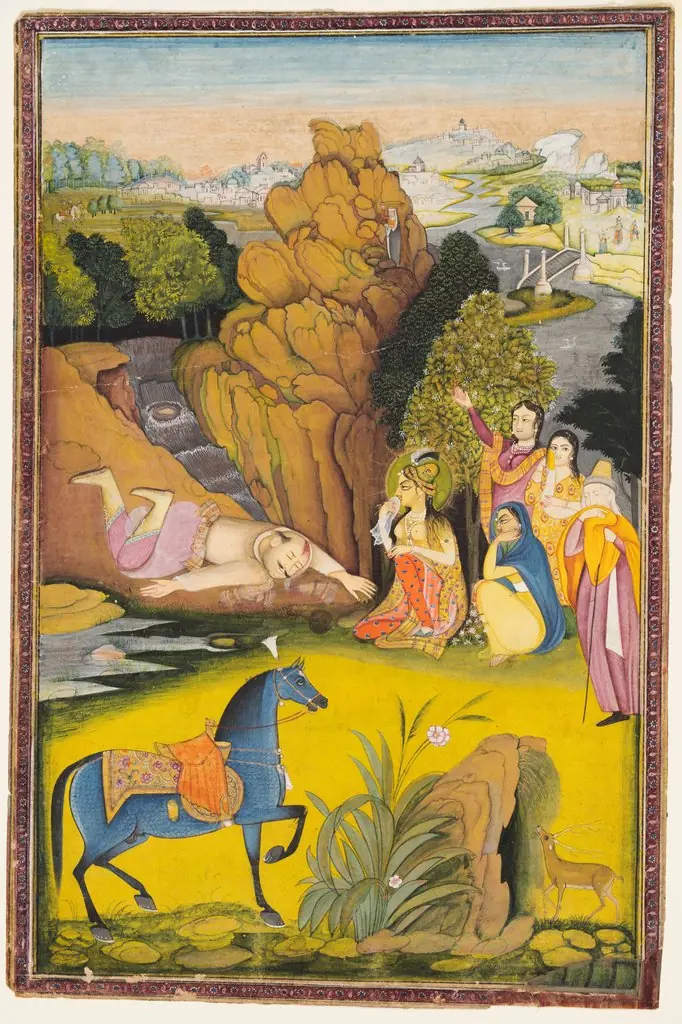
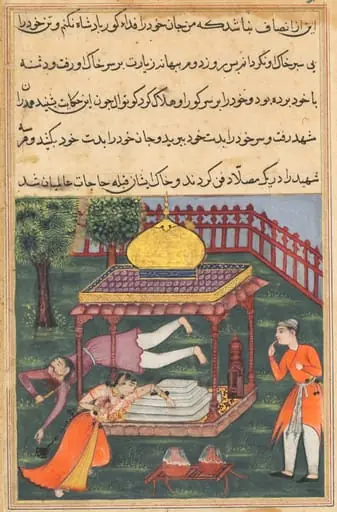
Farhad Kills Himself After Hearing the False News of Shirin’s Death is an unspecified painting by the Patna School of Painting artist Amar Das Bhatti. It dates from 1810 and is held in the collection of the Cleveland Museum of Art. This painting depicts the aftermath of Farhad’s suicide, triggered by the false report of Shirin’s death.
About this work
Overview
The scene captures a pivotal moment from Persian romantic legend, rendered with the refined detail typical of Rajasthani court painting.
This painting depicts the aftermath of Farhad’s suicide, triggered by the false report of Shirin’s death. His lifeless form lies on rugged terrain, surrounded by a group of women. Among them, Shirin kneels, distinguished by her ornate attire and radiant halo—signaling her continued life and the tragic misunderstanding that led to his death. The scene captures a pivotal moment from Persian romantic legend, rendered with the refined detail typical of Rajasthani court painting.
Subject & Meaning
The narrative draws from the Persian tale of Farhad and Shirin, where Farhad, a stonemason, carved a canal through a mountain to win Shirin’s hand. Upon hearing she had died, he took his own life by leaping from a cliff. The painting shows Shirin alive, unaware of his fate, her halo underscoring the cruel irony: his death was caused by a lie. The scene emphasizes the destructive power of misinformation and the extremity of devotion.
Technique & Style
Executed in the Rajput tradition, the work employs vivid mineral pigments, intricate patterning on garments, and precise linework to define figures and landscape. The use of gold for Shirin’s halo and decorative elements reflects courtly aesthetics. The composition balances emotional gravity with decorative richness, typical of 17th–18th century Rajasthani miniatures, where narrative clarity and ornamental detail coexist.
History & Provenance
The painting likely originated in the Rajput courts of Rajasthan, possibly Jodhpur, where Persian literary themes were popular among royal patrons. Such works were often part of illustrated manuscripts or standalone folios commissioned for private contemplation. While exact provenance is unrecorded, stylistic features align with regional workshops active in the late Mughal period, where Persian epics were visually reinterpreted.
Context
Persian love stories like that of Farhad and Shirin were widely adapted in Indian courts during the 17th and 18th centuries, especially under Mughal and Rajput patronage. These tales resonated with local audiences for their themes of loyalty, sacrifice, and fate. Artists translated them into visual form using indigenous styles, blending Persian narrative with Indian aesthetics to create culturally hybrid works.
Legacy
This painting preserves a version of a legend that endured across centuries and regions, illustrating how literary traditions were visually sustained in South Asian court culture. Its survival offers insight into how emotional narratives were encoded in miniature art, influencing later illustrative practices. Though not widely known outside specialist circles, it remains a quiet testament to cross-cultural storytelling in pre-modern India.
Artist & collection

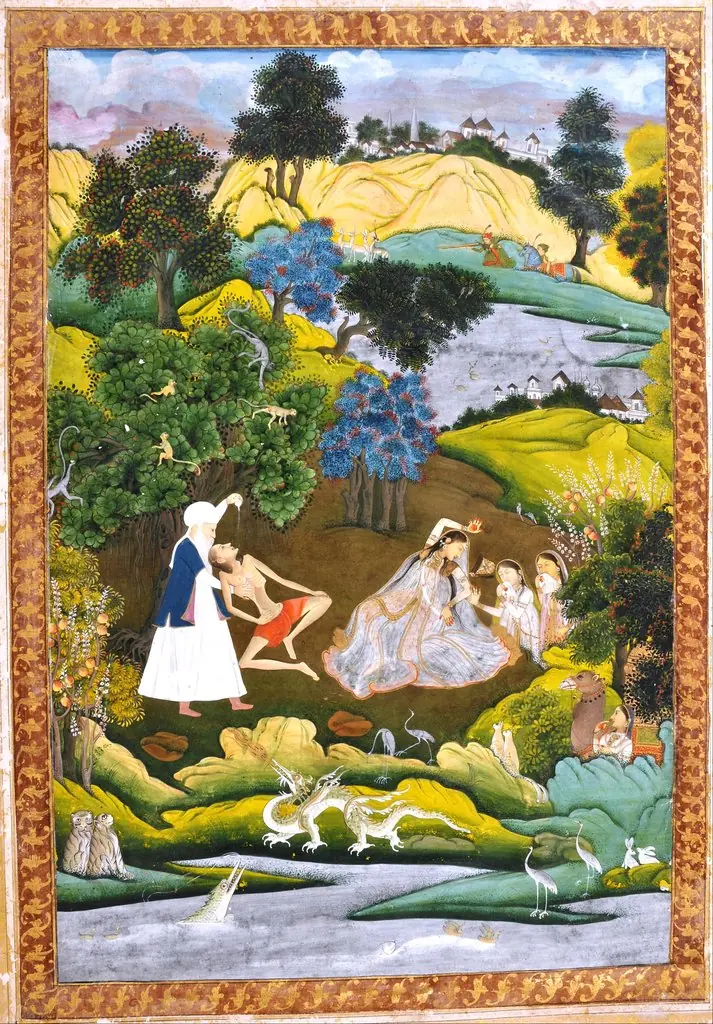 Fainted Laila and Majnun-Based on the Khamsa of Persian poet Nizami
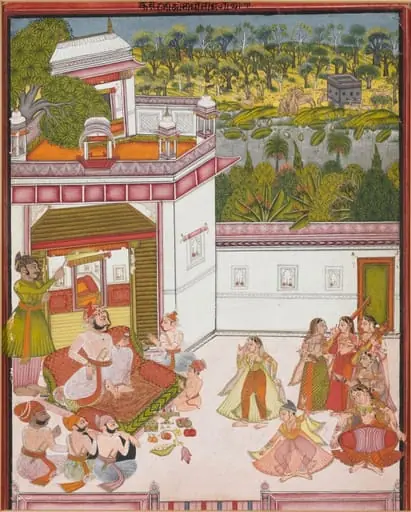 Maharaja of Kotah Listening to Music and Watching Dancers
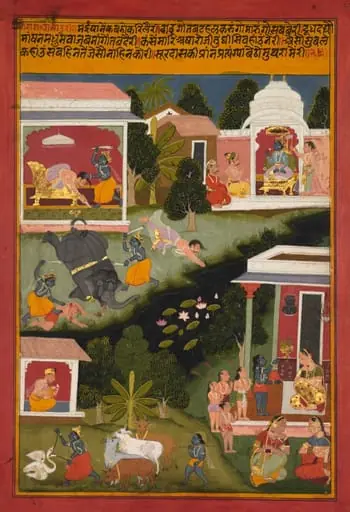 Krishna asks for sweets, from a Sursagar of Surdas (Indian, c. 1480–1580)
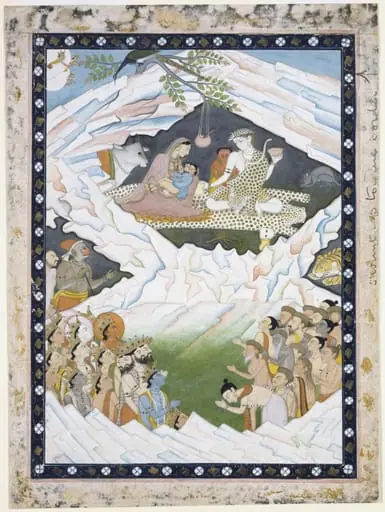 Shiva and Parvati
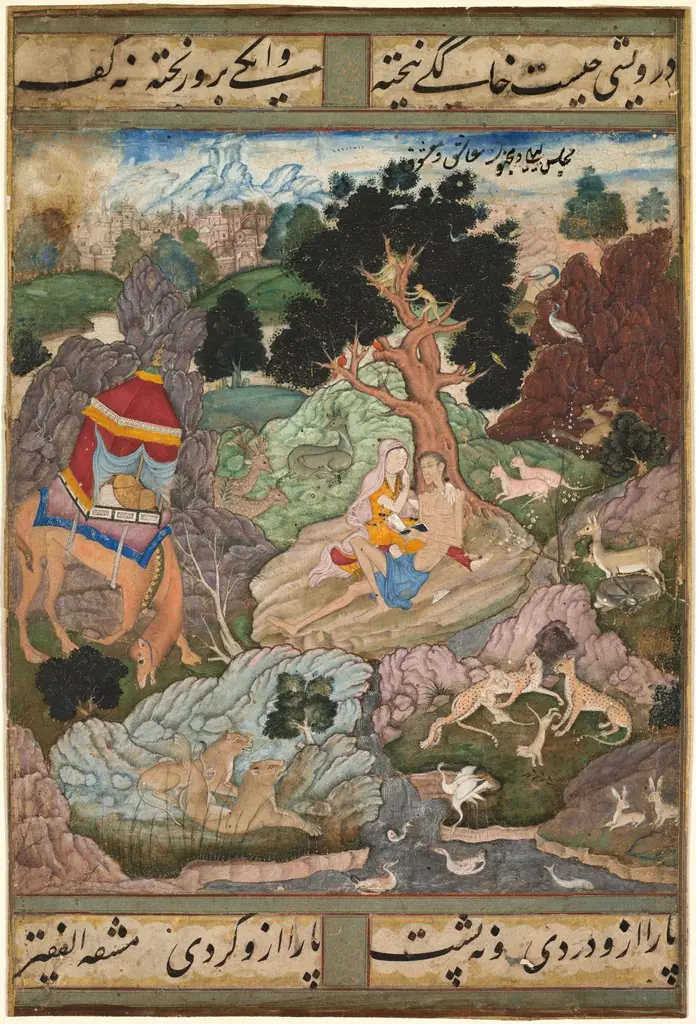 Layla and Majnun in the wilderness with animals, from a Khamsa (Quintet) of Amir Khusrau Dihlavi
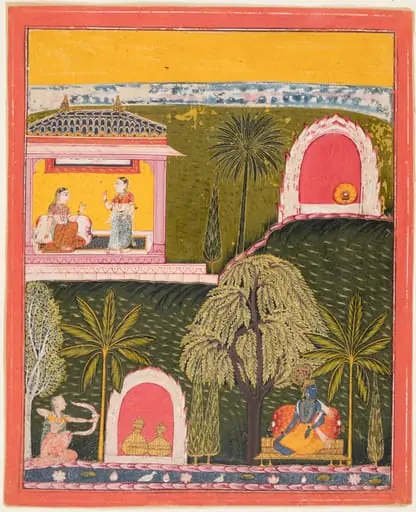 Rati, the Goddess of Erotic Love, Takes Aim at Krishna, from a Rasikapriya
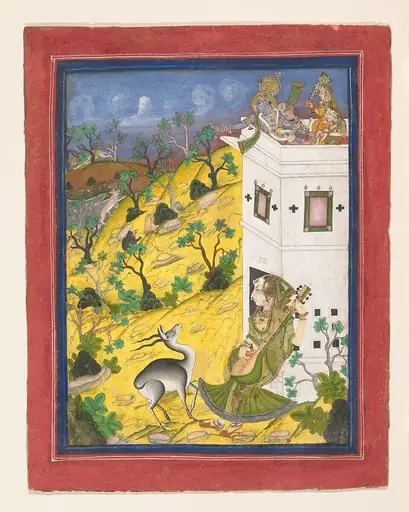 Untitled
 Prositapatika Nayika
 Rama and Lakshmana slay the demon giant Viradha, from Chapters 2 through 4 of the Aranya Kanda (Book of the Forest) of a Ramayana (Rama’s Journey)
 Farhad Kills Himself After Hearing the False News of Shirin’s Death
 Layla and Majnun in the wilderness with animals, from a Khamsa (Quintet) of Amir Khusrau Dihlavi
 Mahrusa kills herself at the tomb of the king of Zabul, and her husband does likewise, from a Tuti-nama (Tales of a Parrot): Thirty-sixth Night