Artwork
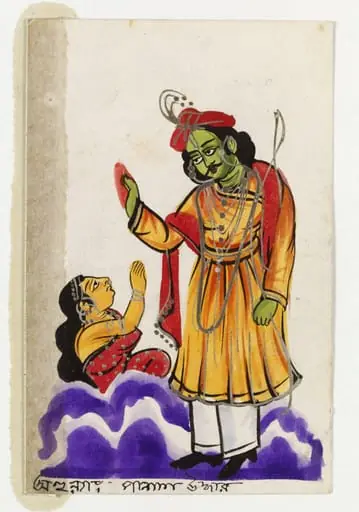
Rama, Lakshmana and Ahalya
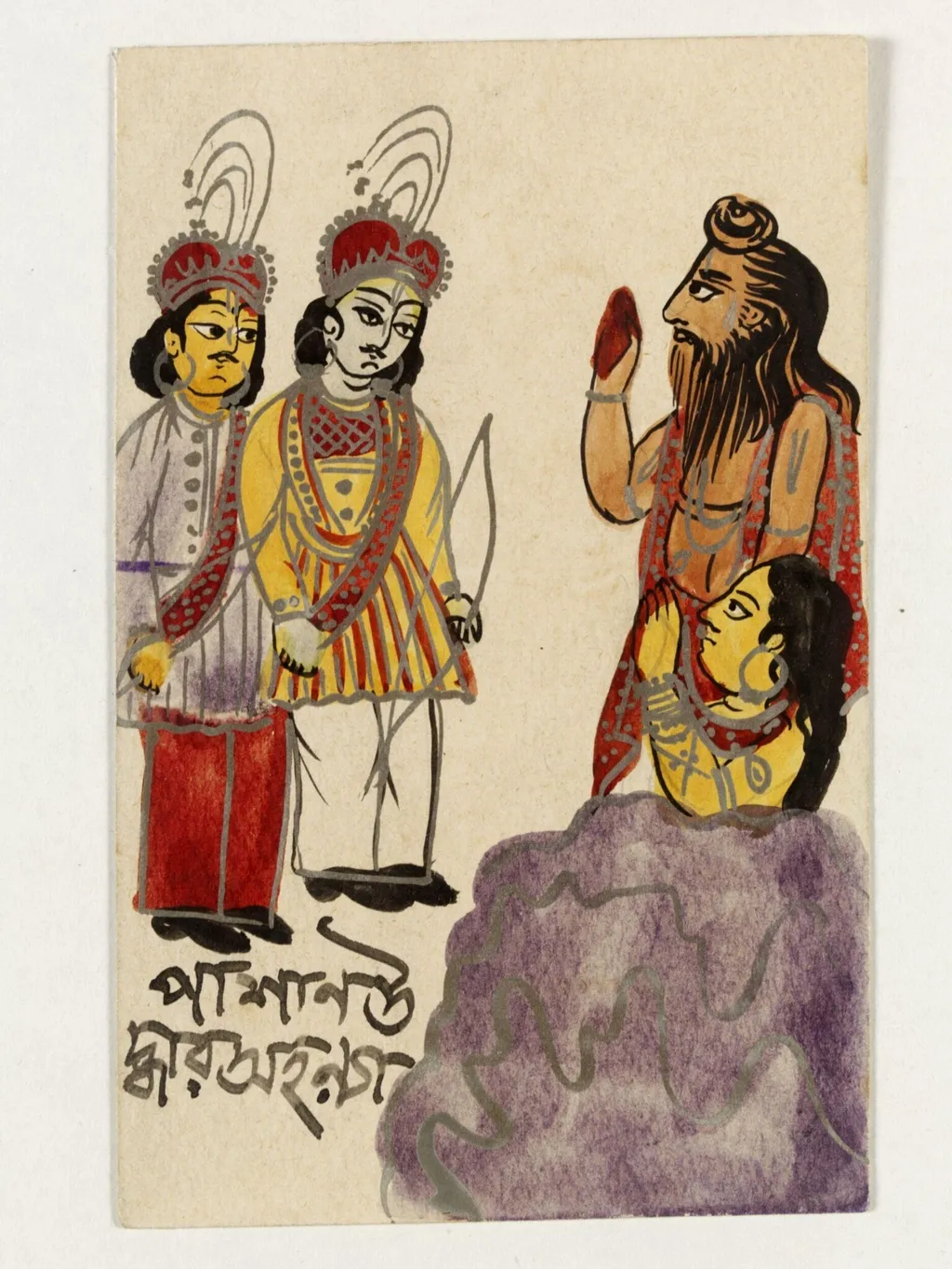
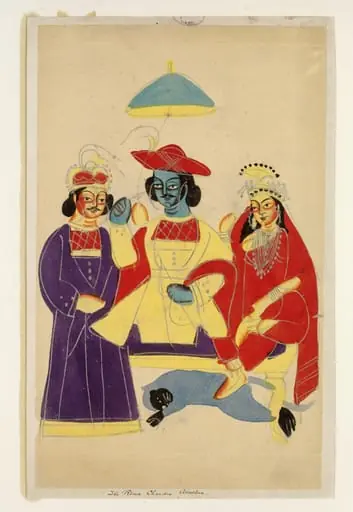
Rama, Lakshmana and Ahalya is a paint painting by the Impressionist artist Unknown. It dates from 1890 and is held in the collection of the Victoria and Albert Museum.
About this work
Overview
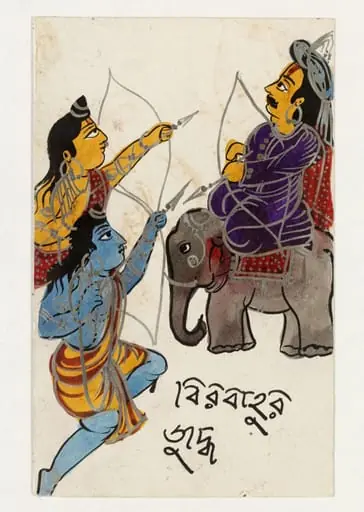
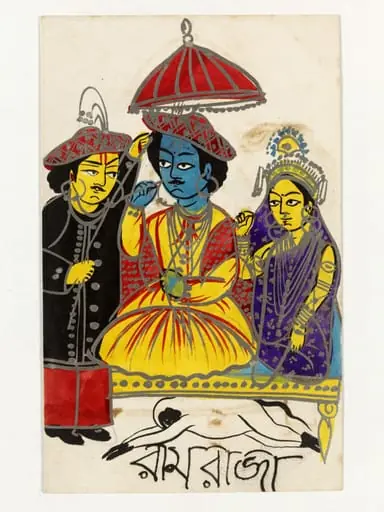
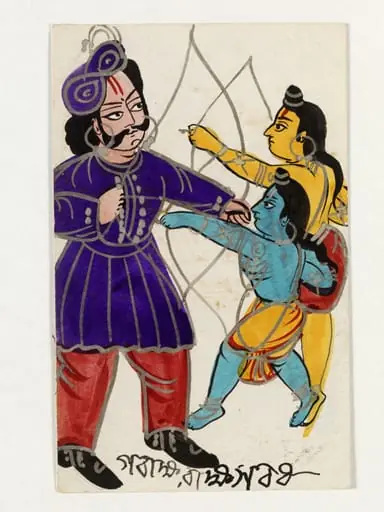
This 1890 watercolor and tin-alloy on paper painting depicts a pivotal scene from the Ramayana, where Rama and Lakshmana liberate Ahalya from her husband's curse. Executed in the Kalighat style, it features bold, flat figures set against a simple background.
Subject & Meaning
The painting illustrates a mythological narrative of redemption. Rama and Lakshmana, identifiable by their bright robes and gold crowns, stand in rescue of Ahalya, kneeling beside her cursed, bearded husband. The scene conveys themes of divine intervention and forgiveness.
Technique & Style
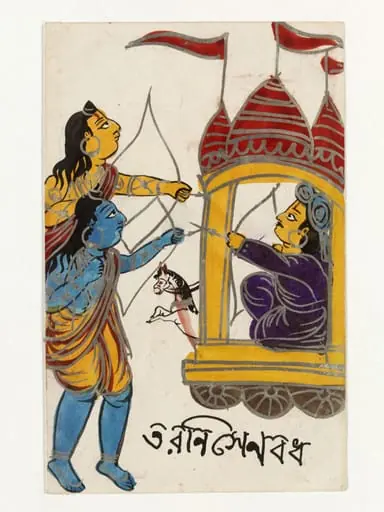
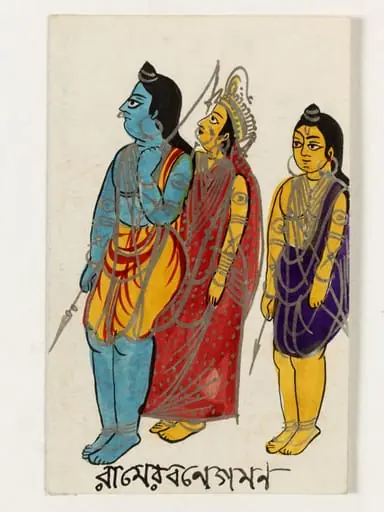
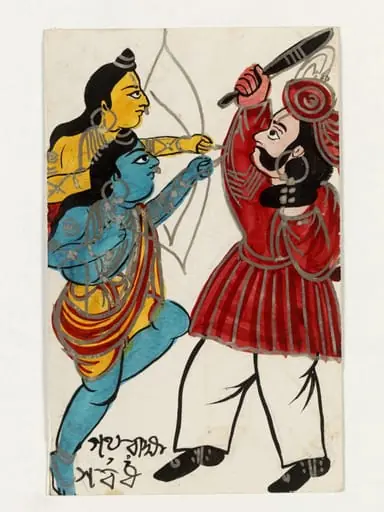
Characteristics of the Kalighat tradition are evident: simplified forms, strong outlines, and vibrant, flat colors. The rapid brushwork and minimal background (faint purple shading) emphasize the figures and the story's emotional core.
History & Provenance
Created in 1890, this work originates from the Kalighat painting movement, which flourished in 19th-century Calcutta among migrant artists from rural Bengal. The script at the bottom, in a non-English language, suggests its local appeal.
Context
The Kalighat style emerged as a response to colonial-era tensions and a means to visually engage with local myths and social practices. This painting reflects the tradition's role in popularizing religious narratives.
Artist & collection

 Domestic Scene
 Giacomo and Cardinal Marco, investing Andrea, Abbot of San Zeno, with his Benefice
 The Nymph of Fontainebleau
 Portrait of a Woman
 Madonna and Child with Saints in the Enclosed Garden
 Venus and Minerva
 Family Group of Four on Sofa
 Wall painting from Room H of the Villa of P. Fannius Synistor at Boscoreale