Artwork
Rama, Lakshmana and Tarani Sen
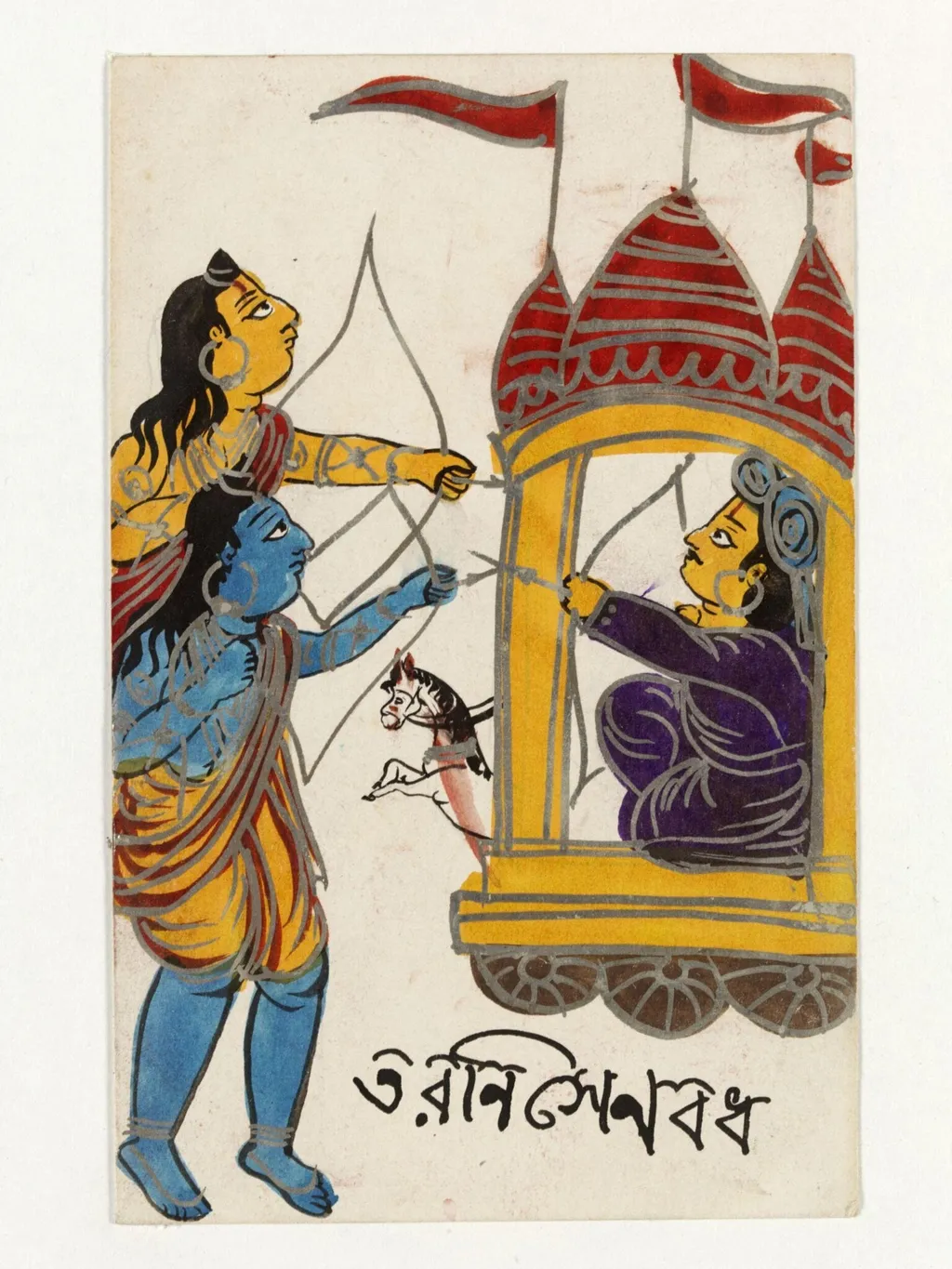
Rama, Lakshmana and Tarani Sen is a paint painting by the Impressionist artist Unknown. It dates from 1890 and is held in the collection of the Victoria and Albert Museum.
About this work
Overview
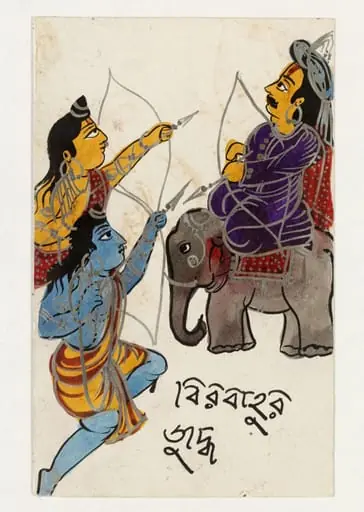
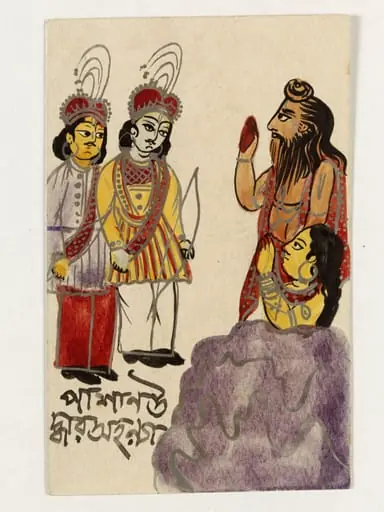
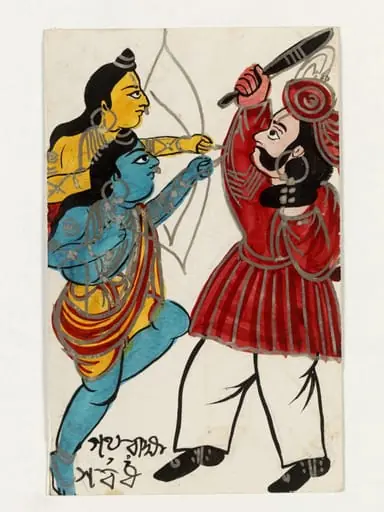
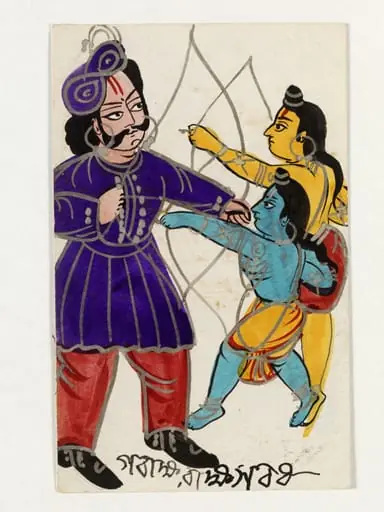
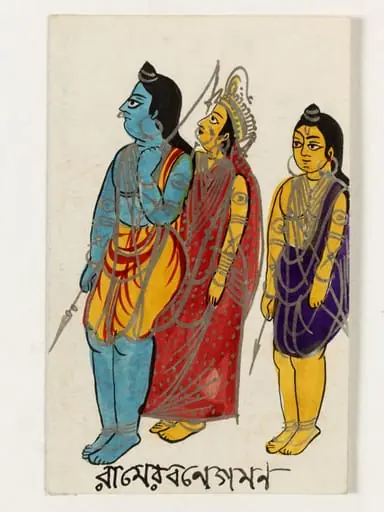
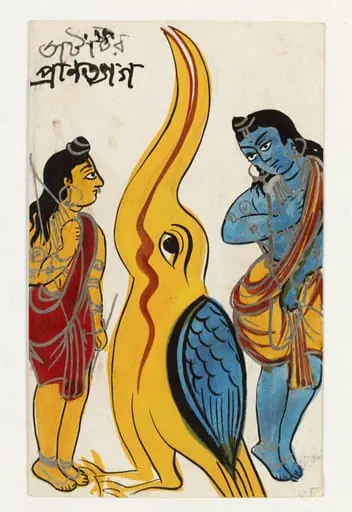
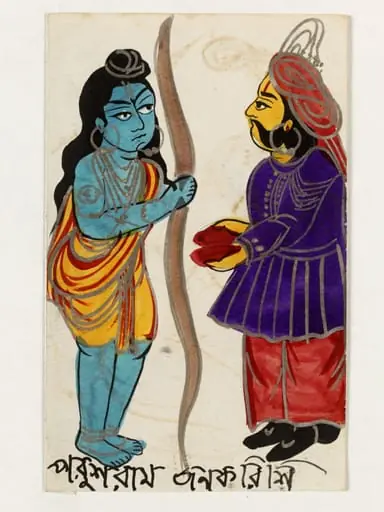
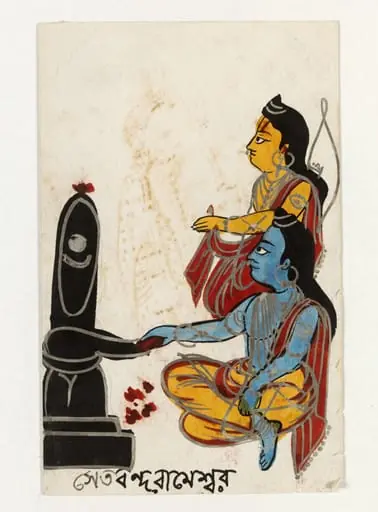
This watercolor and tin-alloy painting on paper, dated circa 1890, illustrates a moment from the Ramayana in which Rama and Lakshmana confront Tarani Sen.
This watercolor and tin-alloy painting on paper, dated circa 1890, illustrates a moment from the Ramayana in which Rama and Lakshmana confront Tarani Sen. Executed in the Kalighat style, it reflects the rapid, expressive approach developed by Bengali artists near the Kalighat temple in Calcutta. The work was likely produced for pilgrims and urban buyers, blending religious narrative with accessible visual language.
Subject & Meaning
The scene depicts Rama and Lakshmana, identifiable by their blue-green skin, shooting arrows at Tarani Sen, who is shown inside a brightly colored carriage. The depiction follows a symbolic rather than literal interpretation: the divine brothers’ intervention signifies justice overcoming arrogance. The horse-drawn vehicle, though small and stylized, represents Tarani Sen’s worldly power, now under threat.
Technique & Style
The painting employs flat areas of bold color, minimal shading, and simplified contours characteristic of Kalighat art. Tin alloy is mixed with watercolor to enhance luminosity, while the figures are rendered with swift, confident brushstrokes. The horse is deliberately reduced in scale, emphasizing narrative over realism. The style prioritizes clarity and emotional impact over anatomical accuracy.
History & Provenance
Created in late 19th-century Calcutta, the work emerged from a tradition of artists who adapted religious themes for a growing urban market. Kalighat painters often worked near the Kalighat temple, producing affordable images for pilgrims. This piece likely circulated among middle-class buyers seeking devotional imagery, reflecting the intersection of spirituality and commercial art in colonial India.
Context
Kalighat paintings responded to the cultural shifts of British colonial Calcutta, blending traditional Hindu iconography with new urban sensibilities. Unlike Mughal or Rajput miniatures, these works rejected fine detail in favor of immediacy. The use of bright, non-naturalistic colors and flattened space aligned with local aesthetic preferences and the demands of mass production.
Legacy
The Kalighat style influenced later Indian modernists and folk art revivals by demonstrating how traditional narratives could be reimagined with contemporary visual tools. Though initially dismissed as commercial art, these works are now recognized for their expressive economy and cultural insight. Surviving examples, including this one, offer a window into the religious and social life of 19th-century Bengal.
Artist & collection

 Domestic Scene
 Giacomo and Cardinal Marco, investing Andrea, Abbot of San Zeno, with his Benefice
 The Nymph of Fontainebleau
 Portrait of a Woman
 Madonna and Child with Saints in the Enclosed Garden
 Venus and Minerva
 Family Group of Four on Sofa
 Wall painting from Room H of the Villa of P. Fannius Synistor at Boscoreale