Artwork
Rana Kirat Singh of Udaipur
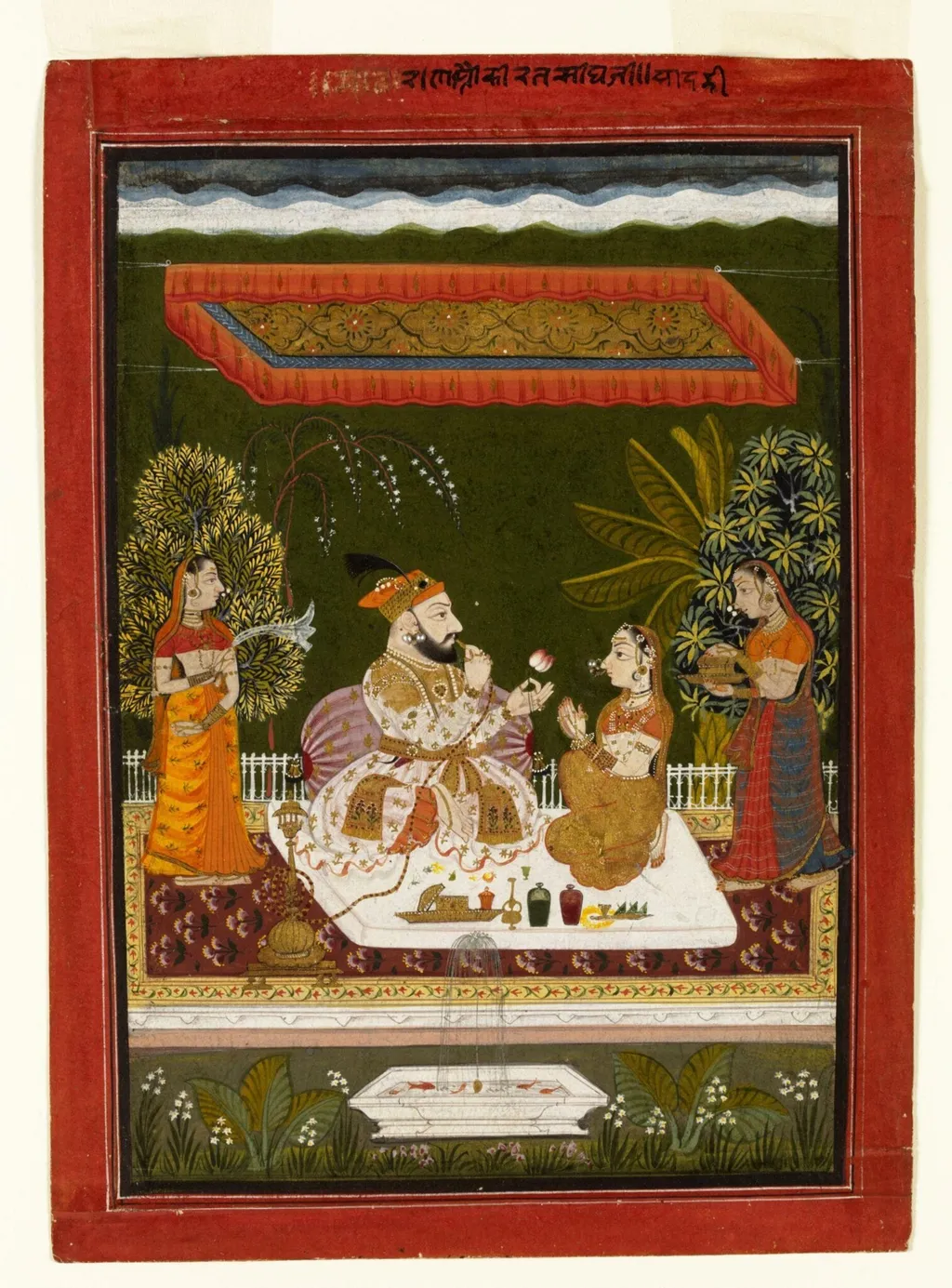
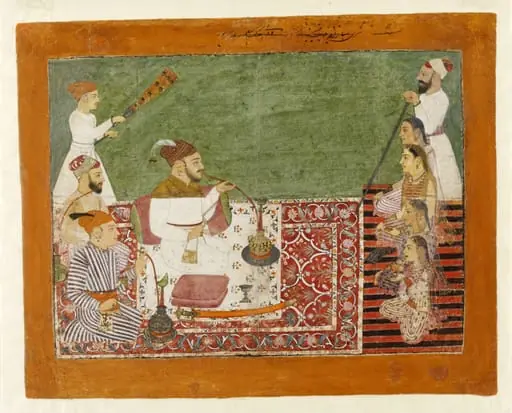
Rana Kirat Singh of Udaipur is a paint painting by the Baroque artist Unknown. It dates from 1730 and is held in the collection of the Victoria and Albert Museum. This 1730 painting portrays Rana Kirat Singh, ruler of Udaipur, in a formal yet intimate outdoor setting.
About this work
Overview
The composition centers on the ruler seated on a raised terrace, surrounded by attendants, with architectural and natural elements framing the scene.
This 1730 painting portrays Rana Kirat Singh, ruler of Udaipur, in a formal yet intimate outdoor setting. Executed in opaque watercolour and gold on paper, it reflects the refined aesthetic of Mewar court art. The composition centers on the ruler seated on a raised terrace, surrounded by attendants, with architectural and natural elements framing the scene. The use of luminous pigments and metallic accents underscores the prestige of the subject and the patronage of the royal household.
Subject & Meaning
Rana Kirat Singh is depicted in a moment of quiet authority, holding a pink flower—a symbol of refinement or seasonal celebration. His white robes, embroidered with gold and floral patterns, signal his status, while the red turban reinforces his royal identity. The presence of two women, dressed in vivid hues, suggests courtly companionship rather than servitude, indicating a relaxed yet structured royal environment. The scene conveys dignity without ceremony, capturing a private moment within a public role.
Technique & Style
The painting employs fine brushwork and layered opaque watercolours to achieve rich, saturated tones, enhanced by delicate gold leaf detailing on textiles and architecture. The background features a stylized landscape with a fence, trees, and a distant boat, rendered with flattened perspective typical of Rajput painting. Script at the top, likely in a regional form of Hindi, identifies the subject and possibly the date. The composition balances symmetry with naturalistic elements, reflecting a courtly tradition that valued both order and lyrical detail.
History & Provenance
The painting entered the collection of the Victoria and Albert Museum in 1954, acquired from Maggs Bros. for £150, with accession numbers IS. 90 to 128-1954. Its earlier provenance remains undocumented, but its style and subject firmly link it to the Udaipur court of the early 18th century. It was likely produced in a royal atelier for internal use or as a gift, preserving the visual legacy of Rana Kirat Singh’s reign during a period of regional artistic flourishing.
Context
Created during a time when Rajput courts maintained distinct artistic traditions despite Mughal influence, this work exemplifies the Mewar school’s emphasis on vivid colour, intricate ornamentation, and personal portraiture. Unlike Mughal court paintings, which often emphasized grandeur and narrative, Udaipur artists favored intimate, atmospheric scenes that highlighted the ruler’s serene authority. Such works were part of a broader visual culture that celebrated lineage, ritual, and the natural world as extensions of royal identity.
Legacy
The painting contributes to the understanding of 18th-century Rajput portraiture, illustrating how local aesthetics persisted alongside broader Indian artistic trends. It remains a key example of the Udaipur style within institutional collections, studied for its technical precision and cultural specificity. While not widely exhibited, it informs scholarly work on regional court art and continues to be referenced in comparative studies of South Asian miniature painting traditions.
Artist & collection

 Domestic Scene
 Giacomo and Cardinal Marco, investing Andrea, Abbot of San Zeno, with his Benefice
 The Nymph of Fontainebleau
 Portrait of a Woman
 Madonna and Child with Saints in the Enclosed Garden
 Venus and Minerva
 Family Group of Four on Sofa
 Wall painting from Room H of the Villa of P. Fannius Synistor at Boscoreale
 Kasta Raga
 Vasant Ragini
 Untitled
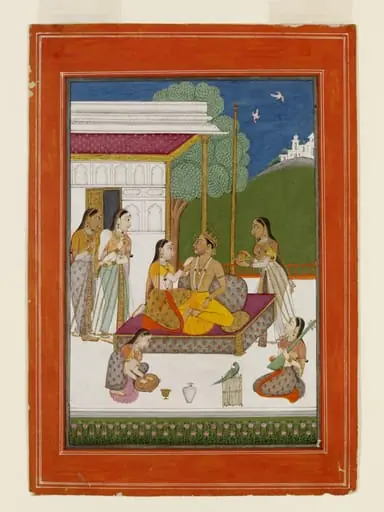 Bhairava Raga
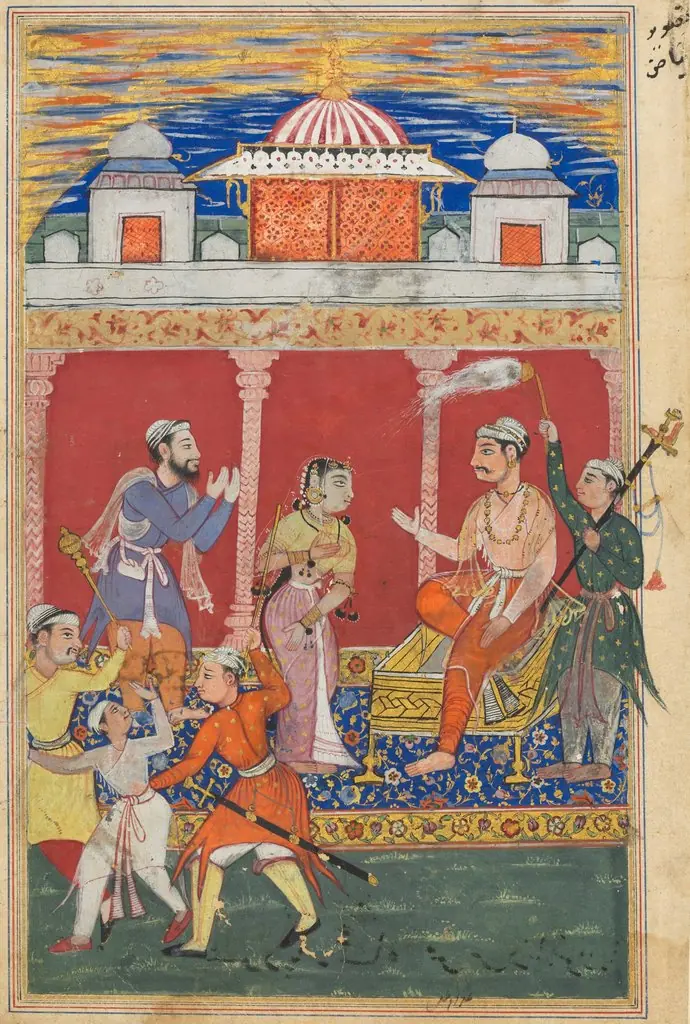 The prince’s ordeal continues, he is ordered away to be executed for the fifth time, from a Tuti-nama (Tales of a Parrot): Eighth Night
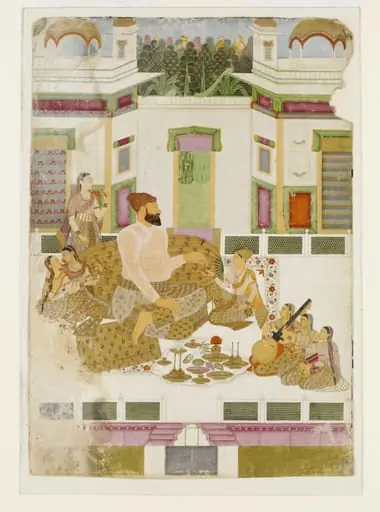 Abul Hasan Qutb Shah
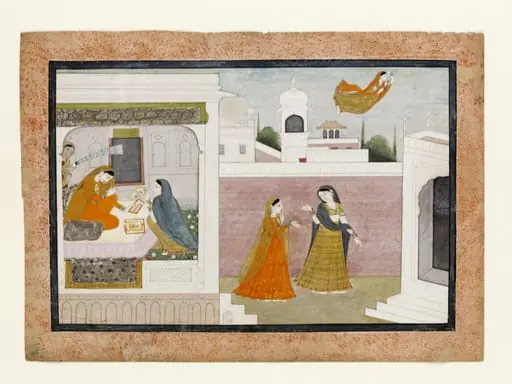 Usha viewing the portrait of Aniruddha
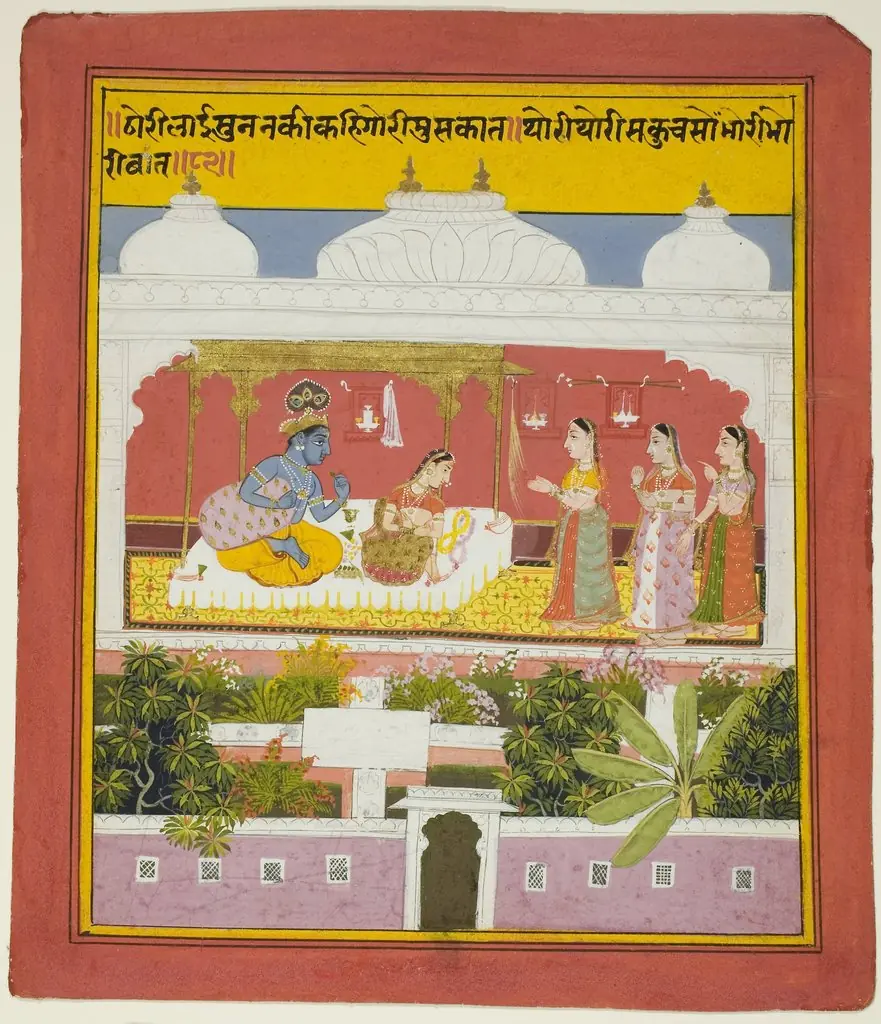 Krishna and Radha in a Pavilion, page from a copy of the Sat Sai Seven Hundred Verses)
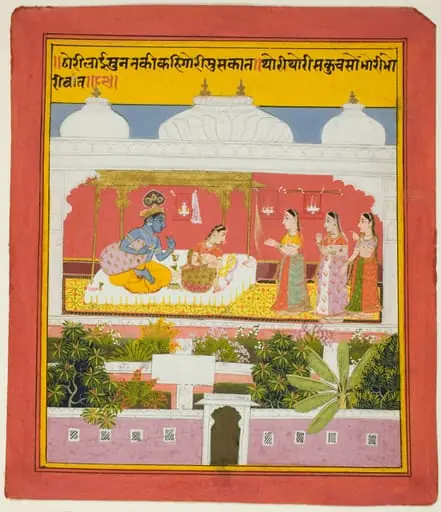 Krishna and Radha in a Pavilion, from a copy of the Seven Hundred Verses (Sat Sai) of Bihari
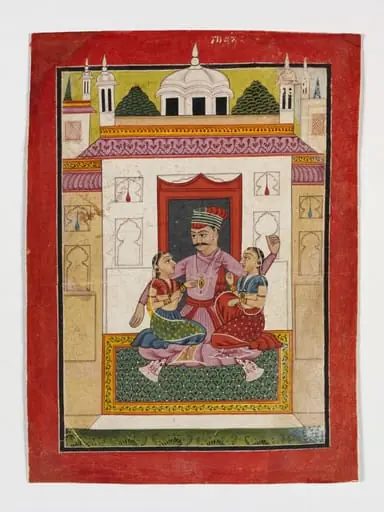 Vinoda Raga
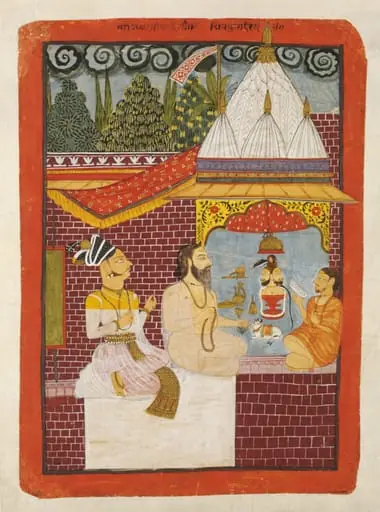 Raja Viram Dev
 Raja Dip Chand of Bilaspur