Artwork
Sculpture at Hungul
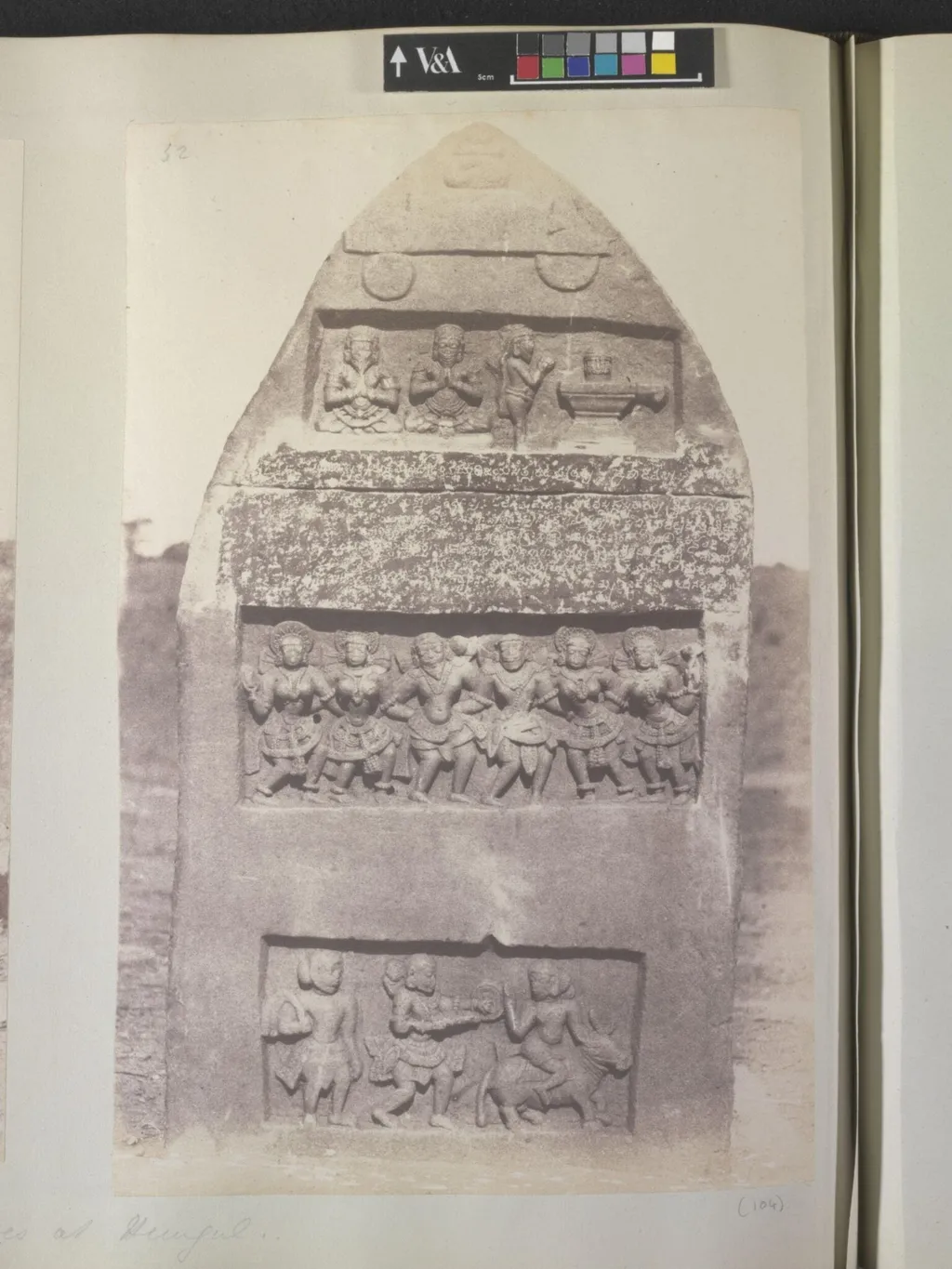
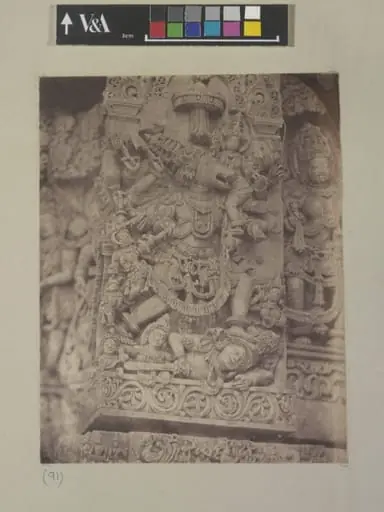
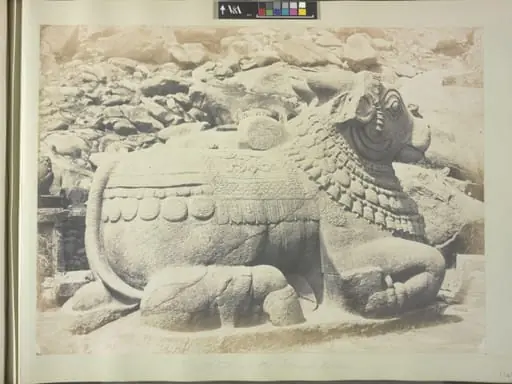
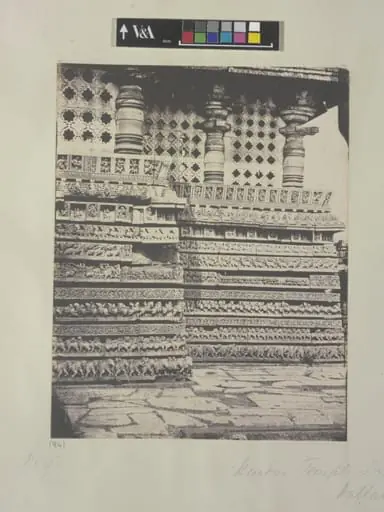
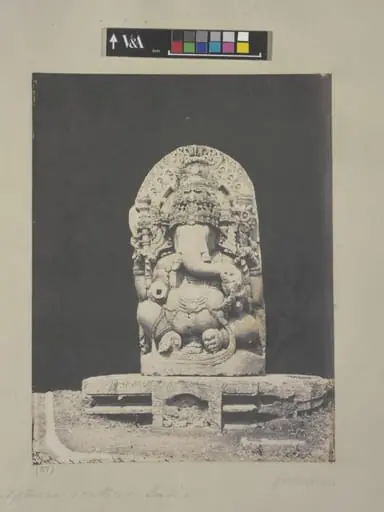
Sculpture at Hungul is a photographic photography by the Impressionist artist William Henry Pigou. It dates from 1855 and is held in the collection of the Victoria and Albert Museum.
About this work
Overview
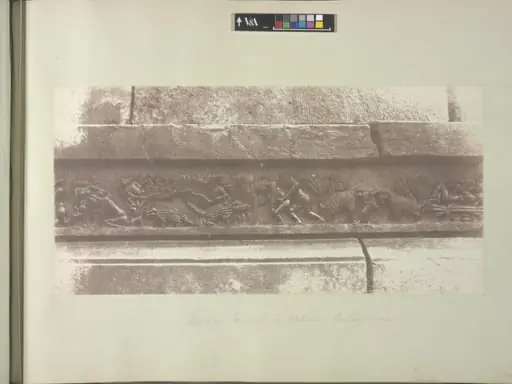
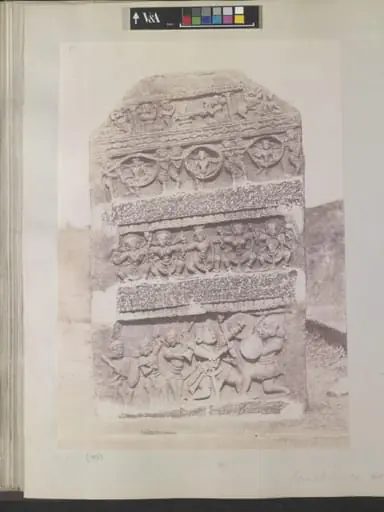
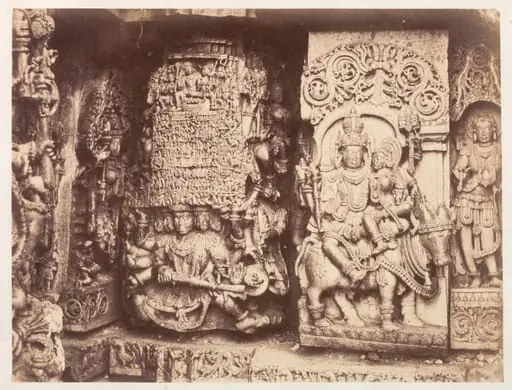
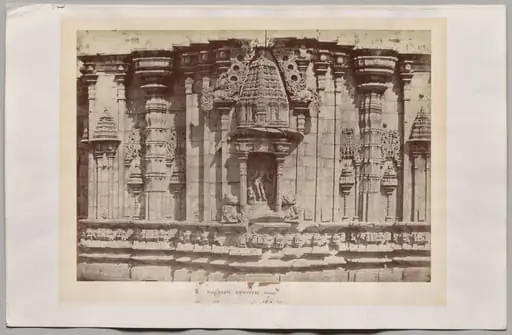
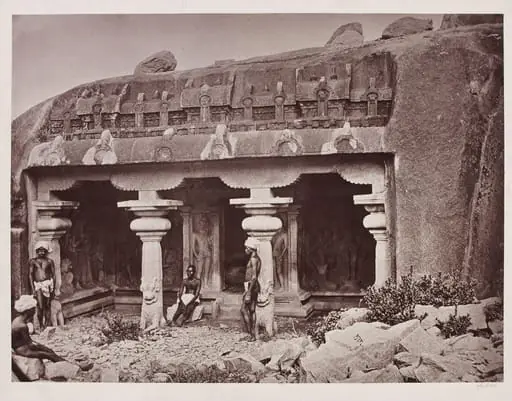
The image, a mid‑nineteenth‑century photograph taken by William Henry Pigou around 1855, records a stone slab bearing a series of carved reliefs. The photograph is part of the Victoria and Albert Museum’s collection and exemplifies early photographic documentation of archaeological material.
Subject & Meaning
The upper register depicts two seated figures and a standing individual positioned beside an elevated platform, possibly indicating a ceremonial context.
The slab presents three horizontal registers of figural scenes. The upper register depicts two seated figures and a standing individual positioned beside an elevated platform, possibly indicating a ceremonial context. The central band shows a procession of figures linked hand‑in‑hand, suggesting a communal or ritual march. The lower register illustrates a combat tableau with mounted and foot soldiers brandishing weapons, hinting at a narrative of warfare.
Technique & Style
The carvings are executed in low relief on stone, with incised lines that remain discernible despite weathering. The stylised forms and repeated motifs reflect a conventional visual language used in the culture that produced the slab, while the photograph captures the surface texture and tonal contrast typical of early black‑and‑white photographic processes.
History & Provenance
Photographed by Pigou during a period of expanding interest in antiquities, the image entered the Victoria and Albert Museum’s holdings as part of its 19th‑century acquisitions. The original stone slab’s provenance prior to Pigou’s documentation is not recorded in the available data, but the photograph itself serves as an early scholarly record of the artifact.
Context
The slab belongs to a broader corpus of stone reliefs that convey ritual, communal, and martial themes, common in the region’s archaeological record. Its visual program aligns with other contemporaneous monuments that combine ceremonial and military iconography, offering insight into the social and symbolic priorities of the producing culture.
Legacy
Pigou’s photograph illustrates the role of early photography in preserving and disseminating knowledge of ancient art. By providing a reproducible image, it enabled comparative studies and contributed to the development of systematic approaches to the analysis of carved stone monuments in the late 1800s.
Artist & collection
Artist
This guy lugged a giant glass-plate camera through southern India in the 1850s, dodging lizards and temple priests alike.