Artwork
Robert Morgan (1608-1673), Bishop of Bangor
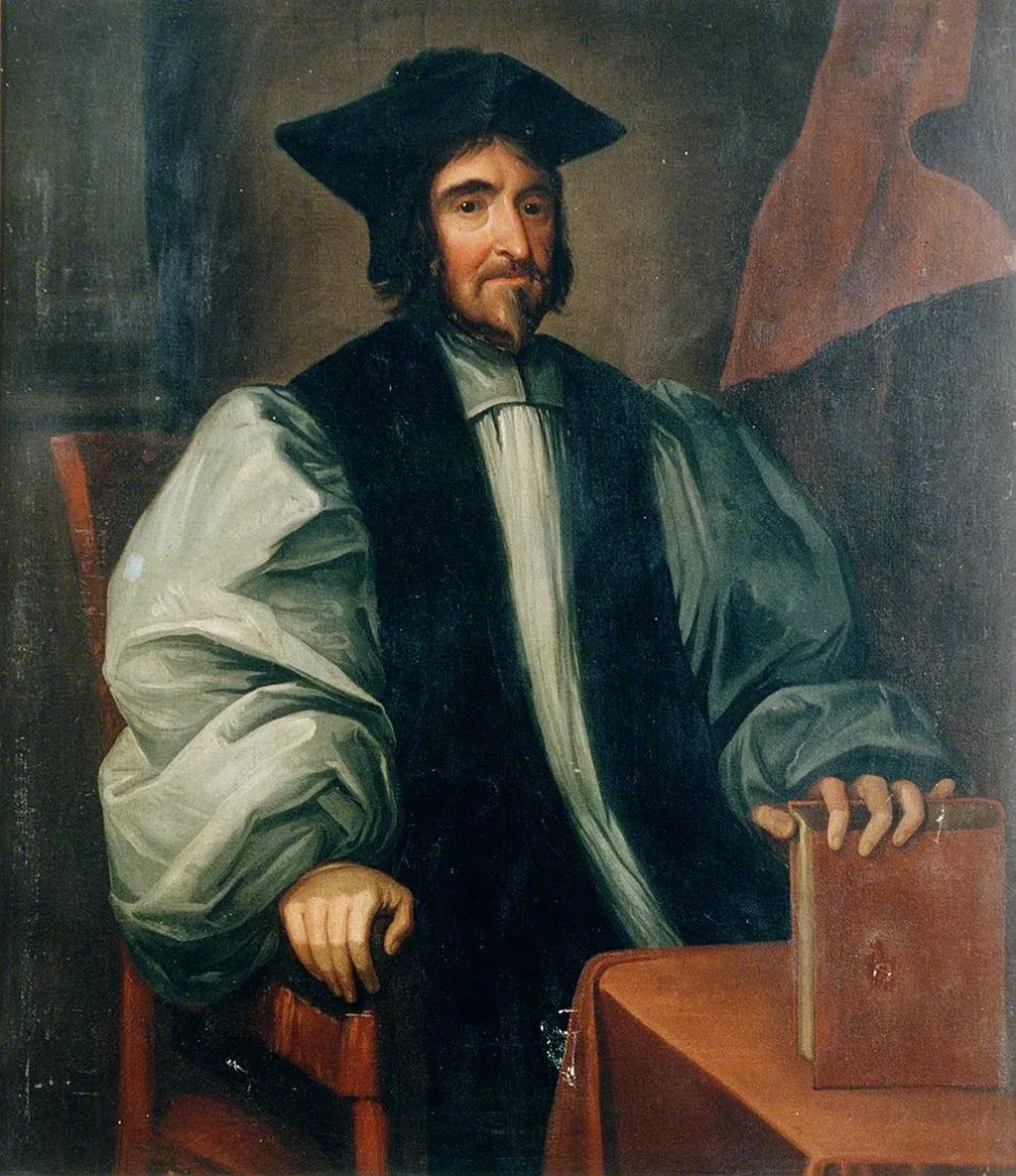
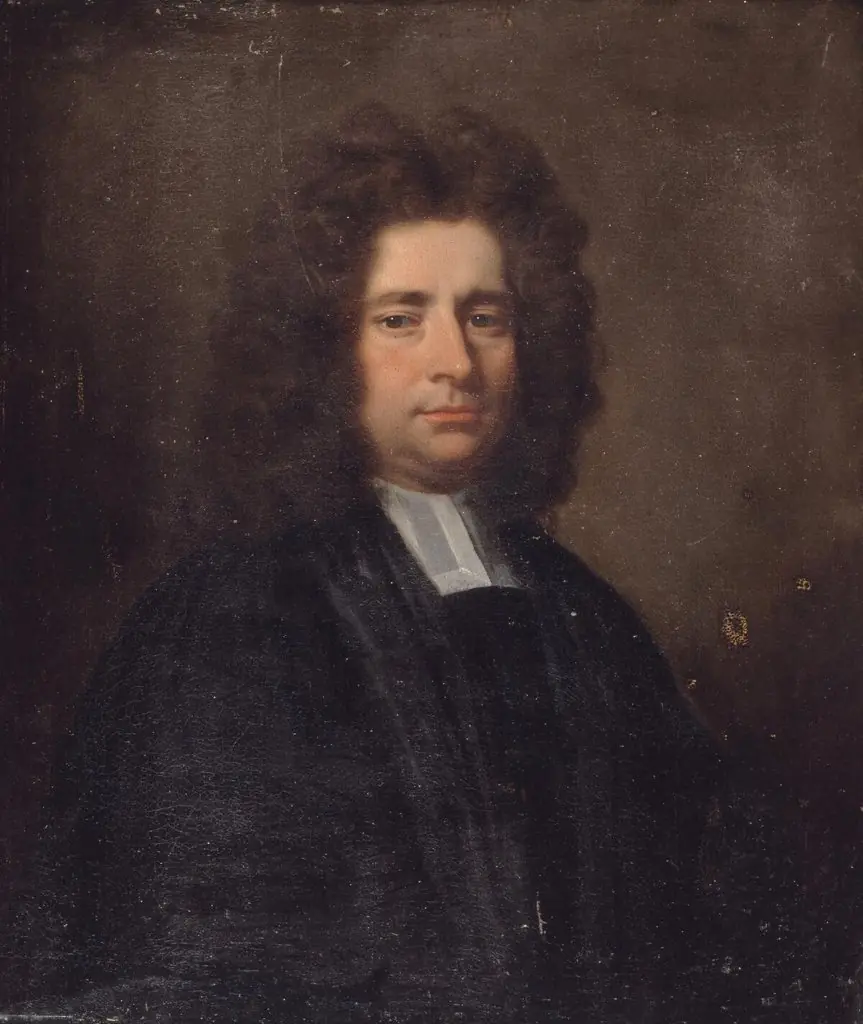
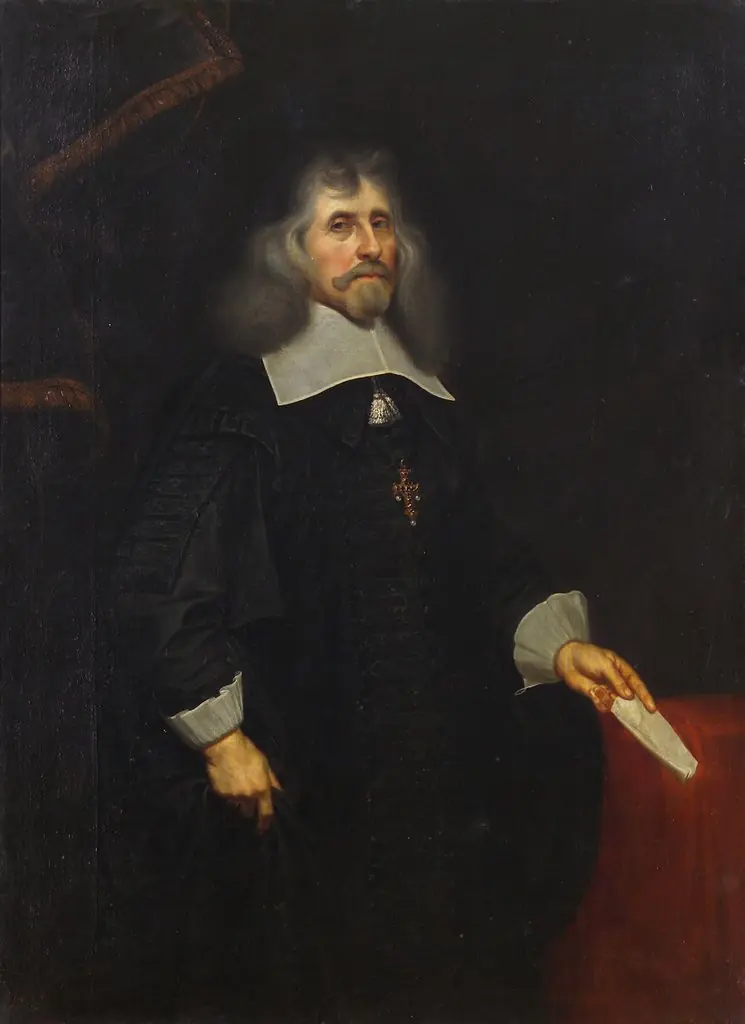
Robert Morgan (1608-1673), Bishop of Bangor is an oil painting by the Rococo painting artist Unknown. It dates from 1740 and is held in the collection of the National Library of Wales. The oil portrait presents Robert Morgan, who served as Bishop of Bangor in the seventeenth century.
About this work
Overview
The oil portrait presents Robert Morgan, who served as Bishop of Bangor in the seventeenth century. He is seated at a table, dressed in a dark robe with contrasting white sleeves and a black hat, his beard rendered in fine detail. A book rests in his right hand, while a deep, shadowed backdrop is punctuated by a red curtain on the right.
Subject & Meaning
Morgan’s ecclesiastical rank is signaled by his vestments and the presence of the book, a common attribute denoting scholarly or clerical authority. The solemn pose and muted palette emphasize his dignified status and reflective demeanor, inviting viewers to consider the intellectual and spiritual responsibilities of a bishop during a turbulent period in Welsh religious history.
Technique & Style
The composition relies on chiaroscuro, employing stark contrasts between illuminated areas—such as the face and sleeves—and the enveloping darkness behind. This handling of light creates a three‑dimensional effect and a sense of intimacy. The painter’s brushwork on the fabrics and beard demonstrates a careful observation of texture, aligning the work with Baroque portrait traditions.
History & Provenance
The portrait is part of the collection of the National Library of Wales, where it has been conserved as a representative example of seventeenth‑century Welsh ecclesiastical portraiture. Its accession to the library reflects the institution’s effort to preserve visual records of notable Welsh clergy and to make such works accessible for research and public display.
Context
Created during a time when Wales was experiencing religious and political upheaval, the painting situates Morgan within the broader narrative of post‑Reformation Anglican leadership. The subdued colour scheme and dramatic lighting echo contemporary continental influences, suggesting that the artist was aware of, or trained in, the visual language popularized by Caravaggio and his followers.
Artist & collection

 Domestic Scene
 Giacomo and Cardinal Marco, investing Andrea, Abbot of San Zeno, with his Benefice
 The Nymph of Fontainebleau
 Portrait of a Woman
 Madonna and Child with Saints in the Enclosed Garden
 Venus and Minerva
 Family Group of Four on Sofa
 Wall painting from Room H of the Villa of P. Fannius Synistor at Boscoreale