Artwork
William Sancroft, Archbishop of Canterbury
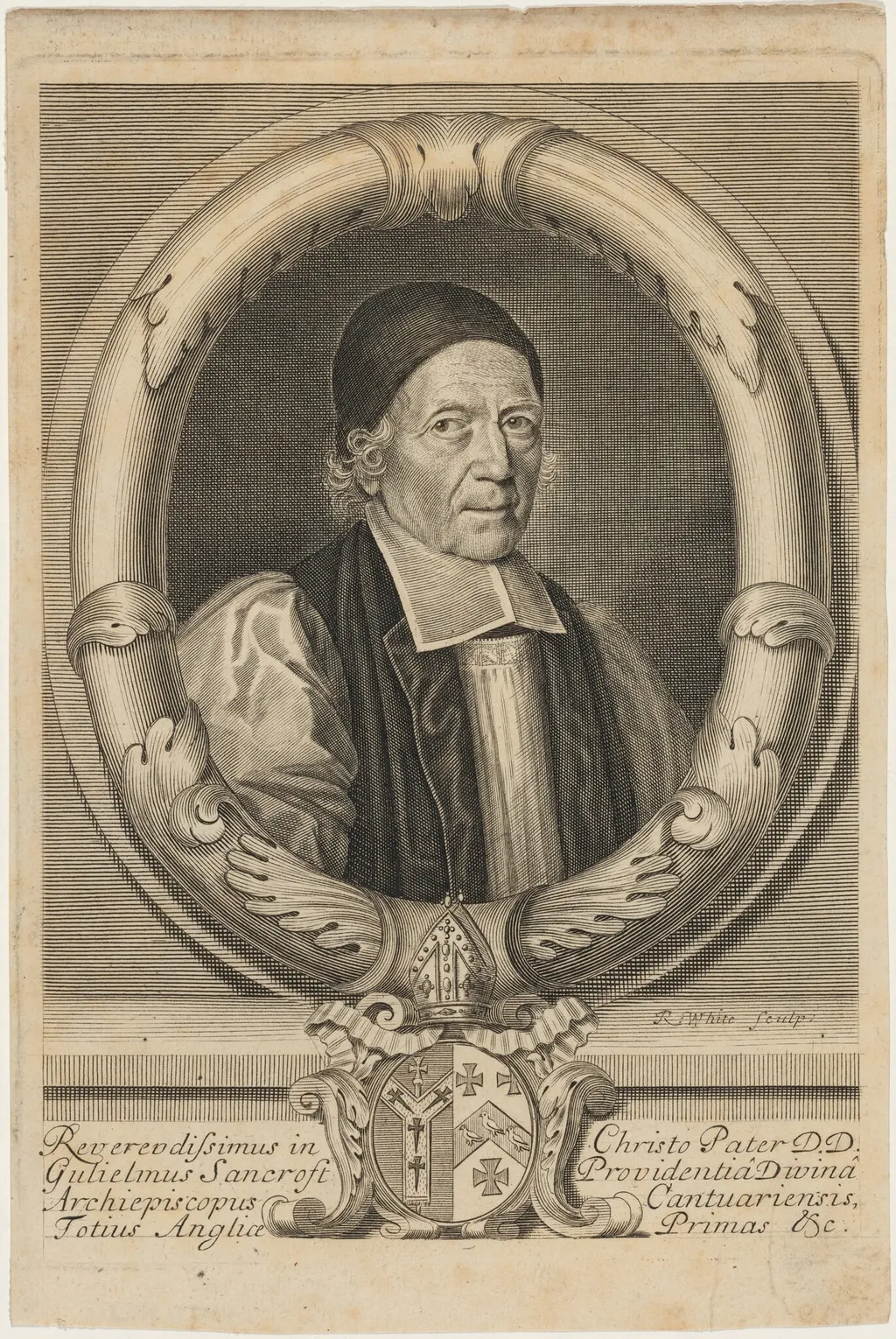
William Sancroft, Archbishop of Canterbury is an ink print by the Baroque artist Robert White. It dates from 1684 and is held in the collection of the National Gallery of Art.
About this work
Overview
White, trained under David Loggan, employed his signature technique of delicate hatching to model the face and fabric with precision.
This 1684 engraving by Robert White portrays William Sancroft, Archbishop of Canterbury, in a formal portrait. Executed in black and white, the image relies on fine linear detail to convey texture and volume. The composition is restrained, with no decorative background, focusing attention on the sitter’s expression and attire. White, trained under David Loggan, employed his signature technique of delicate hatching to model the face and fabric with precision.
Subject & Meaning
Sancroft is depicted in his ecclesiastical role, wearing the high collar and wig typical of Anglican prelates of the period. He holds a heraldic shield bearing a cross, symbolizing his spiritual authority and connection to the Church of England. His serious gaze and composed posture reflect the gravity of his position, particularly during a time of religious tension following the Glorious Revolution. The image serves as a visual assertion of his status and duty.
Technique & Style
White’s engraving uses controlled, intricate lines to build form and shadow, a hallmark of his training under Loggan. The wrinkles on the face, the folds of the collar, and the texture of the wig are rendered through subtle variations in line density. The plain background isolates the figure, enhancing the three-dimensionality achieved without color or tone. This method prioritizes clarity and anatomical accuracy over embellishment.
History & Provenance
The portrait derives from a pencil drawing on vellum, likely made as a preparatory study. White translated this into an engraved print, a common practice for disseminating likenesses of prominent figures in late 17th-century England. The print was part of a broader trend in which ecclesiastical and political leaders were commemorated through engraved portraiture, often for institutional or private collections.
Context
Created during a period of religious upheaval, the portrait reflects the Church of England’s efforts to maintain continuity and authority. Sancroft, who refused to swear allegiance to William and Mary, was a symbol of traditional Anglican loyalty. White’s depiction, though restrained, aligns with the era’s emphasis on dignity and institutional identity, reinforcing the Archbishop’s role as a pillar of established order.
Legacy
Robert White’s engraving remains a key example of English portrait printmaking in the late 1600s. His precise line work influenced later engravers and preserved the visual identity of Anglican leadership during a transformative era. While not widely reproduced today, the image endures in archival collections as a document of both artistic skill and ecclesiastical history.
Artist & collection
Artist
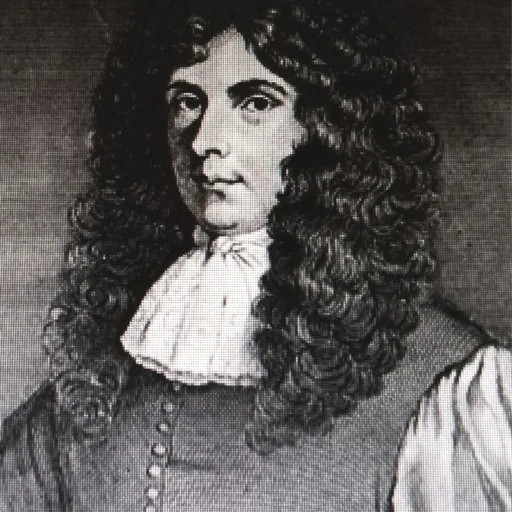
Robert White (1645 – 1703) was an English draughtsman and engraver. A Londoner, he was a pupil of David Loggan, and became a leading portrait engraver. White was celebrated for his original portraits, drawn in pencil on…