Artwork
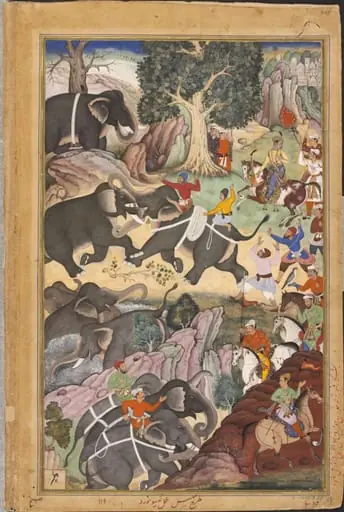
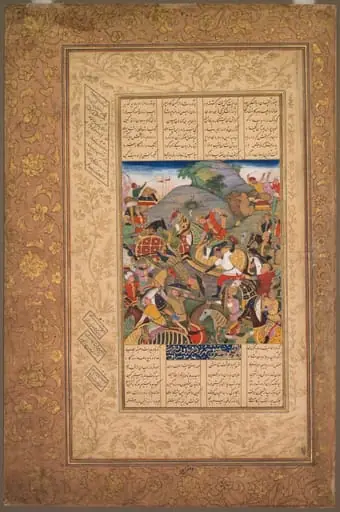
Akbar supervising the capture of wild elephants at Malwa in 1564, painting 90 from an Akbar-nama (Book of Akbar) of Abu’l Fazl (Indian 1551–1602)
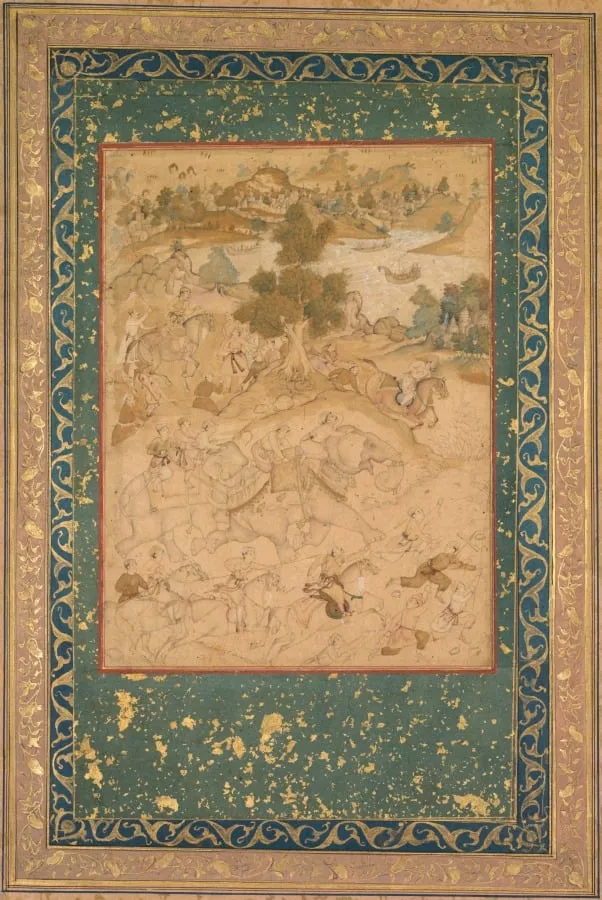
Akbar supervising the capture of wild elephants at Malwa in 1564, painting 90 from an Akbar-nama (Book of Akbar) of Abu’l Fazl (Indian 1551–1602) is an unspecified painting by the Mughal Painting artist Farukh Chela. It dates from 1704 and is held in the collection of the Cleveland Museum of Art. The work illustrates a scene from a late‑16th‑century illustrated biography of the Mughal emperor Akbar.
About this work
Overview
The work illustrates a scene from a late‑16th‑century illustrated biography of the Mughal emperor Akbar. It records an episode from the early years of his rule in which the sovereign oversees the capture of a herd of wild elephants for inclusion in the imperial stables.
Subject & Meaning
Akbar is shown on horseback in the upper left, gesturing to his attendants as two domesticated elephants pursue the panicked herd in the foreground. The composition emphasizes the emperor’s active role in a royal enterprise that combined military organization with the acquisition of valuable war and ceremonial animals.
Technique & Style
Executed in the miniature tradition of Mughal court painting, the image blends Persianate detailing with influences from European prints that had entered Akbar’s collection. This results in a relatively open landscape, with distant city silhouettes and gently rolling hills rendered in lighter, less saturated tones than earlier Mughal works.
History & Provenance
The painting originates from an Akbar‑nama compiled by the court historian Abu’l‑Fazl shortly before the emperor’s death in 1605. It formed part of a manuscript intended to document the ruler’s deeds and was likely circulated among the elite of the Mughal court.
Context
Elephant capture was a complex operation: trained elephants were released to chase the wild ones, then the animals were bound together and coaxed with preferred foods. The scene reflects the logistical sophistication of the Mughal administration and the symbolic importance of elephants as symbols of power and prestige.
Artist & collection

 Akbar supervising the capture of wild elephants at Malwa in 1564, painting 90 from an Akbar-nama (Book of Akbar) of Abu’l Fazl (Indian 1551–1602)
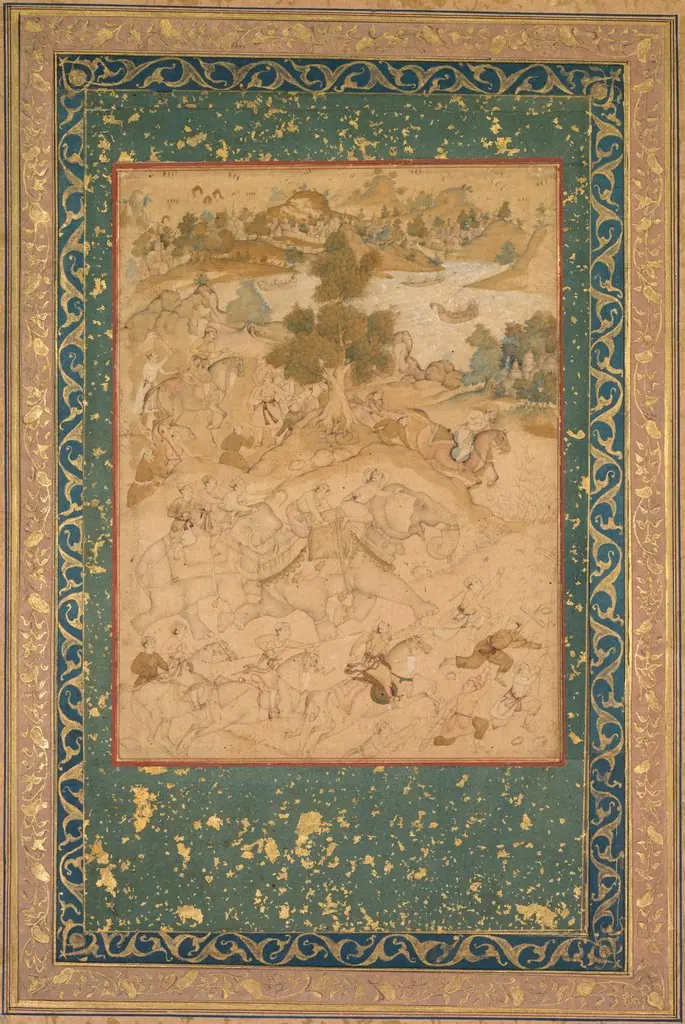 Akbar supervising the capture of wild elephants at Malwa in 1564, painting 90 from an Akbar-nama (Book of Akbar) of Abu’l Fazl (Indian 1551–1602)
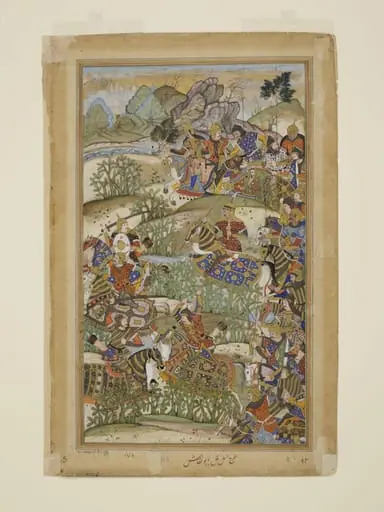 Battle of Sarnal in Gujarat
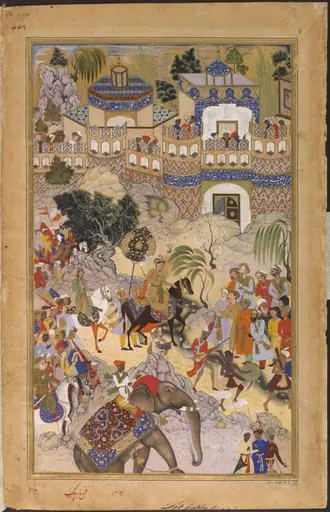 Akbar
Akbar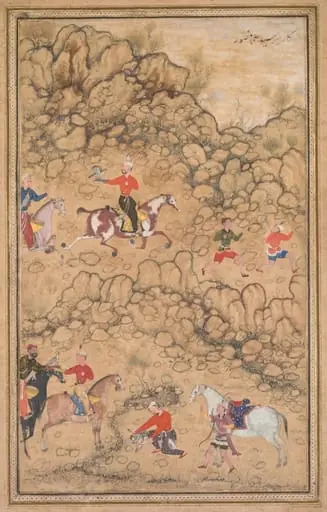 Hunting with falcons in a landscape (recto)
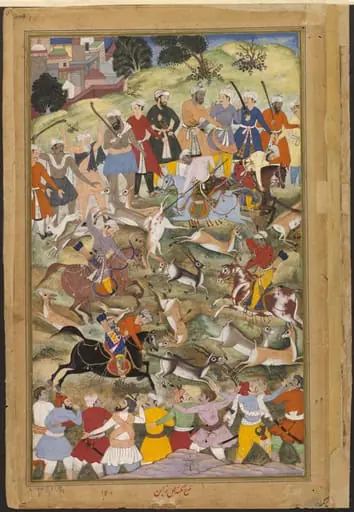 Akbar
Akbar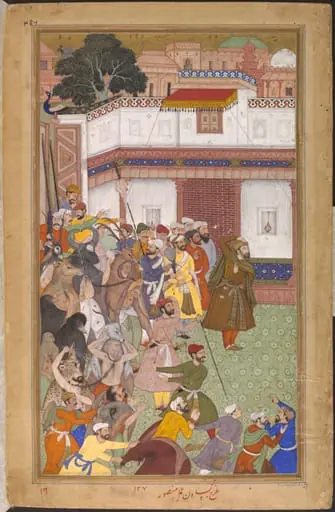 Husain Quli and Akbar
 Akbar
Akbar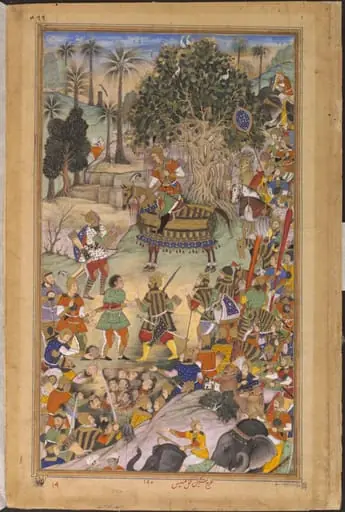 Muhammad Husain Mirza and Akbar
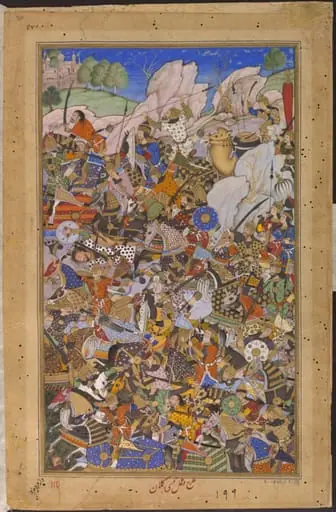 Untitled
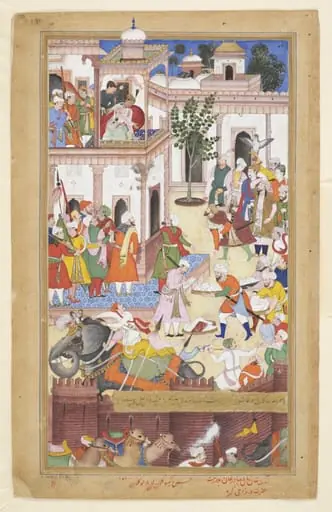 Ali Quli, Bahadur Khan and Akbar
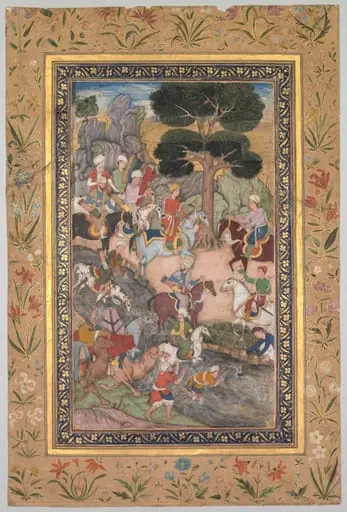 Babur meeting with Sultan Ali Mirza at the Kohik River, from a Babur-nama (Memoirs of Babur)
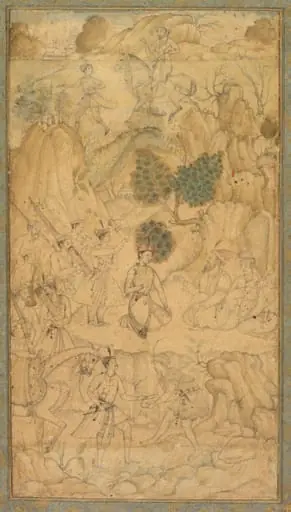 A Prince Visiting a Holy Man in a Rocky Landscape (recto)
 A prince visiting a holy man in a rocky landscape
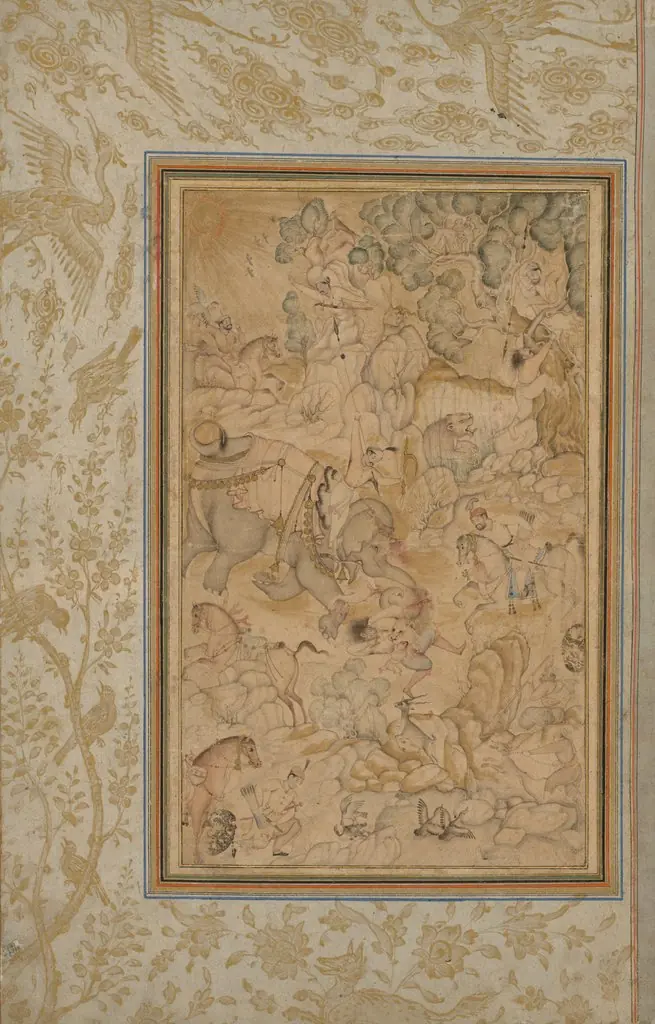 Princes hunting in a rocky landscape
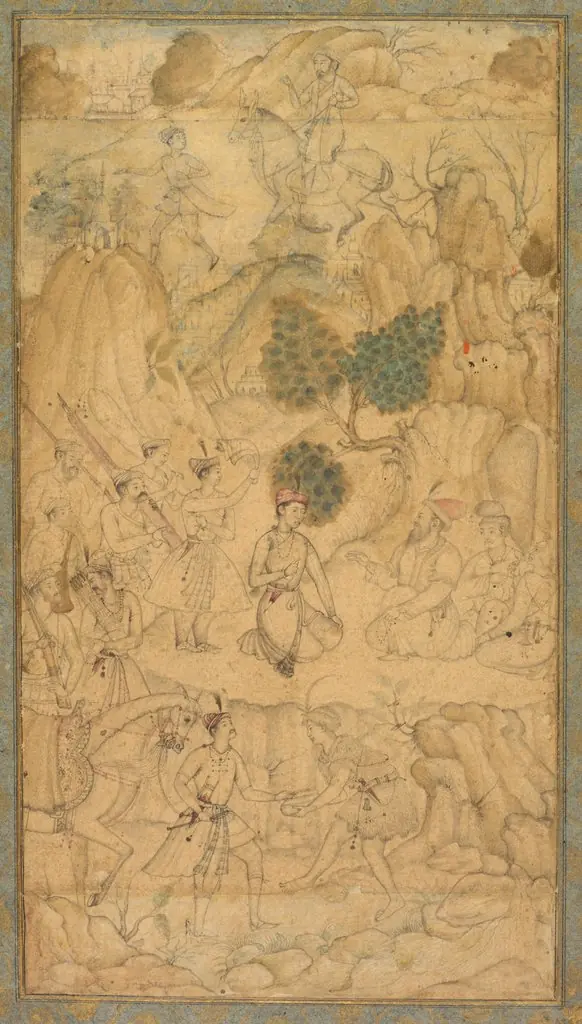 A Prince Visiting a Holy Man in a Rocky Landscape (recto)
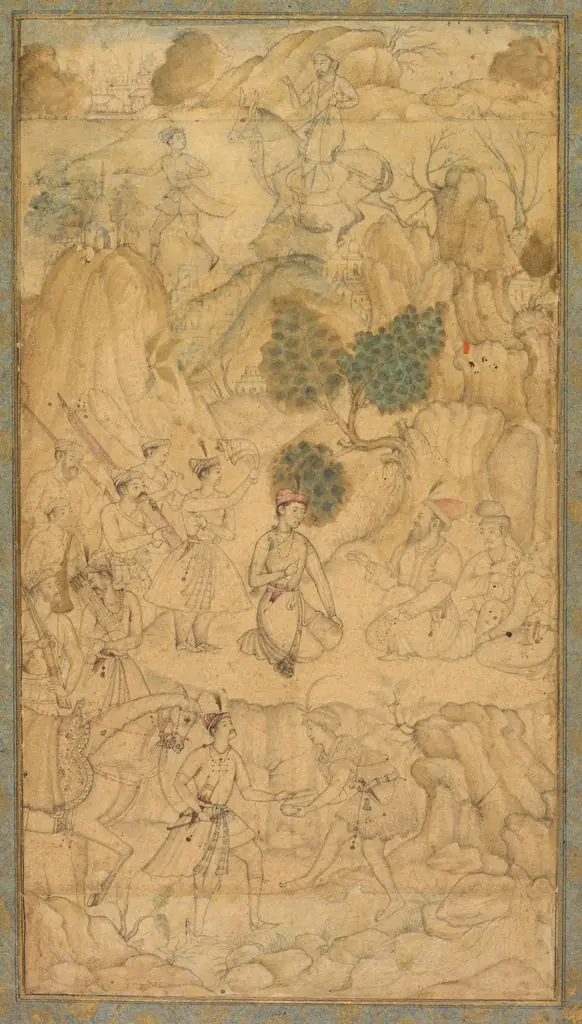 A prince visiting a holy man in a rocky landscape
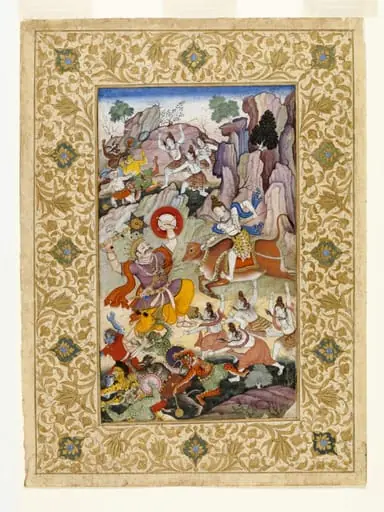 Shiva and Andhaka
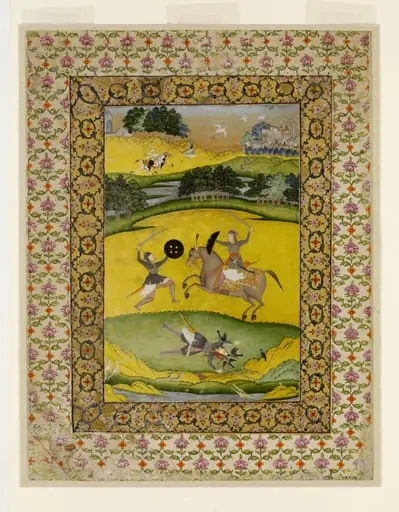 Nata Ragini
 Battle between Manuchihr and Tur, from a Shah-nama (Book of Kings) of Firdausi (Persian, c. 934–1020)