Artwork
Saraswati
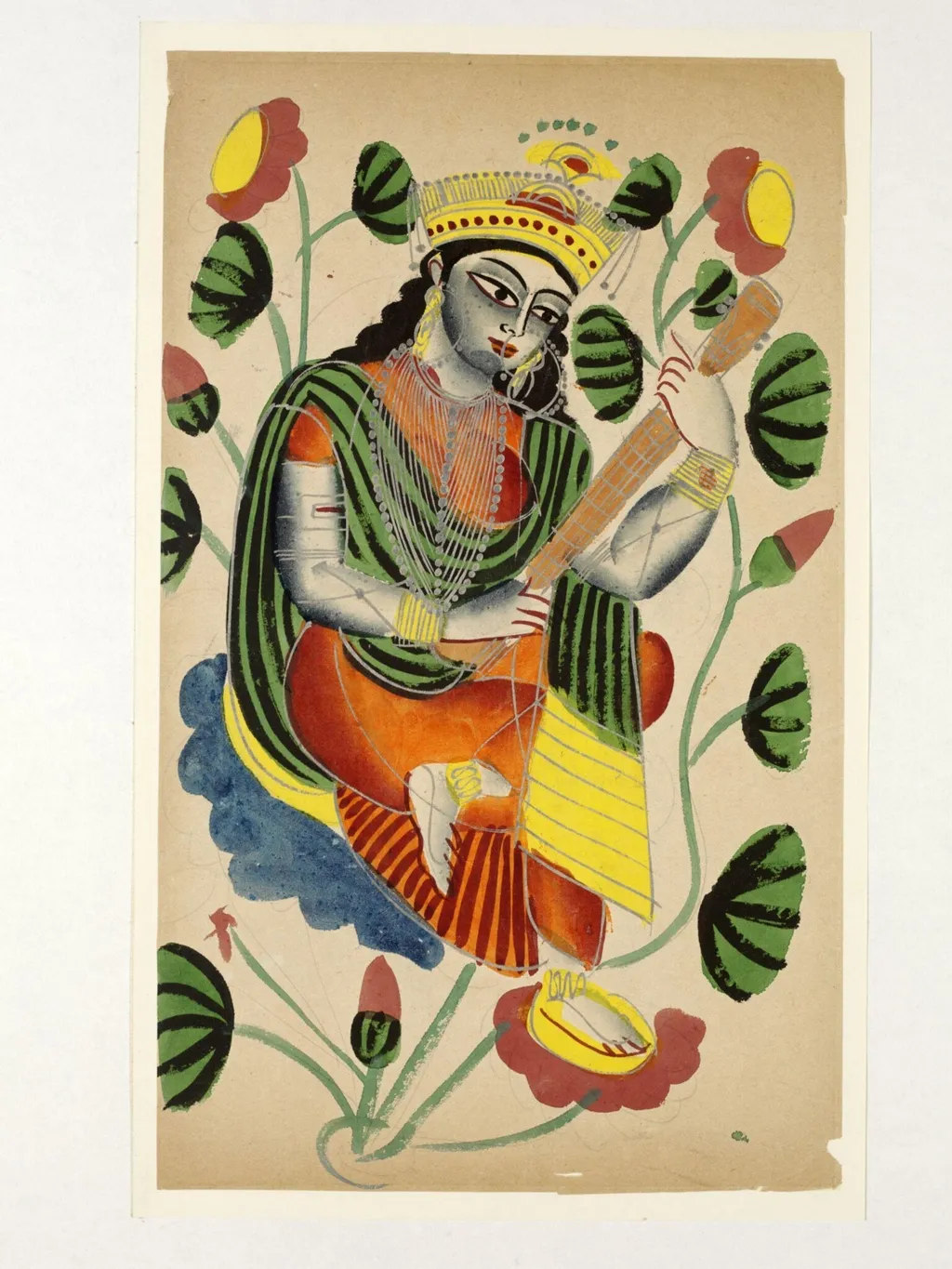
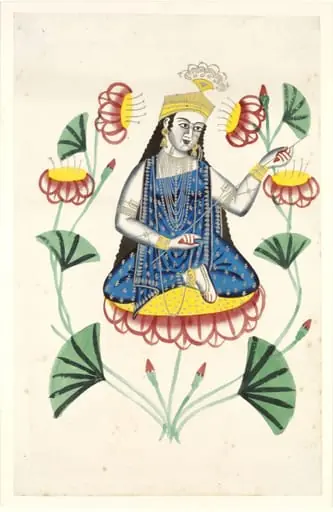
Saraswati is a paint painting by the Impressionist artist Unknown. It dates from 1890 and is held in the collection of the Victoria and Albert Museum.
About this work
Overview
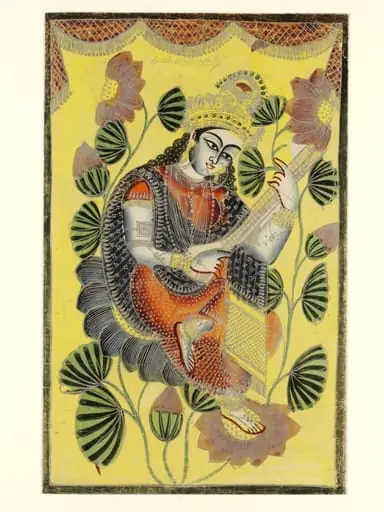
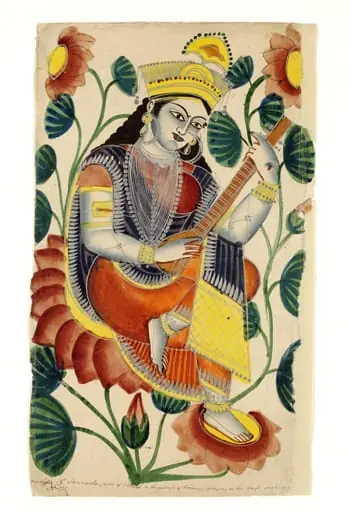
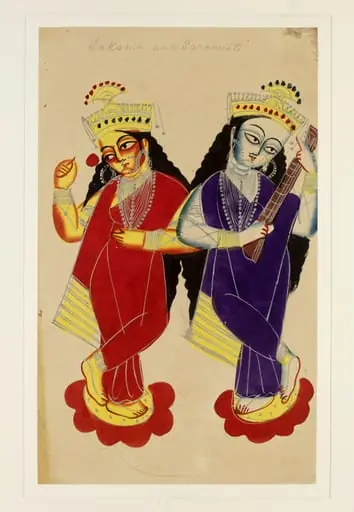
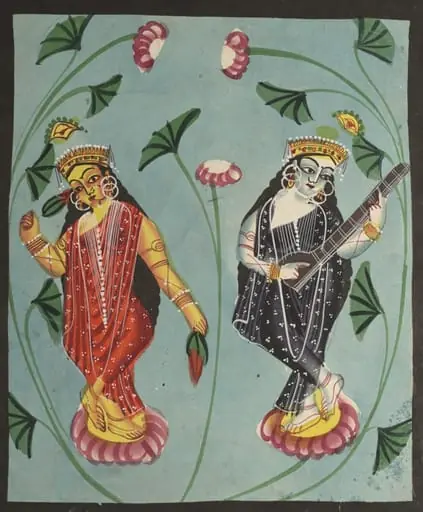
This watercolour and tin-alloy painting on paper portrays the Hindu goddess Saraswati, created in Calcutta during the late 1800s. It belongs to the Kalighat tradition, a style developed by local artists near the Kalighat temple, catering to pilgrims and urban patrons. The work combines delicate pigments with metallic accents, executed in a rapid, expressive manner characteristic of the school.
Subject & Meaning
Saraswati, deity of knowledge, music, and the arts, is depicted seated atop lotus blooms, symbolizing purity and spiritual awakening. She holds a sitar, representing musical harmony, and a conch shell, an emblem of sacred sound and creation. Her serene expression and poised posture convey calm authority, aligning with her role as a guide to wisdom and creative insight.
Technique & Style
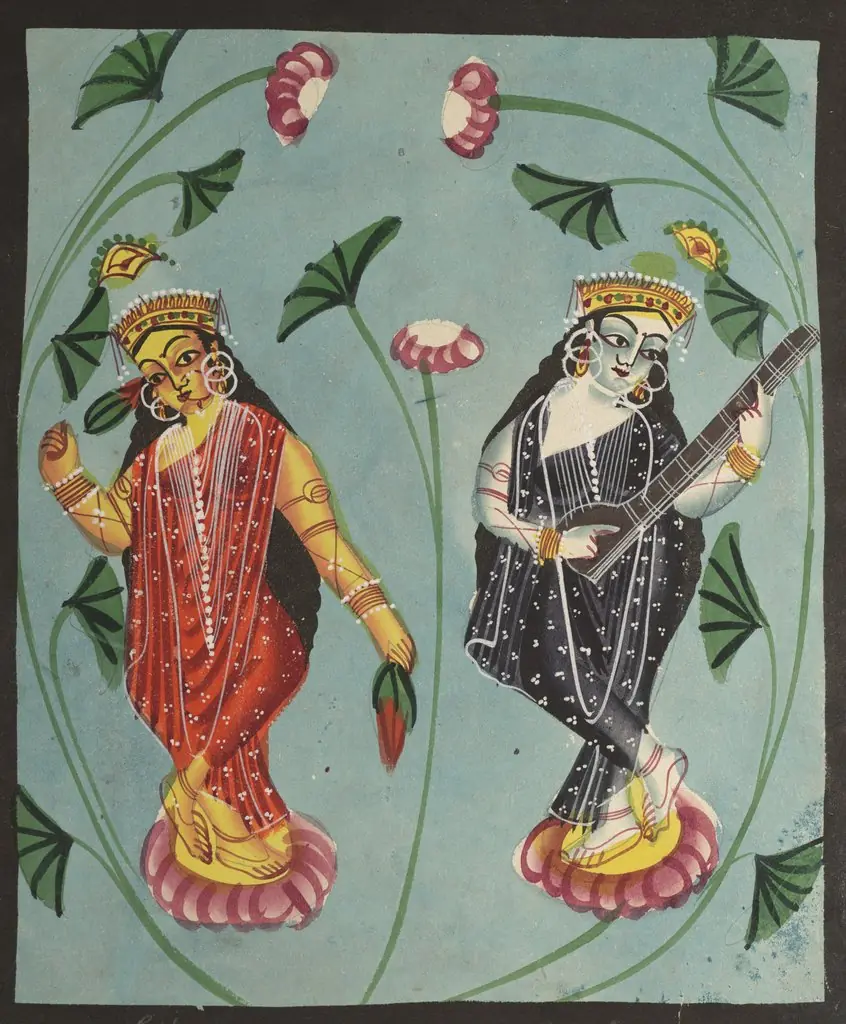
The painting employs bold, flat areas of colour with minimal shading, typical of Kalighat’s folk aesthetic. Outlines are strong and fluid, forms are simplified yet expressive, and details like the striped dress and metallic highlights add decorative richness. The background is filled with stylized flora, rendered with rhythmic brushwork that emphasizes pattern over naturalism.
History & Provenance
Produced in Calcutta’s commercial art market of the late 19th century, the painting was likely made for domestic or devotional use. It entered institutional collection in 1955 through a donation by M.N. Varvill, a collector with interest in Indian visual culture. Its survival reflects the enduring appeal of Kalighat art beyond its original context.
Context
Kalighat paintings emerged as urban folk art in response to pilgrimage traffic and colonial urbanization. Artists adapted traditional iconography to contemporary tastes, using inexpensive materials and quick techniques. This work reflects a moment when religious imagery intersected with market forces, blending devotion with commercial production in a rapidly changing society.
Legacy
Though originally produced for mass consumption, Kalighat works like this one are now valued for their artistic vitality and cultural insight. They bridge folk and fine art traditions, offering a window into 19th-century Bengal’s visual language. This painting contributes to ongoing scholarship on how regional styles preserved spiritual themes amid social transformation.
Artist & collection

 Domestic Scene
 Giacomo and Cardinal Marco, investing Andrea, Abbot of San Zeno, with his Benefice
 The Nymph of Fontainebleau
 Portrait of a Woman
 Madonna and Child with Saints in the Enclosed Garden
 Venus and Minerva
 Family Group of Four on Sofa
 Wall painting from Room H of the Villa of P. Fannius Synistor at Boscoreale