Artwork
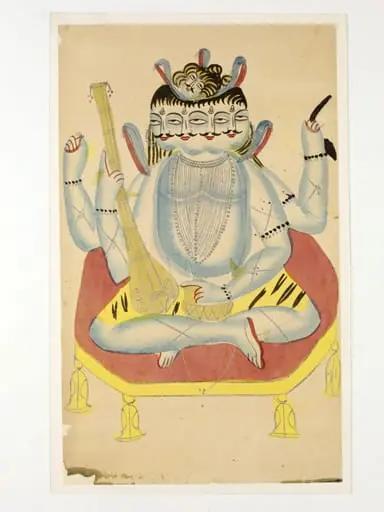
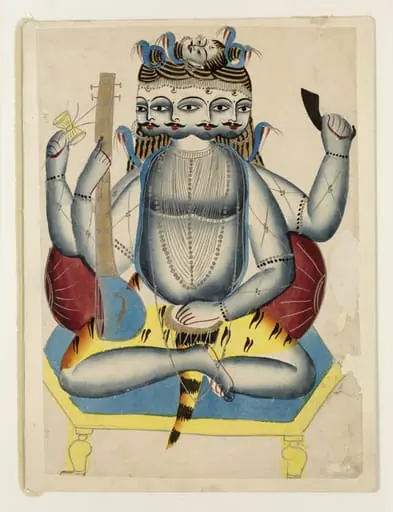
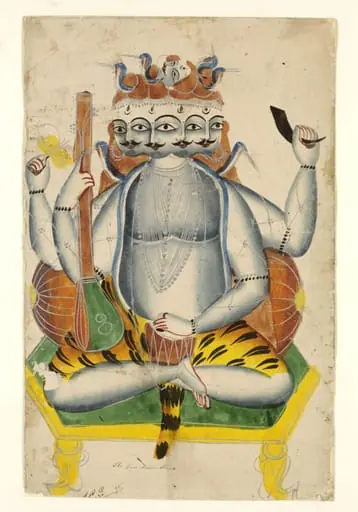
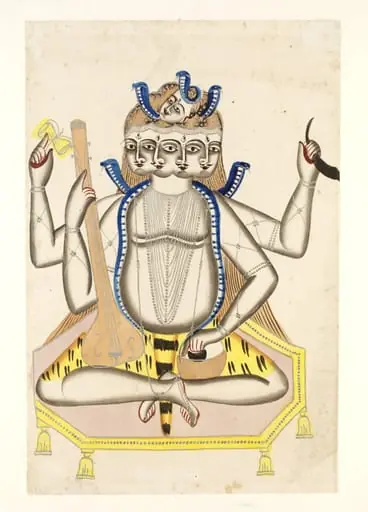
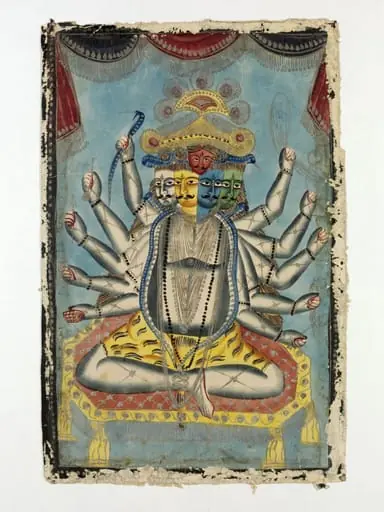
Shiva Panchanana
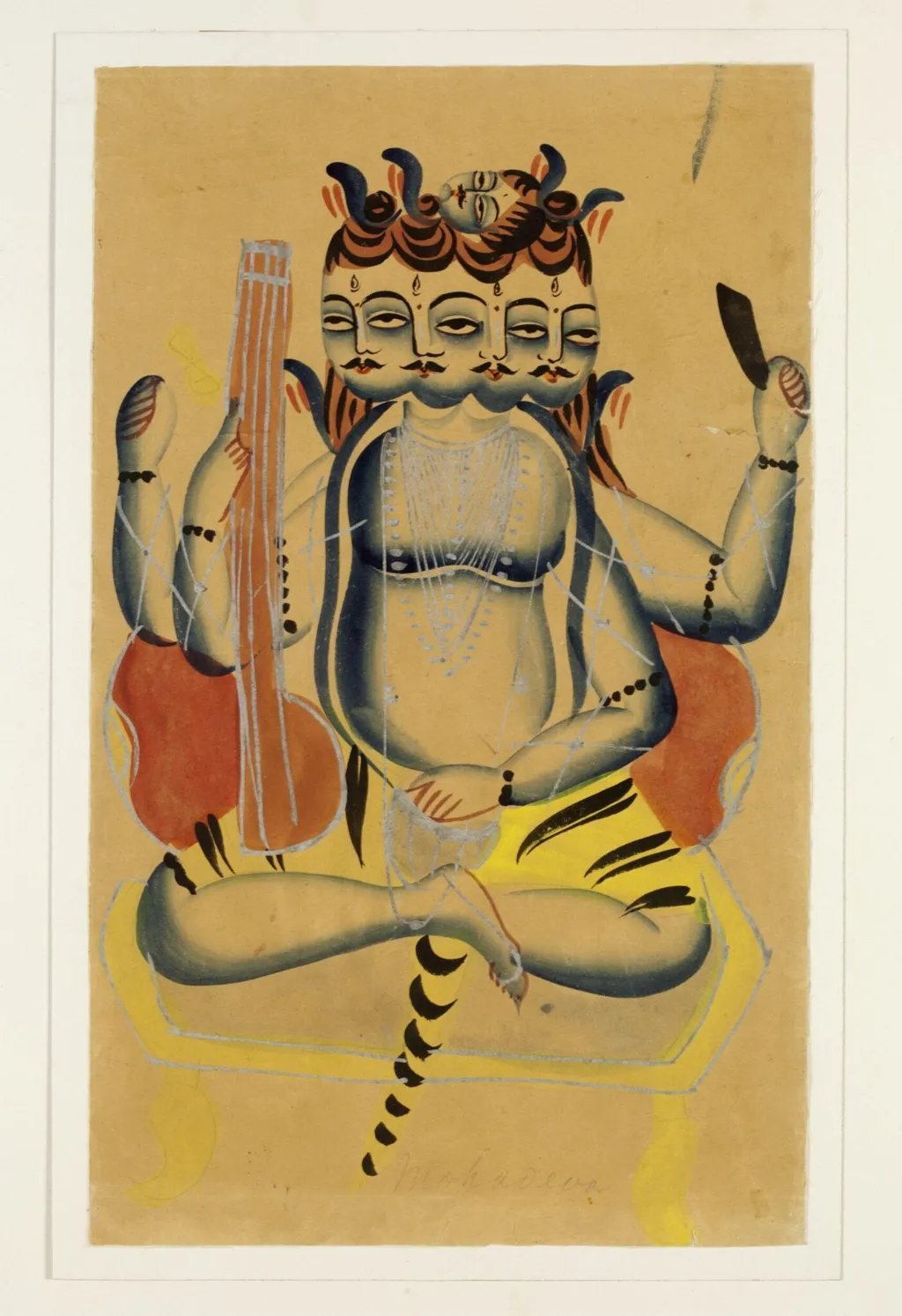
Shiva Panchanana is a paint painting by the Impressionist artist Unknown. It dates from 1885 and is held in the collection of the Victoria and Albert Museum.
About this work
Overview
Executed in a vibrant, informal style, the painting reflects regional Indian artistic traditions rather than courtly refinement.
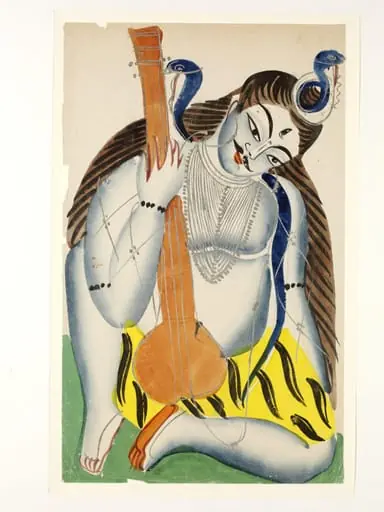
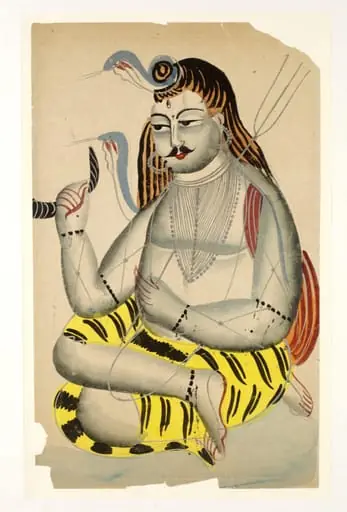
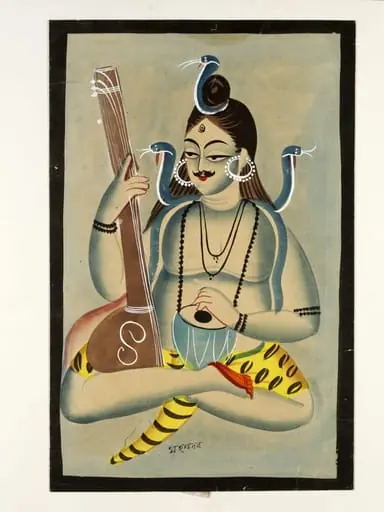
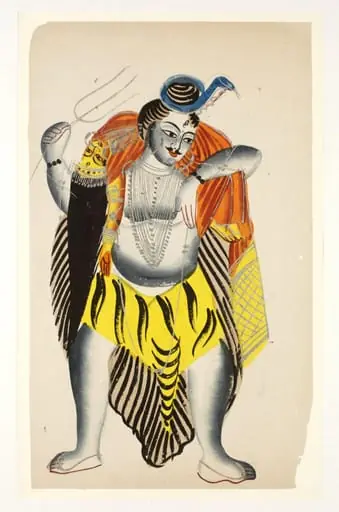
This opaque watercolor on paper depicts Shiva Panchanana, a five-faced manifestation of the Hindu deity. Executed in a vibrant, informal style, the painting reflects regional Indian artistic traditions rather than courtly refinement. It was acquired by the museum in 1950 from Miss M. Steele, whose family had connections to scholarly circles in Cambridge and possible ties to India through her grandmother.
Subject & Meaning
The figure represents Shiva in his five-faced form, symbolizing his cosmic dominion over the five elements and directions. Though only four faces and arms are visibly rendered, the composition alludes to the full iconography. The drum and flame in his hands signify creation and destruction, central to Shiva’s dual role as destroyer and regenerator within Hindu cosmology.
Technique & Style
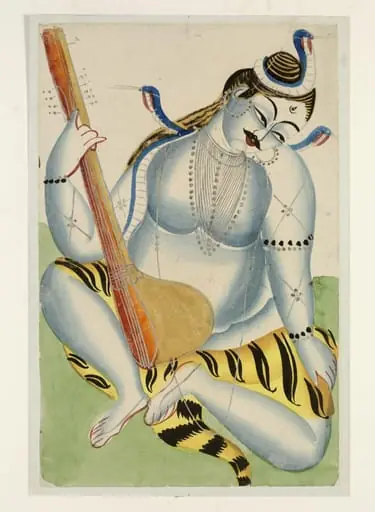
The painting employs bold, fluid outlines and flat areas of unmodulated color, typical of Kalighat-style works. Snakes entwine the deity’s hair, and a red drape contrasts with his blue skin. The background is minimally detailed, with warm yellow and orange washes suggesting light or sacred space. The loose handling and lack of fine detail reflect an artisanal, possibly devotional, approach rather than academic precision.
History & Provenance
The painting entered the museum’s collection in 1950 through Miss M. Steele, who inherited it from her mother, a Cambridge Sanskrit scholar. Steele suggested the work may have originated with her grandmother, who lived in India and possibly assembled a group of similar images. The precise date of creation and artist remain unknown, but the style points to 19th-century Bengal.
Context
This work aligns with the Kalighat painting tradition, which emerged in 19th-century Kolkata near the Kalighat temple. Artists produced affordable devotional images for pilgrims, blending mythological themes with everyday visual language. The simplified forms and vivid palette reflect an urban, commercial aesthetic distinct from earlier Mughal or Rajput styles, yet deeply rooted in Hindu iconography.
Legacy
As part of a broader corpus of Kalighat art, this painting contributes to the understanding of how Hindu deities were visually adapted for mass devotion in colonial India. Its presence in a Western museum underscores the global circulation of regional religious art, though its original ritual or domestic context remains partially obscured by the passage of time and changing ownership.
Artist & collection

 Domestic Scene
 Giacomo and Cardinal Marco, investing Andrea, Abbot of San Zeno, with his Benefice
 The Nymph of Fontainebleau
 Portrait of a Woman
 Madonna and Child with Saints in the Enclosed Garden
 Venus and Minerva
 Family Group of Four on Sofa
 Wall painting from Room H of the Villa of P. Fannius Synistor at Boscoreale