Artwork
Lakshmi and Saraswati
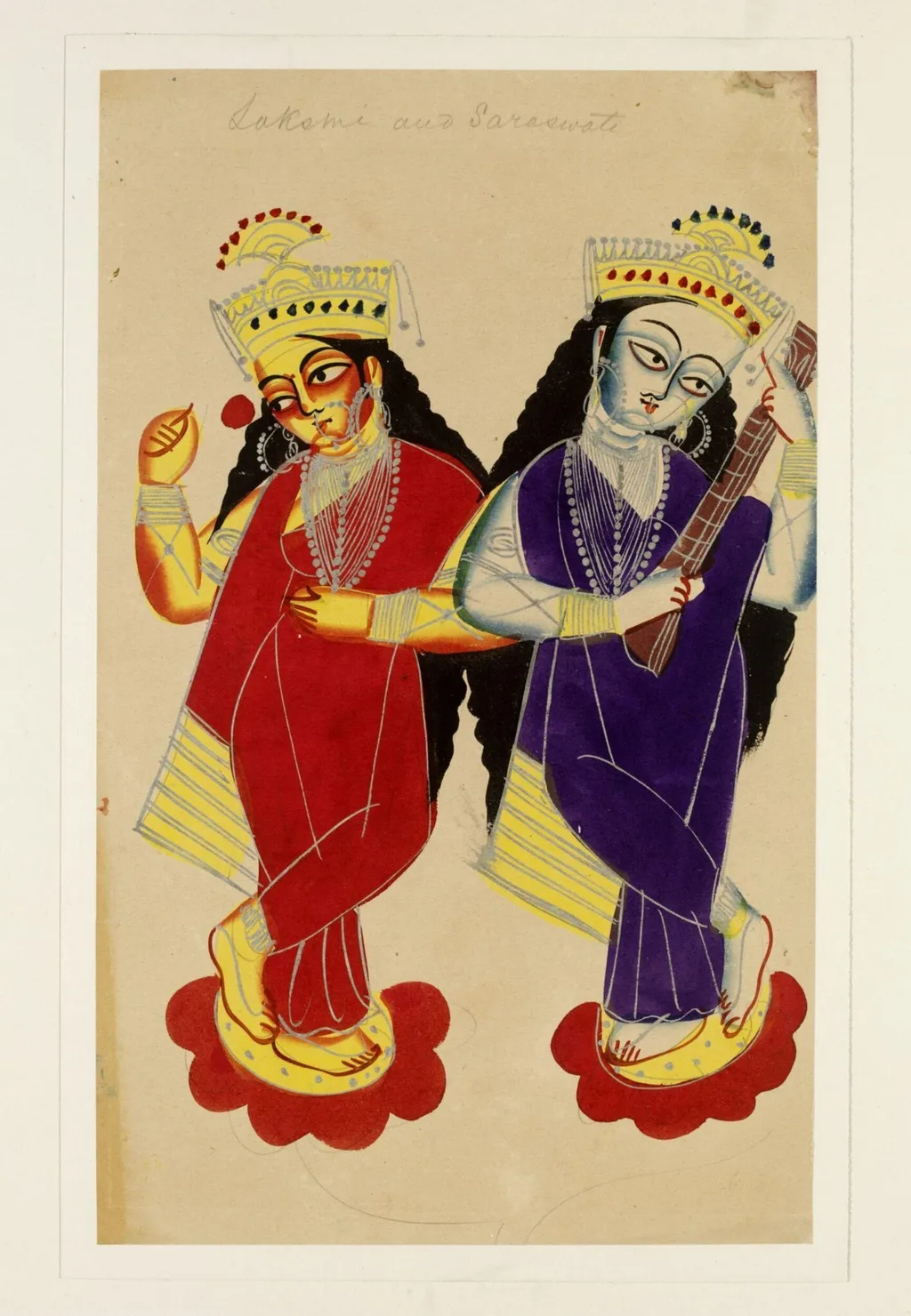
Lakshmi and Saraswati is a paint painting by the Impressionist artist Unknown. It dates from 1885 and is held in the collection of the Victoria and Albert Museum.
About this work
Overview
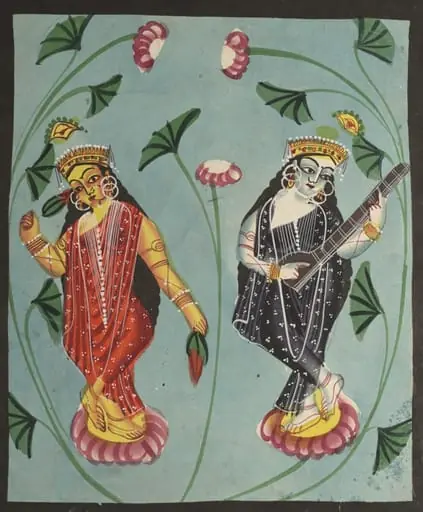
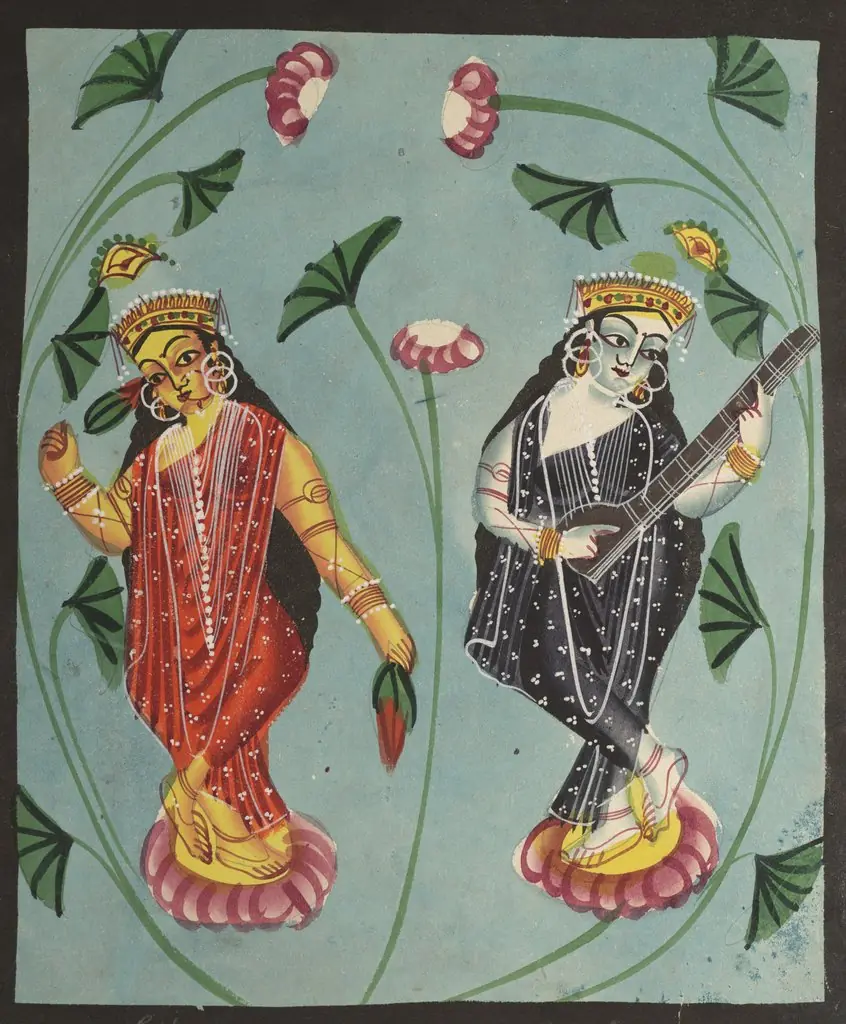
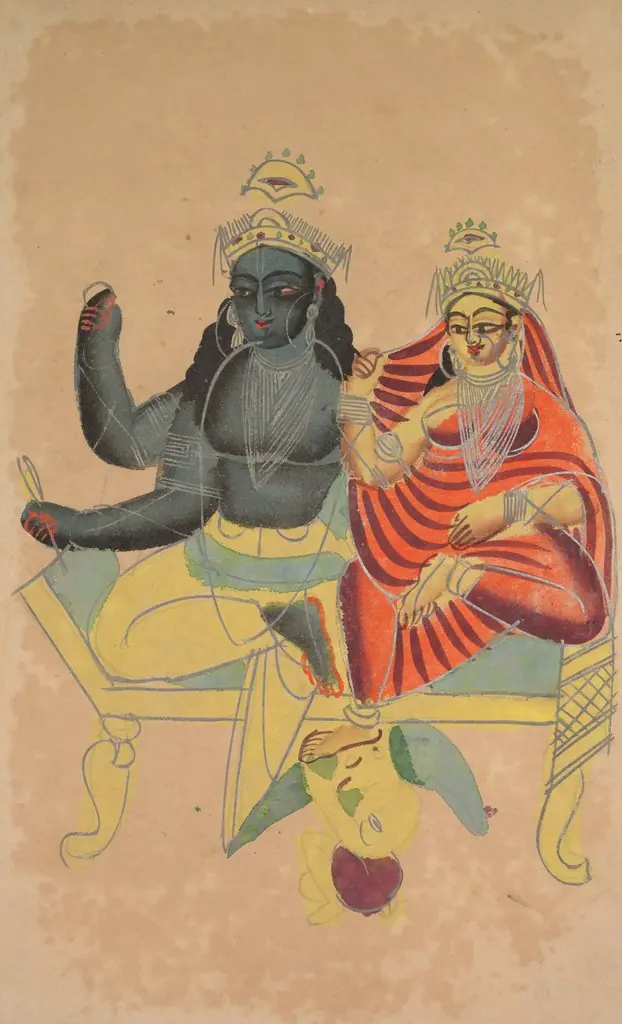
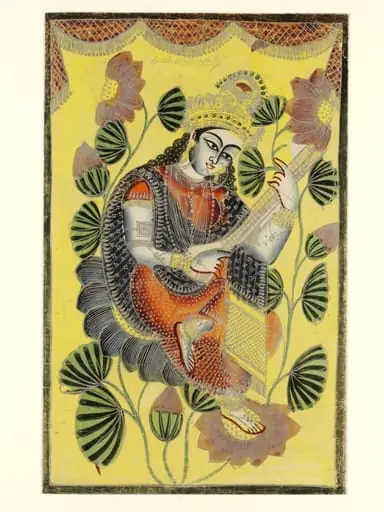
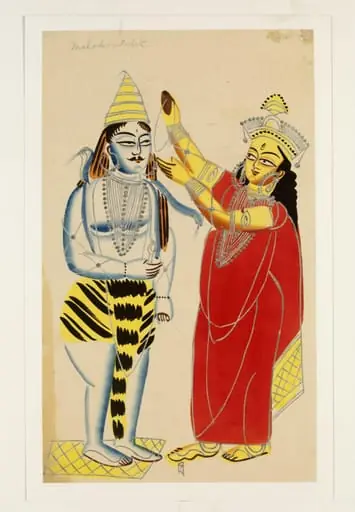
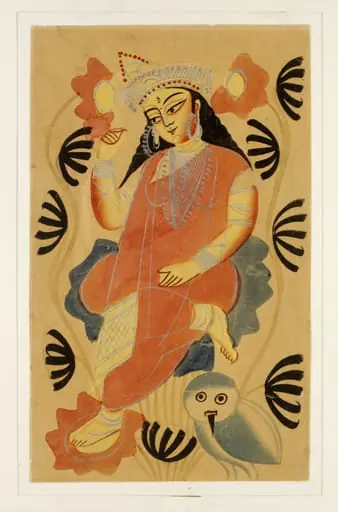
An opaque watercolor on paper from 1885 portrays the Hindu goddesses Lakshmi and Saraswati in a composition characteristic of the Kalighat tradition.
An opaque watercolor on paper from 1885 portrays the Hindu goddesses Lakshmi and Saraswati in a composition characteristic of the Kalighat tradition. The work entered a museum collection in 1950 through a bequest from Miss M. Steele, who inherited it from her mother, a Cambridge Sanskrit scholar. The painting likely originated from a larger series collected in India, possibly by Steele’s grandmother, whose residence there suggests direct access to local artistic production.
Subject & Meaning
The two figures represent Lakshmi, goddess of wealth and prosperity, and Saraswati, goddess of knowledge and the arts. Lakshmi holds a red lotus, symbolizing purity and spiritual power, while Saraswati plays a veena, an instrument associated with music and learning. Their shared posture, ornate adornments, and lotus pedestals reflect their divine status and complementary roles in Hindu cosmology, emphasizing abundance and wisdom as interdependent forces.
Technique & Style
Rendered in bold, flat areas of color with strong black outlines, the painting exemplifies the Kalighat style, which emerged in 19th-century Bengal near the Kalighat temple. The use of opaque watercolor on paper allowed for vivid hues and crisp forms, suited to mass production for pilgrims and urban patrons. Gold detailing on garments and jewelry adds luminosity, while the simplified anatomy and stylized features reflect a deliberate move away from naturalism toward symbolic clarity.
History & Provenance
The painting was acquired by the museum in 1950 from Miss M. Steele, whose mother, a scholar of Sanskrit at Cambridge, received it in 1894. Steele noted that her grandmother, who lived in India, may have acquired the work during her time there. This lineage suggests the painting traveled from a local artist’s studio in Bengal to a British household, preserving its cultural context through familial transmission rather than institutional collection.
Context
Produced in Calcutta during the late 19th century, Kalighat paintings responded to urbanization and colonial influence, blending traditional iconography with new commercial demands. Artists adapted devotional imagery for sale to pilgrims and middle-class buyers, often simplifying forms for efficiency. This work reflects that transition—retaining religious symbolism while adopting the visual language of a rapidly changing urban culture, where art served both spiritual and economic functions.
Legacy
As part of a broader Kalighat corpus, this painting contributes to the understanding of how Hindu iconography was reinterpreted in colonial India. Its survival in a British family collection highlights the movement of South Asian art beyond its place of origin. Today, it stands as evidence of a dynamic artistic tradition that negotiated religious devotion, market forces, and cross-cultural exchange in a period of profound social transformation.
Artist & collection

 Domestic Scene
 Giacomo and Cardinal Marco, investing Andrea, Abbot of San Zeno, with his Benefice
 The Nymph of Fontainebleau
 Portrait of a Woman
 Madonna and Child with Saints in the Enclosed Garden
 Venus and Minerva
 Family Group of Four on Sofa
 Wall painting from Room H of the Villa of P. Fannius Synistor at Boscoreale