Artwork
Nagarjuna (c. 150–250 CE) with a Buddhist Master
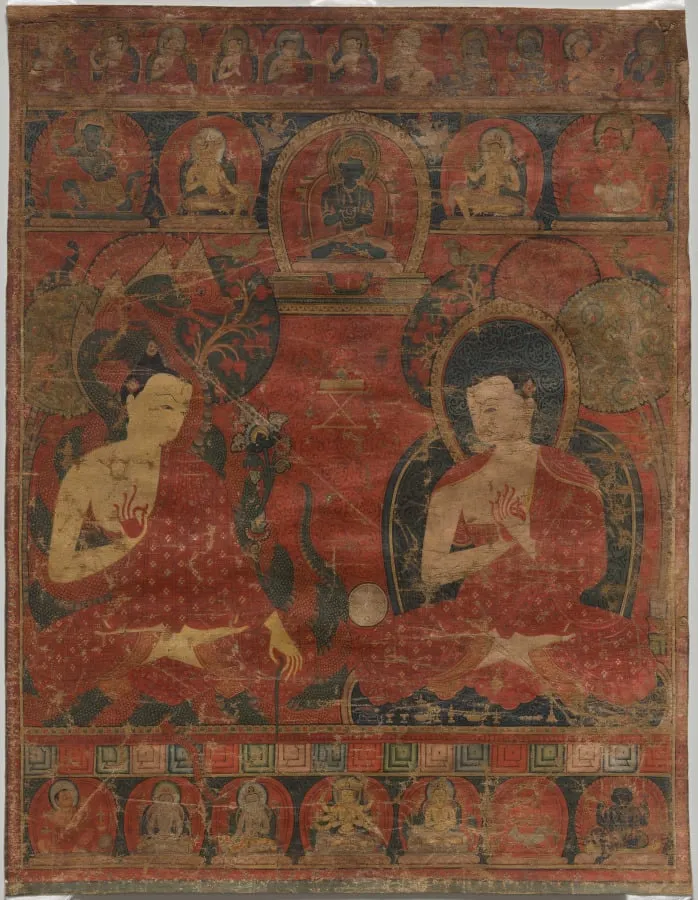
Nagarjuna (c. 150–250 CE) with a Buddhist Master is an unspecified painting by the Byzantine icon painting artist Unknown. It dates from 1304 and is held in the collection of the Cleveland Museum of Art.
About this work
Overview
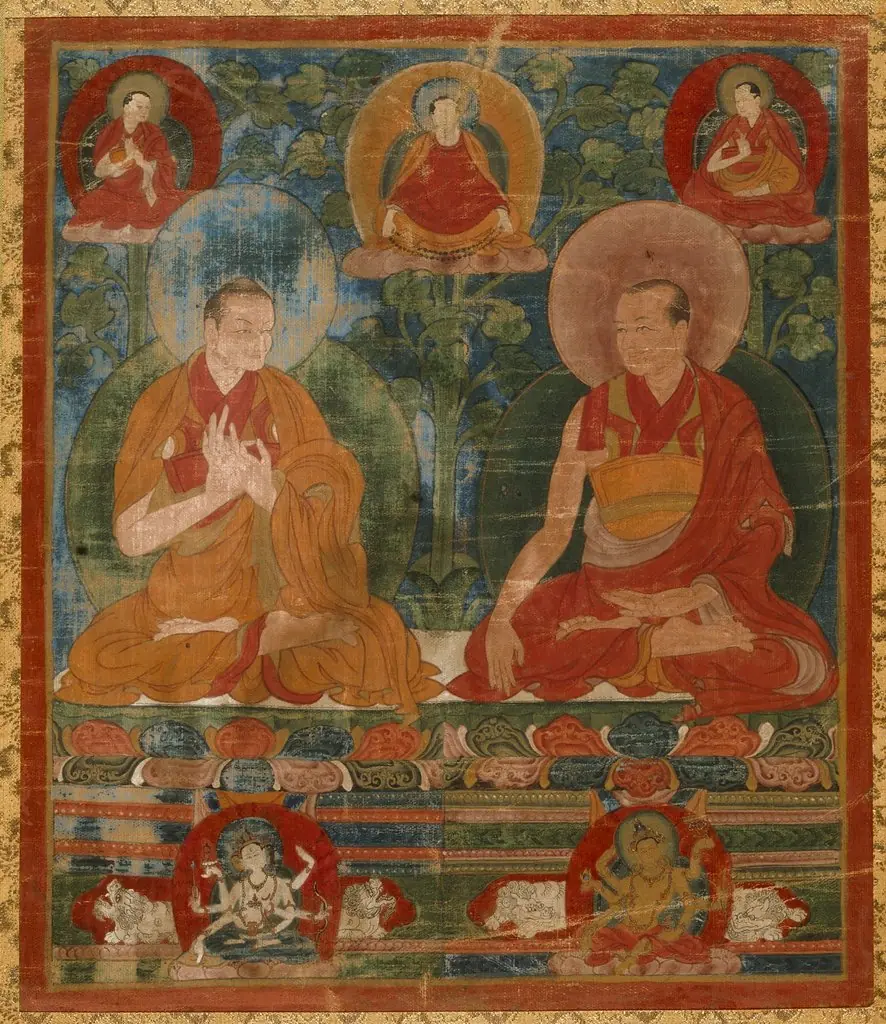
The painting depicts the Indian Buddhist philosopher Nagarjuna seated upon intertwined red and black serpents, traditional naga symbols, engaged in dialogue with a second figure, likely his disciple Aryadeva. Between them rests an illuminated volume of the Perfection of Wisdom on a gilded stand, its pages adorned with flowers, all set beneath a lush Indian landscape populated by flowering trees, peacocks and parrots.
Subject & Meaning
Nagarjuna, a central figure in Mahayana Buddhism, is presented in the company of a disciple, emphasizing the transmission of doctrinal insight. The naga serpents symbolize water, protection and esoteric wisdom, while the offering of flowers to the sacred text underscores reverence for the Prajñāpāramitā teachings.
Technique & Style
Executed in the Nepalese painting tradition, the work combines vivid coloration with intricate detailing of flora and fauna. The use of gold for the bookstand and the careful rendering of the serpents' scales reflect a refined approach to materiality, while the composition balances narrative focus with decorative natural elements.
History & Provenance
Created centuries after Nagarjuna’s lifetime, the painting originates from Nepal, a region where his teachings were historically venerated. The donor monk is identified in the lower left corner, indicating a devotional commission, and the upper row of figures includes lineage masters of the Sakya order, beginning with the renowned Virupa.
Context
The inclusion of Sakya lineage masters situates the work within the broader Tibetan Buddhist tradition, linking Nagarjuna’s philosophical legacy to the institutional transmission of the Sakya school. The surrounding Indian motifs reinforce the cultural origins of the teachings while reflecting Nepal’s syncretic artistic vocabulary.
Artist & collection

 Domestic Scene
 Giacomo and Cardinal Marco, investing Andrea, Abbot of San Zeno, with his Benefice
 The Nymph of Fontainebleau
 Portrait of a Woman
 Madonna and Child with Saints in the Enclosed Garden
 Venus and Minerva
 Family Group of Four on Sofa
 Wall painting from Room H of the Villa of P. Fannius Synistor at Boscoreale