Artwork
Vasul are formă tronconică, adâncită. Este decorat cu motive florale, vegetale și geometrice; are trei flori pe margine ce sunt delimitate de o linie; în centru este decorat cu un buchet format din trei trandafiri; pe fund are trei cercuri concentrice. Vasul este smălțuit interior-exterior. Cromatică: fond alb; motive: verde; roșu.
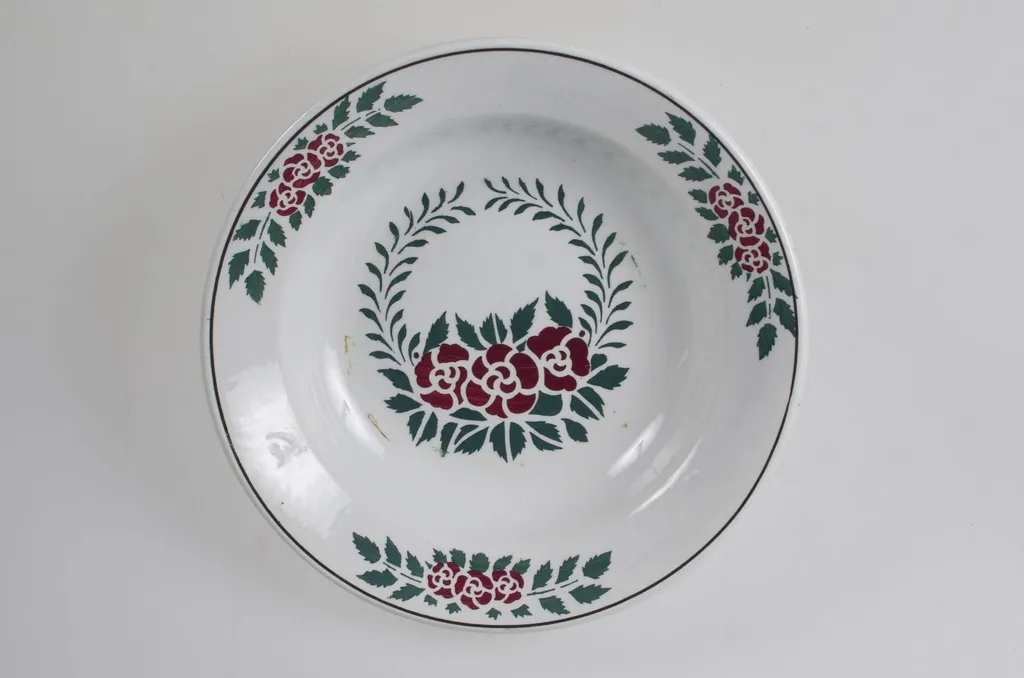
Vasul are formă tronconică, adâncită. Este decorat cu motive florale, vegetale și geometrice; are trei flori pe margine ce sunt delimitate de o linie; în centru este decorat cu un buchet format din trei trandafiri; pe fund are trei cercuri concentrice. Vasul este smălțuit interior-exterior. Cromatică: fond alb; motive: verde; roșu. is a photography by Unknown. It dates from 1850 and is held in the collection of the ASTRA National Museum Complex. The object is a ceramic bowl shaped like a truncated cone, narrowing toward the base.
About this work
Overview
The object is a ceramic bowl shaped like a truncated cone, narrowing toward the base. Its surface is glazed both inside and out, presenting a white background over which green and red motifs are applied. The decorative scheme includes floral, vegetal, and geometric elements arranged symmetrically around the rim and interior.
Subject & Meaning
Around the rim three individual flowers are set off by a separating line, while the central interior space features a composed bouquet of three roses. The design’s concentric circles on the bottom suggest a structured, perhaps symbolic, arrangement, emphasizing balance and harmony within the decorative program.
Technique & Style
The bowl is executed in glazed ceramic, with a smooth, glossy finish achieved through a uniform enamel coating. The color palette—white ground, green foliage, and red roses—creates a vivid contrast typical of folk decorative traditions that favor bright, contrasting hues and stylized botanical motifs.
Context
The combination of geometric borders, concentric circles, and stylized floral groups aligns the piece with Eastern European vernacular pottery, where such motifs often convey seasonal or ceremonial themes. Its form and ornamentation reflect a utilitarian object elevated by ornamental treatment for domestic or ritual use.
Artist & collection

 Domestic Scene
 Giacomo and Cardinal Marco, investing Andrea, Abbot of San Zeno, with his Benefice
 The Nymph of Fontainebleau
 Portrait of a Woman
 Madonna and Child with Saints in the Enclosed Garden
 Venus and Minerva
 Family Group of Four on Sofa
 Wall painting from Room H of the Villa of P. Fannius Synistor at Boscoreale
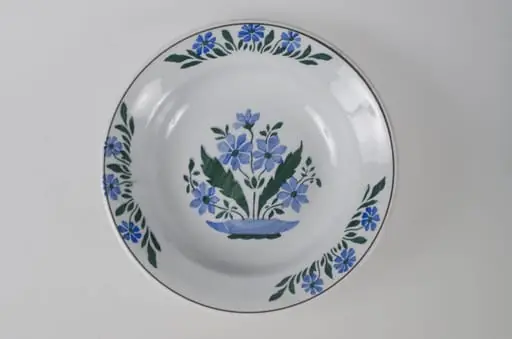 Vasul are formă tronconică, adâncită și este decorat cu motive florale dispuse în trei registre a câte trei flori pe margine, încadrate de o linie; în centru este decorat cu flori și frunze. Pe fund are trei cercuri concentrice care profilează trei registre. Vas evazat în partea superioară. Smălțuit interior-exterior. Cromatică: fond: alb; motive: verde; albastru; negru.
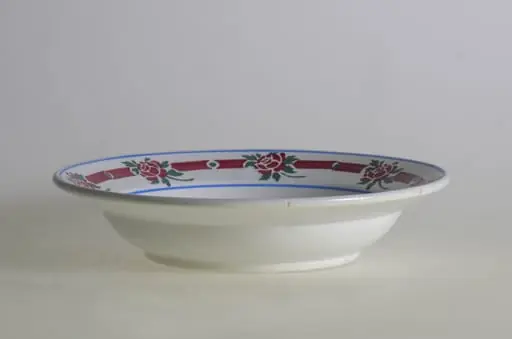 Vasul are formă tronconică; pe margine este decorat cu motive florale, despărțite de motive geometrice: linie, punct, care sunt încadrate de două cercuri concentrice; motive florale în centru (trandafiri); pe fund are trei cercuri concentrice. Cromatică: fond: alb; motive: roșu; verde; albastru. Vasul este smălțuit interior-exterior.
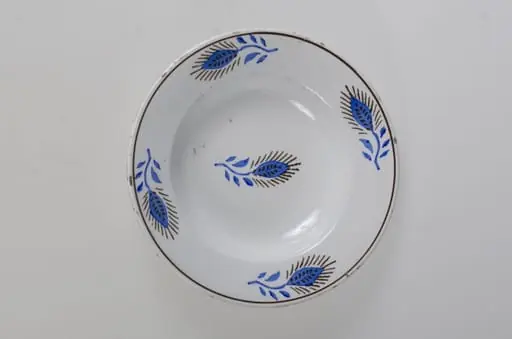 Vasul prezintă formă tronconică adâncită cu o bordură decorată cu motive florale și vegetale dispuse câte două în opoziție pe suprafața buzei (patru flori cu frunze). În centru este decorat cu o floare. Prezintă o marcă indescifrabilă pe exteriorul vasului. Cromatică: fond: alb; motive: albastru; maro.
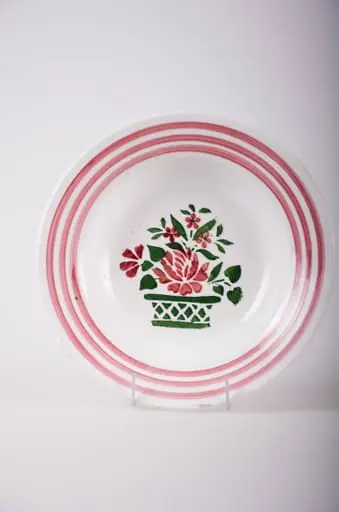 Vas de formă tronconică, adâncit; pe fund are găuri pentru agățare. În centru este decorată cu motive florale: vază cu flori; pe margine sunt trei cercuri concentrice; motive geometrice: linie, romb, triunghi. Pe fund are o marcă indescifrabilă. Cromatică: fond: alb; motive: vișiniu; verde.
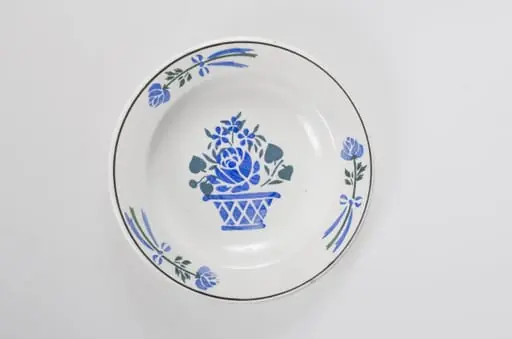 Vas tronconic și adânc realizat din porțelan. Pe fondul alb, central se află un coș albastru (realizat din motive geometrice: romuri și triunghiuri încadrate de două linii) cu un trandafir și trei floricele: pe marginimea farfuriei se observă trei secvențe cu trandafiri legate cu o fontiță. Marginea vasului este decorată cu un cerc. Cromatică: alb; motive: albastru; verde; negru.
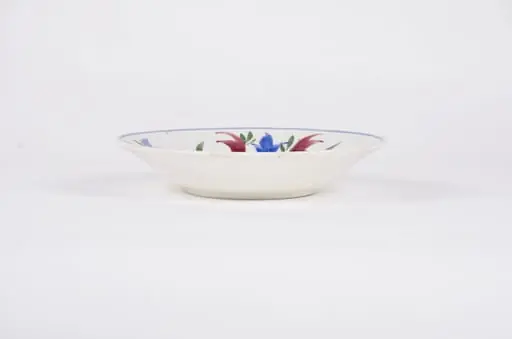 Vasul are formă tronconică fiind realizat din caolin. Fondul, interior-exterior, este alb iar decorul este floral-vegetal și acoperă interiorul vasului cu extensii pe buza acestuia. De asemenea pe buza vasului este pictată o linie circulară. Cromatică: fond: alb; motive: albastru; maro; verde; vișiniu.
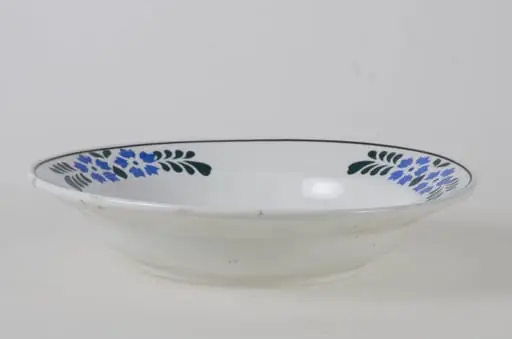 Vasul are formă tronconică smălțuit la interior și pe exterior (smalț de culoare albă). Prezintă motive decorative floral/vegetal și geometrice dispuse pe fundul vasului dar și într-un registru decorativ dispus pe buza vasului. De asemenea se identifică și motive decorative geometrice: pătratul, cercul, linia. Cromatică: fundal alb; verde; grena; albastru.
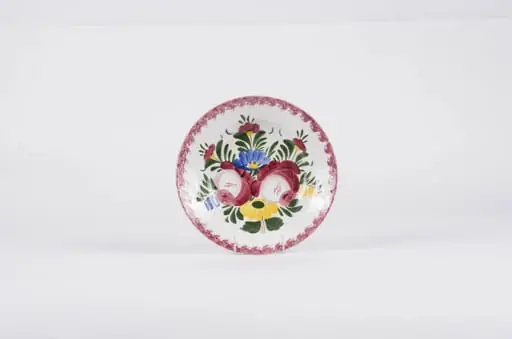 Vasul este de formă tronconică fiind smălțuit interior-exterior. Este confecționat din faianță Decorul este format din motive florale pictate pe fond alb; gura este decorată în stropi de culoare vișinie iar baza farfuriei este decorată cu motive florale. Se identifică șapte flori alcătuind motivul decorativ pe baza farfuriei. Pe spate inscripția este indescifrabilă. Cromatică: galben; albastru; verde; vișiniu; alb;