Artwork
Sfânta Mare Cuvioasă Parascheva de la Iași are crucea în mâna stângă, binecuvântând, și o ramură mare de finic verde, în mâna dreaptă. Este îmbrăcată în veșmânt roșu vermillon-cărămiziu, cu interiorul căptușit cu verde-mușchi de pădure, verde de China, înspre gri-antracit. Sacosul este alb-crem cu danteluță și guleraș și dungi gri-verzui. Sfânta Cuvioasă are părul negru lung, lăsat pe umeri, coroană roșie cu gri-antracit, cu radiații verzi, ca de catifea și aureolă. Fondul icoanei este cerul albastru regal-ceruleum, în registrul superior și un câmp galben-chihlimbar, în registrul inferior. Întreaga compoziție tematic-iconografică este încadrată de un chenar decorativ fitomorf, format din 3 ruje roșii mari, cu frunze verde-brad. Cromatica este armonioasă: roșu vermillon-cărămiziu, alb-zinc, albastru regal-ceruleum, crem-bej, galben-chihlimbar, verde mușchi-de-pădure, verde de China, gri-verzui, gri-antracit, bej-crem, bronziu, negru, alb zinc. Inscripția din româno-chirilică se traduce Paraschiva. Icoana este din Nordul Transilvaniei, Nicula.
Sfânta Mare Cuvioasă Parascheva de la Iași are crucea în mâna stângă, binecuvântând, și o ramură mare de finic verde, în mâna dreaptă. Este îmbrăcată în veșmânt roșu vermillon-cărămiziu, cu interiorul căptușit cu verde-mușchi de pădure, verde de China, înspre gri-antracit. Sacosul este alb-crem cu danteluță și guleraș și dungi gri-verzui. Sfânta Cuvioasă are părul negru lung, lăsat pe umeri, coroană roșie cu gri-antracit, cu radiații verzi, ca de catifea și aureolă. Fondul icoanei este cerul albastru regal-ceruleum, în registrul superior și un câmp galben-chihlimbar, în registrul inferior. Întreaga compoziție tematic-iconografică este încadrată de un chenar decorativ fitomorf, format din 3 ruje roșii mari, cu frunze verde-brad. Cromatica este armonioasă: roșu vermillon-cărămiziu, alb-zinc, albastru regal-ceruleum, crem-bej, galben-chihlimbar, verde mușchi-de-pădure, verde de China, gri-verzui, gri-antracit, bej-crem, bronziu, negru, alb zinc. Inscripția din româno-chirilică se traduce Paraschiva. Icoana este din Nordul Transilvaniei, Nicula. is a drawing by Unknown. It dates from 1850 and is held in the collection of the ASTRA National Museum Complex. An icon of Saint Parascheva, crafted in wood, originates from Nicula in northern Transylvania.
About this work
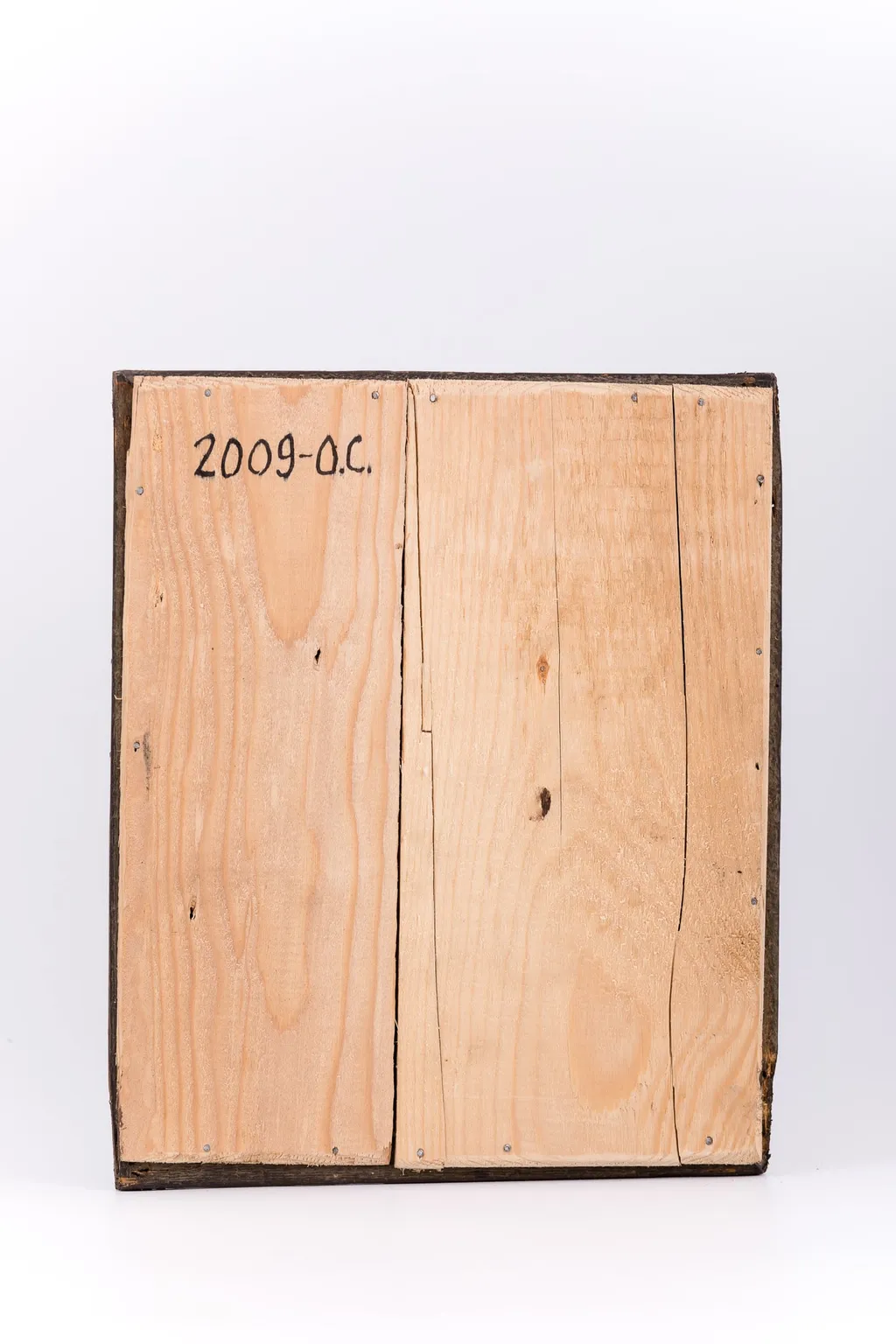
The image depicts a wooden crate with a light-colored wood grain, featuring a dark border around its edges.
The image depicts a wooden crate with a light-colored wood grain, featuring a dark border around its edges. The crate is positioned upright, with its front side facing the viewer. A handwritten label on the top-left corner reads "2009-O.C." in black marker.
The crate's surface is smooth, with visible wood grain patterns. The dark border adds a sense of depth and contrast to the overall design. The handwritten label suggests that the crate may have been used for storage or transportation purposes.
This image invites you to explore the work of artist Unknown.
Overview
An icon of Saint Parascheva, crafted in wood, originates from Nicula in northern Transylvania. The saint is depicted frontally, holding a cross in her left hand and a branch of green fennel in her right, both symbols of spiritual authority and divine blessing. Her attire and surroundings follow traditional Eastern Orthodox iconographic conventions, rendered in a rich, calibrated palette of mineral and earth pigments.
Subject & Meaning
Saint Parascheva, venerated for her ascetic life and miracles, is shown with attributes that signify her sanctity: the cross denotes her faith, while the fennel branch recalls healing and divine favor. Her serene expression and upright posture convey spiritual composure. The icon serves as a focus for prayer and veneration, embodying the belief in her intercessory power within Romanian Orthodox tradition.
Technique & Style
The icon is painted with tempera on wood, using a layered application of pigments to achieve depth and luminosity. The colors—vermillion, royal blue, moss green, and charcoal gray—are applied with precision, enhancing the flat, hieratic composition typical of regional Transylvanian icons. Fine details in the embroidery of her garments and the radiating halo suggest skilled handwork, rooted in local craftsmanship.
History & Provenance
Produced in the Nicula region, known for its monastic artistic activity, the icon likely dates to the late 18th or early 19th century. It was preserved within a wooden crate marked '2009-O.C.', indicating modern archival handling. The crate’s presence suggests the icon was stored or transported for conservation, though its original ecclesiastical context remains unrecorded.
Context
This icon reflects the devotional practices of Romanian Orthodox communities in Transylvania, where saints’ images were central to domestic and monastic worship. The use of local pigments, Cyrillic inscriptions, and regional color preferences aligns with broader Moldavian-Transylvanian iconographic traditions, distinct from Byzantine or Western European models.
Legacy
As a preserved artifact of rural religious art, the icon contributes to the understanding of regional iconography in Romania. Its survival, despite minimal documentation, underscores the resilience of folk devotional practices. The crate’s modern labeling reflects ongoing efforts to conserve such works, ensuring their place in cultural memory.
Artist & collection

 Domestic Scene
 Giacomo and Cardinal Marco, investing Andrea, Abbot of San Zeno, with his Benefice
 The Nymph of Fontainebleau
 Portrait of a Woman
 Madonna and Child with Saints in the Enclosed Garden
 Venus and Minerva
 Family Group of Four on Sofa
 Wall painting from Room H of the Villa of P. Fannius Synistor at Boscoreale
 Sfânta Mare Cuvioasă Parascheva de la Iași are crucea cărămizie în mâna stângă, binecuvântând, și o ramură de finic verde, nuanța algelor în mâna dreaptă. Este îmbrăcată în veșmânt roșu vermillon-orange cu interiorul căptușit cu verde-smarald și franjuri brun-bronzii. Sacosul este alb-crem cu danteluță, guleraș și dungi albastre. Sfânta Cuvioasă are părul negru lung, lăsat pe umeri, coroană roșie cu verde-brad și aureolă brun-bronzie. Fondul icoanei este cerul albastru regal în registrul superior-mijloc și un câmp galben-chihlimbar, în registrul inferior. Întreaga compoziție iconografică este încadrată de un chenar decorativ fitomorf, format dintr-o ghirlandă de 4 ruje mari orange-cărămizii cu frunze verzi. Inscripția din româno-chirilică se traduce Paraschiva. Cromatica este armonioasă: roșu vermillon-orange, albastru cobalt-ceruleum, verde alge, mușchi de pădure, bej-crem, bronziu, galben-solar, negru, alb zinc. Icoana este din Nordul Transilvaniei, Nicula.
 Sfânta Mare Cuvioasă Parascheva de la Iași are crucea și o ramură de finic verde brad, în mâna dreaptă. Este îmbrăcată în veșmânt roșu vermillon, cu interiorul căptușit cu verde, vernil, crem și galben, cu sacosul alb ivoriu, cu dungi crem-bej. Sacosul este alb ivoriu crem-bej, cu danteluță și guleraș galben. Sfânta Cuvioasă are părul negru lung, ondulat, lăsat pe umeri, coroană roșie și aureolă. Fondul icoanei este cerul albastru-negru întunecat, în registrul superior și un câmp înalt luminos de grâu galben-copt, în registrul mediu și inferior, de culoare ocru-muștar. Întreaga compoziție iconografică este încadrată de un chenar decorativ geometrizant alb și unul paralel, fitomorf, format dintr-o ghirlandă de 6 ruje - margarete, cu petale roșii. Ghirlanda excelează prin delicatețea desenului și bogăția cromatică armonioasă. Cromatica este armonioasă: roșu vermillon, albastru-negru, verde forest, kaki, vernil-măr, olive, bej-crem, negru, galben chihlimbar, ocru, muștar, negru, alb. Icoana este din Nordul Transilvaniei, Nicula.
 Sfântul Mare Mucenic Gheorghe este așezat călare pe un cal alb-gri, omorând balaurul verde-gri-antracit cu lancea, pe care o ține în amândouă mâinile. Fondul icoanei este cerul cobalt-senin, în registrul superior și alb-bej-bronziu în cel inferior, în centrul icoanei ușor întrepătrundu-se toate culorile. Tunica Sfântului Mucenic Purtător de Biruință este roșie vermillon, cu mânecile verzi, având pantalonii gri, cizme negre și tunică roșie-vermillon. Întreaga compoziție iconografică este încadrată de un chenar decorativ fitomorf, format dintr-o ghirlandă de 7 ruje - trandafiri sălbatici și bujori roșii și roz cu petale și pistil alternativ colorate cu albastru cobalt, roz și roșu vermillon. Ghirlanda excelează prin delicatețea desenului și bogăția cromatică armonioasă. Ziua de praznic a Sfântului Gheorghe este în 23 aprilie, primăvara, justificându-se pentru încă o dată prezența ghirlandei înflorite. Inscripția din româno-chirilică se traduce S. Georgie. Cromatica este armonioasă; roșu vermillon, roz, albastru cobalt, ceruleum, cobalt, gri antracit, ocru, bronziu, brun, crem, alb și negru. Icoana este din Nordul Transilvaniei, Nicula.
 Sfânta Mare Cuvioasă Parascheva de la Iași este redată central, în picioare, având crucea în mâna dreaptă și cu mâna stângă dăruiește pace, ca printr-o atingere mângâietoare de binecuvântare, cu o ramură aurie de finic. Este îmbrăcată în veșmânt roșu vermillon, cu interiorul căptușit cu vișiniu-stacojiu, galben și verde fin-dungat cu alb. Peste maforiomul roșu, sfânta cuvioasă are coroniță și aureolă. La gât, veșmântul este închis printr-o fibulă-broșă. În registrul superior, de-a stânga și de-a dreapta, este câte un înger păzitor, serafim, în locul destinat mai precis, de obicei, Sfinților Arhangheli Mihail și Gavriil. Fondul icoanei este împărțit într-un registru superior de cer albastru regal și un registru inferior format din câmpuri de crem-bej și galben, dispuse paralel, alternativ cromatic. Compoziția este elaborată și detaliile se întrepătrund armonios cu alternanța cromatică: roșu vermillon, roșu stacojiu, galben chihlimbar, albastru regal și bleu-ciel, verde-văratic și nuanța spanac-avocado, crem, bej, negru, alb. Icoana este încadrată pe laterale de chenar decorativ lat verde, cu margine bronzie și elemente florale stilizate - ruje roșii. Este o icoană cu aer luminos, specific Țării Oltului. Inscripția din româno-chirilică se traduce Sfânta Paraschiva.
 Sfânta Mare Cuvioasă Parascheva de la Iași are o cruce și ramură de finic verde, nuanța algelor în mâna dreaptă. Este îmbrăcată în veșmânt roșu vermillon-corai cu interiorul căptușit cu verde-mușchi de pădure și bordură galbenă-chihlimbar. Sacosul este alb-crem cu danteluță, guleraș și dungi. Sfânta Cuvioasă are părul negru lung, lăsat pe umeri, coroană roșie-roz cu verde-brad și aureolă brun-bronzie. Fondul icoanei este cerul albastru cobalt în registrul superior-mijloc și un câmp alb-crem, ancadrator întregii compoziții. Întreaga compoziție iconografică este încadrată de un chenar decorativ fitomorf, format dintr-o ghirlandă de 5 ruje mari orange-cărămizii cu frunze verzi. Cromatica este armonioasă: roșu vermillon-orange, corai, albastru cobalt-ceruleum, verde alge, mușchi de pădure, bej-crem, bronziu, galben-solar, negru, alb zinc. Icoana este din Nordul Transilvaniei, Nicula.
 În centrul icoanei este Crucea roșie-vermillon, cu capetele brațelor împodobite verde-trilobat, pe care este Răstignit Mântuitorul Iisus Hristos, iar în dreapta crucii este Sfântul Împărat Constantin și în stânga este Împărăteasa Elena, mama sa. Sub Cruce este un spațiu galben izvorâtor de lumină. Crucea găsită este susținută cu bucurie de cei doi sfinți. Veșmintele Sfinților Constantin și Elena sunt într-o combinație de roșu vermillon și albastru cobalt. Spațiul galben de lumină duce cu gândul la Crucea de lumină apărută pe cer In hoc signo vinces - prin acest semn vei învinge. Fondul icoanei este cerul albastru bleu-ciel. Întreaga compoziție este încadrată armonios de un chenar fitomorf, format din rujele de Nicula, 6 trandafiri mari roșii cu motivul zăluței albe în interior. Cromatica este armonioasă și senină: roșu vermillon, galben-chihlimbar, albastru cobalt și bleu-ciel, verde brad, de China, alb, negru. Icoana este de Nicula. De menționat este că în icoană este Mântuitorul Iisus Hristos Răstignit pe Crucea, susținută de Sfinții Constantin și Elena. În această compoziție fiind, icoana este considerată mai rară prin tematica abordată, de obicei lângă Mântuitorul Răstignit sunt Maica Domnului și Sfântul Apostol și Evanghelist Ioan Teologul. Inscripția din româno-chirilică se traduce Restignirea.
 Sfântul Mare Ierarh Nicolae Făcătorul de minuni este redat central, așezat pe tron arhieresc, ținând în mâna stângă Sfânta Evanghelie deschisă și binecuvântează cu mâna dreaptă. Veșmintele arhierești liturgice ale sfântului ierarh sunt într-o alternanță cromatică de roșu vermillon-verde-ocru și alb și negru. Epitrahilul, patrafirul este verde, cu patru cruci pe el, sacosul roșu vermillon. Poartă mithră și are aureolă. În registrul inferior în colțul din stânga Sfântului Nicolae este tatăl celor trei fete, salvate de sărăcie și desfrânare, îngenuncheat, mulțumind prin ajutor. În colțul din dreapta Sfântului sunt cele trei fete cu coronițe pe cap, coronițele simbolizând atât bogăția materialnică, cât și cumințenia și curățenia sufletească. În registrul superior, dreapta sfântului, este Mântuitorul Dumnezeu-Fiul binecuvântând și în partea stângă este Maica Domnului ocrotind. Inscripția din româno-chirilică se traduce Sf Nicolae ICXC MP Iisus Hristos Maica Domnului. Cromatica este specifică Țării Oltului: roșu vermillon, verde de China, galben chihlimbar, ocru, albastru ceruleum, alb, negru.