Artwork
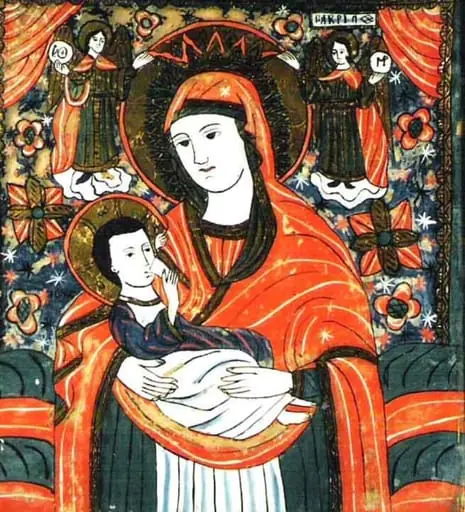
Sfinții Constantin și Elena; Maica cu Pruncul
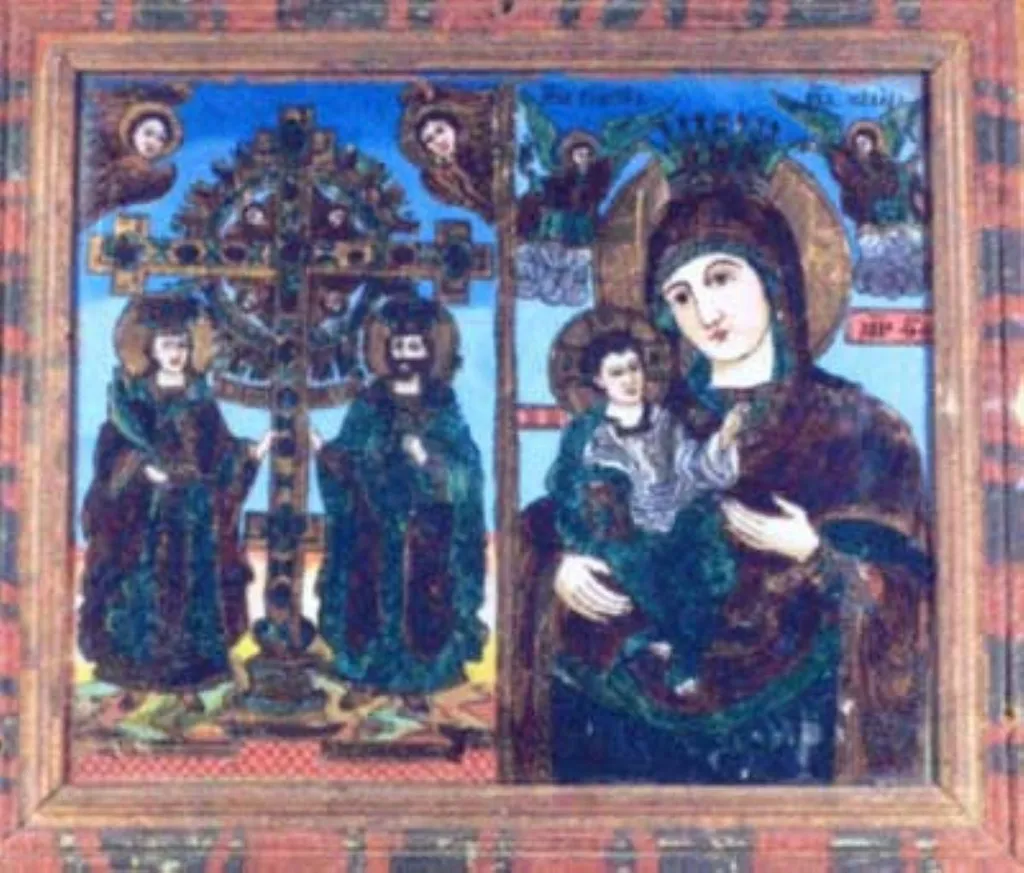
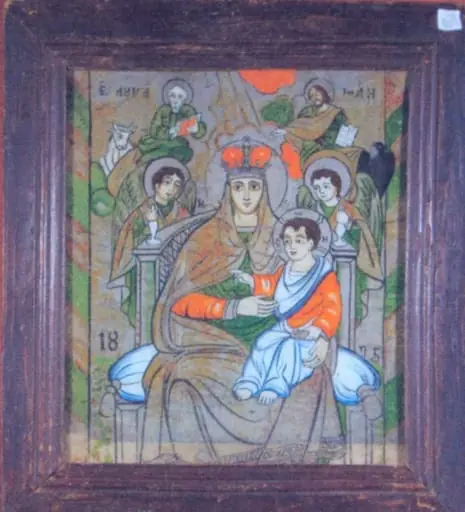
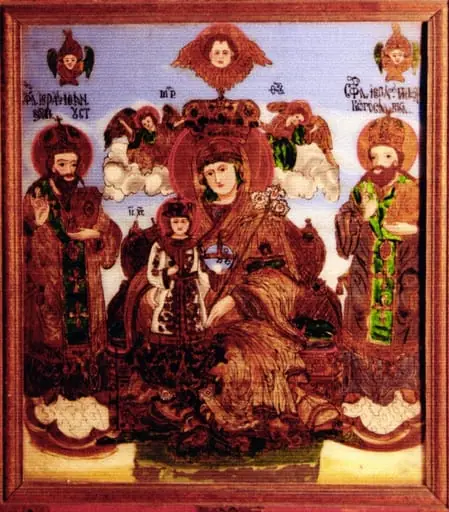
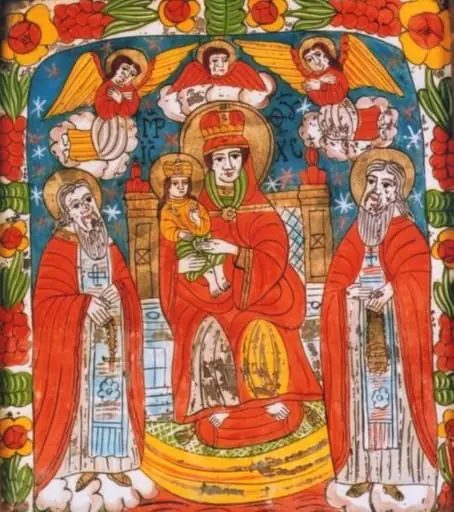
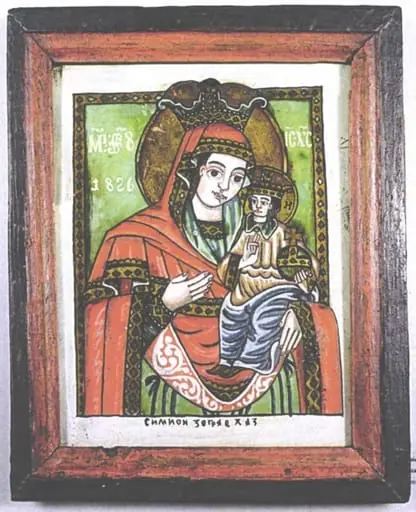
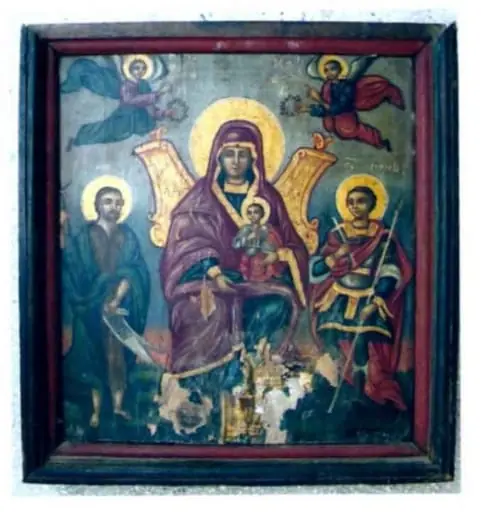
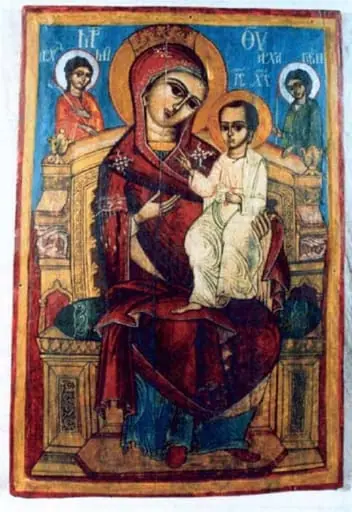
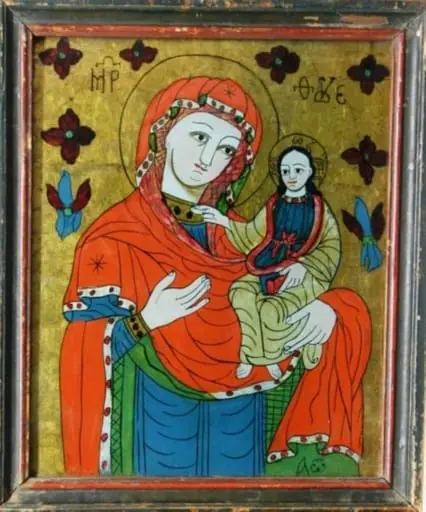
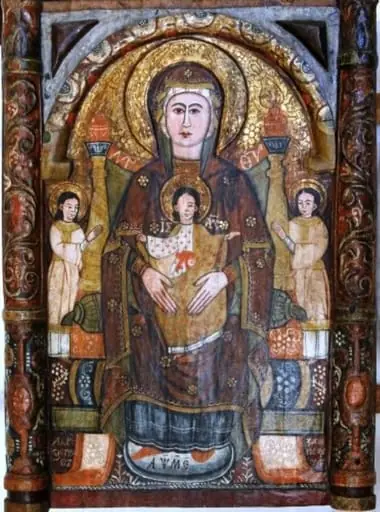
Sfinții Constantin și Elena; Maica cu Pruncul is a drawing by Unknown. It dates from 1850 and is held in the collection of the "Dimitrie Gusti" National Village Museum. Two vertical panels form a devotional diptych, each depicting sacred figures in a Byzantine-inspired style.
About this work
Overview
Rich blues and golds dominate the backgrounds, framed by ornate red and gold borders, emphasizing sacred space over naturalistic setting.
Two vertical panels form a devotional diptych, each depicting sacred figures in a Byzantine-inspired style. The left panel shows three robed saints beneath a golden crown, with halos of smaller faces suggesting divine presence. The right panel portrays the Virgin Mary holding the Christ Child, their expressions serene. Rich blues and golds dominate the backgrounds, framed by ornate red and gold borders, emphasizing sacred space over naturalistic setting.
Subject & Meaning
The left panel likely represents Constantine and Helena, early Christian patrons, flanked by an additional saint, all under celestial authority symbolized by the crown and hovering figures. The right panel presents the Theotokos with the infant Jesus, a common motif in Eastern Orthodox tradition, conveying divine motherhood and quiet reverence. The floating faces may denote angels or saints, reinforcing the holiness of the scene without narrative action.
Technique & Style
Painted in tempera or egg-based medium on wood, the figures are rendered with flattened forms and elongated proportions typical of late medieval iconography. Gold leaf highlights halos and backgrounds, while deep ultramarine blues suggest heavenly realms. Facial features are stylized, eyes large and direct, inviting contemplation rather than emotional engagement. The borders, richly decorated in red and gold, frame the sacred imagery as objects of veneration.
History & Provenance
The panels likely originated in a Byzantine or post-Byzantine workshop, possibly in the Balkans or Romania, during the 14th to 16th centuries. Such diptychs were used in private devotion or church altars. Their survival suggests careful preservation, possibly within a religious community. Exact provenance remains undocumented, but stylistic elements align with regional Orthodox traditions of the period.
Context
This work reflects the enduring influence of Byzantine iconography in Eastern Christian communities, where religious imagery served as a bridge between the earthly and divine. Unlike Western altarpieces, these panels prioritize symbolic presence over narrative drama. The emphasis on gold, blue, and frontal poses aligns with liturgical needs and theological principles emphasizing the unchanging nature of sacred truth.
Legacy
The diptych exemplifies a tradition of sacred art preserved across centuries in Orthodox regions, influencing later folk and ecclesiastical painting. While not widely known outside regional collections, it continues to inform contemporary understandings of devotional aesthetics. Its preservation in institutional or private hands ensures its role as a material witness to centuries of spiritual practice.
Artist & collection
Museum
"Dimitrie Gusti" National Village Museum
Continue through works from the same source collection.
 Domestic Scene
 Giacomo and Cardinal Marco, investing Andrea, Abbot of San Zeno, with his Benefice
 The Nymph of Fontainebleau
 Portrait of a Woman
 Madonna and Child with Saints in the Enclosed Garden
 Venus and Minerva
 Family Group of Four on Sofa
 Wall painting from Room H of the Villa of P. Fannius Synistor at Boscoreale