Artwork
Bunavestire
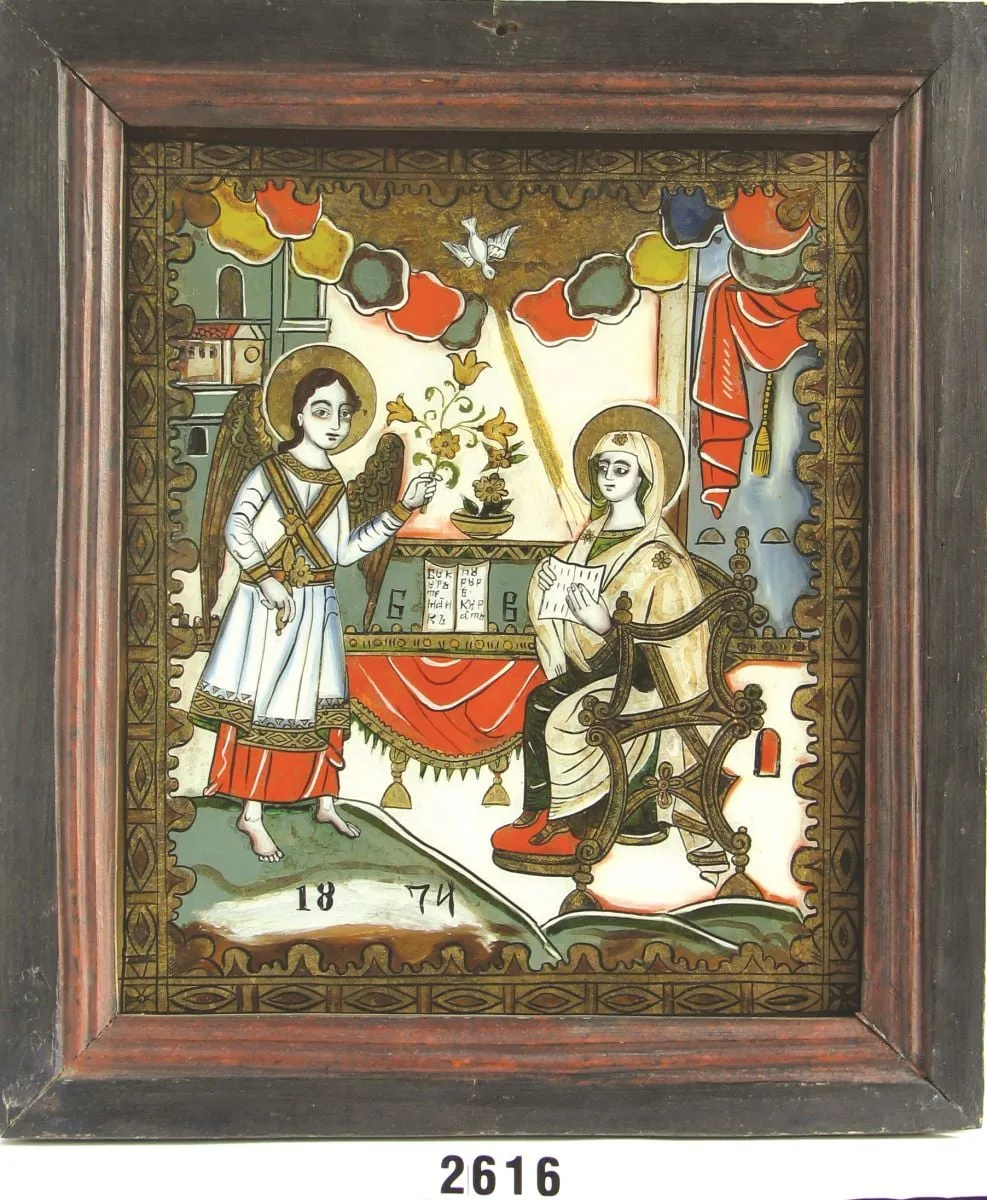
Bunavestire is a drawing by the Impressionist artist Unknown. It dates from 1874 and is held in the collection of the ASTRA National Museum Complex. Painted in 1874, this work depicts a religious scene with two figures rendered in flat, vivid hues.
About this work
Next, check out Realism to see how artists showed everyday or religious scenes in a straightforward way.
This painting shows two figures in bright, flat colors. One stands holding a branch with flowers, dressed in white and red robes. The other kneels, reading a book, wearing gold and red. The background has a red cloth, a building, and a dove flying above. Gold frames and patterns surround the scene.
The date "1874" is written in the bottom left corner. The figures look like holy people, but the style is simple and bold.
Next, check out Realism to see how artists showed everyday or religious scenes in a straightforward way.
Overview
Painted in 1874, this work depicts a religious scene with two figures rendered in flat, vivid hues. The composition is simplified, lacking depth or naturalistic shading, and framed by ornamental gold patterns. The style emphasizes symbolic clarity over realism, suggesting a devotional purpose. The date is inscribed in the lower left, anchoring the work in a specific moment of artistic transition in Eastern European religious painting.
Subject & Meaning
The figures likely represent the Annunciation: one in white and red, holding a flowering branch, symbolizing purity and divine message; the other, kneeling in gold and red robes, engaged with a book, suggesting humble reception. The dove above signifies the Holy Spirit. The red background and architectural element frame the sacred moment, reinforcing its spiritual gravity through symbolic rather than literal representation.
Technique & Style
The painting employs bold, unmodulated colors and minimal modeling, rejecting chiaroscuro and perspective. Forms are outlined clearly, and details are reduced to essential shapes. Gold accents frame the scene, echoing traditional iconography. The flatness and decorative patterning align more with folk or liturgical art than academic traditions, prioritizing spiritual symbolism over naturalistic fidelity.
History & Provenance
Created in 1874, the work emerged during a period when religious imagery in Eastern Europe was being reinterpreted through local traditions. Its style suggests influence from regional icon-painting practices, possibly produced by an anonymous or lesser-known artist working outside major academies. The inscription of the date indicates an intention to situate the piece within contemporary artistic discourse.
Context
While Western European artists of the time pursued Realism and naturalism, this painting reflects a parallel tradition in Eastern Orthodox communities, where religious imagery retained symbolic conventions. The use of flat color and gold ornamentation connects it to older iconographic models, even as its date places it alongside modernizing trends. It represents a quiet resistance to Western artistic norms.
Legacy
This work stands as an example of how religious themes persisted in vernacular forms amid the rise of modern art. Its stylistic simplicity and symbolic clarity offer insight into devotional practices outside academic circles. Though not widely exhibited, it contributes to understanding the diversity of 19th-century visual culture in regions where tradition and modernity coexisted uneasily.
Artist & collection

 Domestic Scene
 Giacomo and Cardinal Marco, investing Andrea, Abbot of San Zeno, with his Benefice
 The Nymph of Fontainebleau
 Portrait of a Woman
 Madonna and Child with Saints in the Enclosed Garden
 Venus and Minerva
 Family Group of Four on Sofa
 Wall painting from Room H of the Villa of P. Fannius Synistor at Boscoreale
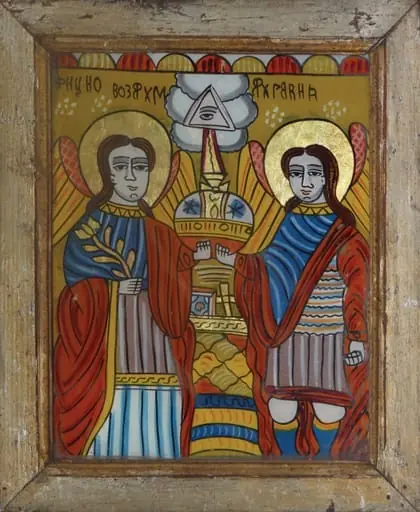 Sfinții Arhangheli Mihail și Gavriil
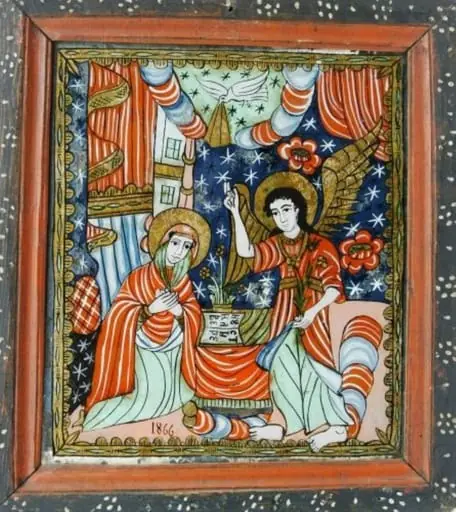 Buna Vestire
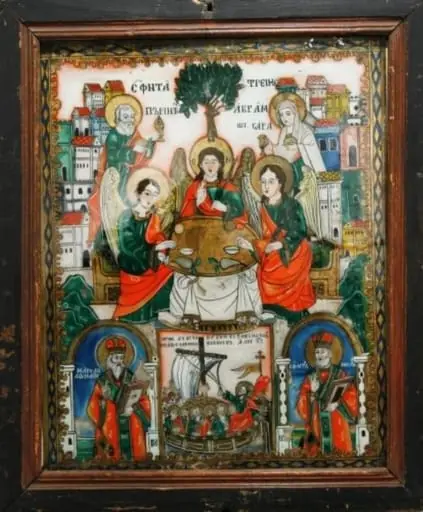 Sfânta Treime (Sfânta Troiță, Filoxenia, Cina de la Mamvri)
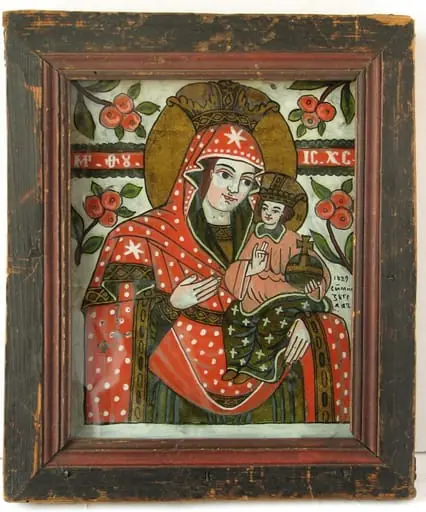 Maica Domnului cu Pruncul Iisus Hristos în brațe
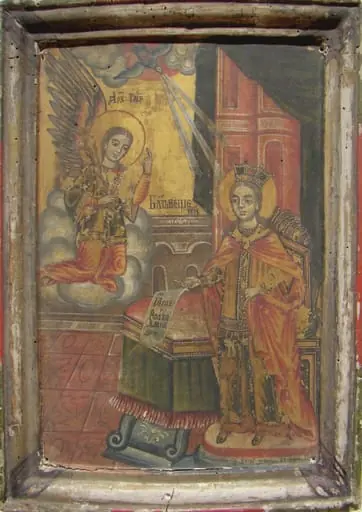 Buna Vestire
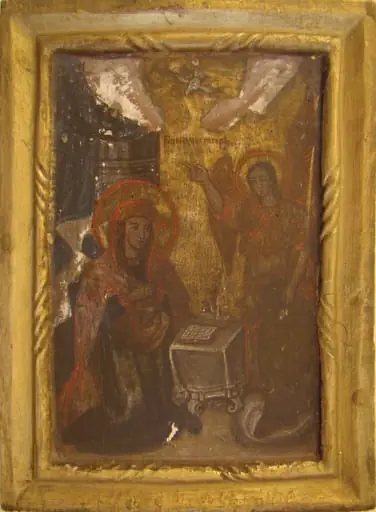 Buna Vestire
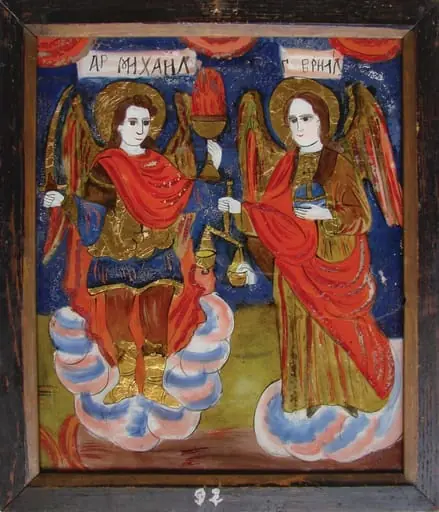 Sfinții Mihail și Gavril
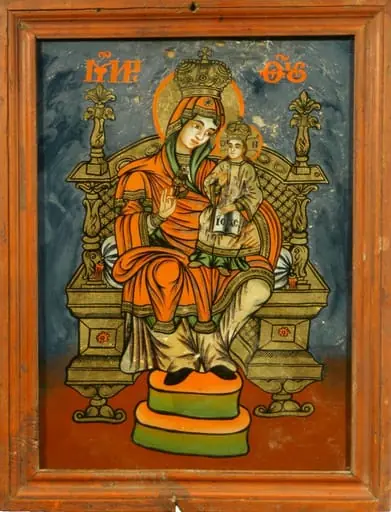 Maica Domnului cu Pruncul, floarea nevestejită
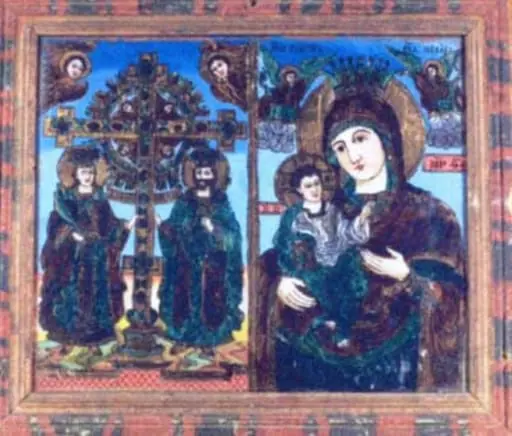 Sfinții Constantin și Elena; Maica cu Pruncul
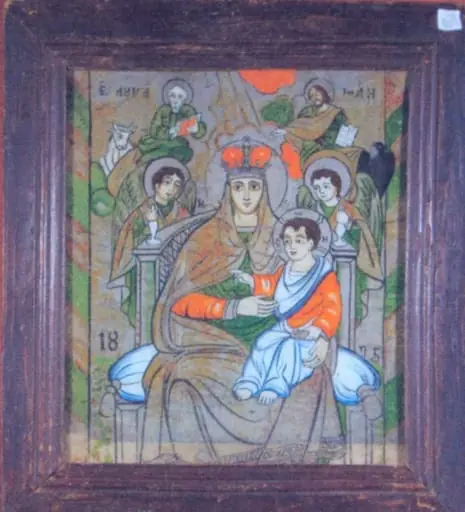 Maica Domnului cu Pruncul