Artwork
Sfânta Treime (Sfânta Troiță, Filoxenia, Cina de la Mamvri)
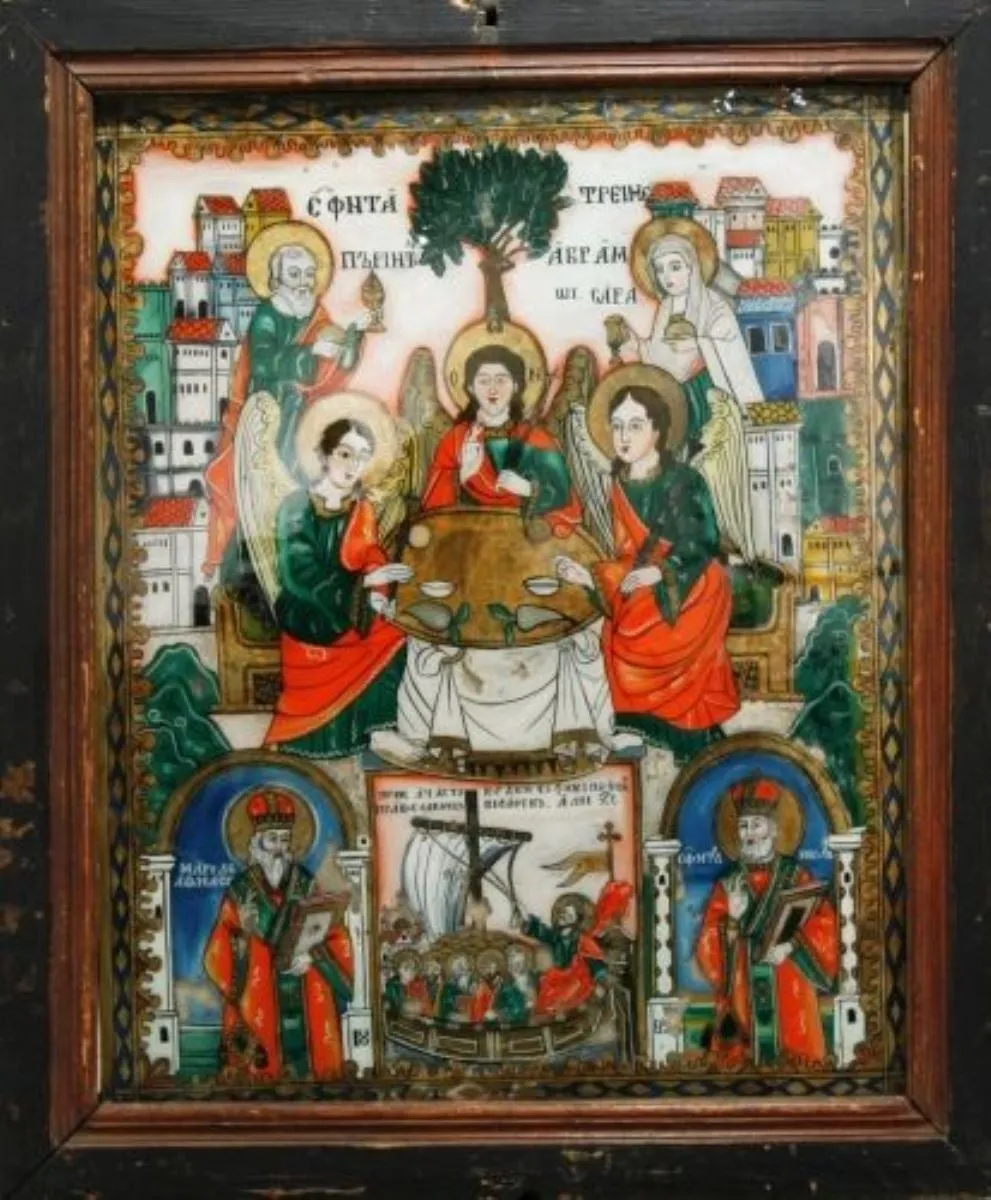
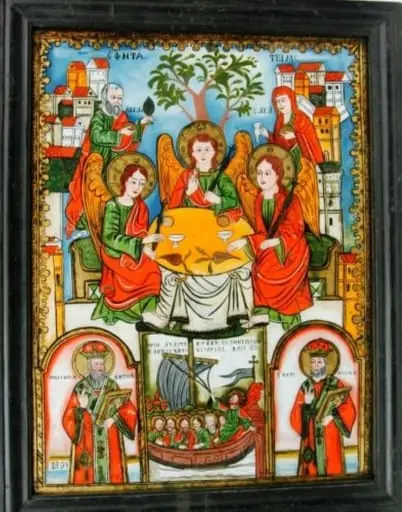
Sfânta Treime (Sfânta Troiță, Filoxenia, Cina de la Mamvri) is a drawing by the Impressionist artist Unknown. It dates from 1882 and is held in the collection of the Romanian Peasant Museum.
About this work
Overview
The work titled Sfânta Treime, also known as Sfânta Troiță, Filoxenia, or Cina de la Mamvri, presents a religious tableau rendered in vivid hues. Central to the composition is a figure surrounded by attendants, all clothed in elaborate garments. A warm golden backdrop underlies the scene, contributing to a sense of spatial depth.
Subject & Meaning
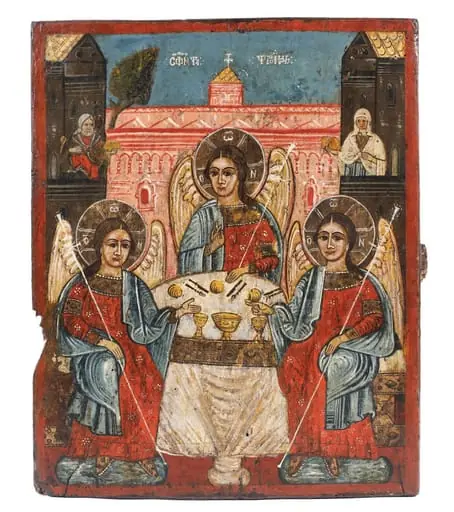
The painting depicts a sacred gathering, likely referencing the Holy Trinity, as suggested by its titles. The central figure, possibly Christ or a divine personage, is encircled by figures whose ornate attire underscores the ritual significance of the moment, evoking themes of reverence and communal worship.
Technique & Style
Executed with a palette of bold reds, blues, and greens, the image balances rich coloration with nuanced light effects. The handling of light and shadow reflects a synthesis of Impressionist attention to atmospheric change and Realist fidelity to detail, particularly evident in the intricate patterns of the robes.
Context
While specific provenance is not provided, the multiple titles indicate the work’s association with Eastern Orthodox iconography and liturgical contexts. The use of a golden background aligns with traditional icon panels, situating the piece within a lineage of devotional art that merges Western painterly influences with Eastern symbolic conventions.
Artist & collection

 Domestic Scene
 Giacomo and Cardinal Marco, investing Andrea, Abbot of San Zeno, with his Benefice
 The Nymph of Fontainebleau
 Portrait of a Woman
 Madonna and Child with Saints in the Enclosed Garden
 Venus and Minerva
 Family Group of Four on Sofa
 Wall painting from Room H of the Villa of P. Fannius Synistor at Boscoreale