Artwork
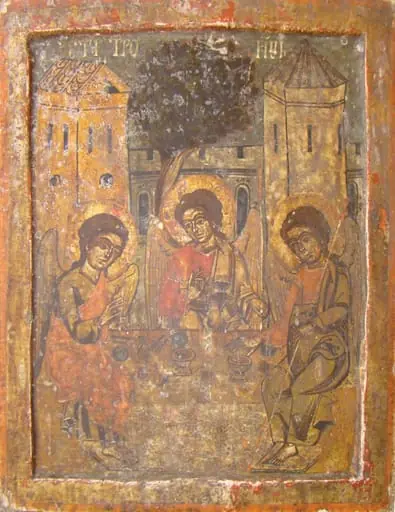
Sfânta Treime; Sfânta Troiță, Filoxenia, Cina de la Mamvri
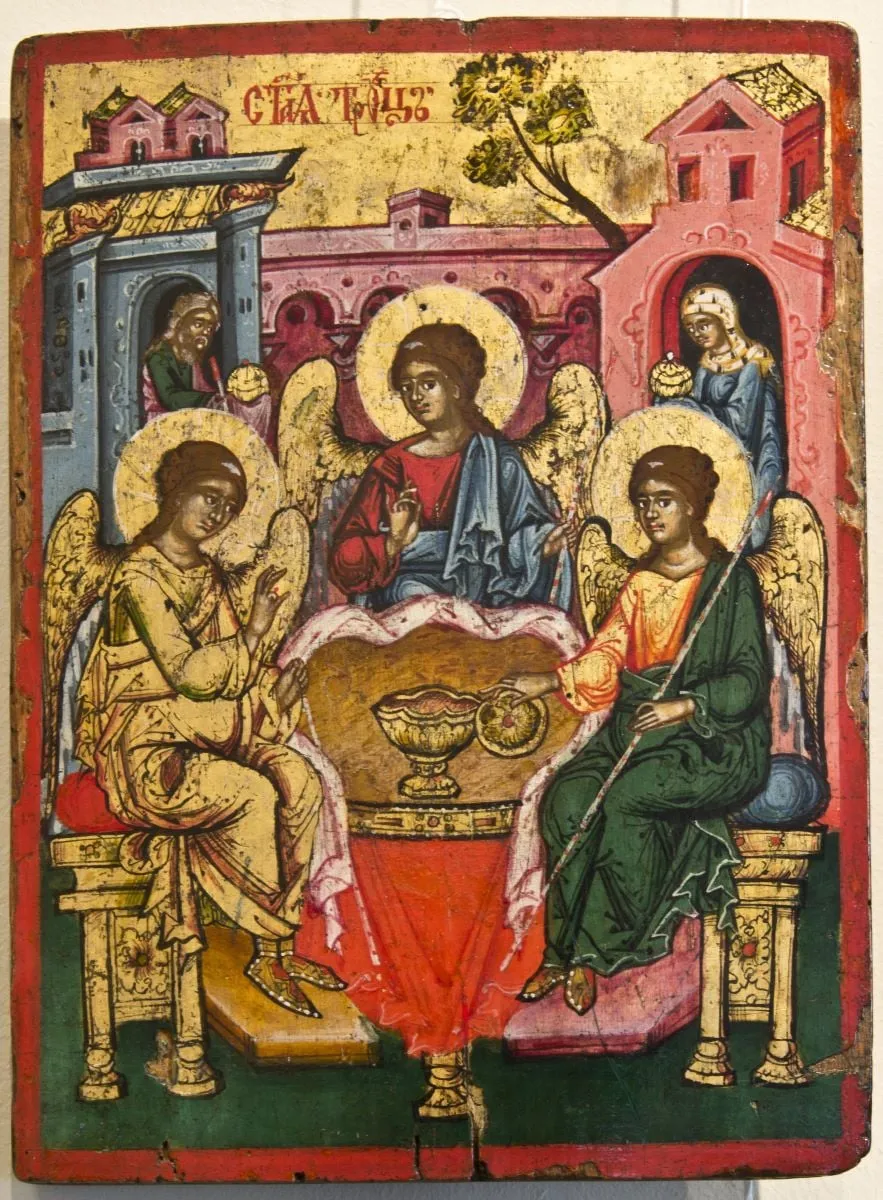
Sfânta Treime; Sfânta Troiță, Filoxenia, Cina de la Mamvri is a drawing by Unknown. It dates from 1850 and is held in the collection of the National Museum of Art of Romania. The composition presents four winged figures gathered on a richly draped red cloth.
About this work
Overview
Behind them, two women are positioned in doorways, while a row of buildings with red tiled roofs and gold trim completes the background.
The composition presents four winged figures gathered on a richly draped red cloth. At the centre sits a figure in a blue garment, crowned with a golden halo and holding a circular object. Flanking this central presence are two kneeling angels, one clad in gold, the other in green, each also bearing a halo. Behind them, two women are positioned in doorways, while a row of buildings with red tiled roofs and gold trim completes the background.
Subject & Meaning
The central, haloed figure is rendered as a saint, likely representing the Holy Trinity, suggested by the title’s reference to the "Sfânta Treime" (Holy Trinity). The accompanying angels reinforce the sacred atmosphere, while the two women in the doorway may symbolize earthly witnesses or patrons. The inclusion of a tree in the upper right introduces a natural element that balances the otherwise formal, hierarchical arrangement.
Technique & Style
The work employs a gold‑leaf background that illuminates the halos and emphasizes the divine status of the figures. The use of vivid reds, blues, gold, and green creates a striking chromatic contrast, while the detailed rendering of fabrics and architectural elements reflects a Byzantine‑influenced iconographic tradition. The figures’ wings and halos are stylized rather than naturalistic, underscoring their spiritual rather than corporeal nature.
Context
The painting’s title combines several Romanian religious terms—"Sfânta Treime," "Sfânta Troiță," "Filoxenia," and "Cina de la Mamvri"—linking it to liturgical themes such as the Holy Trinity, the Holy Cross, hospitality, and the Last Supper. Such titles suggest the work was intended for a church setting or a devotional space, aligning with Eastern Orthodox visual conventions prevalent in the region during the period of its creation.
Artist & collection

 Domestic Scene
 Giacomo and Cardinal Marco, investing Andrea, Abbot of San Zeno, with his Benefice
 The Nymph of Fontainebleau
 Portrait of a Woman
 Madonna and Child with Saints in the Enclosed Garden
 Venus and Minerva
 Family Group of Four on Sofa
 Wall painting from Room H of the Villa of P. Fannius Synistor at Boscoreale
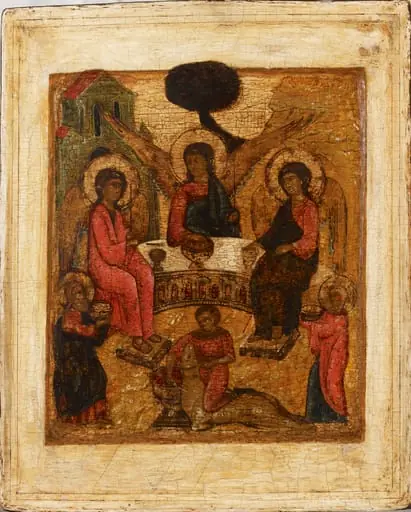 Pyhä Kolminaisuus, venäläinen ikoni
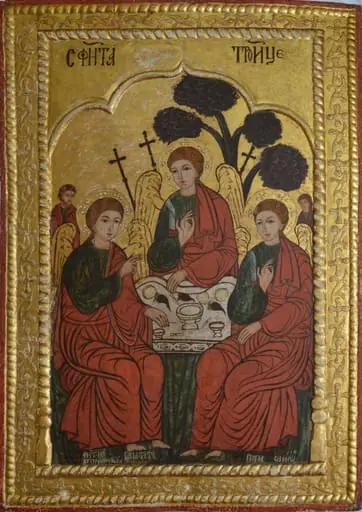 Cina de la Mamvri
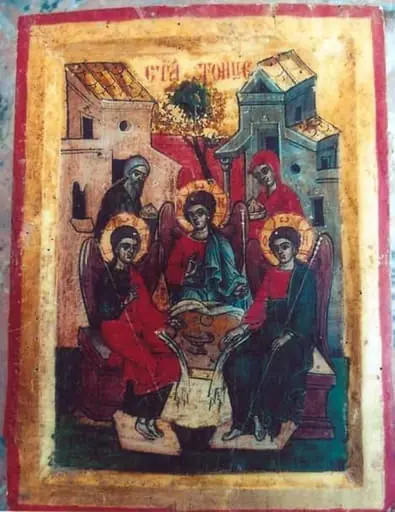 Sfânta Treime, patriarhul Avraam și Sara
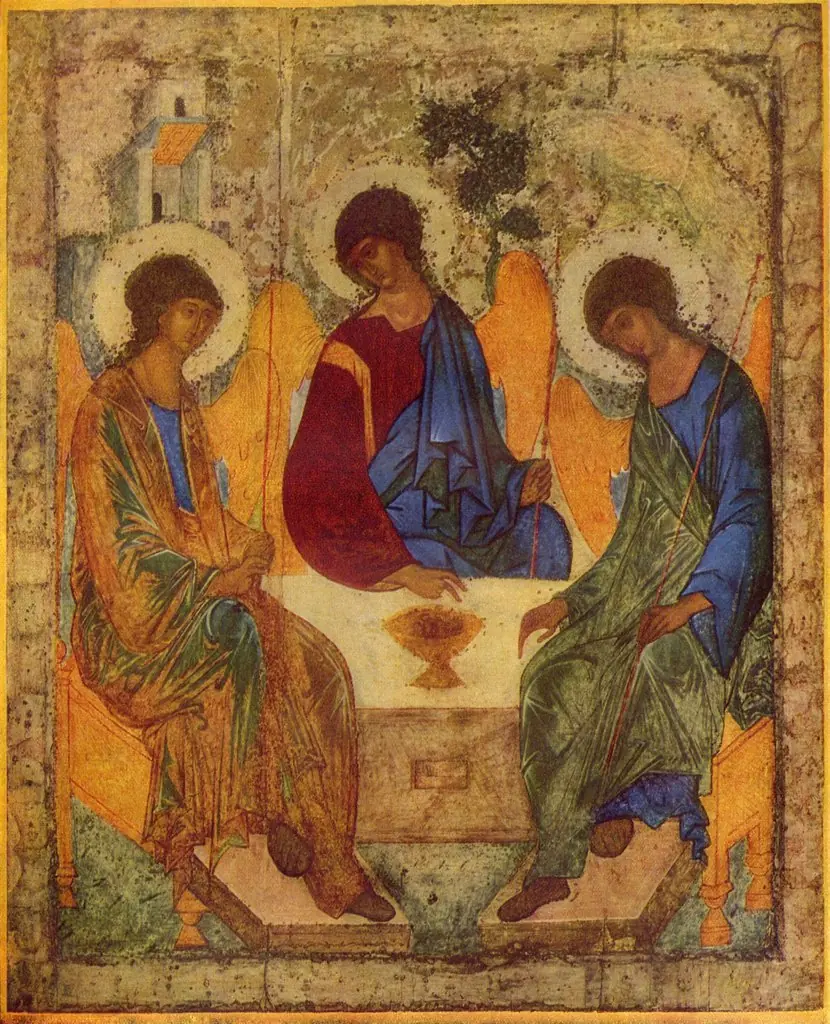 Hospitality of Abraham
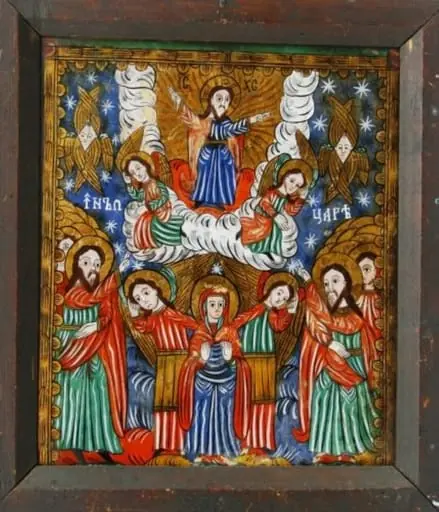 Înălțarea lui Iisus Hristos la ceruri
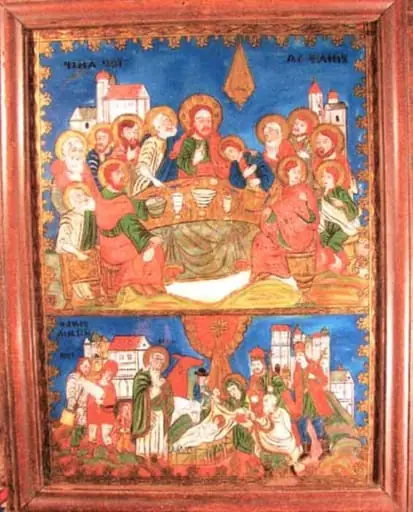 Cina cea de Taină și Nașterea lui Iisus
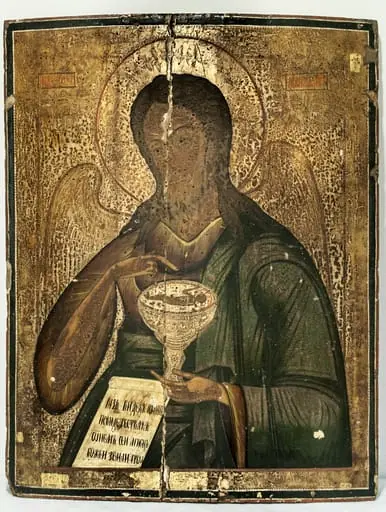 Sântul Ioan3/4 în centrul spațiului pictural, cu capul ușor înclinat, părul desfăcut, căzând în șuvițe pe umeri. Înveșmântat cu himation verde peste blana de cămilă. În mâna stângă ține un potir cu trupul lui Iisus, pregătit pentru momentul euharistic, degetul arătător al mâinii drepte arătând către trupul Domului Iisus Hristos, care se va jertfi spre iertarea păcatelor omenirii. Aripile sunt simbol al curățeniei Acest tip de reprezentare iconografică a început să aibă o mare popularitate în Rusia între secolele XVI - XVII. Pe rotulusul desfășurat în mâna stângă: „Iată eu îl trimit pe îngerul meu în fața ta, cel care pregătește drumul spre mântuirea ta” (Luca ). De aici pornește reprezentarea iconografică a sfântului cu aripi ca înger al pustiului, fie cu rotulus scris cu această inscripție, fie cu propriul cap sângerând pe tipsie, vestind jertfa Domnului. Reprezentarea de față a potirului cu trupul lui Iisus Hristos, este frecventă la mijlocul secolului XIX. Cromatica: tonuri de brun, verde, negru, auriu, alb-gălbui, inscripții- roșu, în casete dreptunghiulare. Fondul - foița de aur, chenar cu motive fitomorfe incizate.
 Cina de la Mamvri