Artwork
Cina de la Mamvri
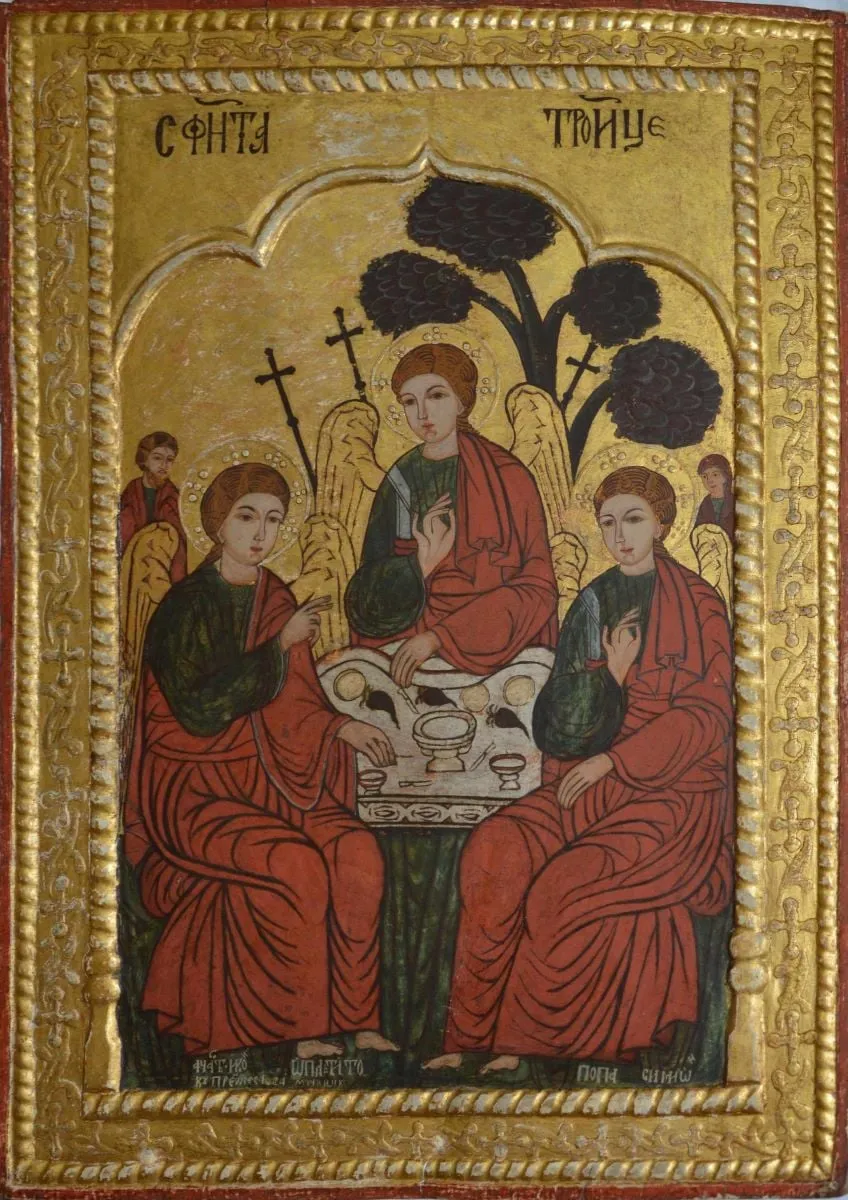
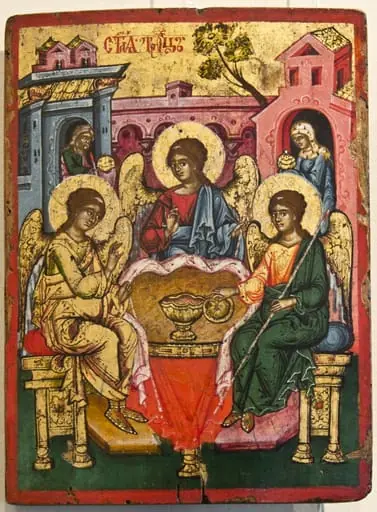
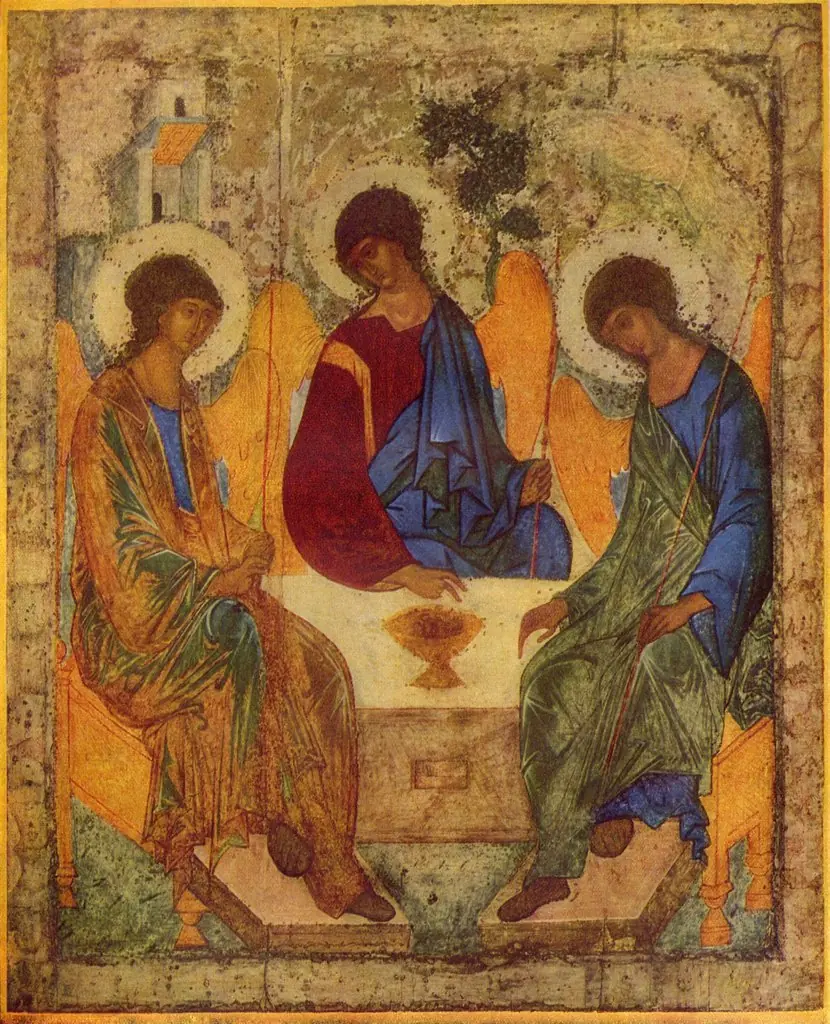
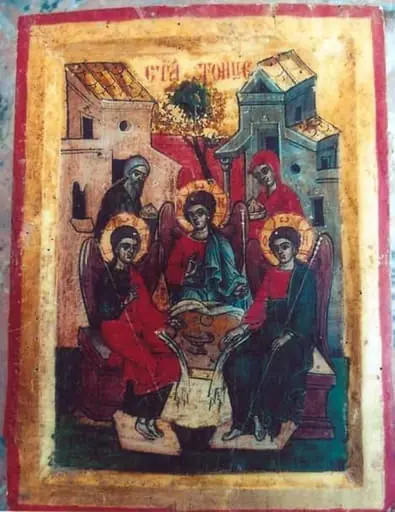
Cina de la Mamvri is a drawing by Gheorghe Tobias din Abrud. It is held in the collection of the Alba Iulia Orthodox Archdiocese. This panel painting depicts a religious scene with three central figures seated at a table beneath a golden background.
About this work
Overview
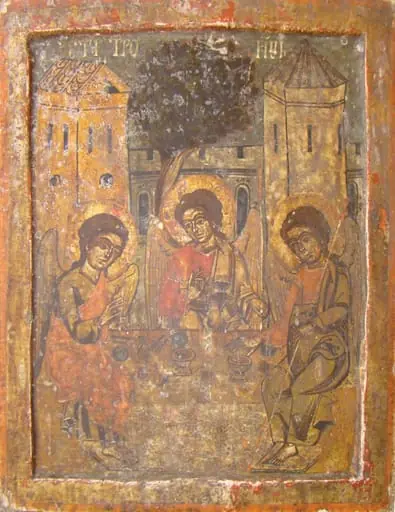
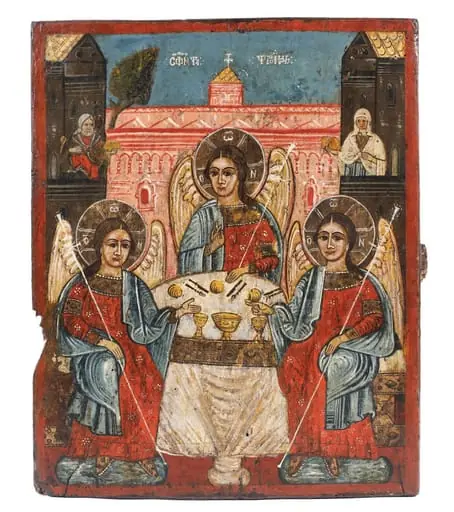
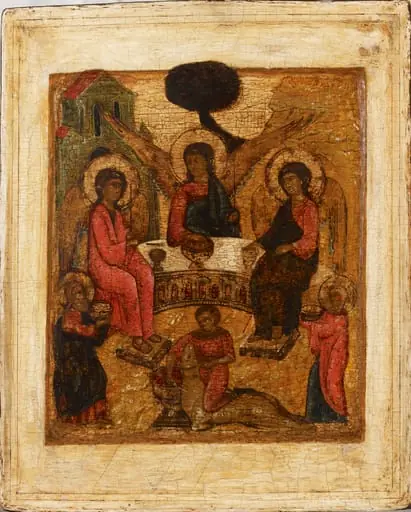
This panel painting depicts a religious scene with three central figures seated at a table beneath a golden background.
This panel painting depicts a religious scene with three central figures seated at a table beneath a golden background. Two smaller figures stand behind them, holding crosses, while a dark-leaved tree rises in the distance. The inscription above reads 'Holy Trinity' in Church Slavonic, identifying the subject as a theological representation. The composition emphasizes symmetry and stillness, typical of devotional imagery from the Eastern Orthodox tradition.
Subject & Meaning
The three seated figures represent the Holy Trinity, a core doctrine in Christian theology. The central figure, distinguished by a green robe and red undergarment, holds a circular object likely symbolizing the Eucharist or the world. The flanking figures, dressed identically in red, may signify divine unity. The crosses held by the background figures and the tree suggest earthly witness and the Tree of Life, reinforcing the spiritual narrative of divine presence and revelation.
Technique & Style
The painting employs a flat, hierarchical composition typical of medieval iconography. Gold leaf backgrounds denote sacred space, while figures are rendered with minimal modeling and elongated proportions. Clothing is outlined in bold lines, and color symbolism—green for divinity, red for sacrifice—is used deliberately. The lack of perspective and the static poses reflect liturgical conventions prioritizing spiritual meaning over naturalism.
History & Provenance
The work originates from a Slavic Orthodox context, likely created in the late medieval or early Renaissance period. Its language and iconography align with traditions from regions such as Russia, Ukraine, or the Balkans. While its exact origin and early ownership are undocumented, its preservation suggests it was venerated in a church or private chapel, possibly as part of an iconostasis or devotional set.
Context
This image reflects the liturgical and theological priorities of Eastern Christianity, where icons served as windows to the divine. The Trinity was rarely depicted directly due to doctrinal caution, making such representations rare and significant. The inclusion of the tree and crosses grounds the mystery of the Trinity in the natural world, aligning with monastic interpretations that saw creation as a reflection of divine order.
Legacy
Though not widely known outside regional Orthodox circles, this work exemplifies the enduring visual language of Byzantine-inspired icon painting. Its formal structure influenced later religious art in Slavic communities, preserving a mode of spiritual expression that emphasized contemplation over narrative drama. It remains a quiet testament to the role of imagery in sustaining theological thought across centuries.
Artist & collection
Artist
Gheorghe Tobias din Abrud was a Transylvanian monk who doodled saints in the margins of his prayer books.