Artwork
Maica Domnului cu Pruncul
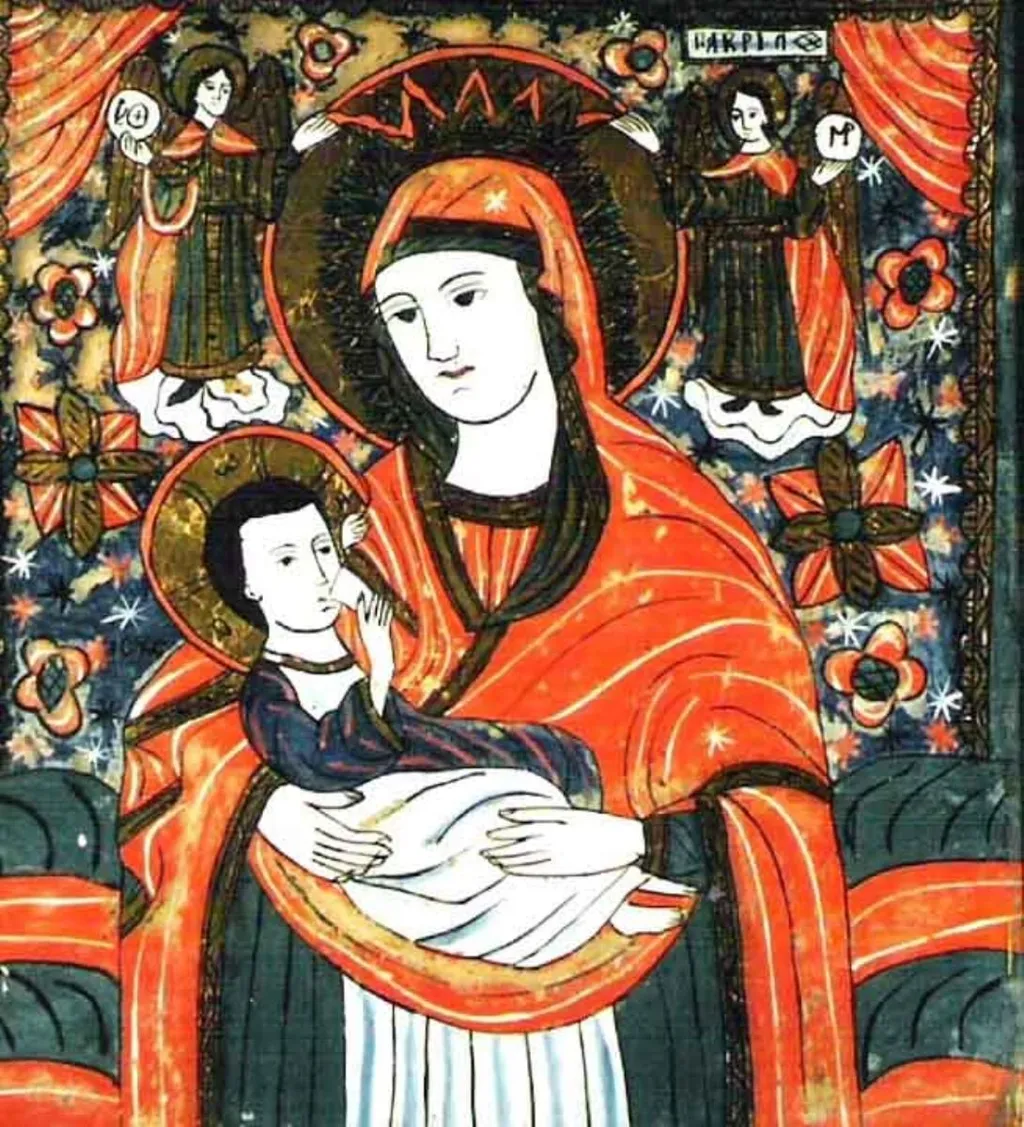
Maica Domnului cu Pruncul is a drawing by Unknown. It dates from 1850 and is held in the collection of the "Dimitrie Gusti" National Village Museum. This devotional image depicts the Virgin Mary seated with the infant Jesus on her lap.
About this work
Overview
Surrounding them are angels in flight, some holding blossoms and musical instruments, creating a quiet, celestial atmosphere.
This devotional image depicts the Virgin Mary seated with the infant Jesus on her lap. Both figures are crowned with golden halos, signaling their sacred status. Surrounding them are angels in flight, some holding blossoms and musical instruments, creating a quiet, celestial atmosphere. The composition is centered and symmetrical, emphasizing stillness and reverence. The background is dark, allowing the vivid reds and golds of the figures to dominate visually.
Subject & Meaning
The Virgin and Child represent the theological concept of the Theotokos—Mary as the Mother of God. Her calm expression and tender grip on Jesus convey both maternal tenderness and spiritual authority. The angels, offering flowers and music, symbolize heavenly praise and the divine nature of the child. The imagery reflects a tradition of Marian veneration, inviting contemplation rather than emotional display.
Technique & Style
The painting employs flat, decorative forms with minimal modeling, typical of Byzantine-influenced iconography. Rich pigments—especially vermilion and gold leaf—are applied boldly against a dark ground to enhance luminosity. Facial features are simplified, with restrained lines and no perspective, prioritizing spiritual presence over naturalism. The angels’ wings and drapery suggest movement through rhythmic outlines rather than shading.
History & Provenance
This work belongs to a tradition of Eastern Orthodox icons produced in the late medieval period, likely in the Balkans or Anatolia. Its style aligns with regional workshops that preserved Byzantine conventions after the fall of Constantinople. Though its exact origin is undocumented, similar icons were used in private devotion or church altars, passed down through generations of faithful communities.
Context
In the 14th to 16th centuries, such images served as focal points for prayer and liturgical memory. The use of gold halos, celestial attendants, and symbolic colors followed established theological codes. Unlike Western Renaissance developments, this tradition resisted naturalistic perspective, favoring timeless, hieratic forms to express divine presence beyond earthly realism.
Legacy
This icon continues to influence religious art in Orthodox communities, where its visual language remains unchanged for centuries. It also informs modern studies of medieval aesthetics, offering insight into how spiritual ideals were encoded in color, posture, and composition. Its enduring presence in collections underscores the persistence of devotional imagery beyond stylistic revolutions.
Artist & collection
Museum
"Dimitrie Gusti" National Village Museum
Continue through works from the same source collection.
 Domestic Scene
 Giacomo and Cardinal Marco, investing Andrea, Abbot of San Zeno, with his Benefice
 The Nymph of Fontainebleau
 Portrait of a Woman
 Madonna and Child with Saints in the Enclosed Garden
 Venus and Minerva
 Family Group of Four on Sofa
 Wall painting from Room H of the Villa of P. Fannius Synistor at Boscoreale
 Maica cu Pruncul-Axionița
 Maica Domnului cu Pruncul
 Maica Domnului cu Pruncul Hodighitria
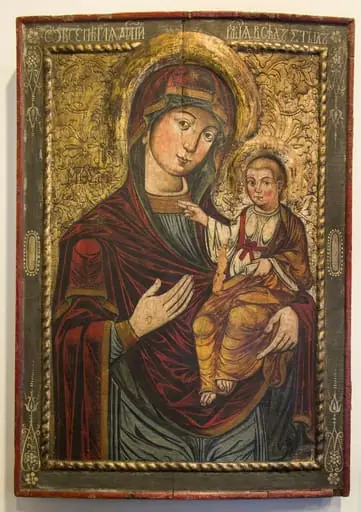 Maica Domnului cu pruncul; Icoană de catapeteasmă; Icoană împărătească
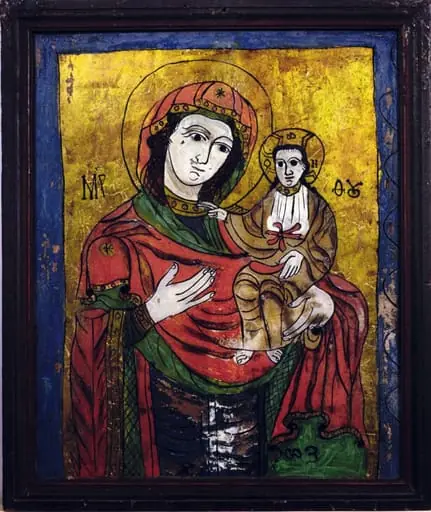 Maica Domnului cu Pruncul
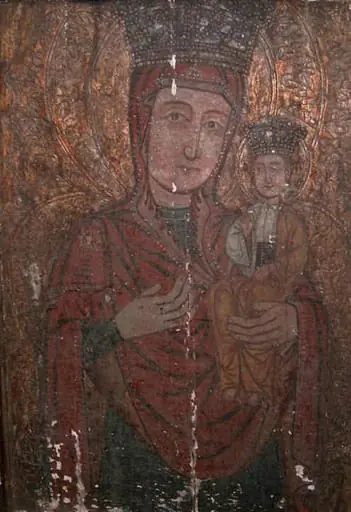 Madona cu Pruncul
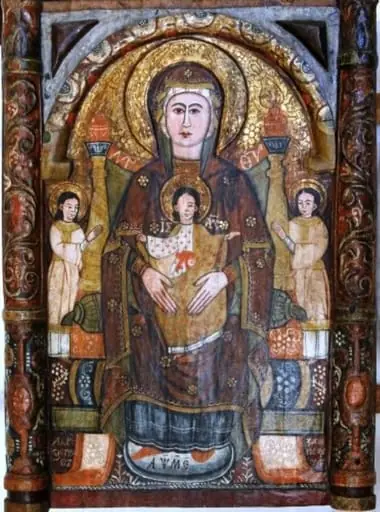 Maica Domnului cu Pruncul
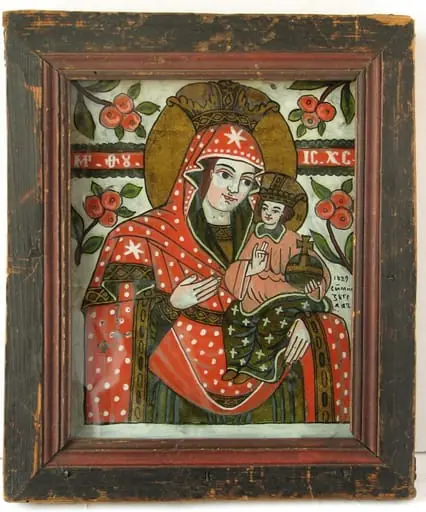 Maica Domnului cu Pruncul Iisus Hristos în brațe
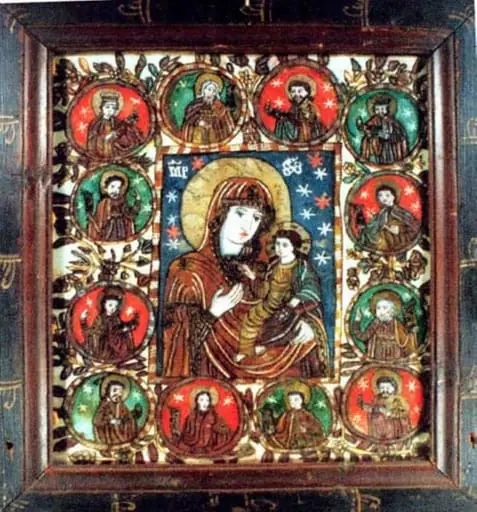 Maica cu Pruncul cu Apostolii
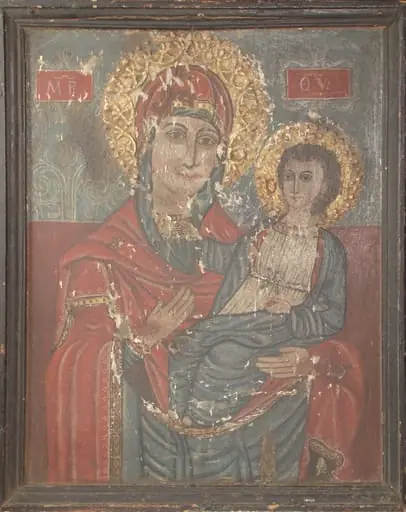 Maica Domnului cu Pruncul
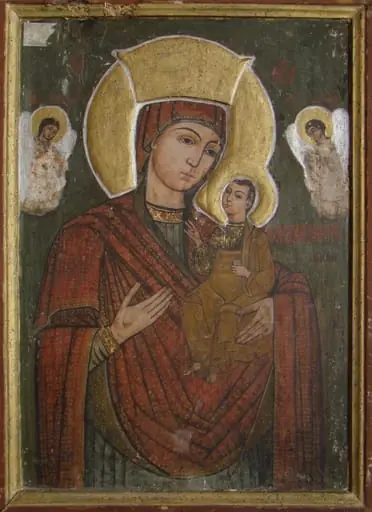 Maica Domnului cu Pruncul