Artwork
Sfinții Împărați Constantin și Elena
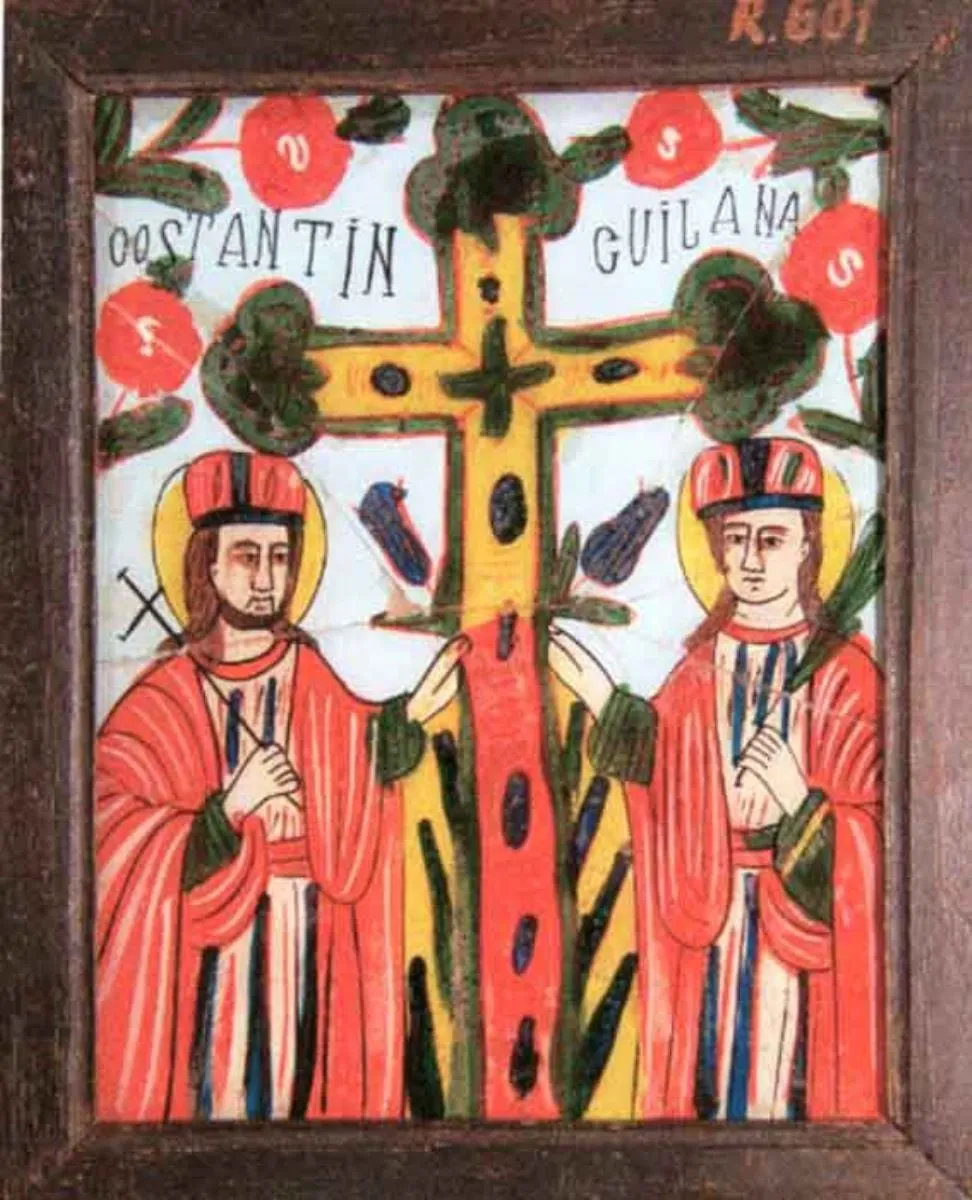
Sfinții Împărați Constantin și Elena is a drawing by Unknown. It dates from 1850 and is held in the collection of the Romanian Peasant Museum.
About this work
Overview
This devotional panel depicts the Roman emperors Constantine and Helena, rendered in a folk-art tradition common in Eastern European religious imagery.
This devotional panel depicts the Roman emperors Constantine and Helena, rendered in a folk-art tradition common in Eastern European religious imagery. The figures stand symmetrically beside a large central cross, their attire and positioning emphasizing their sacred status. The composition avoids naturalism, favoring flat planes of color and clear outlines, typical of regional ecclesiastical crafts. The white background and sparse floral motifs create a quiet, reverent space.
Subject & Meaning
Constantine and Helena are venerated as Christian imperial saints, credited with the discovery of the True Cross and the promotion of Christianity in the Roman Empire. Their paired presence here signifies divine authority and imperial piety. The cross, central and prominent, represents the core of their legacy. The inscriptions 'OOSTANTIN' and 'GUILANA' reflect localized spelling, suggesting a vernacular tradition of veneration outside formal ecclesiastical texts.
Technique & Style
Painted with bold, unmodulated colors and simplified forms, the work reflects a folk aesthetic rooted in local artisan practices. Figures lack anatomical detail, instead defined by strong contours and symbolic garments. The cross features minimal ornamentation—green accents and black spots—while the background is left largely empty, with scattered leaves and flowers adding subtle ritual symbolism. The style prioritizes clarity and devotional impact over realism.
History & Provenance
The painting resides in the Museum of Ethnography, indicating its origin as a popular religious object rather than a commissioned ecclesiastical work. Its preservation suggests it was used in domestic or community worship, possibly in rural areas of Eastern Europe. The spelling variations and stylistic choices point to transmission through oral and visual tradition, rather than formal artistic training.
Context
In regions where literacy was limited, visual icons served as primary tools for religious instruction and devotion. This painting aligns with a broader tradition of folk Christian art that adapted imperial saints into accessible, locally understood forms. Its presence in an ethnographic collection underscores its role as a cultural artifact, reflecting how religious narratives were localized and sustained outside institutional frameworks.
Legacy
Though not produced by a known artist, the painting endures as evidence of grassroots religious expression. Its preservation in a museum highlights the value placed on vernacular piety within cultural heritage. The work continues to illustrate how sacred imagery, stripped of academic refinement, could still convey deep spiritual meaning through simplicity, repetition, and symbolic clarity.
Artist & collection

 Domestic Scene
 Giacomo and Cardinal Marco, investing Andrea, Abbot of San Zeno, with his Benefice
 The Nymph of Fontainebleau
 Portrait of a Woman
 Madonna and Child with Saints in the Enclosed Garden
 Venus and Minerva
 Family Group of Four on Sofa
 Wall painting from Room H of the Villa of P. Fannius Synistor at Boscoreale
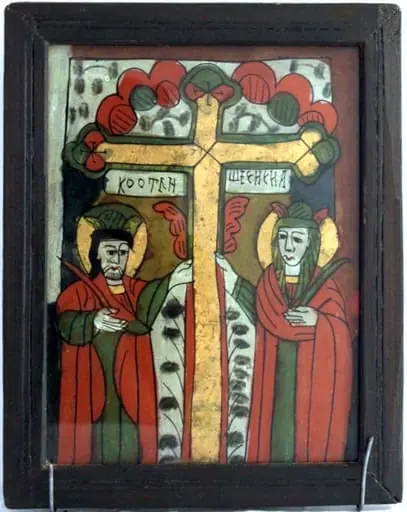 Sf. Constantin și Elena
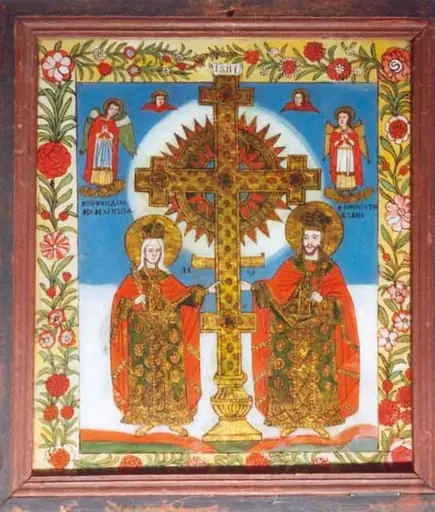 Sfinții Constantin și Elena
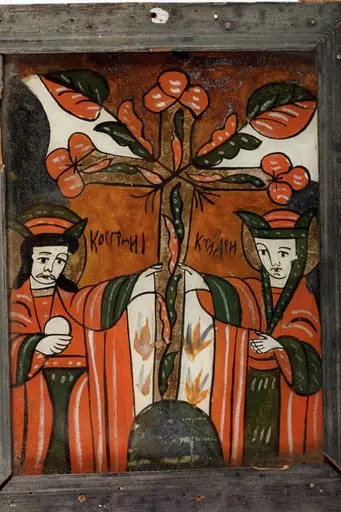 Icoană pictată pe sticlă reprezentând pe Sf. Constantin și Elena sub brațele unei cruci. Culori: roșu, verde, cafeniu, alb, bronz. Icoana este înrămată.
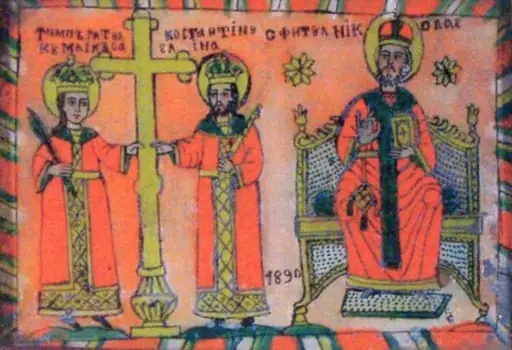 Sfinții Împărați Constantin și Elena, Sfântul Nicolae
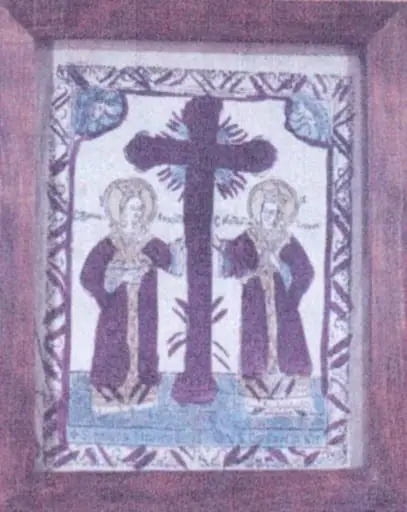 Sfinții Constantin și Elena
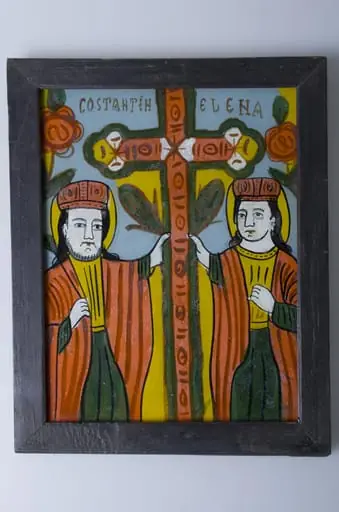 Icoana este pictată pe sticlă, cu reprezentarea Sfinților Împărați Constantin și Elena, îmbrăcați în veșminte împărătești, redați de o parte și de cealaltă a crucii. Deasupra Sfinților este înscris textul: „Constantin
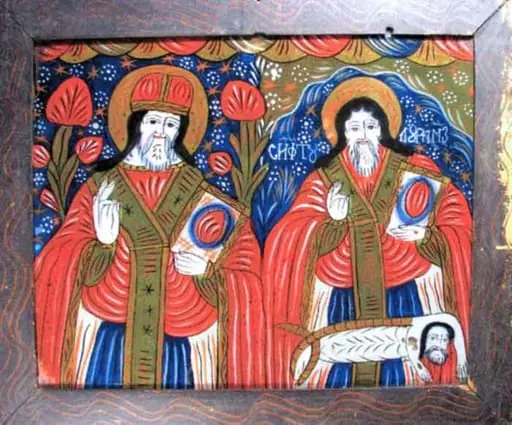 Sfinții Nicolae și Haralambie
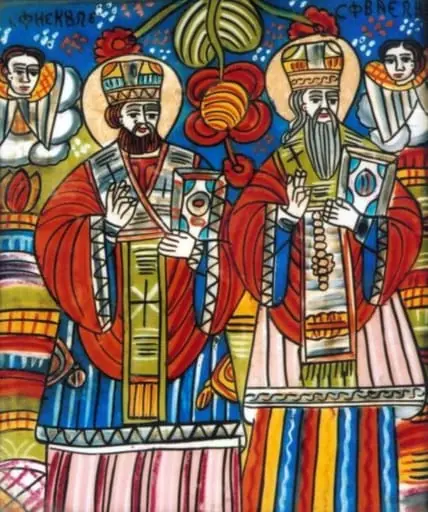 Sfinții Nicolae și Vasile
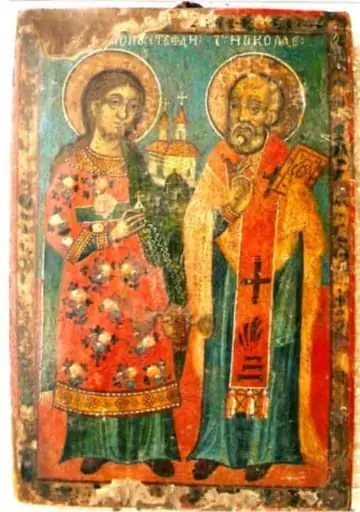 Sfântul Arhidiacon Ștefan și Sfântul Ierarh Nicolae
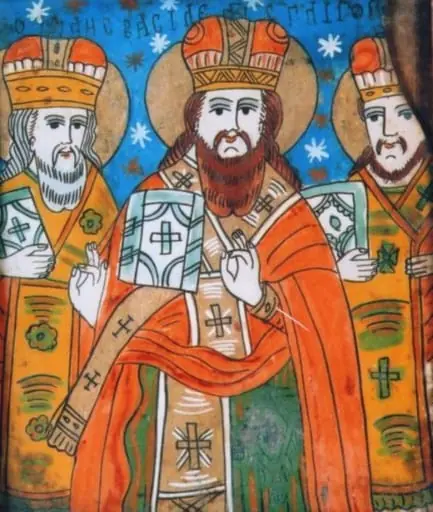 Sfinții Ioan, Vasile și Grigore