Artwork
Icoana este pictată pe sticlă, cu reprezentarea Sfinților Împărați Constantin și Elena, îmbrăcați în veșminte împărătești, redați de o parte și de cealaltă a crucii. Deasupra Sfinților este înscris textul: „Constantin
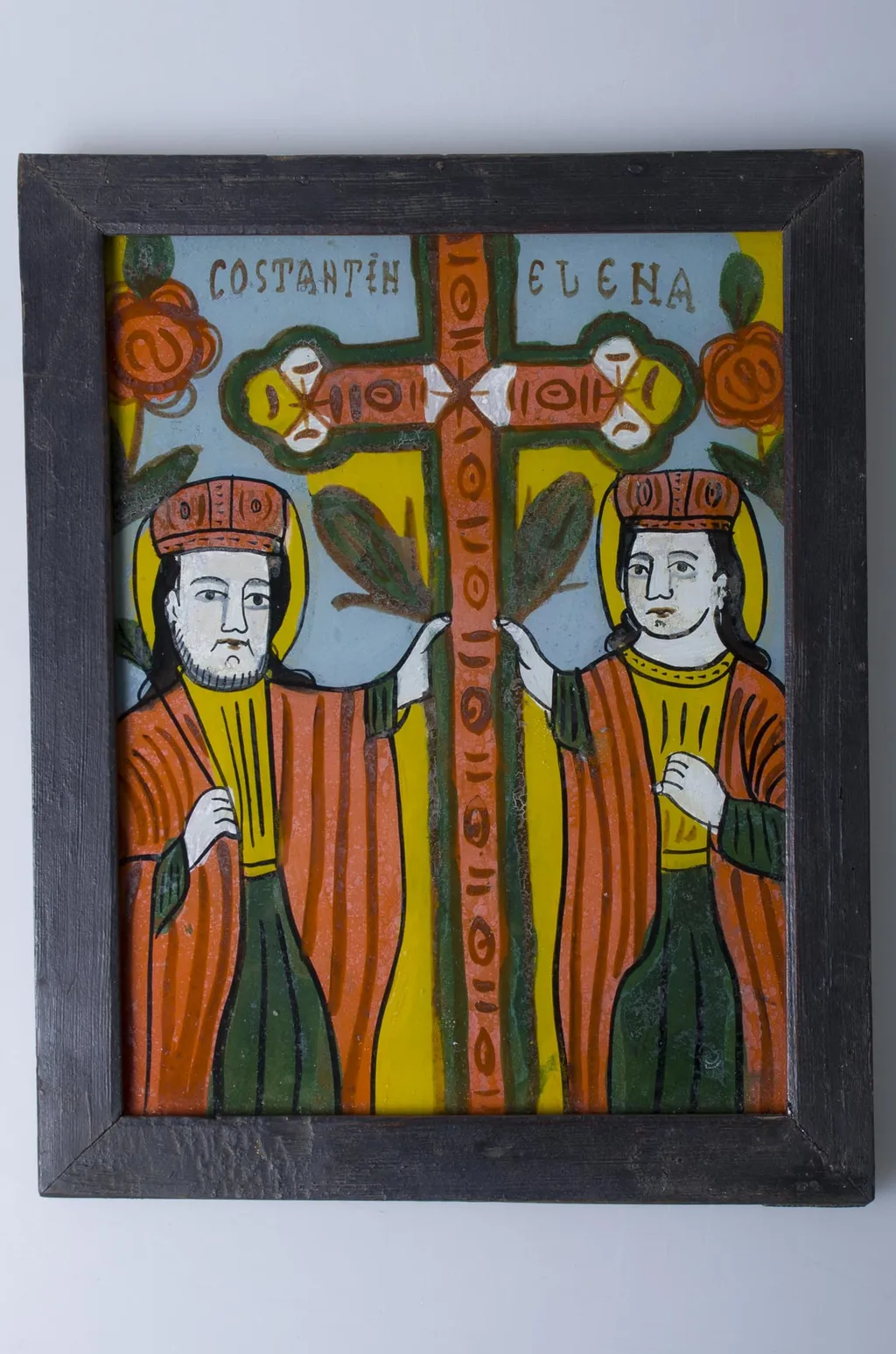
Icoana este pictată pe sticlă, cu reprezentarea Sfinților Împărați Constantin și Elena, îmbrăcați în veșminte împărătești, redați de o parte și de cealaltă a crucii. Deasupra Sfinților este înscris textul: „Constantin is a drawing by Unknown. It dates from 1850 and is held in the collection of the ASTRA National Museum Complex. This icon is painted on glass, depicting Emperor Constantine and Empress Helena standing symmetrically on either side of a cross.
About this work
Overview
The palette includes red, yellow, green, white, black, and blue, applied with bold clarity typical of Eastern Orthodox devotional art.
This icon is painted on glass, depicting Emperor Constantine and Empress Helena standing symmetrically on either side of a cross. Their royal garments and inscribed names emphasize their imperial and saintly status. Floral motifs frame the cross, while a blue sky with red blossoms forms the background. The palette includes red, yellow, green, white, black, and blue, applied with bold clarity typical of Eastern Orthodox devotional art.
Subject & Meaning
Constantine and Helena, revered as saintly rulers in Eastern Christianity, are shown flanking the cross to signify their role in the Christianization of the Roman Empire. Constantine, credited with legalizing Christianity, and Helena, known for her pilgrimage to Jerusalem and discovery of the True Cross, are presented not as historical figures but as eternal intercessors. Their posture and regalia reinforce their dual identity as both monarchs and holy patrons.
Technique & Style
The image is executed in tempera or enamel on glass, a technique common in Byzantine and post-Byzantine traditions. Colors are applied in flat, opaque layers with minimal shading, enhancing symbolic clarity. The outlines are sharp, and the composition is rigidly symmetrical, prioritizing spiritual order over naturalism. The floral borders and sky elements are rendered with decorative precision, reflecting liturgical aesthetics rather than landscape realism.
History & Provenance
Glass icons of this type were produced primarily in the Balkans and Romania between the 17th and 19th centuries, often for private chapels or church altars. The use of wood slats to secure the glass to its frame suggests local craftsmanship. While the exact origin of this piece is undocumented, its iconography aligns with devotional practices in Orthodox communities where imperial saints were venerated for their role in establishing Christian institutions.
Context
The depiction of Constantine and Helena alongside the cross reflects a broader tradition in Orthodox iconography that links imperial authority with divine favor. Such icons were not merely decorative but served as focal points for prayer and remembrance. Their presence on glass—more durable than wood—indicates a desire for longevity and protection, particularly in domestic or portable religious settings where resilience mattered.
Legacy
This icon exemplifies a regional adaptation of Byzantine models, preserving doctrinal themes through accessible visual language. Though less studied than panel icons, glass icons like this one played a vital role in sustaining Orthodox piety in rural and domestic contexts. Their survival offers insight into the continuity of devotional practices and the material culture of faith in Eastern Europe during the early modern period.
Artist & collection

 Domestic Scene
 Giacomo and Cardinal Marco, investing Andrea, Abbot of San Zeno, with his Benefice
 The Nymph of Fontainebleau
 Portrait of a Woman
 Madonna and Child with Saints in the Enclosed Garden
 Venus and Minerva
 Family Group of Four on Sofa
 Wall painting from Room H of the Villa of P. Fannius Synistor at Boscoreale
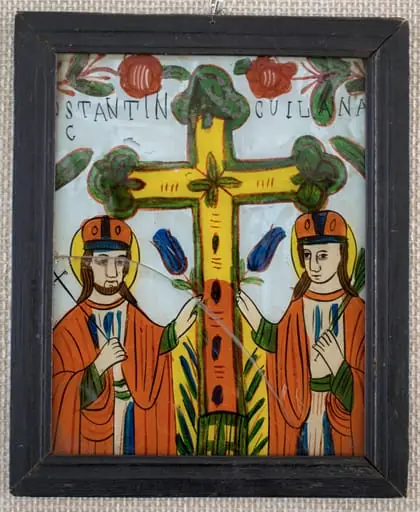 Icoana este pictată "în oglindă", pe un suport de sticlă de formă dreptunghiulară în ax vertical.Compoziția îi reprezintă pe Sfinții Împărați Constantin și Elena 3/4, în picioare, din ușor semiprofil, sub brațele crucii pe care o susțin, crucea pe care a fost răstignit Isus, găsită de Împărăteasa Elena la Ierusalim. Amândoi au plete castanii, lăsate pe umeri, coroane sub formă de tocă, veșminte identice(cămașă albă cu vrâste verzi, și mantii roșii). Sf. Constantin ține în mâna liberă o cruce, mama sa o ramură verde. Fețele diforme, ochii negri cu umbre gri. Crucea, axul de simetrie al compoziției, pictată multicolor, are brațele trilobate . Câmp alb, cu excepția zonei ocru de la baza crucii. Chenar din tulpini de ruje roșii, dispus pe cadrul rectangular. Icoana este caracteristică fazei târzii a picturii din zona Nicula-Gherla, caracterizată prin aglomerarea compoziției cu elemente florale și decorative, fețele diforme, câmpul bicolor, lipsa foiței, calitatea mai prostă a materialelor. Paleta cromatică este totuși armonioasă.Suportul pictural crăpat.. Rama profilată, din lemn de brad, pictată cu negru și încheiată oblic; Pictura ușor exfoliată;Dosul - placaj.
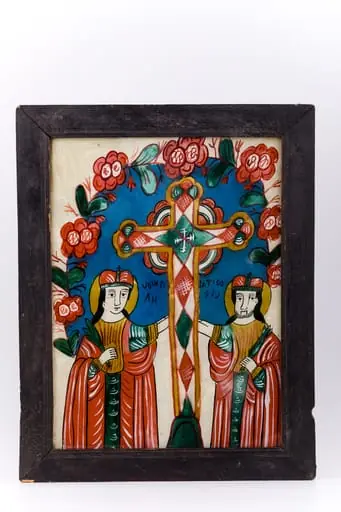 În centrul icoanei este Crucea, iar în dreapta crucii este Sfânta Împărăteasă Elena, și în stânga este Împăratul Constantin. Veșmintele sfinților împărați sunt pictate cu roșu vermillon și ocru-muștar și mânecile și epitrahile-patrafire vernil-gri. Poartă coroane împărătești și aureole de sfinți, mantiiile de împărați le au prinse la gât cu fibulă. Crucea este alb-crem cu elemente decorative geometrizante romboidale roșii-verzi și are capetele brațelor cu elemente decorative trilobate roșii vermillon-vernil. Fondul este cerul albastru ceruleum-regal foarte senin. Împrejurul Crucii este un spațiu luminos de alb-ivoriu Întreaga compoziție iconografică este încadrată de un chenar decorativ geometrizant alb-luminos și un chenar fitomorf, format dintr-o ghirlandă de 7 ruje - trandafiri și bujori roșii vermillon și 2 boboci de măceș - cu frunze gri-verzui. Cromatica este armonioasă: roșu vermillon-stacojiu-rose, albastru cobalt-regal, ocru-muștar, bronziu, brun, galben-chihlimbar, verde brad, vernil-gri, alb, negru. Inscripția în româno-chirilică se traduce Constantin și Elena. Icoana este din Nordul Transilvaniei, Nicula.
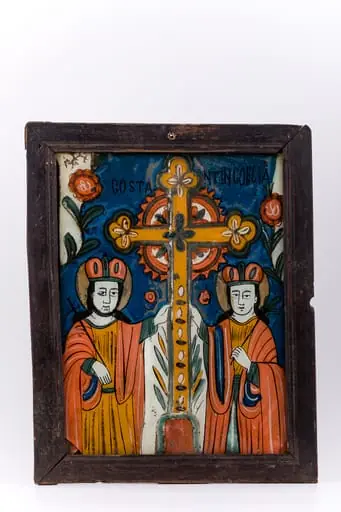 În centrul icoanei este Crucea, iar în stânga crucii este Sfânta Împărăteasă Elena, și în dreapta este Împăratul Constantin. Veșmintele sfinților împărați sunt pictate cu roșu vermillon și gri-antracit și epitrahile-patrafire gri-antracit. Poartă coroane împărătești și aureole de sfinți, mantiiile de împărați le au prinse la gât cu fibulă. Crucea este roșie-vermillon cu gri și are capetele brațelor cu elemente decorative trilobate roșii vermillon-cărămiziu. Fondul este cerul albastru bleu-ciel foarte senin, înspre alburiu. Împrejurul Crucii este un spațiu luminos de galben-chihlimbar. Întreaga compoziție iconografică este încadrată de un chenar decorativ fitomorf, format dintr-o ghirlandă de 7 ruje - trandafiri și bujori roșii vermillon și 2 boboci de măceș - cu frunze gri-verzui. Cromatica este armonioasă: roșu vermillon-cărămiziu, albastru bleu-ciel înspre alburiu, gri-antracit, bronziu, brun, galben-chihlimbar, ocru, alb, negru. Inscripția în româno-chirilică se traduce Constantin și Elena. Icoana este din Nordul Transilvaniei, Nicula.
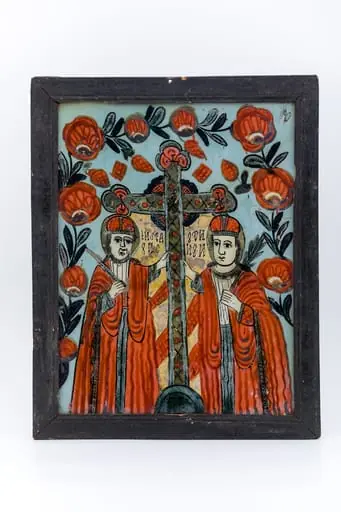 În centrul icoanei este Crucea bronzie, iar în stânga crucii este Sfânta Împărăteasă Elena, și în dreapta este Împăratul Constantin. Veșmintele sfinților împărați sunt pictate cu roșu vermillon și gri-albăstrui. Poartă coroane împărătești și aureole de sfinți, mantiiile de împărați le au prinse la gât cu fibulă. Crucea este bronzie și are capetele brațelor cu elemente decorative trilobate roșii vermillon somon. În spatele Crucii sunt elemente fitomorfe și o cunună de Rusalii. Fondul este cerul albastru bleu-ciel regal senin. Întreaga compoziție iconografică este încadrată de un chenar decorativ fitomorf, format dintr-o bogată ghirlandă de trandafiri-bujori, formată din 9 ruje roșii cu bobocei. În interiorul icoanei este un spațiu galben luminos cu umbre roșii paralele. Cromatica este armonioasă: roșu vermillon-somon, albastru bleu-ciel regal, gri, bej, crem, bronziu, brun, ocru, alb, negru. Inscripția în româno-chirilică se traduce Constantin și Elena. Icoana este din Nordul Transilvaniei, Nicula.
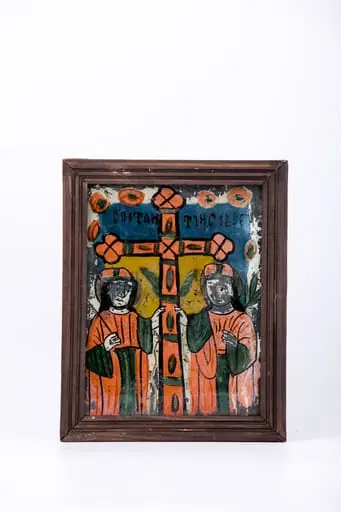 În centrul icoanei este Crucea pictată cu roșu vermillon și ornamentată cu 7 elemente ovoidale gri antracit și brațele au terminații trilobate. În dreapta crucii este Sfântul Împărat Constantin, și în stânga este Împărăteasa Elena, mama sa. Deasupra fiecăruia este inscripționat numele. În spatele Crucii, lipit de cruce, sunt două aripi ca de înger, stilizate sub formă de elemente vegetale. Veșmintele Sfinților Constantin și Elena sunt într-o combinație de roșu vermillon și gri antracit. Spațiul galben de lumină din spatele crucii duce gândul la Crucea de lumină apărută pe cer In hoc signo vinces - prin acest semn vei învinge. Icoana este bogat ornamentată de culoare, lumină și detalii semnificative, elemente decorative geometrizante și fitomorfe. Fondul icoanei este cerul de noapte, albastru ultramarin bleumarin întunecat. Întreaga compoziție este încadrată armonios de un chenar decorativ fitomorf-geometrizant, format din ruje roșii. Cromatica este armonioasă și bogată: roșu vermillon, galben-chihlimbar, albastru ultramarin bleumarin, gri antracit, alb, negru. Icoana este de Nicula. Inscripția din româno-chirilică se traduce Constantin Elena. Icoana este deteriorată, având absențe cromatice.
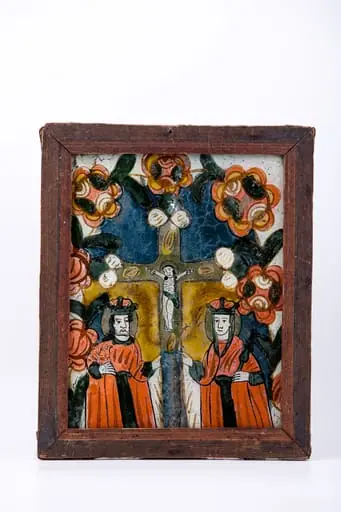 În centrul icoanei este Crucea albastră-galbenă, pe care este Răstignit Mântuitorul Iisus Hristos, iar în dreapta crucii este Sfântul Împărat Constantin și în stânga este Împărăteasa Elena, mama sa. În spatele Crucii este un spațiu galben izvorâtor de lumină. Crucea găsită este susținută cu bucurie de cei doi sfinți. Veșmintele Sfinților Constantin și Elena sunt într-o combinație de roșu vermillon și gri antracit. Spațiul galben de lumină duce gândul la Crucea de lumină apărută pe cer In hoc signo vinces - prin acest semn vei învinge. Icoana este bogat ornamentată de culoare, lumină și detalii semnificative, elemente decorative geometrizante - ovaluri galbene de lumină și brațele crucii au terminații trilobale albe. Fondul icoanei este cerul albastru ceruleum. Întreaga compoziție este încadrată armonios de un chenar fitomorf, format din rujele de Nicula, 7 trandafiri mari roșii cu striații galbene. Cromatica este armonioasă și senină: roșu vermillon, galben-chihlimbar, albastru cerulauml, gri antracit, alb, negru. Icoana este de Nicula. De menționat este că în icoană apare Mântuitorul Iisus Hristos Răstignit pe Crucea, susținută de Sfinții Constantin și Elena.
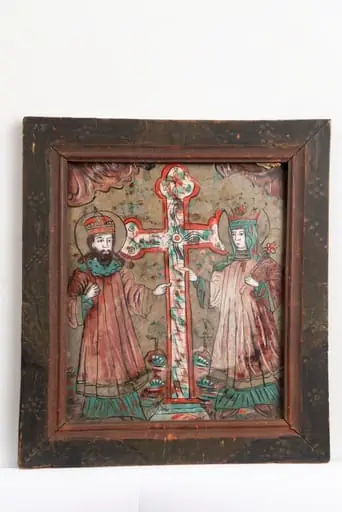 Icoana îi reprezintă pe Sfinții Împărați Constantin și Elena, pictați frontal, în picioare, ținând împreună în mână Crucea Răstignirii, ce domină central compoziția. Împărăteasa Elena ține în mâna stângă o ramură, îar împăratul Constantin are în mâna dreaptă un sceptru. Fondul icoanei e pictat integral doar în partea superioară unde apar în colțuri două ornamente din registrul vegetal, în rest e pictat cu laviuri colorate și decorat cu flori realizate din puncte, fiind vizibil fondul din hârtie argintată. Cromatica icoanei se compune din tonuri de roșu, alb, albastru, maro și gri. Rama icoanei e profilată, bicromă (latura interioară roșie, iar cea exterioară verde, decorată cu motive florale și geometrice) și e formată din îmbinarea a patru baghete de lemn. Sticla are un fragment lipsă, de mici dimensiuni, în partea stângă-sus.
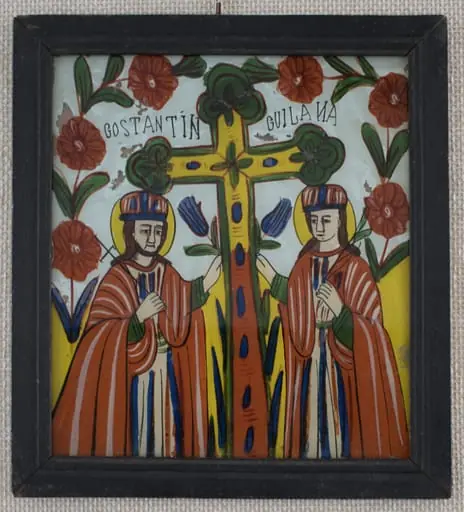 Icoana este pictată pe spatele unei bucăți de sticlă dreptunghiulară, în ax vertical. Compoziția îi reprezintă pe Sfinții Împărați Constantin și Elena, în picioare, din ușor semiprofil, sub brațele crucii pe care o susțin, crucea pe care a fost răstignit Isus, găsită de Împărăteasa Elena la Ierusalim. Amândoi au plete castanii, lăsate pe umeri, coroane sub formpă de tocă, veșminte identice , cămăși pictate policrom (alb, roșu, verde) și mantii roșii cu falduri bogate, trasate cu alb. Sf. Constantin ține în mâna liberă o cruce iar mama sa o ramură verde. Crucea, plasată în centrul compoziției, pictată policrom, are brațele trilobate, corpul decorat cu motive geometrice și sacrale. În partea de jos sunt sugerate frunze, amintind de ipostaza de pom al vieții. Câmp bicolor, jumătatea inferioară - galben intens caracteristic Niculei târzii, partea de sus alb-bleu, două tulpini sinuoase de flori roșii(ruje) care se apropie în partea superioară a crucii.Linie de desen roșie. Rama profilată este vopsită cu negru și încheiată oblic;dosul este din lemn subțire de brad; Culoarea este exfoliată pe unele locuri;
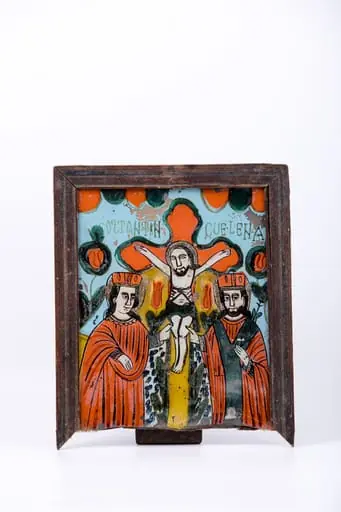 În centrul icoanei este Crucea roșie-galbenă, pe care este Răstignit Mântuitorul Iisus Hristos, iar în stânga crucii este Sfântul Împărat Constantin, și în dreapta este Împărăteasa Elena, mama sa. Deasupra fiecăruia este inscripționat numele, inversat. În spatele Crucii este un spațiu galben izvorâtor de lumină și două elemente florale, asemenea unor martori - îngeri păzitori. Crucea găsită este susținută cu bucurie de cei doi sfinți. Veșmintele Sfinților Constantin și Elena sunt într-o combinație de roșu vermillon și gri antracit. Spațiul galben de lumină duce gândul la Crucea de lumină apărută pe cer In hoc signo vinces - prin acest semn vei învinge. Icoana este bogat ornamentată de culoare, lumină și detalii semnificative, elemente decorative geometrizante. Fondul icoanei este cerul senin, albastru bleu-ciel deschis. Întreaga compoziție este încadrată armonios de un chenar decorativ geometrizant roșu stacojiu și fitomorf, format din rujele de Nicula. Cromatica este armonioasă și senină: roșu vermillon, galben-chihlimbar, albastru bleu-ciel, gri antracit, alb, negru. Icoana este de Nicula. Inscripția din româno-chirilică se traduce Constantin Elena. De menționat este că în icoană apare Mântuitorul Iisus Hristos Răstignit pe Crucea, susținută de Sfinții Constantin și Elena. Icoana este deteriorată, lipsindu-i partea inferioară a ramei.
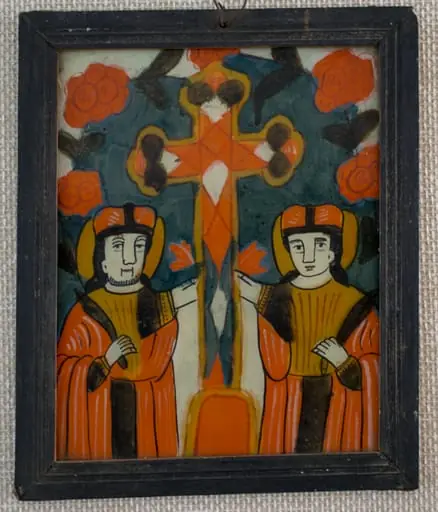 Icoana este pictată pe dosul unei bucăți de sticlă de formă dreptunghiulară în ax vertical. Crucea(tipul calvarului, cu brațele treflate)susținută în partea de jos de cei doi împărați, Constantin și mama sa Elena, (cea care a descoperit crucea la Ierusalim).este plasată sub o arcadă semicirculară de trandafiri roșii. Corpul crucii ornamentat cu motive geometrice policrome(alb, roșu, negru, galben).Sfinții (3/4) sub brațele orizontale ale crucii, o susțin cu cîte o mână(diformă), în cealaltă mână țin câte un sceptru vegetal. Fețele sunt butucănoase, veșmintele identice(galben, negru și roșu), mitrele rotunde, aureolele trasate liber. Câmpul despărțit în două zone de o arcadă de trandafiri roșii(ruje): albastru de Prusia sub arcadă, alb în rest. Desenul este schematic, naiv, Paleta cromatică este dominată culorile calde(roșu, galben, orange) contrastul cu câmpul albastru.creând perspectivă cromatică. Rama este alcătuită din patru stinghii brune, îmbinate oblic; dosul este nou, din lemn subțire de brad.
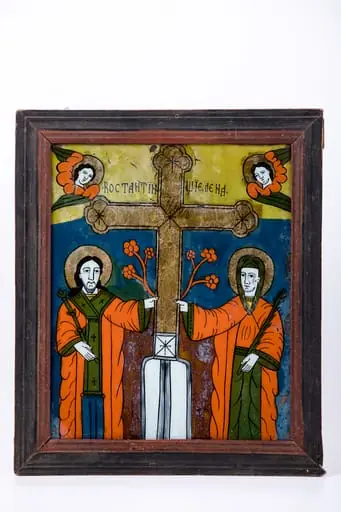 În centrul icoanei este Crucea albă la bază și bronzie în rest, cu capetele brațelor împodobite trilobat, iar în dreapta crucii este Sfântul Împărat Constantin, și în stânga este Împărăteasa Elena, mama sa. În spatele Crucii, sunt flori roșii agățătoare și unduitoare dintr-o grhirlandă de trandafiri. Crucea găsită este susținută cu bucurie de cei doi sfinți. Veșmintele Sfinților Constantin și Elena sunt într-o combinație de roșu vermillon și verde-iarbă de vară. Spațiul albastru-galben de lumină, din fondul icoanei, duce gândul la Crucea de lumină apărută pe cer In hoc signo vinces - prin acest semn vei învinge. Fondul icoanei este cerul albastru cobalt, lumina galbenă și o panglică albă, în josul crucii. În registrul superior, în colțurile stânga-dreapta sunt 2 îngeri serafimi. Cromatica este armonioasă, bogată și senină: roșu vermillon, galben-ocru, albastru cobalt, verde-iarbă de vară nuanță spanac-avocado, alb, negru. Icoana este de Nicula. Inscripția din româno-chirilică se traduce Constantin Elena.
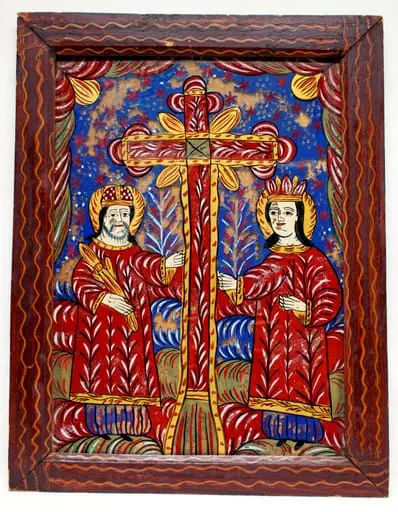 Icoana îi reprezintă pe Sfinții Împărați Constantin și Elena, susținând crucea pe care a fost răstignit Isus, cruce găsită de Împărăteasa Elena la Ierusalim. Crucea, tipul Calvarului, având brațele trilobate este în centrul compoziției pe care o domină.Cei doi sfinți sunt reprezentați cu însemnele împărătești, coroane pe cap și sceptru(împăratul Constantin). Veșmintele sunt simple, decorate doar cu șiruri de ghirlande fitomorfe verticale, în alternanță cromatică. Crucea decorată cu motive fitomorfe Câmpul icoanei, albastru ultramarin, decorat cu motive astrale și florale. În colțurile superioare sunt pictate falduri de draperii iar jumătatea inferioară a icoanei este "umplută" cu un relief vălurit și elemente vegetale. Compoziția foarte încărcată. Rama decorată cu căte trei șiruri de linii vălurite de culoare mai deschisă. Paleta cromatică: roșu, negru, alb, verde-oliv, gri, fond albastru cu decor roșu și alb. Rama - lemn de brad, "dosul" din șipci orizontale fixate de ramă.